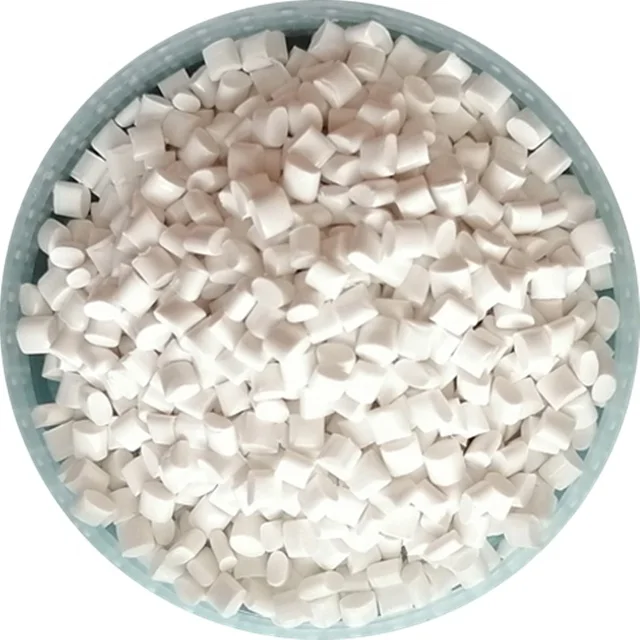
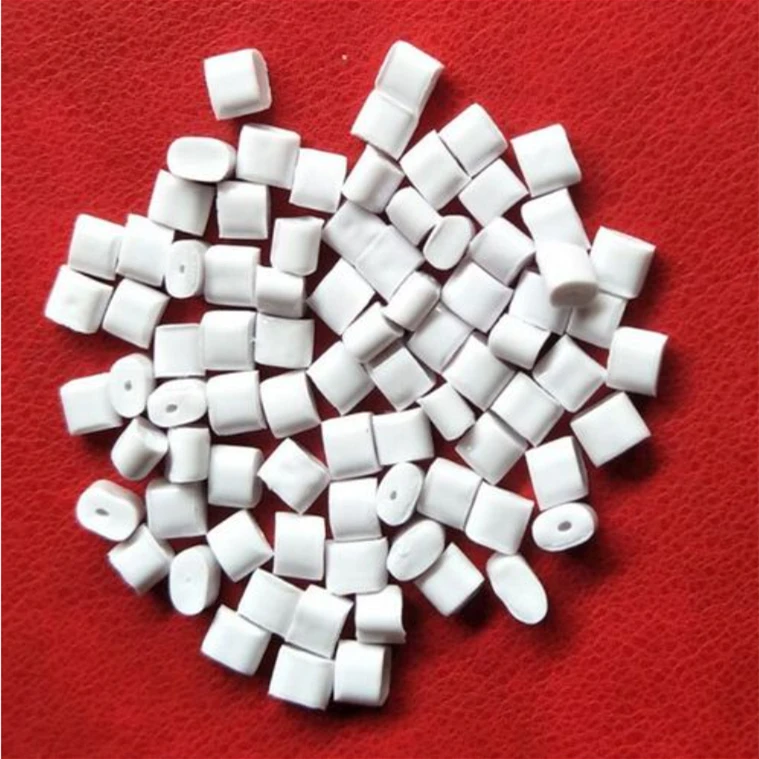
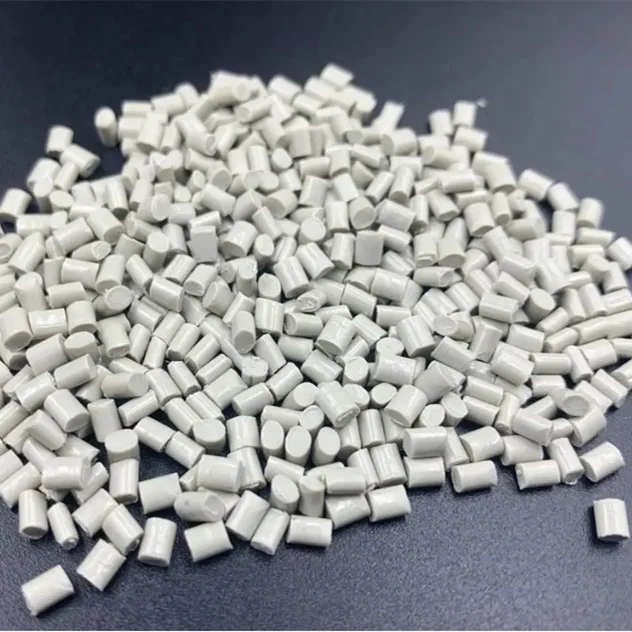
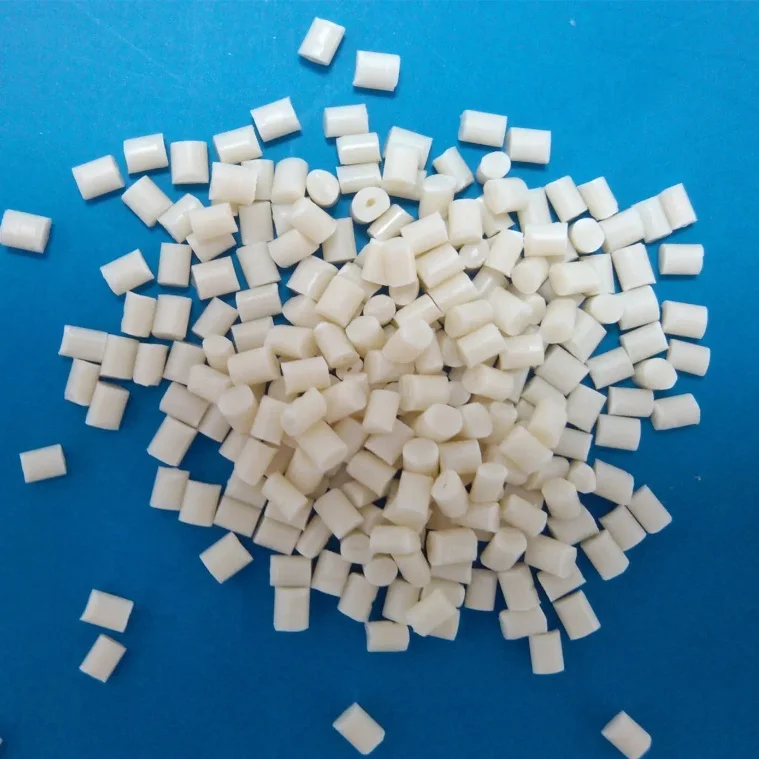
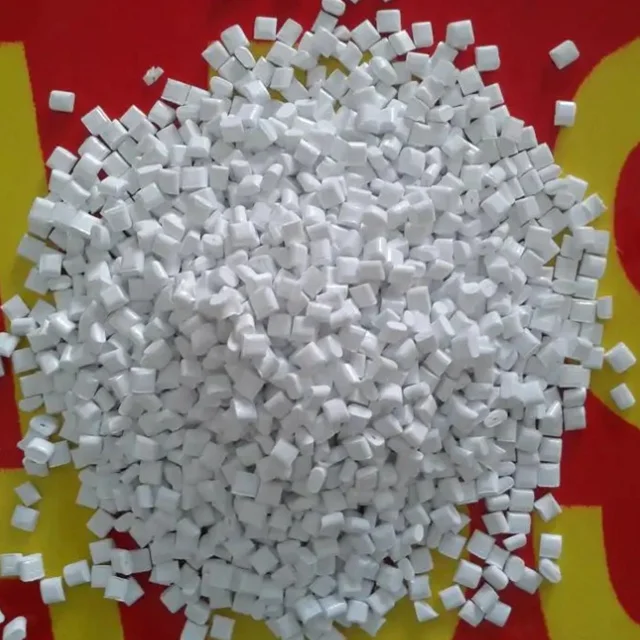
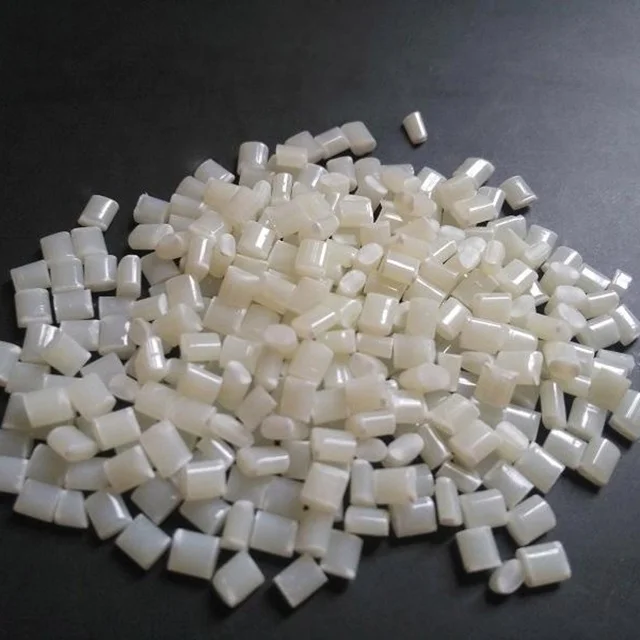
abs granules plastic raw material abs abs manufacturers
- Category: >>>
- Supplier: Hangzhou Yuhang Trade Co. Ltd.
Share on (1600740447442):
Product Overview
Description
HANGZHOU YUHANG


Product Description | High gloss high rigidity medium impact | ||||||
Properties | Test method | Conditions | Unit | Attribute values | |||
Tensile Strength | ISO 527 | 50mm/min | MPa | 46 | |||
(Ib/in²) | 6672 | ||||||
Tensile Elongation | ISO 527 | 50mm/min | % | 20 | |||
Flexural Modulus | ISO 178 | 2mm/min | MPa | 2.2 | |||
10²lb/in² | 3.2 | ||||||
Flexural Strength | ISO 178 | 2mm/min | MPa | 72 | |||
(Ib/in²) | 10443 | ||||||
Rockwell-Hardness | ASTM D-785 | 1/2 | -- | R-105 | |||
Izod Impact Strength | ISO 180 | 23°C Notched | KJ/m² | 18 | |||
ft-Ib/in² | 8.6 | ||||||
Charpy lmpact Strength | ISO 179 | 23°C Notched | KJ/m² | 19 | |||
ft-Ib/in² | 9.0 | ||||||
Vicat Softening Temp. | ISO 306 | 50°C/Hr | °C | 103 | |||
(°F) | 217 | ||||||
Heat Deflection Temp. | ISO 75-2 | annealed unannealed | °C/°F | 94(201) | |||
°C/°F | 79(174) | ||||||
Density | ISO 1183 | 23°C | g/cm³ | 1.04 | |||
Melt Volume Flow Rate | ISO 1133 | 200°Cx5kg | cm³/10min | 1.9 | |||
200°Cx10kg | 20 | ||||||
Flammability | File No.E194560 UL & C-UL | 1.5mm HB | |||||

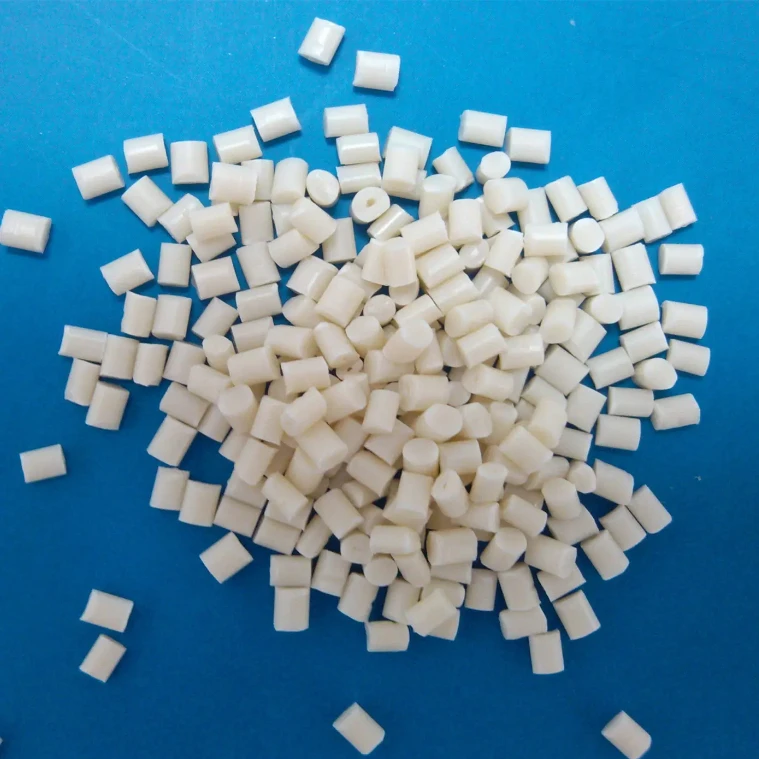
Introduction to the
Acrylonitrile - styrene - butadiene copolymer is a thermoplastic polymer material structure with high strength, good toughness and easy processing.
ABS resin is a graft copolymer of Acrylonitrile, Butadiene and Styrene. Its molecular formula can be written as (C8H8·C4H6·C3H3N) X, but in fact it is often a mixture of butadiene-containing graft copolymer and acrylonitrile-styrene copolymer, in which acrylonitrile accounts for 15%~35%, butadiene accounts for 5%~30%, styrene accounts for 40%~60%, The most common proportion of ABS in emulsion method is A:B:S=22:17:61, while the proportion of B in ABS of body method is usually lower, about 13%. ABS plastic molding temperature is 180-250℃, but it is best not to exceed 240℃, at this time the resin will have decomposition.
With the adjustment of the proportion of the three components, the physical properties of the resin will change to some extent:
1, 3-butadiene provides low temperature ductility and impact resistance for ABS resin, but too much butadiene will reduce the hardness, luster and fluidity of the resin;
Acrylonitrile provides ABS resin hardness, heat resistance, acid, alkali, salt and other chemical corrosion properties;
Styrene provides ABS resin with hardness, fluidity and finish.
ABS resin is a graft copolymer of Acrylonitrile, Butadiene and Styrene. Its molecular formula can be written as (C8H8·C4H6·C3H3N) X, but in fact it is often a mixture of butadiene-containing graft copolymer and acrylonitrile-styrene copolymer, in which acrylonitrile accounts for 15%~35%, butadiene accounts for 5%~30%, styrene accounts for 40%~60%, The most common proportion of ABS in emulsion method is A:B:S=22:17:61, while the proportion of B in ABS of body method is usually lower, about 13%. ABS plastic molding temperature is 180-250℃, but it is best not to exceed 240℃, at this time the resin will have decomposition.
With the adjustment of the proportion of the three components, the physical properties of the resin will change to some extent:
1, 3-butadiene provides low temperature ductility and impact resistance for ABS resin, but too much butadiene will reduce the hardness, luster and fluidity of the resin;
Acrylonitrile provides ABS resin hardness, heat resistance, acid, alkali, salt and other chemical corrosion properties;
Styrene provides ABS resin with hardness, fluidity and finish.
ABS resin is a yellowish solid with a certain toughness and a density of about 1.04~1.06 g/cm3. It is resistant to acid, alkali, salt corrosion ability is relatively strong, but also to a certain extent to tolerate organic solvent dissolution.
ABS resin can perform normally in the -25℃~60℃ environment, and has good molding, processed product surface smooth, easy to dye and electroplating. Therefore, it can be used in household appliances, toys and other everyday products. The most common lego bricks are ABS.
ABS resin can be mixed with a variety of resins into blends, such as PC/ABS, ABS/PVC, PA/ABS, PBT/ABS, etc., resulting in new performance and new application fields, such as: ABS resin and PMMA mixed, can make transparent ABS resin.
ABS resin can perform normally in the -25℃~60℃ environment, and has good molding, processed product surface smooth, easy to dye and electroplating. Therefore, it can be used in household appliances, toys and other everyday products. The most common lego bricks are ABS.
ABS resin can be mixed with a variety of resins into blends, such as PC/ABS, ABS/PVC, PA/ABS, PBT/ABS, etc., resulting in new performance and new application fields, such as: ABS resin and PMMA mixed, can make transparent ABS resin.
ABS is synthesized from acrylonitrile, butadiene and styrene. Each monomer has different properties: acrylonitrile has high strength, thermal stability and chemical stability; Butadiene has toughness and impact resistance. Styrene is easy to work, high finish and high strength.
In terms of morphology, ABS is an amorphous material. The polymerization of the three monomers yields a terpolymer with two phases, one continuous phase of styrene-acrylonitrile and the other dispersed phase of polybutadiene rubber. The characteristics of ABS mainly depend on the ratio of the three monomers and the molecular structure of the two phases. This allows great flexibility in product design and has resulted in hundreds of different quality ABS materials on the market. These materials of different qualities offer different properties such as medium to high impact resistance, low to high finish and high temperature distortion. ABS material has super easy processing, appearance characteristics, low creep and excellent dimensional stability and high impact strength.
In terms of morphology, ABS is an amorphous material. The polymerization of the three monomers yields a terpolymer with two phases, one continuous phase of styrene-acrylonitrile and the other dispersed phase of polybutadiene rubber. The characteristics of ABS mainly depend on the ratio of the three monomers and the molecular structure of the two phases. This allows great flexibility in product design and has resulted in hundreds of different quality ABS materials on the market. These materials of different qualities offer different properties such as medium to high impact resistance, low to high finish and high temperature distortion. ABS material has super easy processing, appearance characteristics, low creep and excellent dimensional stability and high impact strength.


We Recommend
New Arrivals
New products from manufacturers at wholesale prices