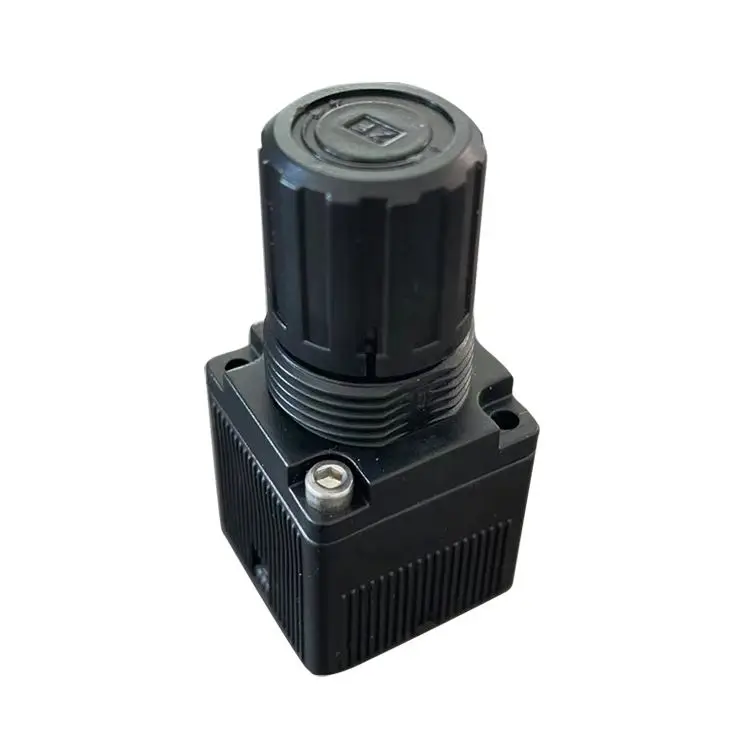
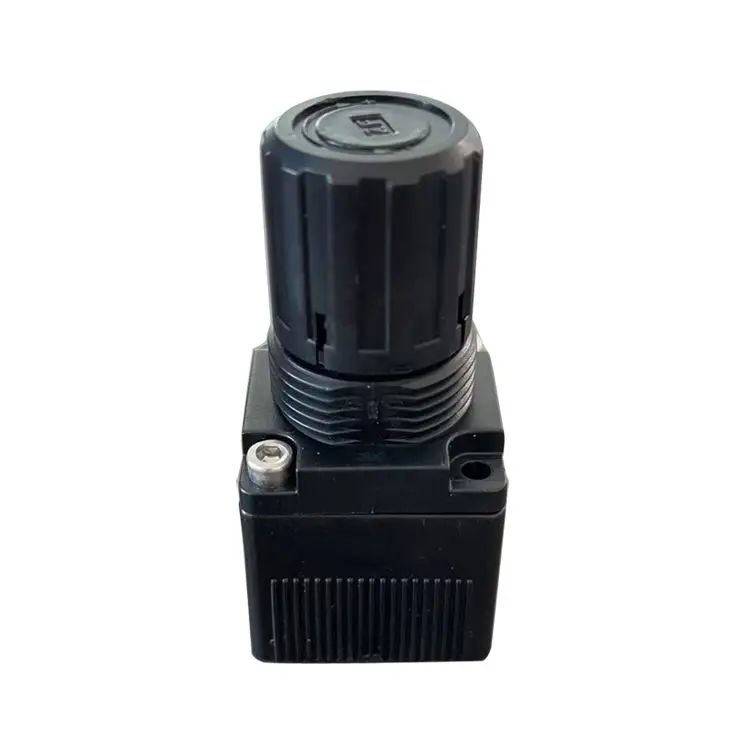
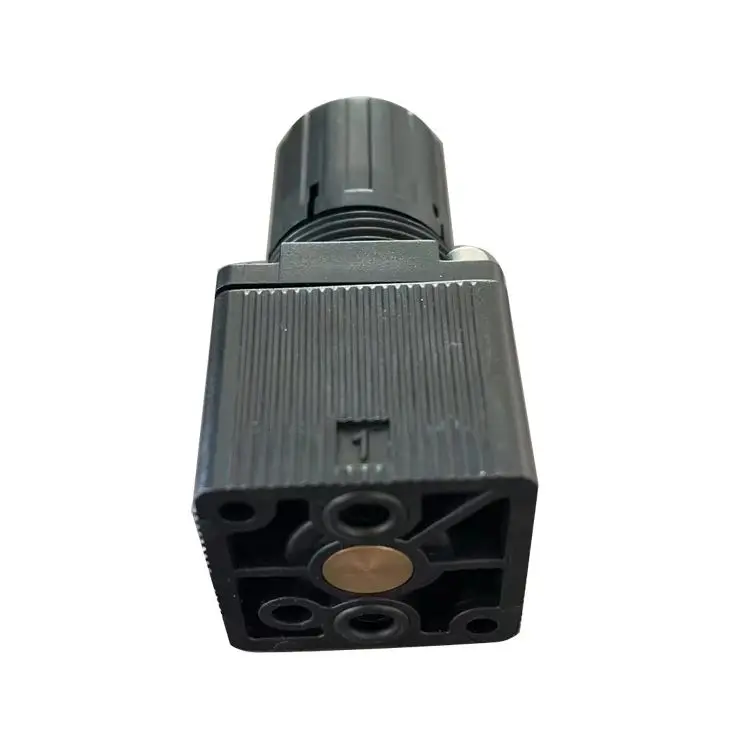
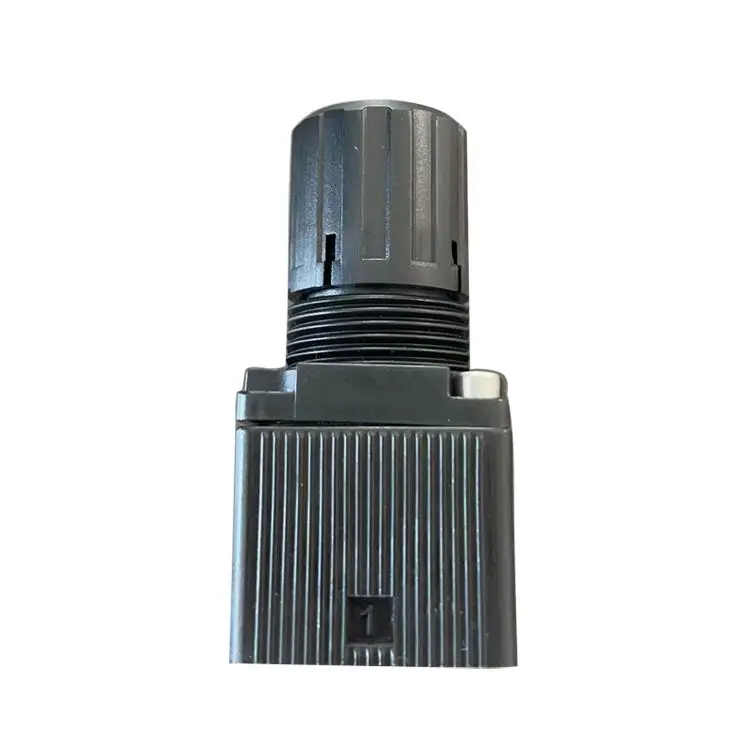
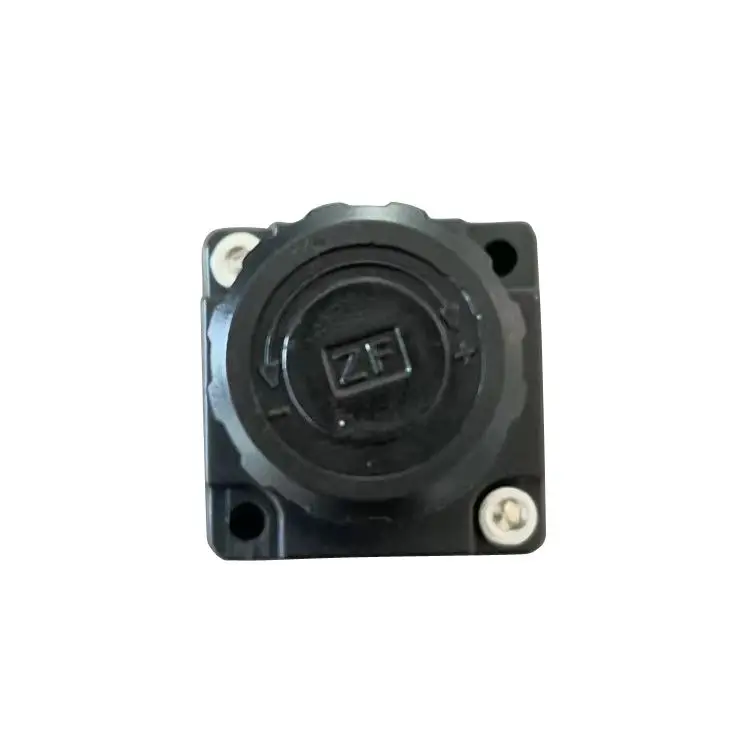
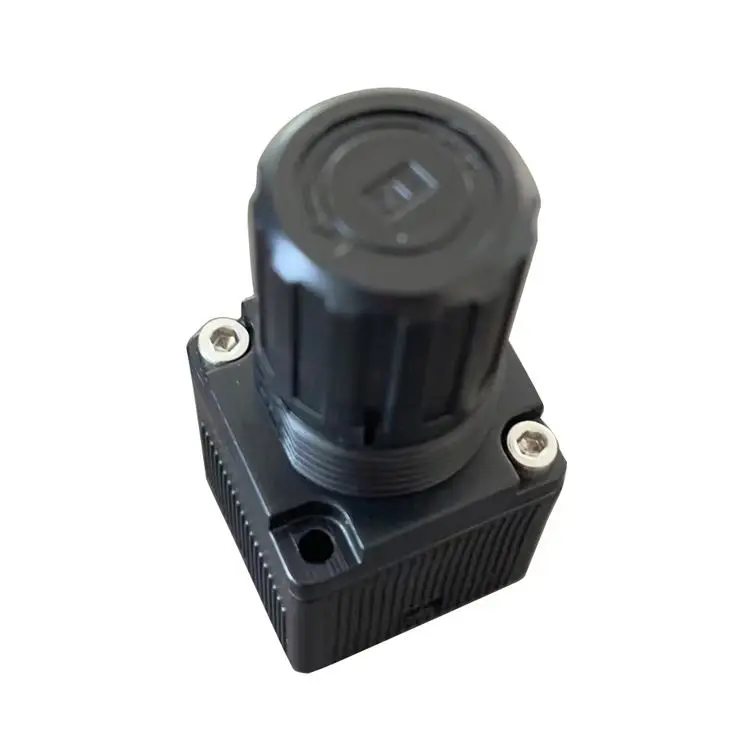
XMC R308 P0C15 pneumatic FRL regulating micro precision regulator
- Category: >>>
- Supplier: Ningbo Huayi Pneumatic Engineering Co. Ltd.
Share on (1600775425138):
Product Overview
Description


Product name | Micro precision regulator |
Rated Flow | 260L/min |
Highest Working Pressure | 1.0MPa |
Working Medium | Compressed air |
Ambient and Fluid Temperature | 0°C ~ 60°C |
Pressure Regulating Range | 0.05 ~ 0.35MPa |
Installation | Bottom flange insalltion |
Installation position | Any where |
Features | 1. The valve body is made of engineering plastic, the product is light weight and compact, making it ideal for use on portable systems,such as ventilators, dental equipment, etc. 2. Special overflow structure consisting of spring, seal and valve core,sensitive movement,high regulating accuracy and good flow characteristics.Flange installation, simple and convenient. |

Why is it necessary to regulate compressed air?
The compressor supplies compressed air with 10 to 16 bar. This pressure is too high for most
pneumatic devices and compressed air tools. It therefore has to be reduced and kept at a constant pressure level. Too high pressure is expensive and quickly wears out the consumer, too low pressure does not yield the desired power or speed. Unregulated compressed air causes fluctuations in the quality of the produced parts, and leads to incorrect results, especially in the case of measurement and control instruments. The pressure reducer or pressure regulator is responsible for establishing a specific operating pressure (secondary pressure) and keep it constant regardless of the air flow rate (primary pressure).
pneumatic devices and compressed air tools. It therefore has to be reduced and kept at a constant pressure level. Too high pressure is expensive and quickly wears out the consumer, too low pressure does not yield the desired power or speed. Unregulated compressed air causes fluctuations in the quality of the produced parts, and leads to incorrect results, especially in the case of measurement and control instruments. The pressure reducer or pressure regulator is responsible for establishing a specific operating pressure (secondary pressure) and keep it constant regardless of the air flow rate (primary pressure).
How does a pressure regulator work?
From the inlet hole of the regulator, unregulated compressed air flows to the valve seat of the tappet valve at inlet pressure
(primary pressure). When flowing through the valve, the air is regulated to the desired pressure and flows to the outlet hole at outlet pressure (secondary pressure). The desired outlet pressure is set by turning the setting screw, and the corresponding effect of the setting spring on the upper side of the membrane. The bottom part of the membrane is subject to the secondary pressure. Depending on the forces exerted by the spring and the secondary pressure, the membrane moves up or down. This actuates the valve tappet, which clears the valve seat and opens the valve bore to varying degrees. If the secondary pressure drops, the spring force on the membrane is larger than the counteracting outlet pressure. This presses the valve tappet further down against the return spring. The valve aperture gets larger and the secondary pressure increases even more.
From the inlet hole of the regulator, unregulated compressed air flows to the valve seat of the tappet valve at inlet pressure
(primary pressure). When flowing through the valve, the air is regulated to the desired pressure and flows to the outlet hole at outlet pressure (secondary pressure). The desired outlet pressure is set by turning the setting screw, and the corresponding effect of the setting spring on the upper side of the membrane. The bottom part of the membrane is subject to the secondary pressure. Depending on the forces exerted by the spring and the secondary pressure, the membrane moves up or down. This actuates the valve tappet, which clears the valve seat and opens the valve bore to varying degrees. If the secondary pressure drops, the spring force on the membrane is larger than the counteracting outlet pressure. This presses the valve tappet further down against the return spring. The valve aperture gets larger and the secondary pressure increases even more.
What does self-relieving, secondary venting or overpressure protection mean?
If no consumer is on, the secondary pressure can increase to a value higher than the desired value set by means of the spring force, due to adjustments at the setting spring, a temperature increase or mechanical actuation of a compressed air cylinder. The membrane lifts from the valve tappet and thus opens the venting hole. The secondary side vents until the spring force presses the membrane back onto the tappet and close the secondary venting valve. The set spring pressure then matches the desired secondary pressure. Non-relieving means that if the secondary pressure is too high, it is not vented to the desired pressure. The membrane does not have a secondary venting hole. Non-relieving regulators are usually used with fluids or hazardous gases that must not escape into the atmosphere.
If no consumer is on, the secondary pressure can increase to a value higher than the desired value set by means of the spring force, due to adjustments at the setting spring, a temperature increase or mechanical actuation of a compressed air cylinder. The membrane lifts from the valve tappet and thus opens the venting hole. The secondary side vents until the spring force presses the membrane back onto the tappet and close the secondary venting valve. The set spring pressure then matches the desired secondary pressure. Non-relieving means that if the secondary pressure is too high, it is not vented to the desired pressure. The membrane does not have a secondary venting hole. Non-relieving regulators are usually used with fluids or hazardous gases that must not escape into the atmosphere.
Internal air consumption
To improve the precision, especially in the case of precision regulators, permanent air consumption is generated. This internal air consumption reduces the hysteresis and the reaction time of the regulator. In the case of gases, fluids and other aggressive media, internal air consumption should not be used.
Pressure setting:
Prior to starting up the pressure control system, the pressure reducer has to be relieved of load by rotating the adjusting knob/adjusting spindle counter-clockwise. Rotating the adjusting knob/adjusting spindle clockwise increases the outlet pressure. Rotating the adjusting knob/adjusting spindle counter-clockwise reduces the outlet pressure. Self-relieving regulators adjust the outlet pressure according to the setting of the adjusting knob/adjusting spindle; the regulator vents the excess pressure. With non-relieving regulators, the outlet pressure has to be reduced by means of the flow rate, or the system has to be vented at another location. Non-relieving regulators cannot independently reduce overpressure at the outlet.
Prior to starting up the pressure control system, the pressure reducer has to be relieved of load by rotating the adjusting knob/adjusting spindle counter-clockwise. Rotating the adjusting knob/adjusting spindle clockwise increases the outlet pressure. Rotating the adjusting knob/adjusting spindle counter-clockwise reduces the outlet pressure. Self-relieving regulators adjust the outlet pressure according to the setting of the adjusting knob/adjusting spindle; the regulator vents the excess pressure. With non-relieving regulators, the outlet pressure has to be reduced by means of the flow rate, or the system has to be vented at another location. Non-relieving regulators cannot independently reduce overpressure at the outlet.
Installation:
To ensure that the regulator works properly, all lines have to be purged prior to installing the regulator. Deposits and other
foreign objects can damage the valve seat and influence the regulator’s behaviour. The regulator has to be installed in the line in such a way that the air flows in the direction of the arrows on the housing (IN to OUT). To ensure that the regulator works properly, afilter has to be installed upstream.
To ensure that the regulator works properly, all lines have to be purged prior to installing the regulator. Deposits and other
foreign objects can damage the valve seat and influence the regulator’s behaviour. The regulator has to be installed in the line in such a way that the air flows in the direction of the arrows on the housing (IN to OUT). To ensure that the regulator works properly, afilter has to be installed upstream.
Maintenance and cleaning:
It is not necessary to remove the regulator from the line to clean it. If the regulator shows erratic behaviour or the outlet
pressure raises permanently, the usual cause is dirt in the valve seat area. To work on the regulator safely, switch off the air supply and vent the lines. Remove the bottom plug/the cap, take out and clean the valve seat, and grease the O-ring. Afterwards assemble the regulator and restart the system.
Caution: In the case of certain media, for example oxygen, only approved grease may be used.
It is not necessary to remove the regulator from the line to clean it. If the regulator shows erratic behaviour or the outlet
pressure raises permanently, the usual cause is dirt in the valve seat area. To work on the regulator safely, switch off the air supply and vent the lines. Remove the bottom plug/the cap, take out and clean the valve seat, and grease the O-ring. Afterwards assemble the regulator and restart the system.
Caution: In the case of certain media, for example oxygen, only approved grease may be used.


We Recommend
New Arrivals
New products from manufacturers at wholesale prices