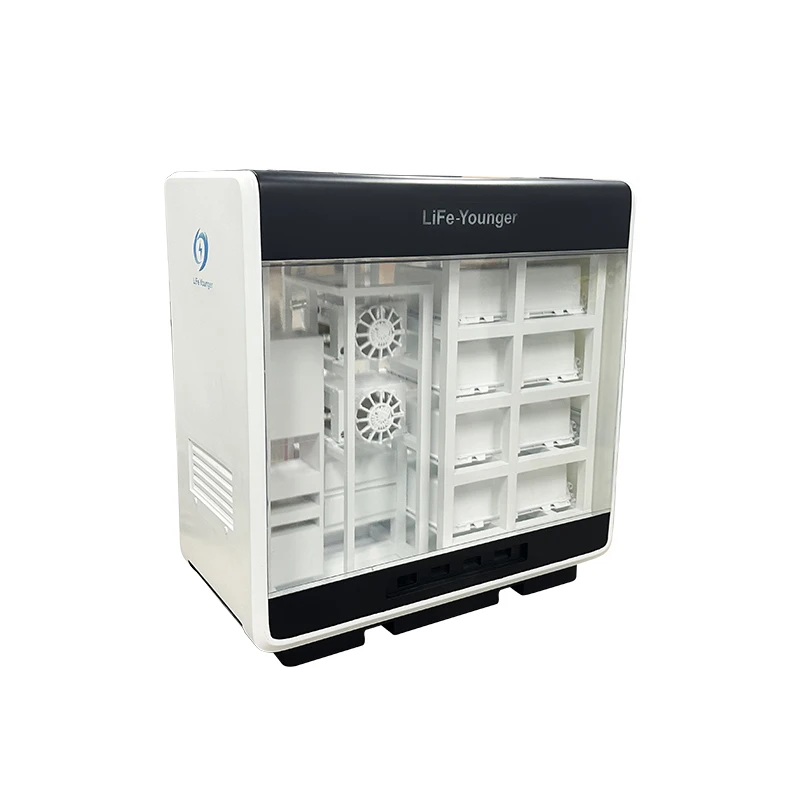
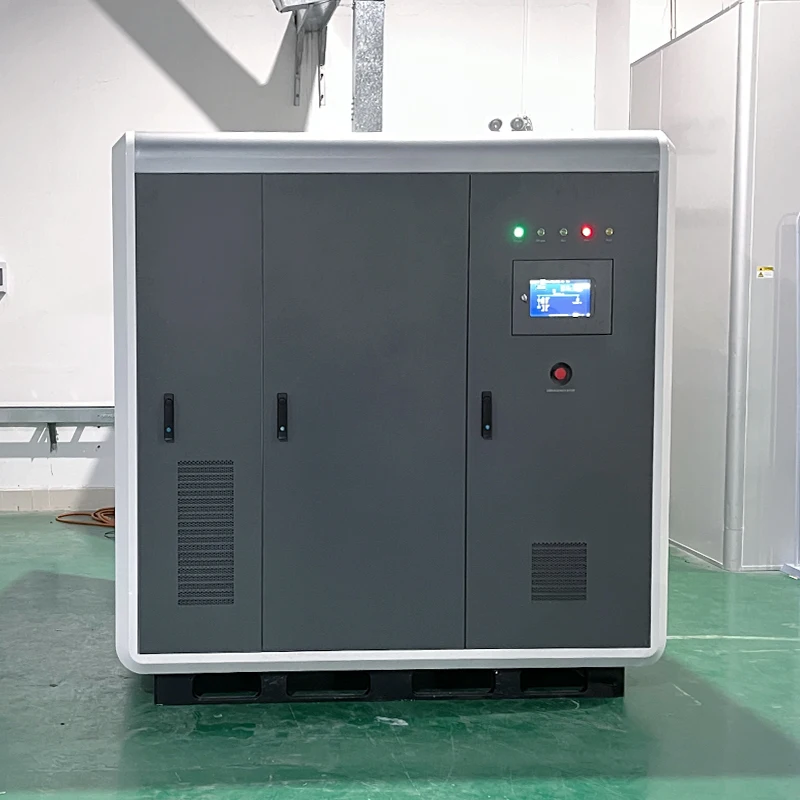
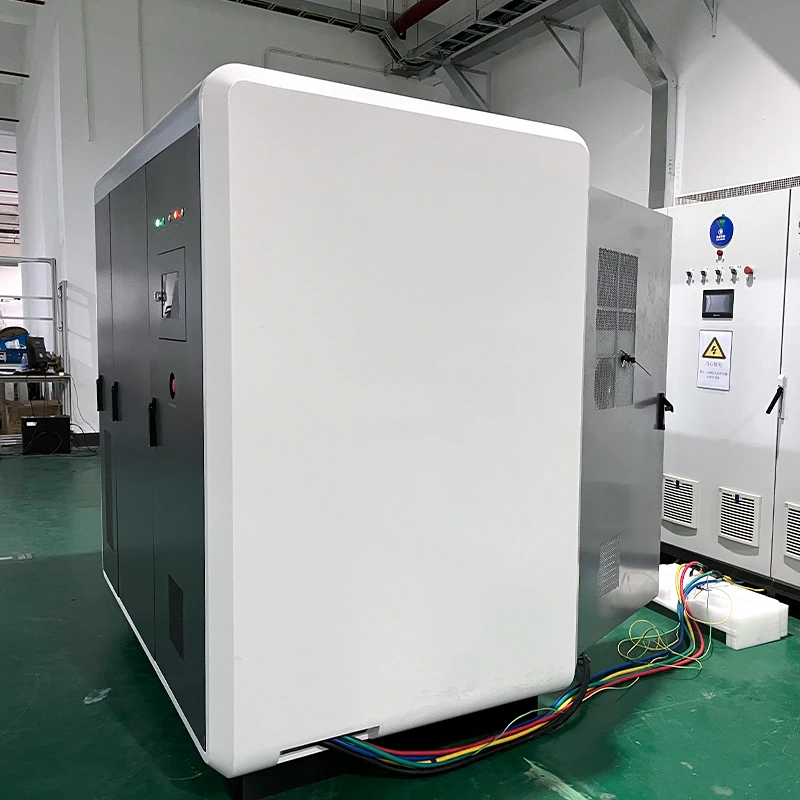
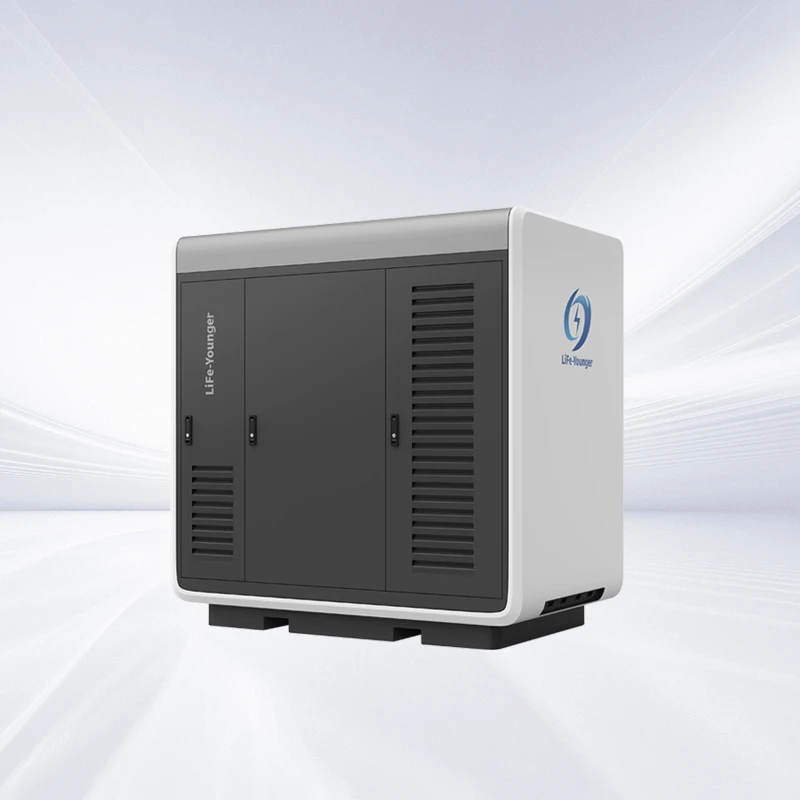
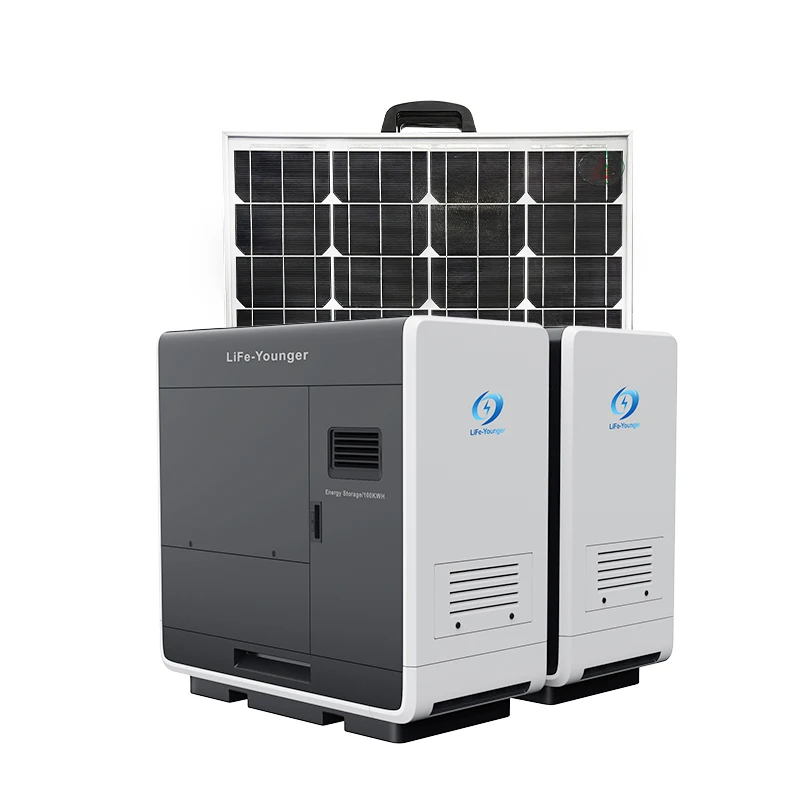
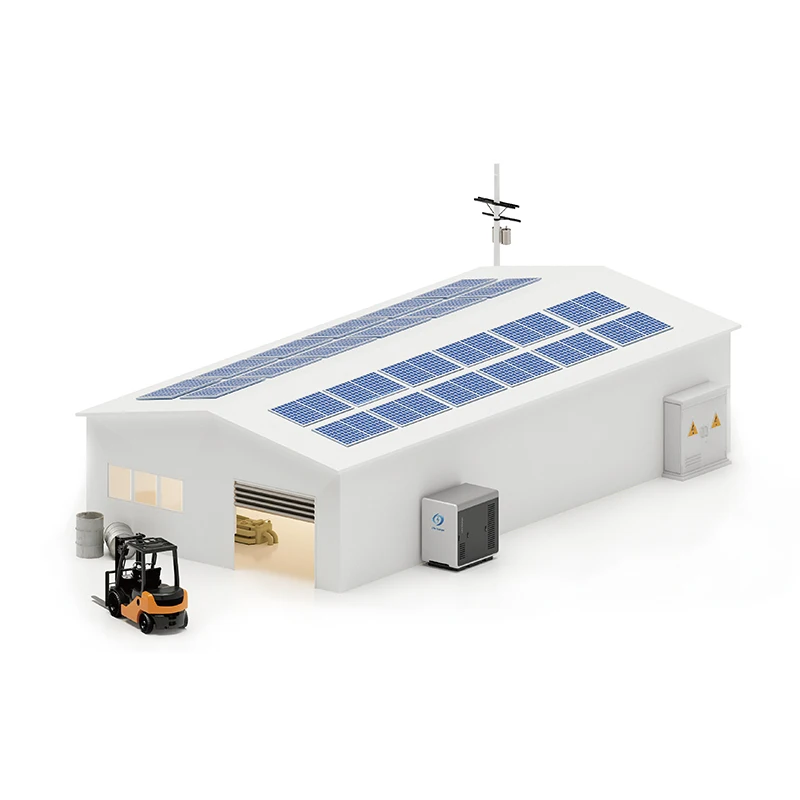
New Product 50kW 105KWh Integrated Intelligent Solar PV Power Lithium Ion Lifepo4 Battery Solutions Energy Storage System
- Category: >>>
- Supplier: Huizhou Liyuan Battery Co. Ltd.
Share on (1600797616518):
Product Overview
Description
Specification
Category | Item | Technical parameter |
BES | Battery system energy | 105 kWh |
Voltage range | 400~ 750V | |
Max continuous charge/discharge current | 120/ADC | |
Cell | LiFePO4 | |
Cycle life | > 5000@ 25°C 0.5C/0.5C | |
AC | AC out put voltage | 400V/AC |
AC current | 65A | |
Rated power | 100KW(max120KW) | |
AC frequency | 50/60Hz | |
AC wiring | 3-phase 3-wire+PE | |
Over load | 105%~ 115%10min,115%~ 125%1min, | |
SYS | Cooling | Air cooling and heat exchanger |
Noise | < 70dB | |
Protection degree | IP54 | |
Communication interface | RS485 CAN ethernet | |
Communication protocol | Modbus TCP/IP | |
Operating temperature | - 20°C ~60°C | |
Size | 2100 x 2000 x 1000mm | |
Weight | ≈1.5 metric tons | |
Fire control | Fire smoke | Smoke sensor |
Oxidant | FM200 or NC 1230 | |
Certification | Certification | IEC62619,CE,UL9540A,UL1973 UN38.3,CE LVD, IEC62477, CE EMC, G99,VDE4110 |
Product Usage
Certifications

Exhibition


Why Choose Us

1.What we provide:
A-grade LFP cells, LFP battery pack, LFP battery module, LFP battery cabinet, Telecom tower battery supply, Special vehicle power supply, Home energy storage system, Commerical energy storage system, Industrial energy storage system, Containerized energy storage system.
2.Product Quality
Certificated with UL,ROHS,CE,MSDS. Every process is strictly controlled to ensure the quality.
3.Advantage
a. 1 hour to Shenzhen port.
b. 12 years' factory can supply cost-effective batteries.
c. 16 years experienced qualified technical team can meet the
requirements of private customization.
requirements of private customization.
d. Trustable supplier to various countries (United States, England, Australia, Europe).
FAQ
1.Why work with LIYUAN?
. A fast-growing and dynamic company with vision and leadership;
. Guaranteed quality and after service, with over 1GWh batteries in service worldwide;
· Original manufacturer with strong research and development, ODM and OEM capability;
· Trade Assurance protected.
. A fast-growing and dynamic company with vision and leadership;
. Guaranteed quality and after service, with over 1GWh batteries in service worldwide;
· Original manufacturer with strong research and development, ODM and OEM capability;
· Trade Assurance protected.
· Support 7/24 hours after-sale service.
· Attend many oversea fair per year to expand our brand Life-Younger
· All products have CE certification and Europe appearance patent
2. What is your lead time?
-It depends on the order quantity and the season you place the order.
-It depends on the order quantity and the season you place the order.
-Usually we can ship within 30-45 days for small quantity,
and about 60 days for large quantity.
3.What is the shipping method?
-It could be shipped by sea, by air or by express (EMS, UPS, DHL, TNT, FEDEX and ect).
Please confirm with us before placing orders.
4. why should you buy from us not from other suppliers?
1) Quality
Every process is controlled by dedicated persons.
2) Supply
Multiple production line ensures stable supply.
3) OEM/ODM
Back up with professional technical team to provide solutions.
5. what services can we provide?
Accepted Delivery Terms: FOB, CFR, CIF, EXW;
Accepted Payment Currency: USD, EUR, JPY, CAD, AUD, HKD, GBP, CNY, CHF;
Accepted Payment Type: T/T, L/C, Credit Card, PayPal, Western Union;
Language Spoken:English, Chinese, Spanish, German, French.
and about 60 days for large quantity.
3.What is the shipping method?
-It could be shipped by sea, by air or by express (EMS, UPS, DHL, TNT, FEDEX and ect).
Please confirm with us before placing orders.
4. why should you buy from us not from other suppliers?
1) Quality
Every process is controlled by dedicated persons.
2) Supply
Multiple production line ensures stable supply.
3) OEM/ODM
Back up with professional technical team to provide solutions.
4) Speed
One hour to Shenzhen port.
5) Service
Excellent technical team will support applicable solutions for you.
Business department will follow up your pre-sales, in-sales and after-sales.
5. what services can we provide?
Accepted Delivery Terms: FOB, CFR, CIF, EXW;
Accepted Payment Currency: USD, EUR, JPY, CAD, AUD, HKD, GBP, CNY, CHF;
Accepted Payment Type: T/T, L/C, Credit Card, PayPal, Western Union;
Language Spoken:English, Chinese, Spanish, German, French.
6.What is your MOQ?
Most of models here,1pcs can be ordered.
7.What is your package like? Can I have a customized package?
We have the factory's current standard packaging, the customized printed logo should meet the buyer's requirements, and the additional cost will be borne by the buyer. Please contact us for more details.
8.How do you make our business long-term and good relationship?
-1. We keep good quality and competitive price to ensure our customers benefit ;
-2. We respect every customer as our friend and we sincerely do business and make friends with them,no matter where they come
from.
-2. We respect every customer as our friend and we sincerely do business and make friends with them,no matter where they come
from.
Application of battery energy storage system:
Battery energy storage systems (BESS) are versatile and can be applied to a variety of industries and situations. Here are some common applications of BESS:
1. Grid Stabilization: BESS can be used to stabilize the grid by providing grid and services. They help maintain grid stability
and improve grid reliability in terms of voltage, frequency and power factor. BESS can respond quickly to supply and demand fluctuations, providing support during peak demand periods or grid disturbances.
2. Renewable energy integration: BESS plays a vital role in bringing renewable energy sources such as solar and wind into the grid. They can store excess energy produced during periods of high production and release it during periods of low production or high demand. This helps address the intermittency of renewable energy and improves the overall reliability and flexibility of the grid.
3. Usage time management: BESS can optimize energy consumption by storing power during periods of low demand and low cost and releasing power during periods of high demand and high cost. This can help businesses or residents reduce their energy bills by avoiding peak energy rates.
4. Microgrids and remote areas: In remote areas or regions where grid connections are unreliable, BESS can be used to create microgrids that provide a reliable and sustainable supply of electricity. These microgrids can integrate renewable energy sources such as solar or wind, store excess energy, and provide power in areas where the grid is interrupted or power supplies are limited.
5. Uninterruptible Power Supplies (UPS): BESS can be used as a power system for critical infrastructure and facilities, such as hospitals, data centers or telecommunications networks, which provide an immediate and uninterrupted supply of power during grid outages or blackouts, ensuring continuous operation.
6. Peak clipping and load management: BESS can be used to reduce peak demand on the grid by supplying power during periods of high demand. By reducing the load, BESS can help avoid costly grid infrastructure upgrades and relieve pressure on the grid during peak periods
7. Electric Vehicle (EV) Charging Infrastructure: Integration of BE with EV charging infrastructure may address challenges
associated with high power demand during peak charging periods. It can store energy during off-peak hours and release energy during peak demand, reducing grid stress and optimizing the charging process for EV owners.
Battery energy storage systems (BESS) are versatile and can be applied to a variety of industries and situations. Here are some common applications of BESS:
1. Grid Stabilization: BESS can be used to stabilize the grid by providing grid and services. They help maintain grid stability
and improve grid reliability in terms of voltage, frequency and power factor. BESS can respond quickly to supply and demand fluctuations, providing support during peak demand periods or grid disturbances.
2. Renewable energy integration: BESS plays a vital role in bringing renewable energy sources such as solar and wind into the grid. They can store excess energy produced during periods of high production and release it during periods of low production or high demand. This helps address the intermittency of renewable energy and improves the overall reliability and flexibility of the grid.
3. Usage time management: BESS can optimize energy consumption by storing power during periods of low demand and low cost and releasing power during periods of high demand and high cost. This can help businesses or residents reduce their energy bills by avoiding peak energy rates.
4. Microgrids and remote areas: In remote areas or regions where grid connections are unreliable, BESS can be used to create microgrids that provide a reliable and sustainable supply of electricity. These microgrids can integrate renewable energy sources such as solar or wind, store excess energy, and provide power in areas where the grid is interrupted or power supplies are limited.
5. Uninterruptible Power Supplies (UPS): BESS can be used as a power system for critical infrastructure and facilities, such as hospitals, data centers or telecommunications networks, which provide an immediate and uninterrupted supply of power during grid outages or blackouts, ensuring continuous operation.
6. Peak clipping and load management: BESS can be used to reduce peak demand on the grid by supplying power during periods of high demand. By reducing the load, BESS can help avoid costly grid infrastructure upgrades and relieve pressure on the grid during peak periods
7. Electric Vehicle (EV) Charging Infrastructure: Integration of BE with EV charging infrastructure may address challenges
associated with high power demand during peak charging periods. It can store energy during off-peak hours and release energy during peak demand, reducing grid stress and optimizing the charging process for EV owners.
We Recommend
New Arrivals
New products from manufacturers at wholesale prices