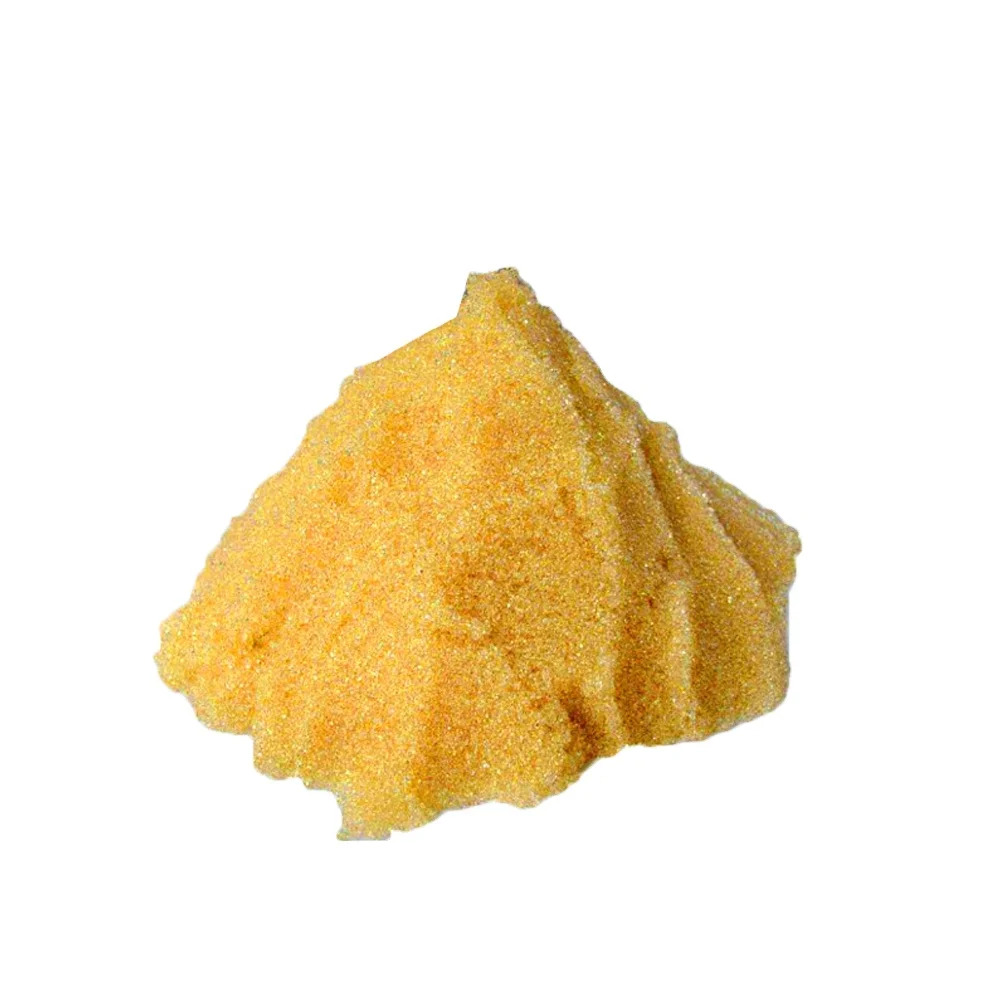
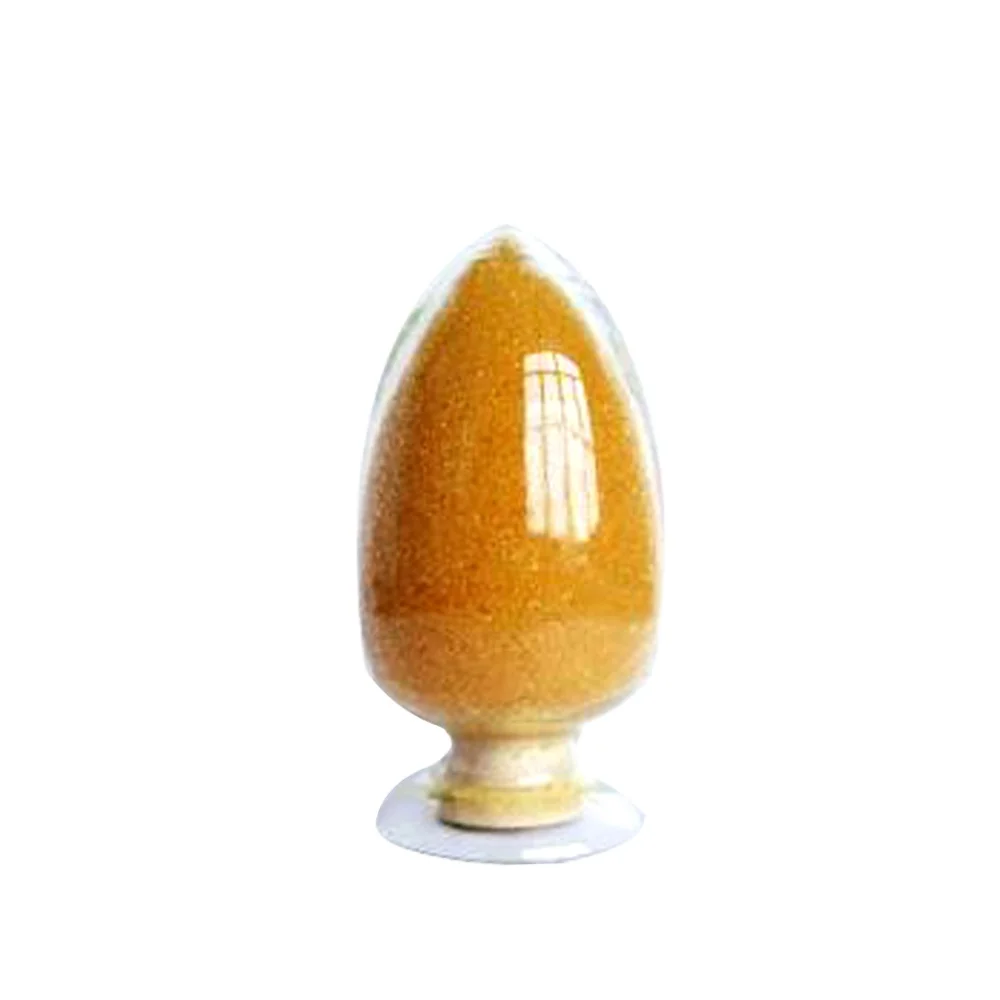
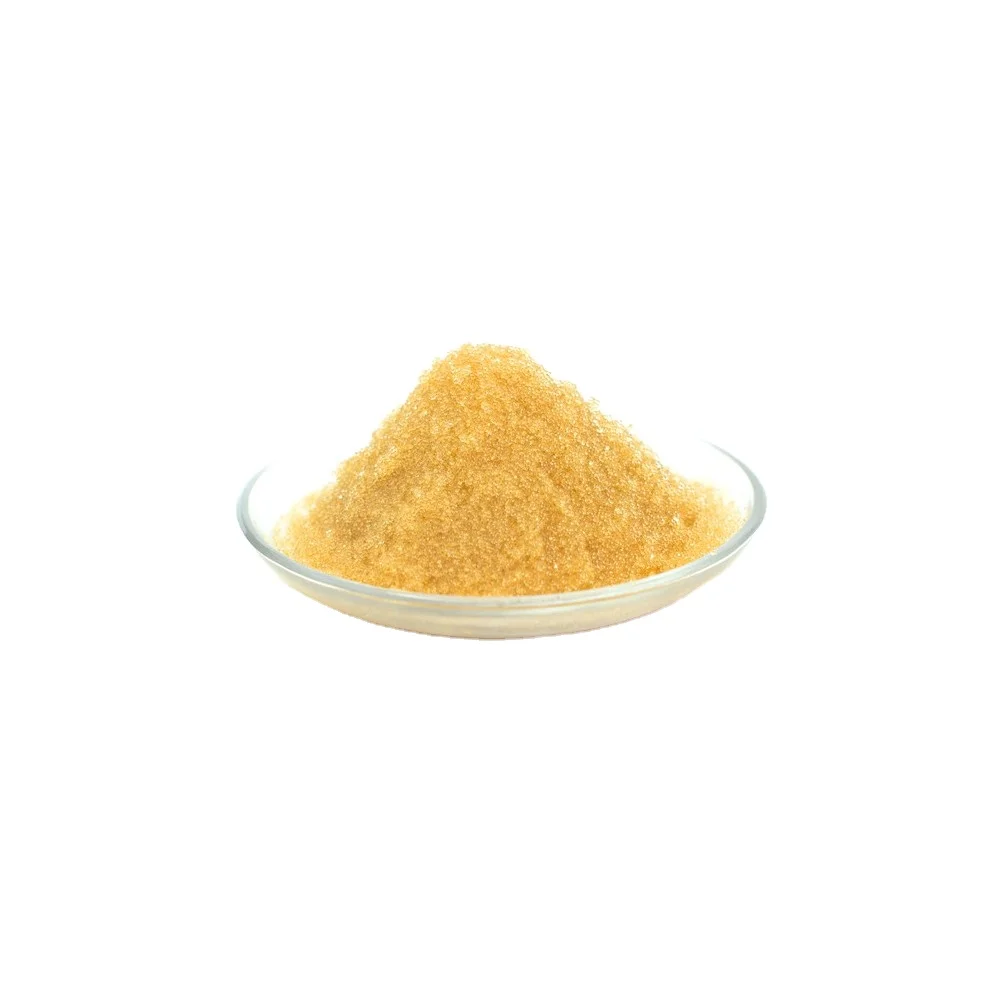
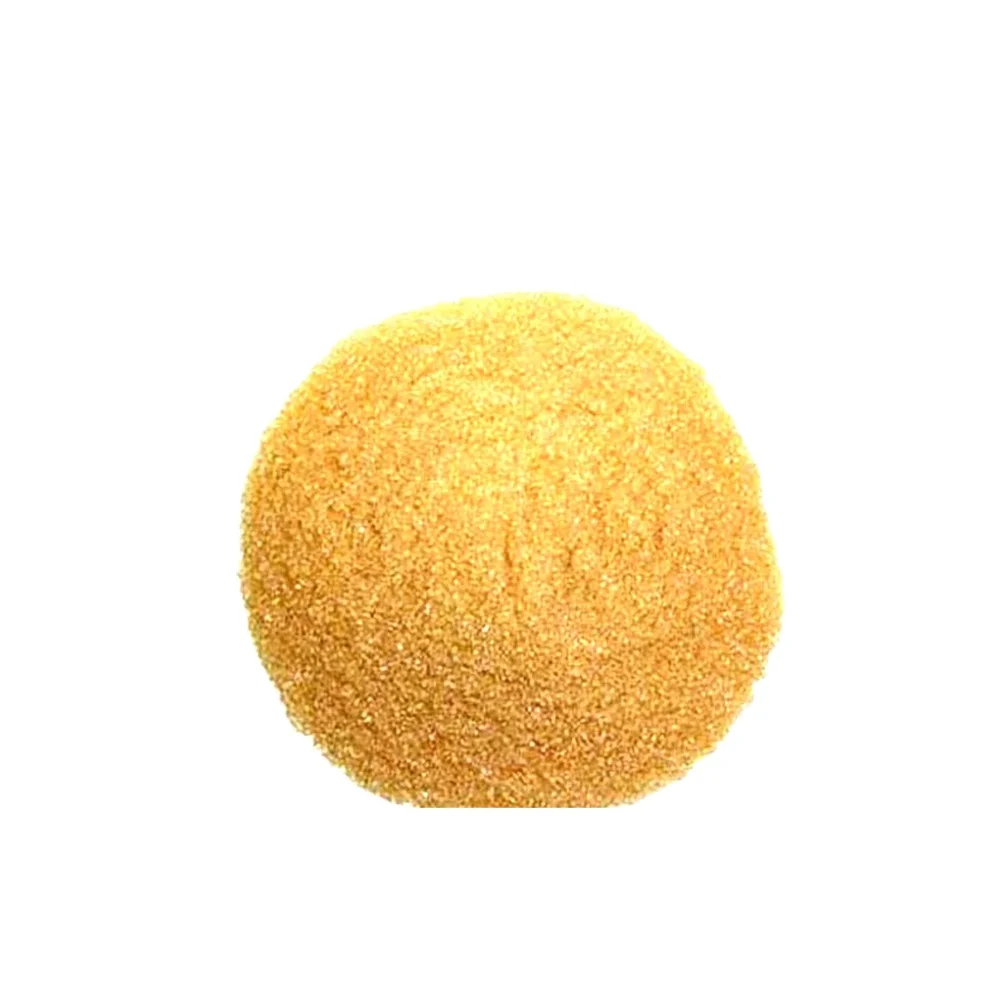
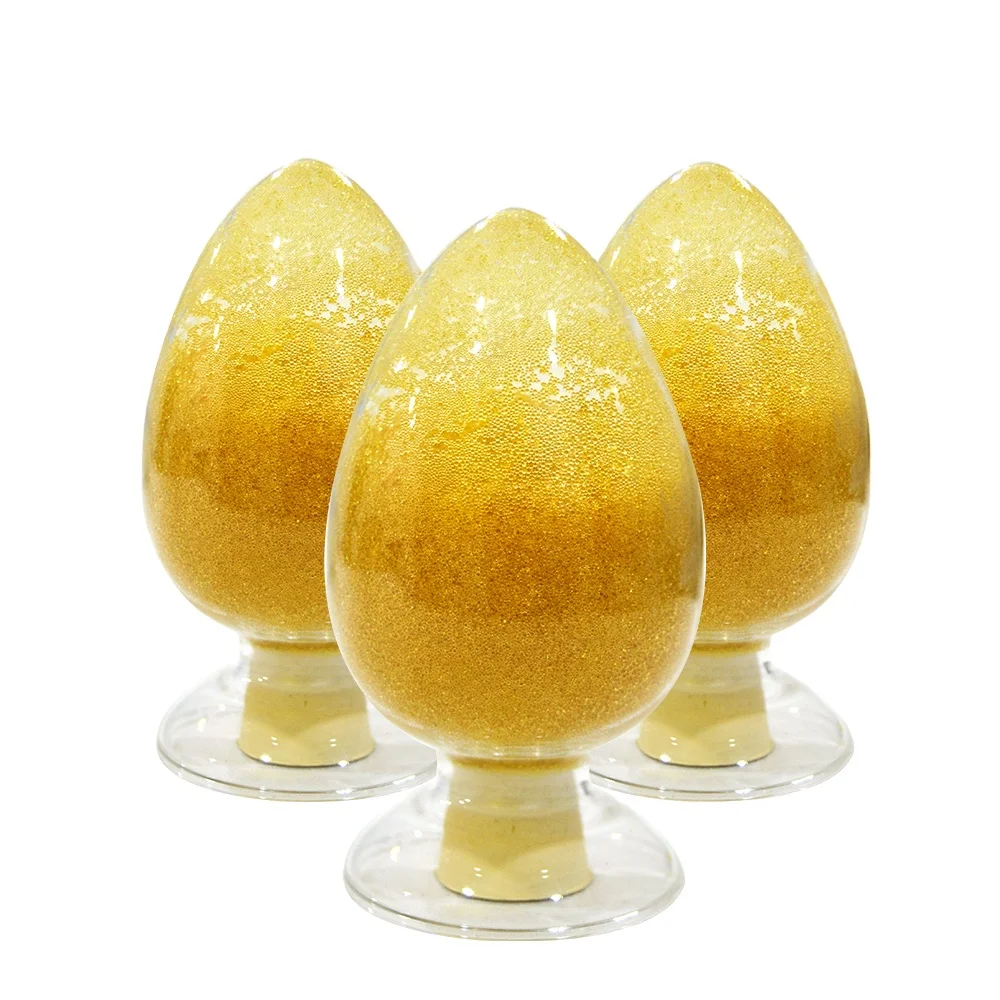
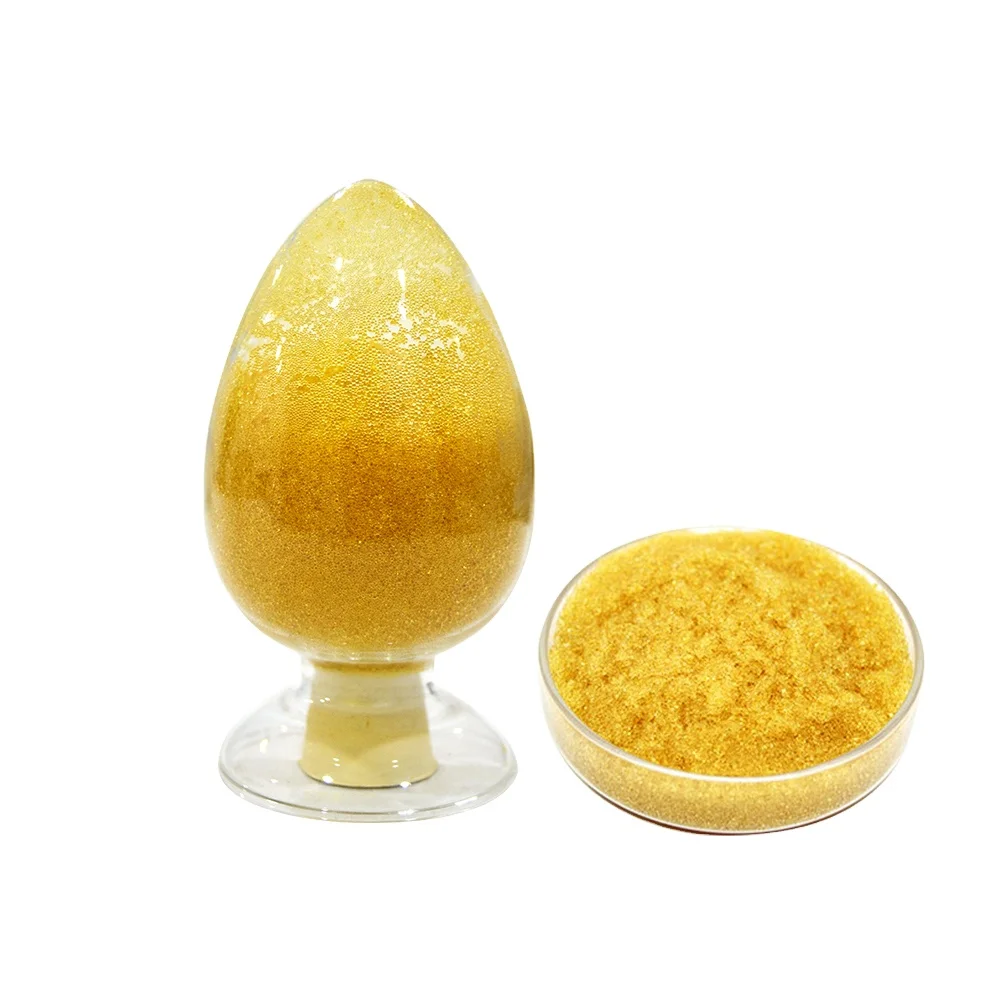
C100E Strong acid cation exchange resin 001*7 ion exchange resin
- Category: >>>
- Supplier: Shijiazhuang Amanda Import And Export Co. Ltd.
Share on (1600829443442):
Product Overview
Description
equivalent mixed bed ion exchange resin for water deionization

Products Description

02 Working parameter
Particle Size Range(%) | 0.315-1.25mm≥90 |
Coefficient of Uniformity | <1.7 |
Effective Grain Size(mm) | 0.4-0.6mm |
True Density(g/ml) | 1.25-1.30 |
Bulk Density(g/ml) | 0.75-0.85 |
Total Exchange Capacity(mmol/ml) | ≥1.9 |
Quality Total Exchange Capacity(mmol/g) | ≥4.5 |
Applications

Product packaging


Recommend Products
Company Profile


FAQ
Q:What is industrial resin?
Broadly speaking, any polymer compound that can be used as a raw material for plastic products processing is called a resin.
Resin is the main raw material for the manufacture of plastics. It is also used to make coatings, adhesives, insulating materials,etc. Synthetic resins are widely used in the separation and purification of impurities in liquids in industrial production.
Q:What is food grade resin?
Food grade resin is a cation exchange resin with sulfonic acid group (-SO3H) on styrene-divinylbenzene copolymer. After special processing, this product has the characteristics of high exchange capacity, fast exchange speed and good mechanical strength. This resin is widely used in the food industry.
Q:What are the application fields of ion exchange resins?
1) Water treatment
The demand for ion exchange resin in the water treatment field is very large, accounting for about 90% of the output of ion
exchange resin, which is used to remove various anions and cations in water.
2) Food industry
Ion exchange resins can be used in industrial equipment such as sugar making, monosodium glutamate, wine refining, and biological products.
3) Pharmaceutical industry
The ion exchange resin in the pharmaceutical industry plays an important role in the development of a new generation of
antibiotics and the quality improvement of the original antibiotics.
4) Synthetic chemistry and petrochemical industry
In organic synthesis, acids and bases are commonly used as catalysts for esterification, hydrolysis, transesterification,
hydration and other reactions. Using ion exchange resin instead of inorganic acid and alkali can also carry out the above
reaction, and has more advantages.
5) Environmental protection
Ion exchange resins have been applied to many environmental protection issues that are of great concern. At present, many aqueous or non-aqueous solutions contain toxic ionic or non-ionic substances, and these can be recycled and used with resin.
6) Hydrometallurgy and others
Ion exchange resin can separate, enrich, purify uranium and extract rare earth elements and precious metals from depleted uraniumore.
Broadly speaking, any polymer compound that can be used as a raw material for plastic products processing is called a resin.
Resin is the main raw material for the manufacture of plastics. It is also used to make coatings, adhesives, insulating materials,etc. Synthetic resins are widely used in the separation and purification of impurities in liquids in industrial production.
Q:What is food grade resin?
Food grade resin is a cation exchange resin with sulfonic acid group (-SO3H) on styrene-divinylbenzene copolymer. After special processing, this product has the characteristics of high exchange capacity, fast exchange speed and good mechanical strength. This resin is widely used in the food industry.
Q:What are the application fields of ion exchange resins?
1) Water treatment
The demand for ion exchange resin in the water treatment field is very large, accounting for about 90% of the output of ion
exchange resin, which is used to remove various anions and cations in water.
2) Food industry
Ion exchange resins can be used in industrial equipment such as sugar making, monosodium glutamate, wine refining, and biological products.
3) Pharmaceutical industry
The ion exchange resin in the pharmaceutical industry plays an important role in the development of a new generation of
antibiotics and the quality improvement of the original antibiotics.
4) Synthetic chemistry and petrochemical industry
In organic synthesis, acids and bases are commonly used as catalysts for esterification, hydrolysis, transesterification,
hydration and other reactions. Using ion exchange resin instead of inorganic acid and alkali can also carry out the above
reaction, and has more advantages.
5) Environmental protection
Ion exchange resins have been applied to many environmental protection issues that are of great concern. At present, many aqueous or non-aqueous solutions contain toxic ionic or non-ionic substances, and these can be recycled and used with resin.
6) Hydrometallurgy and others
Ion exchange resin can separate, enrich, purify uranium and extract rare earth elements and precious metals from depleted uraniumore.

We Recommend




New Arrivals
New products from manufacturers at wholesale prices