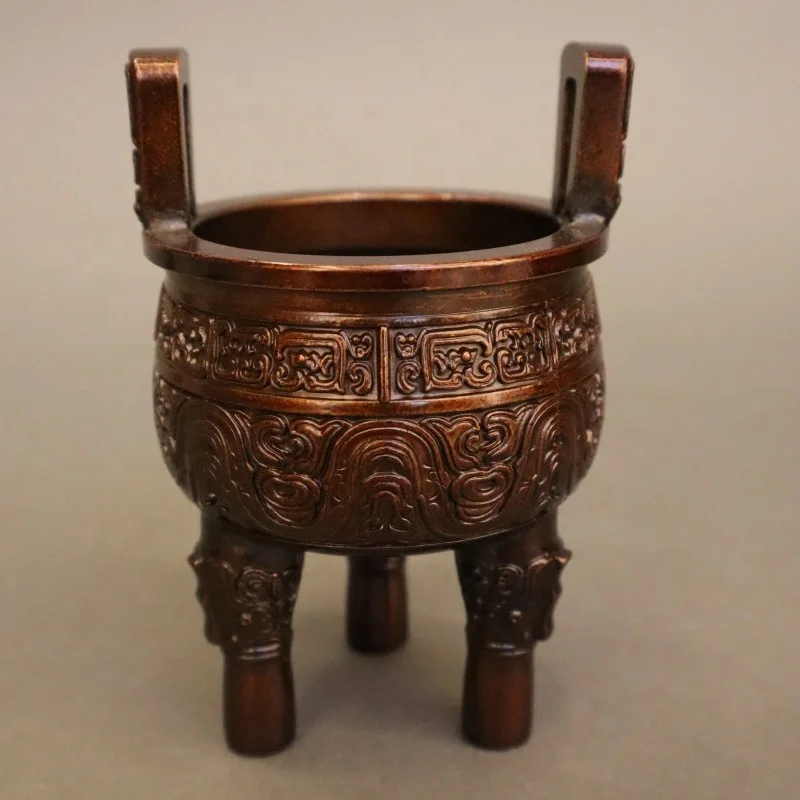
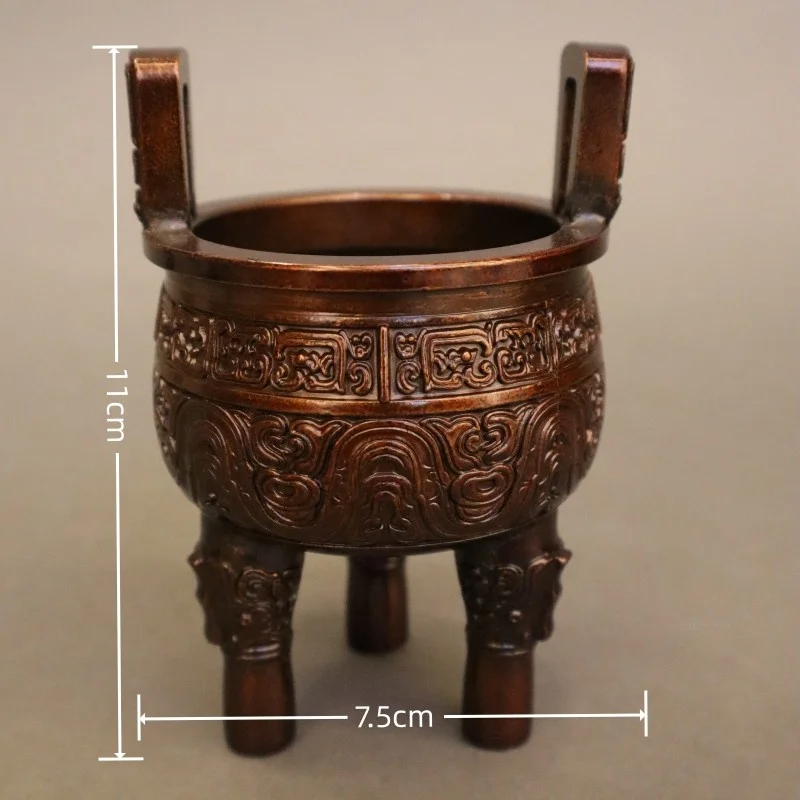
Antique Chinese Ancient Dynasty Brass Censer Incense Burner Ding Vessel for Incensory Burning Food Vessel Supplies
- Category: >>>
- Supplier: Shanghai Fortune Electric Co. Ltd.Shanghai Ltd.
Share on (1600861286850):
Product Overview
Description
Remarks:
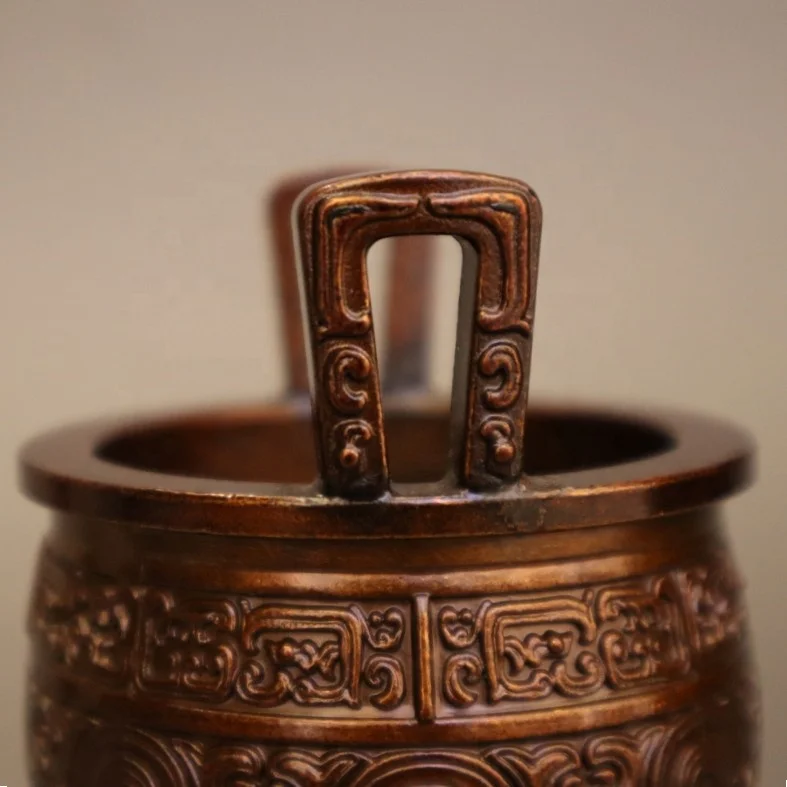
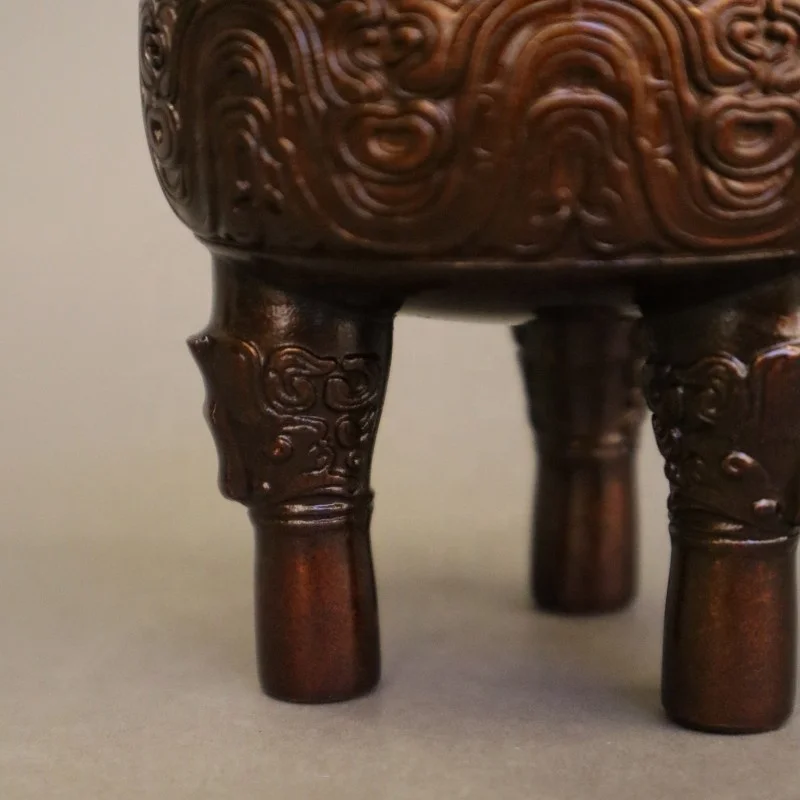
*Apologies for the slight color discrepancy in the close-up shots due to lighting conditions.
*Customized design by customers is available. Please feel free to contact us with any requirements.
*Customized design by customers is available. Please feel free to contact us with any requirements.
Product Description
Specification
item | value |
Place of Origin | zhejiang |
Brand Name | / |
Model Number | / |
Material | Brass |
Usage | Religious Sacrifice Supplies;incense burner |
Shape | Irregular |
Pattern | tripod |
Occasion | / |
Format | tripod |
Technics | pressed and forged;machined;casting |
Theme | Art, Ding |
Specification | 1 pc |
Function | incense burner |
Design Style | Art Deco;home deco |
Style | Ancient China |
weight | 0.44 |
Color | handcrafted antique bronze |
Usage scenario | temple;home deco |
Item name | Ding; Food vessel; Samll Gram Tripod |
Size | 7.5*11cm |
Main Production Process
Wax Refinement
The clay sculptures are prone to damage from weathering, so we aim to create molds to transform the clay prototypes into resin replicas. This allows for long-term preservation and a faithful representation of the essence of the original sculptures, as well as improvements to their shortcomings.
Dipping and Coating
"Dipping and coating" is the process of creating a ceramic shell mold. It involves assembling multiple wax patterns onto a tree assembly, repeatedly immersing them in a slurry (or stone slurry), embedding the outer layer, and allowing it to dry. This process results in the formation of a ceramic shell with a thickness of 9mm (5-7 layers). Subsequently, the tree assembly is placed in a high-temperature oven or a high-pressure steam pot at 140-160°C to dissolve the wax patterns, leaving behind a hollow ceramic shell.
Sandblasting
Sandblasting is a process that uses compressed air as a power source to generate a high-speed jet, which propels abrasive materials (such as copper ore sand, quartz sand, iron sand, sea sand, garnet sand, etc.) onto the surface of the workpiece to bring about surface changes. The impact and cutting action of the abrasive on the workpiece surface result in a certain level of cleanliness and different roughness on the outer surface of the workpiece. This process improves the mechanical properties of the workpiece surface, enhancing its resistance to fatigue, increasing adhesion between the workpiece and coatings, prolonging the durability of the coatings, and facilitating coating leveling and decoration.
Polishing
The surface of cast copper parts is relatively rough, so repeated polishing and refinement have become important steps to ensure
the quality of the copper parts. The polishing technicians have rich experience and work meticulously and carefully. Otherwise, a
slight mishap could result in the rejection of a piece of work.
the quality of the copper parts. The polishing technicians have rich experience and work meticulously and carefully. Otherwise, a
slight mishap could result in the rejection of a piece of work.
We Recommend




New Arrivals
New products from manufacturers at wholesale prices