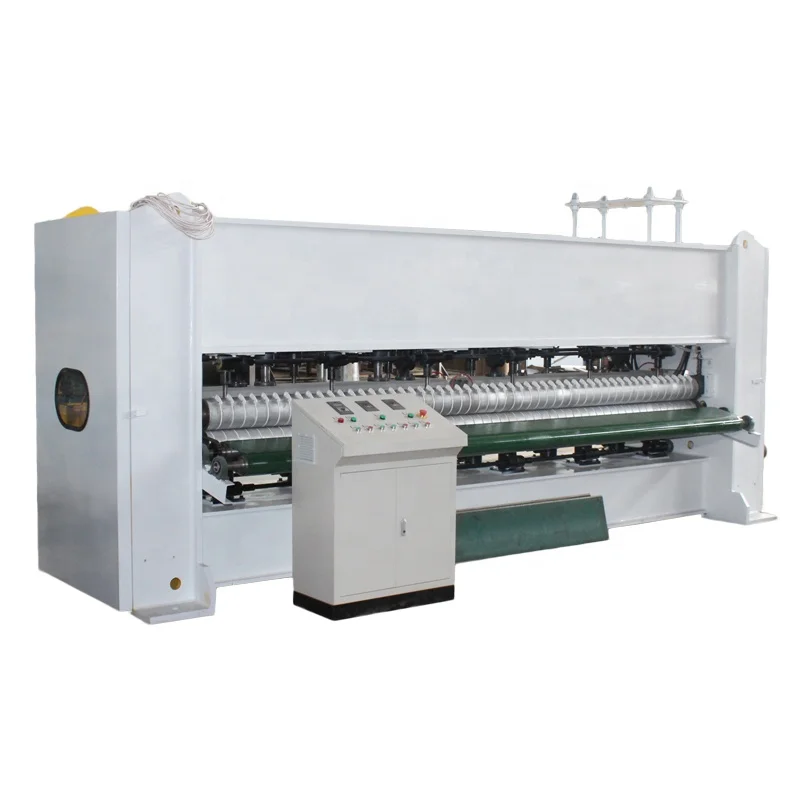
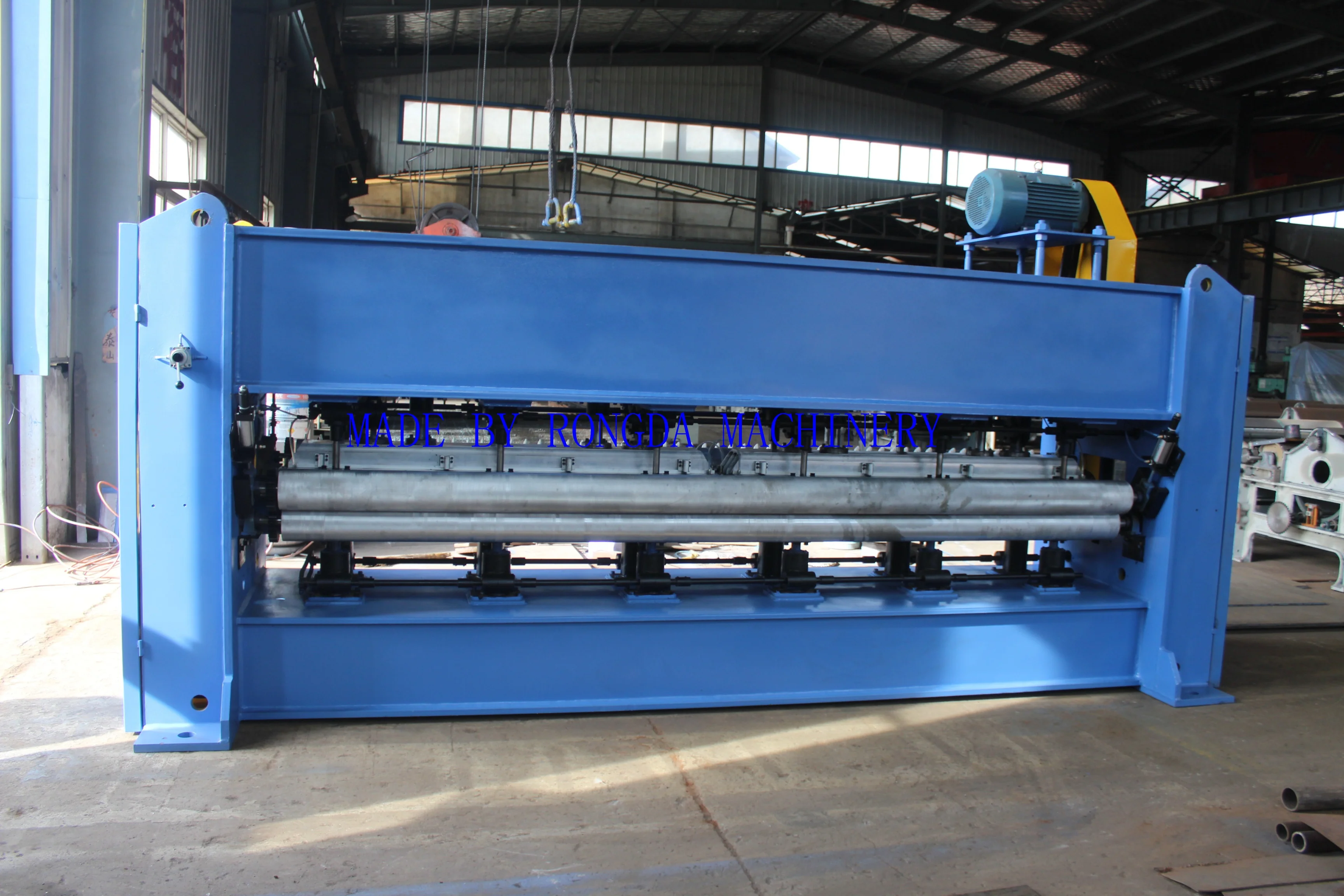
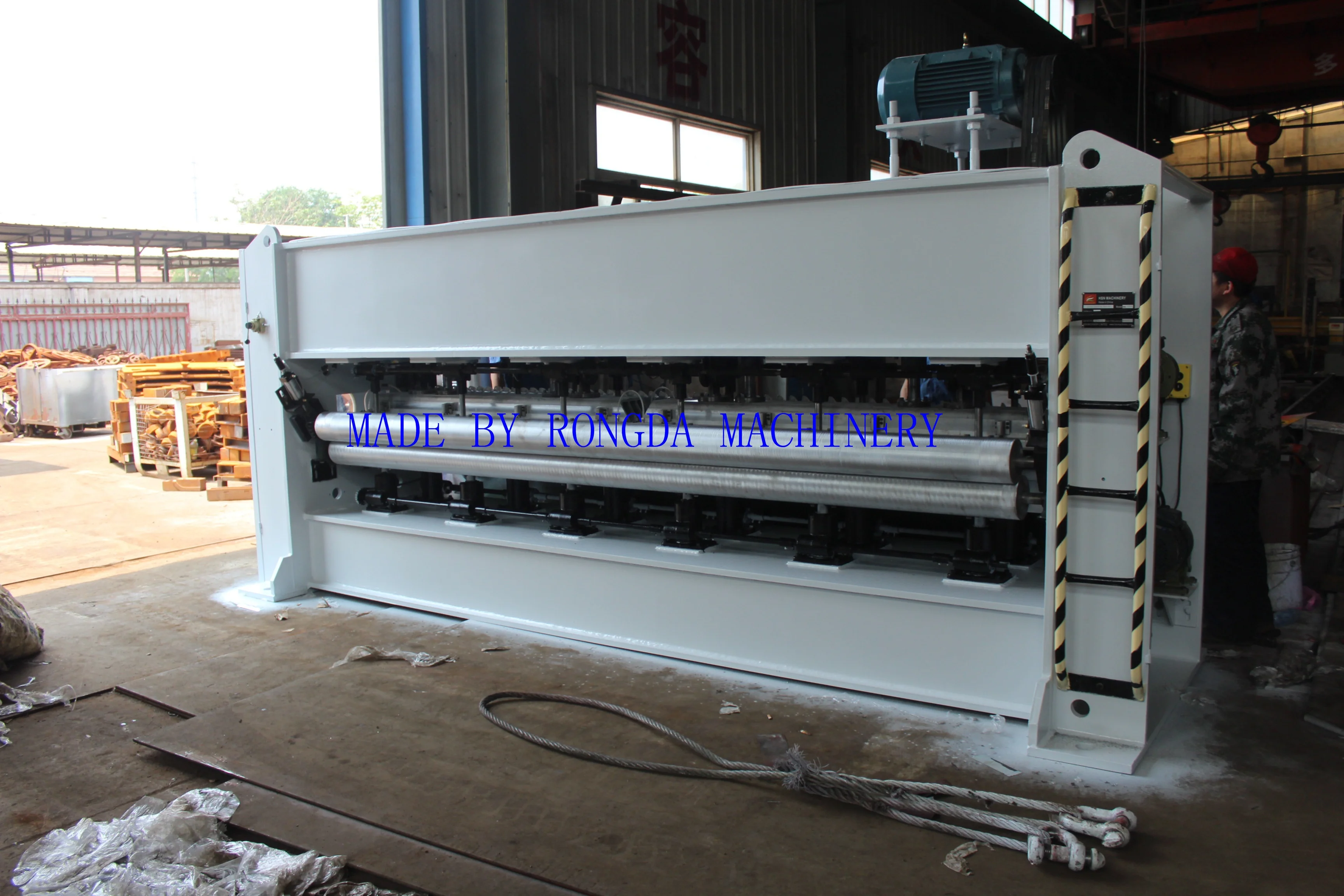
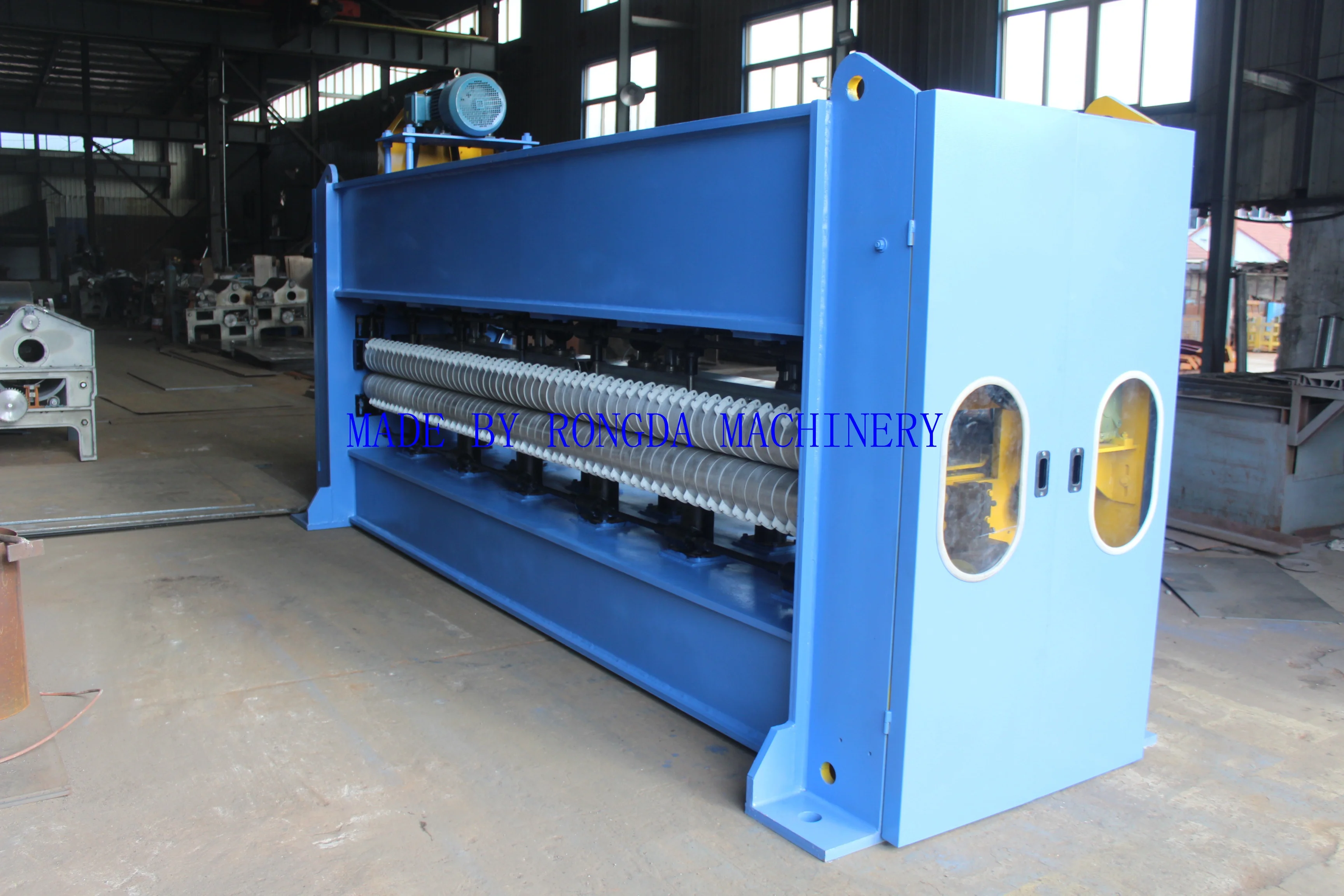
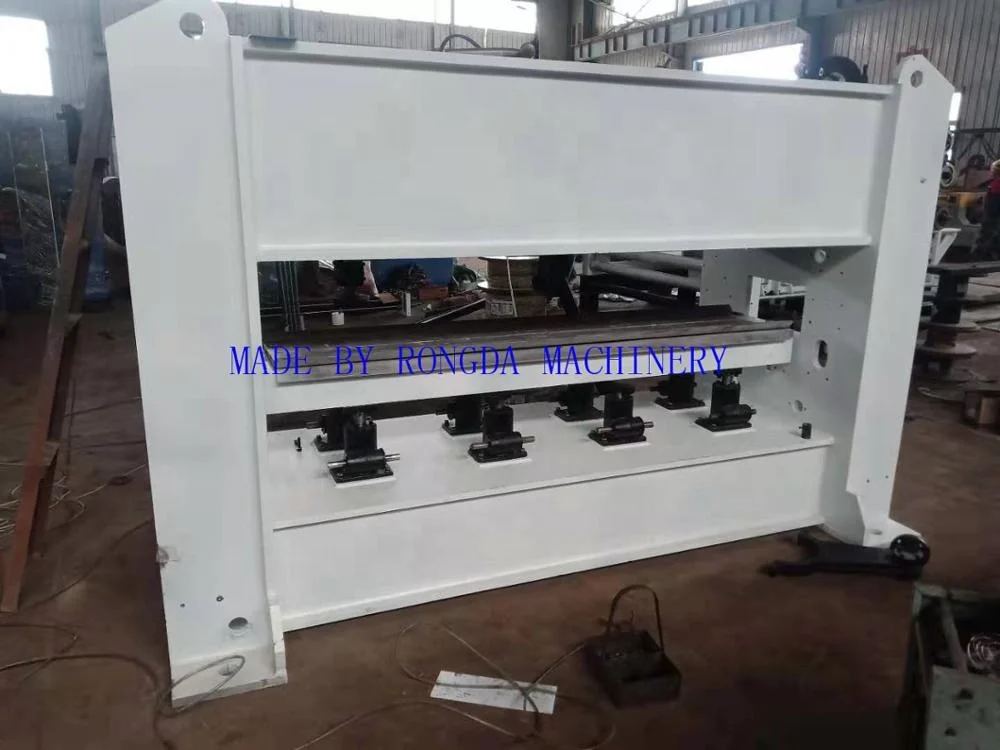
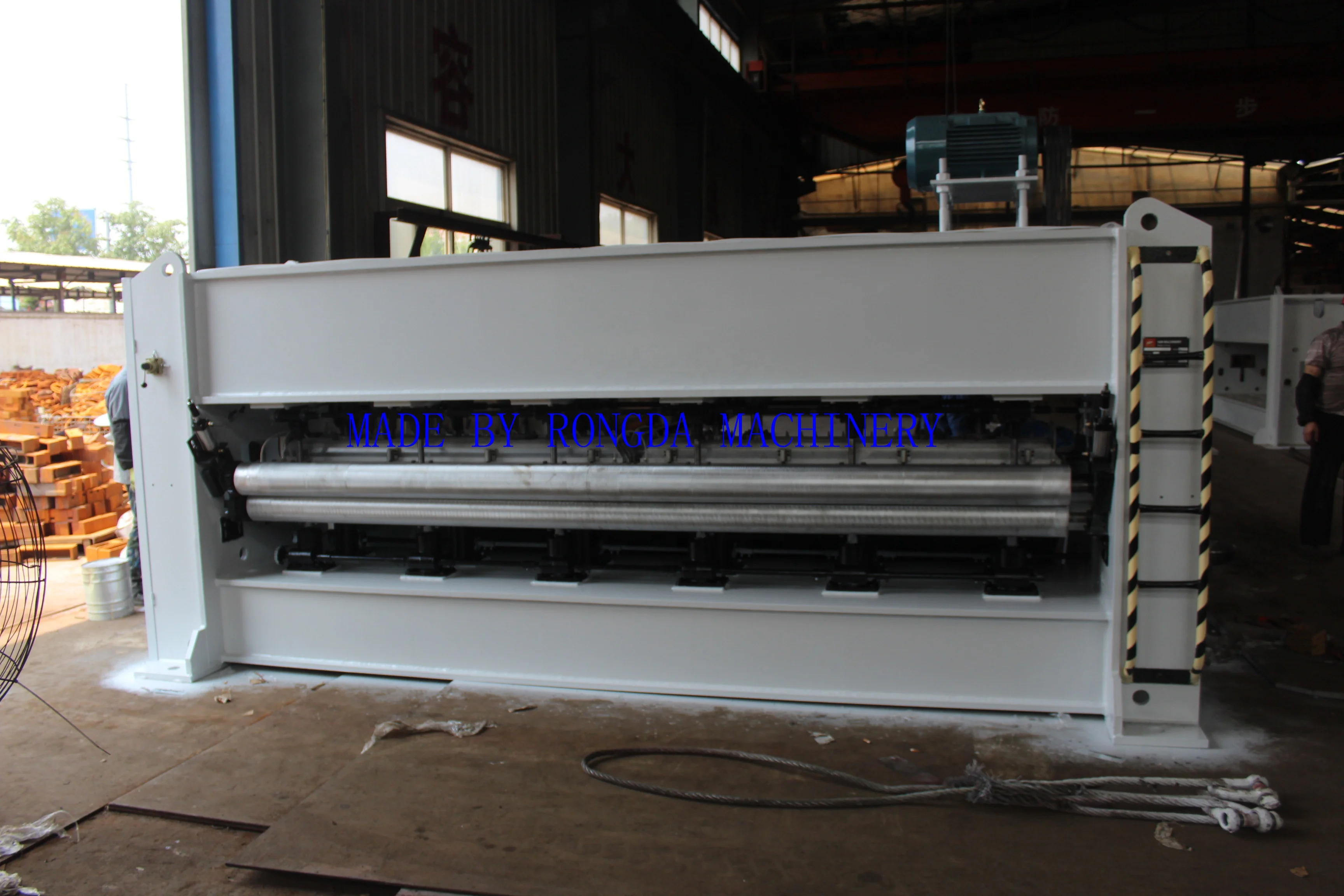
Non woven Geo textile Production Machines Make Non woven Fibers into Felt Fiber Needle punching Machine
- Category: >>>
- Supplier: Shandong New Haina Machinery Co. Ltd.
Share on (1600887826122):
Product Overview
Description
Product Overview
Non-woven needle punching machine
Needle punching machines repeatedly pierce the fiber web by using thorns with a triangular or other shape cross section and barbed
hooks on the edges. The fiber web unloaded by the cross-laid or air-laid machine is very fluffy when it is fed into the needle
punching machine. It is only strong due to the cohesive force between the fibers, but the strength is very poor. When the needle
penetrates into the fiber web, the barbed hooks on the needle will drive the fibers on the surface and subsurface of the fiber web
to move from the plane direction of the web to the vertical direction of the web, causing the fibers to shift up and down, and
then shift up and down. The fibers of the fiber will squeeze the fiber web to a certain extent, so that the fibers in the fiber
web will be compressed.
Process characteristics 1. It is suitable for all kinds of fibers and does not affect the original characteristics of the fibers
after mechanical entanglement. 2. Flexible entanglement between fibers, with good dimensional stability and elasticity. 3. Used in
papermaking blankets to greatly increase the life span. 4. Good permeability and filtration performance. 5. Terry products feel
full. 6. No pollution, the side material can be recycled. 7. Various geometric patterns or three-dimensional molded products can
be manufactured according to requirements.
Usage The main applications of needle-punched non-woven materials are carpets, decorative felts, sports mats, mattresses,
furniture pads, shoes and hats, shoulder pads, synthetic leather base fabrics, coated base fabrics, ironing pads, wound dressings,
Artificial blood vessels, heat pipe covers, filter materials, geotextiles, papermaking blankets, linoleum base cloths, sound
insulation and heat insulation materials and decorative materials for vehicles, etc. At present, needle punching machines are
widely used in high-temperature filtration products. The high-performance fibers of high-temperature filtration products mainly
include glass fiber, Nomex fiber, P84 fiber, PPS fiber, and PETT fiber. Due to the characteristics of the first few kinds of
fibers, the scope of use has been affected to a certain extent. Glass fiber is relatively brittle, Nomex fiber has poor oxidation
resistance, P84 fiber is easy to hydrolyze and age, and PPS fiber has a lower service temperature. PETT fiber is resistant to
chemical corrosion and high temperature, and can be used in various harsh environments with better results. It also has a longer
service life than filter materials made of other fibers. Although PETT has good temperature resistance and chemical corrosion
resistance, it is expensive and its filtration efficiency has no advantage compared to other fiber-made filter materials. For this
reason, some companies add proper amount of ultra-fine glass fiber, which will not affect the temperature resistance, but can also
increase the filtration efficiency of the filter material and reduce the price of the material, and also expand the scope of
application and extend the service life.
hooks on the edges. The fiber web unloaded by the cross-laid or air-laid machine is very fluffy when it is fed into the needle
punching machine. It is only strong due to the cohesive force between the fibers, but the strength is very poor. When the needle
penetrates into the fiber web, the barbed hooks on the needle will drive the fibers on the surface and subsurface of the fiber web
to move from the plane direction of the web to the vertical direction of the web, causing the fibers to shift up and down, and
then shift up and down. The fibers of the fiber will squeeze the fiber web to a certain extent, so that the fibers in the fiber
web will be compressed.
Process characteristics 1. It is suitable for all kinds of fibers and does not affect the original characteristics of the fibers
after mechanical entanglement. 2. Flexible entanglement between fibers, with good dimensional stability and elasticity. 3. Used in
papermaking blankets to greatly increase the life span. 4. Good permeability and filtration performance. 5. Terry products feel
full. 6. No pollution, the side material can be recycled. 7. Various geometric patterns or three-dimensional molded products can
be manufactured according to requirements.
Usage The main applications of needle-punched non-woven materials are carpets, decorative felts, sports mats, mattresses,
furniture pads, shoes and hats, shoulder pads, synthetic leather base fabrics, coated base fabrics, ironing pads, wound dressings,
Artificial blood vessels, heat pipe covers, filter materials, geotextiles, papermaking blankets, linoleum base cloths, sound
insulation and heat insulation materials and decorative materials for vehicles, etc. At present, needle punching machines are
widely used in high-temperature filtration products. The high-performance fibers of high-temperature filtration products mainly
include glass fiber, Nomex fiber, P84 fiber, PPS fiber, and PETT fiber. Due to the characteristics of the first few kinds of
fibers, the scope of use has been affected to a certain extent. Glass fiber is relatively brittle, Nomex fiber has poor oxidation
resistance, P84 fiber is easy to hydrolyze and age, and PPS fiber has a lower service temperature. PETT fiber is resistant to
chemical corrosion and high temperature, and can be used in various harsh environments with better results. It also has a longer
service life than filter materials made of other fibers. Although PETT has good temperature resistance and chemical corrosion
resistance, it is expensive and its filtration efficiency has no advantage compared to other fiber-made filter materials. For this
reason, some companies add proper amount of ultra-fine glass fiber, which will not affect the temperature resistance, but can also
increase the filtration efficiency of the filter material and reduce the price of the material, and also expand the scope of
application and extend the service life.
FEATURES AT A GLANCE

The distance between the stripping plate and the supporting plate is small Acupuncture frequency is higher Acupuncture stroke is
small The needle plate has a higher density of needles and shorter needles.
small The needle plate has a higher density of needles and shorter needles.
PRODUCT SPECIFICATIONS
Needling frequency: ≤1200 t/min Working width: 2000mm~9000mm
Needle stroke: 25~60mm Stroke
Type: Up-stroke ; Down-stroke, Needle
Density: 2000~7500n/m
Needle stroke: 25~60mm Stroke
Type: Up-stroke ; Down-stroke, Needle
Density: 2000~7500n/m
Company Profile
Exhibition

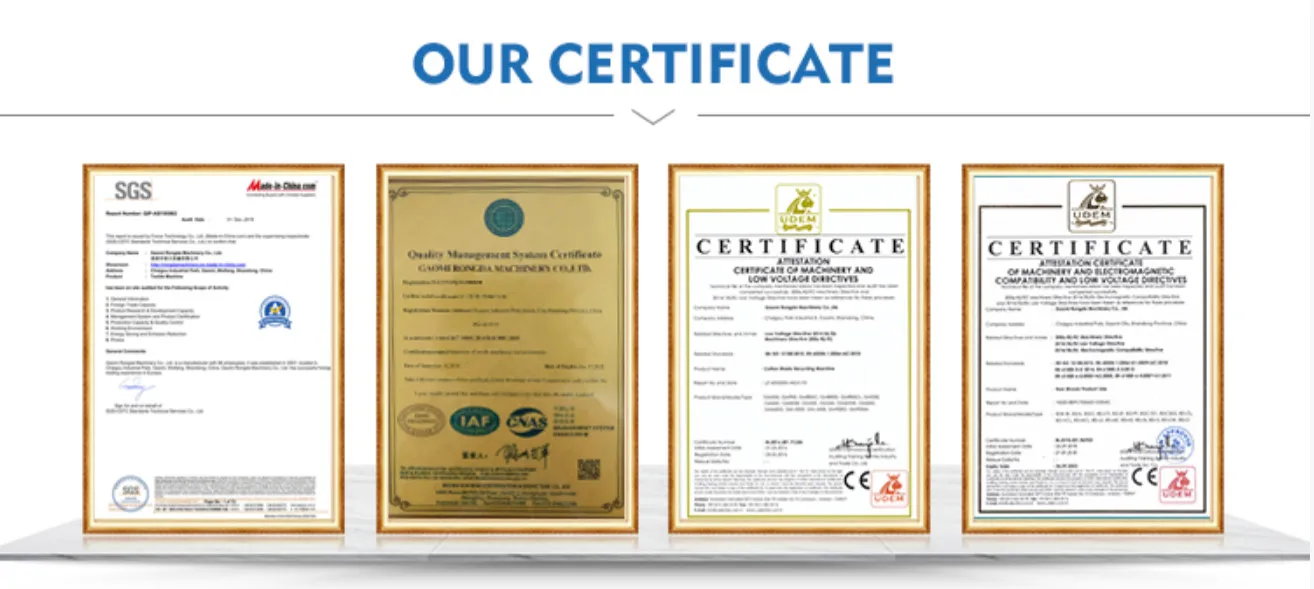
Certifications
Product Delivery


We Recommend
New Arrivals
New products from manufacturers at wholesale prices