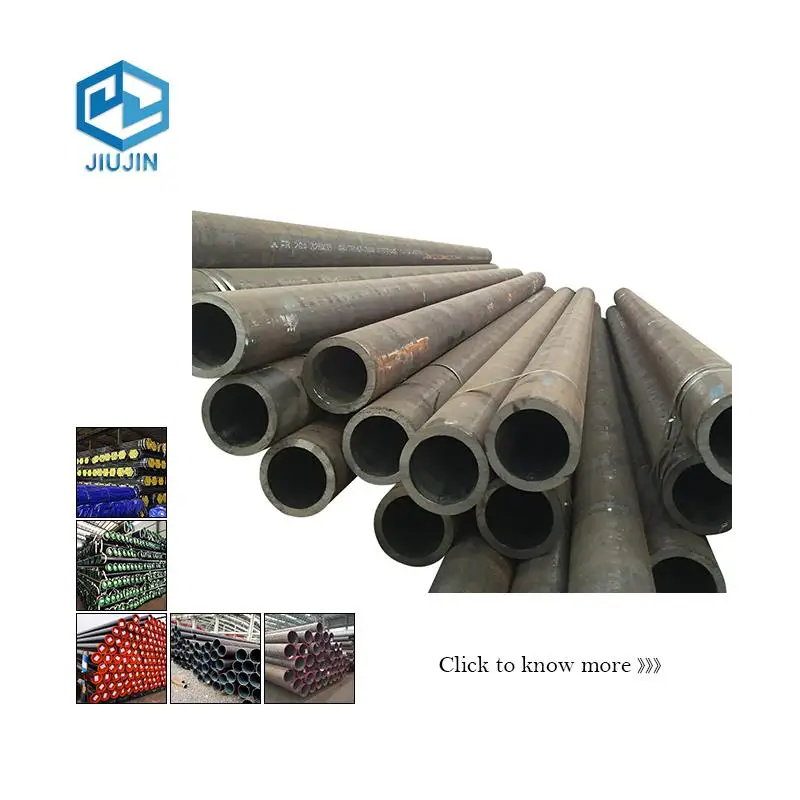
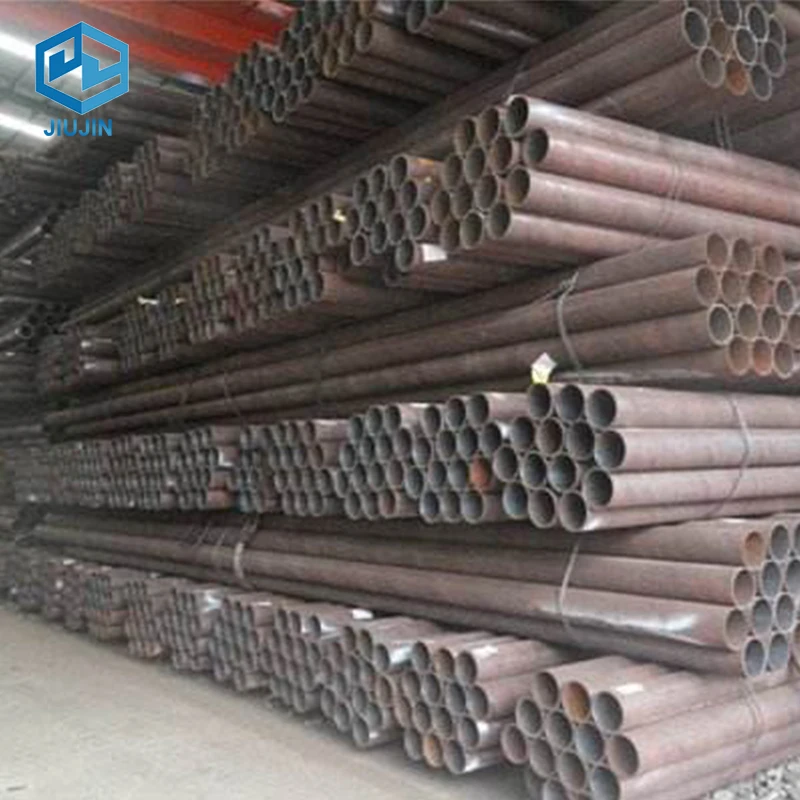
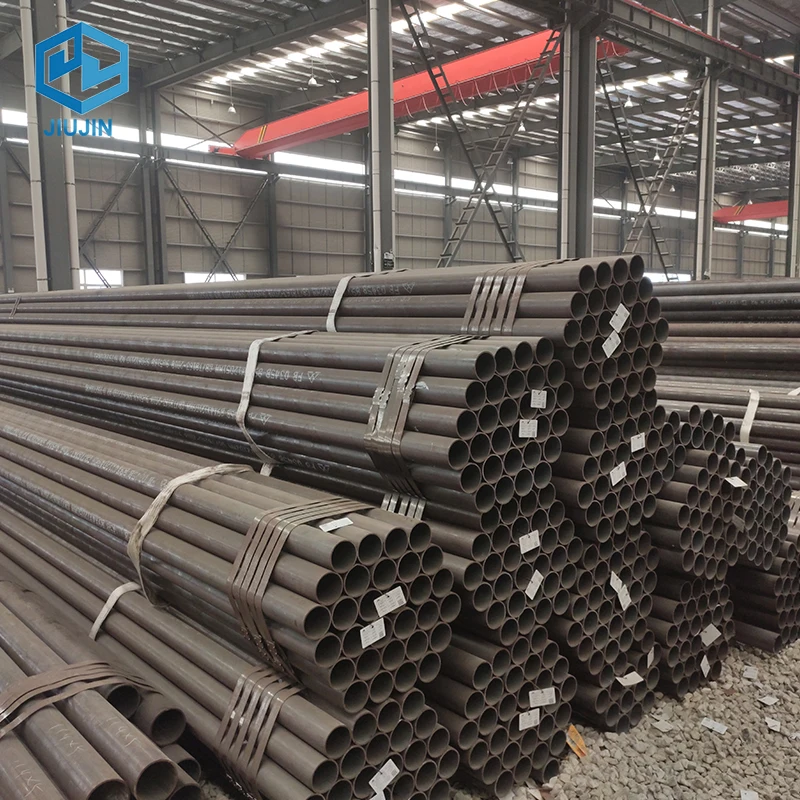
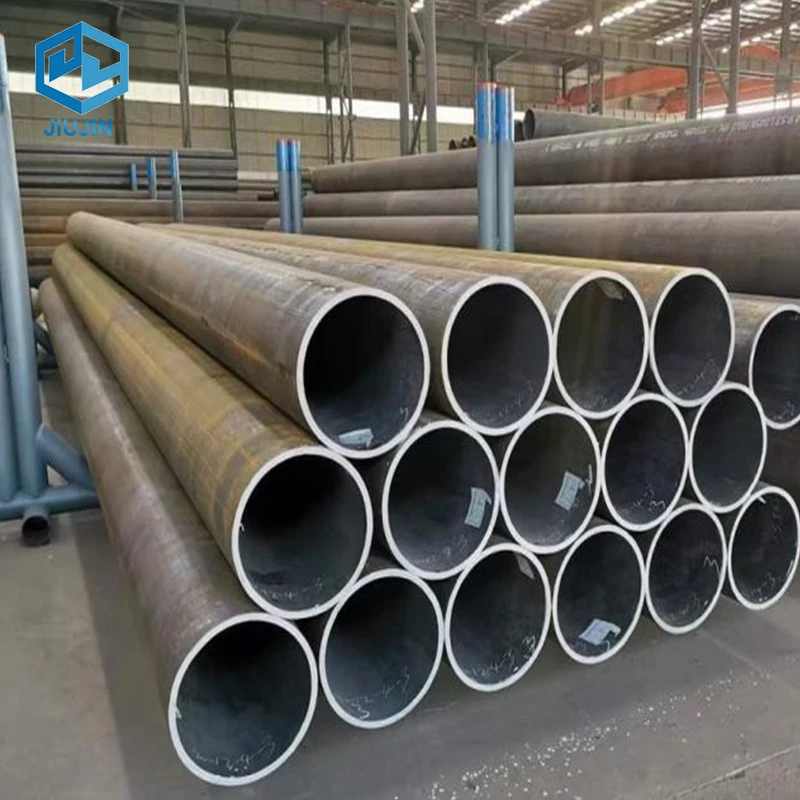
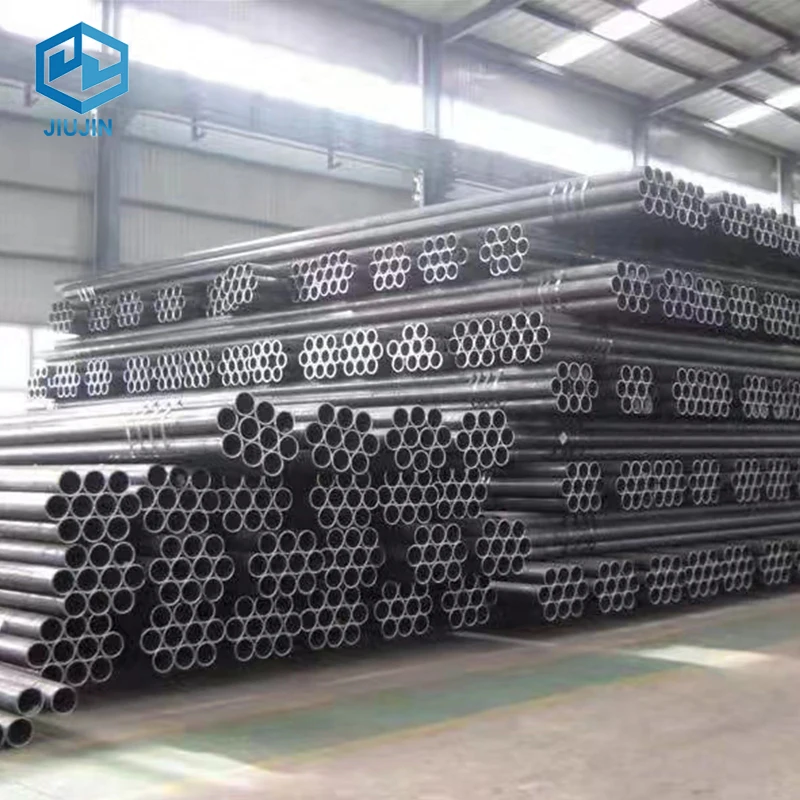
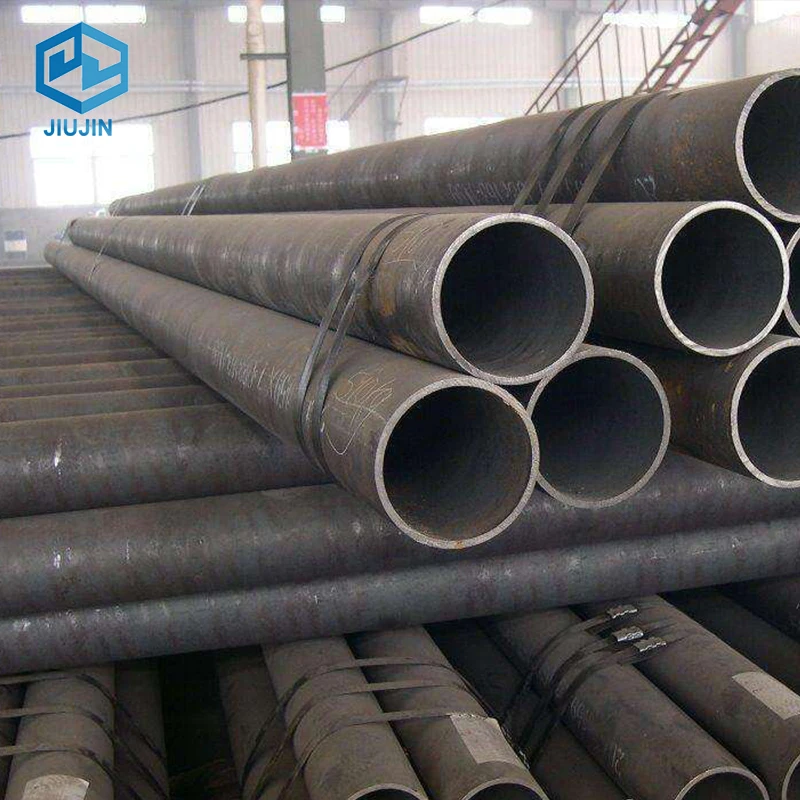
Oem Shape Corrugated Casing Stc 9 5 / 8 40 Lb / Ft N80 Api Tube Seamless Welded Carbon Steel Pipe Bs1387 Pipe
- Category: >>>
- Supplier: Jinan Jiujin Steel Co. Ltd.
Share on (1600923993475):
Product Overview
Description

Product Description
Seamless pipes, also known as seamless tubes or seamless steel pipes, are cylindrical pipes without any welded seams. They are manufactured through a solid billet of steel being pierced longitudinally to create a hollow tube. Seamless pipes offer superior strength and integrity compared to welded pipes due to their uniform composition and absence of welds.
Applications: Seamless pipes find extensive usage in various industries, including:
1. Oil and gas exploration: Seamless pipes are widely used in the oil and gas industry for transporting fluids such as petroleum, natural gas, and water. They are ideal for high-pressure and high-temperature applications.
2. Shipbuilding: Seamless pipes are employed in shipbuilding for various piping systems, including fuel and hydraulic lines, cooling systems, and structural components.
3. Power generation: Seamless pipes are utilized in power plants for steam and water transportation within boilers, superheaters, and condensers.
4. Automotive industry: Seamless pipes are essential for manufacturing parts of automobiles such as exhaust systems, hydraulic cylinders, and fuel injection systems.
Manufacturing Process: The manufacturing of seamless pipes involves the following steps:
1. Billet preparation: The process starts with the selection and preparation of a solid steel billet, which is usually produced through continuous casting or hot rolling.
2. Piercing: The billet is pierced to form a hollow shell. This is typically done by rotary piercing or elongating the billet in
a mandrel mill.
3. Rolling: The pierced billet is then subjected to multiple rolling processes to reduce its diameter and wall thickness,
creating a seamless pipe. The rolling can be done through hot rolling or cold drawing.
4. Heat treatment: The seamless pipe may undergo heat treatment processes like annealing, normalizing, or quenching and tempering to enhance its mechanical properties.
Material Specifications: Seamless pipes are manufactured using different materials depending on the intended application. Common materials include:
1. Carbon steel: Carbon steel seamless pipes, such as ASTM A53, ASTM A106, or API 5L, are widely used in various industries due to their affordability, general corrosion resistance, and good mechanical properties.
2. Alloy steel: Alloy steel seamless pipes, such as ASTM A335, are suitable for applications that require enhanced strength, high-temperature resistance, and exceptional corrosion resistance.
Classifications: Seamless pipes can be classified based on various factors, including:
1. Manufacturing standards: Seamless pipes comply with specific industry standards such as ASTM, API, DIN, JIS, or BS.
2. Dimensions: They are available in various sizes and dimensions, with different nominal diameters and wall thicknesses to suit different requirements.
3. End connections: Seamless pipes can have different types of end connections, such as plain ends, beveled ends, or threaded ends, as per the application needs.
4. Surface finish: Seamless pipes may have different surface finishes, including bare (no coating), black paint, varnish, or
galvanization for added corrosion resistance.
Applications: Seamless pipes find extensive usage in various industries, including:
1. Oil and gas exploration: Seamless pipes are widely used in the oil and gas industry for transporting fluids such as petroleum, natural gas, and water. They are ideal for high-pressure and high-temperature applications.
2. Shipbuilding: Seamless pipes are employed in shipbuilding for various piping systems, including fuel and hydraulic lines, cooling systems, and structural components.
3. Power generation: Seamless pipes are utilized in power plants for steam and water transportation within boilers, superheaters, and condensers.
4. Automotive industry: Seamless pipes are essential for manufacturing parts of automobiles such as exhaust systems, hydraulic cylinders, and fuel injection systems.
Manufacturing Process: The manufacturing of seamless pipes involves the following steps:
1. Billet preparation: The process starts with the selection and preparation of a solid steel billet, which is usually produced through continuous casting or hot rolling.
2. Piercing: The billet is pierced to form a hollow shell. This is typically done by rotary piercing or elongating the billet in
a mandrel mill.
3. Rolling: The pierced billet is then subjected to multiple rolling processes to reduce its diameter and wall thickness,
creating a seamless pipe. The rolling can be done through hot rolling or cold drawing.
4. Heat treatment: The seamless pipe may undergo heat treatment processes like annealing, normalizing, or quenching and tempering to enhance its mechanical properties.
Material Specifications: Seamless pipes are manufactured using different materials depending on the intended application. Common materials include:
1. Carbon steel: Carbon steel seamless pipes, such as ASTM A53, ASTM A106, or API 5L, are widely used in various industries due to their affordability, general corrosion resistance, and good mechanical properties.
2. Alloy steel: Alloy steel seamless pipes, such as ASTM A335, are suitable for applications that require enhanced strength, high-temperature resistance, and exceptional corrosion resistance.
Classifications: Seamless pipes can be classified based on various factors, including:
1. Manufacturing standards: Seamless pipes comply with specific industry standards such as ASTM, API, DIN, JIS, or BS.
2. Dimensions: They are available in various sizes and dimensions, with different nominal diameters and wall thicknesses to suit different requirements.
3. End connections: Seamless pipes can have different types of end connections, such as plain ends, beveled ends, or threaded ends, as per the application needs.
4. Surface finish: Seamless pipes may have different surface finishes, including bare (no coating), black paint, varnish, or
galvanization for added corrosion resistance.
Product Paramenters
Product Name | Seamless pipes | |
Place of Origin | China | |
Shandong | ||
Brand Name | jiujin | |
Application | Boiler Pipe, Drill Pipe, Hydraulic Pipe, Structure Pipe, Other | |
Alloy Or Not | Non-Alloy | |
Section Shape | Round | |
Thickness | 0.8 - 30 mm | |
Standard | ASTM, API, DIN, JIS, or BS | |
Length | 12M, 6m | |
Certificate | ce, Bsi, BIS, JIS, GS, ISO9001 | |
Grade | Q195/Q215/Q235/Q345, GR.A/B, S235/S355 | |
Surface Treatment | Pre-galvanized/hot dipped galvanized/Bare/oil | |
Tolerance | ±1% | |
Processing Service | Bending, Welding, Punching, Cutting | |
Oiled or Non-oiled | Slightly Oiled | |
Delivery Time | 8 days | |
MOQ | 1 Ton | |
Product name | Hot Dip Galvanized Steel Pipe | |
Material | ST37/ST45/ST52/25Mn/27SiMn/E355/SAE1026/STKM13C | |
Keyword | Galvanzied Steel Pipe | |
Surface | Black | |
Shape | Round Pipe Tube | |
Usage | Oil Gas Sewage Transport | |
End protector | Plastic Pipe Cap | |
Packing | STANDARD PACKING | |
Payment terms | 30%TT Advance + 70% Balance | |
Details Images
Company Profile

Jinan JiuJin Steel Co.,Ltd is a leading manufacturer of private ownecsteel company. We have passed ISO9001 certificate and CE certificate.Our main products are seamless steel pipe, welded steel pipe, galvanizecsteel pipe, precision steel pipe, SHS&RHS steel pipe, pre-insulation steepipe, alloy steel pipe, carbon steel plate, galvanized steel plate, allosteel plate. cold rolled steel bar, carbon steel bar, alloy steel bar, galvanized steel bar,PPGl,PPGL etc. According to American standards ASTM Japanese standards JIS, German standards DIN, British standards Bsand other standards.
Jinan Jiujin Steel Co.,Ltd based on quality. integrity managementadhere to the "spirit of enterprise" seriouslv, customer first. Since the establishment of the enterprise, for the purpose of "quality, credibility and the serviceenet of continuously", the good faith building customer trust, quality tcservice to solvemeet customer requirementswith excellent atter-salesustomer extraadvantadeof strong,Explore a widemarket for steel and constantly create moreambitious targets.
Jinan Jiujin Steel Co.,Ltd based on quality. integrity managementadhere to the "spirit of enterprise" seriouslv, customer first. Since the establishment of the enterprise, for the purpose of "quality, credibility and the serviceenet of continuously", the good faith building customer trust, quality tcservice to solvemeet customer requirementswith excellent atter-salesustomer extraadvantadeof strong,Explore a widemarket for steel and constantly create moreambitious targets.
Our Services:
1. We have a strong logistics system and professional logistics service team to make our customers and employees have nothing to worry about.
2. We have the country's leading production equipment and a strong product testing team, ensuring the quality of each product.
3. We have a strong product packaging services, perfect packaging to ensure good quality of our products without any damage after arriving at customers’ place.
4. Our company has a strong after sales service platform, and our leaders are glad to make guidance personally for every feedback from customers, until the customer get a satisfactory solution.
1. We have a strong logistics system and professional logistics service team to make our customers and employees have nothing to worry about.
2. We have the country's leading production equipment and a strong product testing team, ensuring the quality of each product.
3. We have a strong product packaging services, perfect packaging to ensure good quality of our products without any damage after arriving at customers’ place.
4. Our company has a strong after sales service platform, and our leaders are glad to make guidance personally for every feedback from customers, until the customer get a satisfactory solution.

Certifications

Why Choose Us


Packing & Delivery
Packing Details:
- Packing in bundles
- Packing in wooden cases
- Bulk shipment, without packing
- Export standard package, or as customers request.
- Packing in bundles
- Packing in wooden cases
- Bulk shipment, without packing
- Export standard package, or as customers request.

FAQ
Q1: What is your terms of payment?
A: 30% T/T in advance, the balance 70% before delivery.
We will show you the photos of products and package before you pay the balance.
Q2: what is the terms of delivery?
A: EXW, FOB, CIF, CFR, DDU
Q3: What is the terms of packing?
A: generally, we pack our goods in bundles or coils with rods or belts, we could also pack the goods as the customers'
requirement.
requirement.
Q4: What is your delivery time?
A: For stocks, we could transport the goods to loading port within 7 days after we received your deposit. For production period,it usually takes about 15 days-30 days after receiving the deposit.
Of course, we will make sure that our delivery time is clearly understood by our customers and provide flexible delivery solutions according to their needs. If possible, I will discuss with the customer how to optimize the price and delivery time to achieve a win-win goal.
Q5: Could you provide the samples?
A: yes, we could provide the free samples on conditons it is available in stocks, however, the the transportation fee is borne by buyer.
Q6: How could you guarantee your products?
A: Each piece of products is manufactured by certified workshops, inspected by Lenser piece by piece according to national QA/QC standard.

Q7:How is your reputation?
A:Send a message to our sales staff, they will provide you with customs documents, customer feedback, shipping documents and other relevant information to prove to you that we have a good reputation for cooperation. If you still have concerns, why not start
with a small order to check our service capabilities.
with a small order to check our service capabilities.
Q8:How about your after-sales service?
A: We will provide 7* 24 h service, including order signing, goods tracking, logistics transportation, communication and feedback with customers after delivery, etc. We have the determination to establish a long-term partnership with our customers and guarantee that we will always provide customers with timely and effective after-sales service.

We Recommend
New Arrivals
New products from manufacturers at wholesale prices