Sost Supply Valerenic Acid Valerian Root Extract
- Category: >>>
- Supplier: Xian Youth Biotech Co. Ltd.
Share on (1600929797639):
Product Overview
Description

100% Natural Valerian Root Extract Powder Valeric Acid
Product Description
Valerian is a hardy, flowering, herbaceous perennial, up to 120 cm tall;Rhizome thick short head, hollow stem, stem leaves ovate to broadly ovate, corolla panicle terminal, lavender-red or white, filaments flattened, flowering July - September.
Valerian is native to parts of Asia and Europe, and is cultivated in North America. Its stems and leaves are eaten by the larvae of some lepidopteran species (butterflies and moths). The root and stem of valerian can be used as a dietary supplement. Valerian is soaked, ground, dehydrated and put into convenient packages. It was used in the 16th century to make spices.

| Items | Standards | Results |
| Physical Analysis | ||
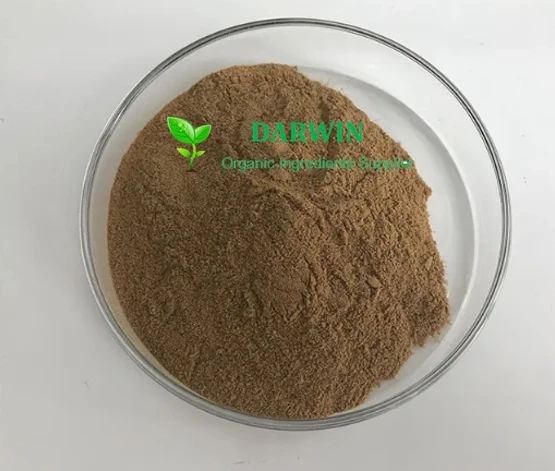
| Description | Brown Powder | Complies |
| Assay | Valeric Acid 0.8% (HPLC) | 0.86% |
| Mesh Size | 100 % pass 80 mesh | Complies |
| Ash | ≤ 5.0% | 3.45% |
| Loss on Drying | ≤ 5.0% | 2.96% |
| Chemical Analysis | ||
| Heavy Metal | ≤ 10.0 mg/kg | Complies |
| Pb | ≤ 2.0 mg/kg | Complies |
| As | ≤ 1.0 mg/kg | Complies |
| Hg | ≤ 0.1mg/kg | Complies |
| Microbiological Analysis | ||
| Residue of Pesticide | Negative | Negative |
| Total Plate Count | ≤ 1000cfu/g | Complies |
| Yeast&Mold | ≤ 100cfu/g | Complies |
| E.coil | Negative | Negative |
| Salmonella | Negative | Negative |
1. Applied in food field.
2. Applied in health product field.
3. Applied in cosmetics field.



We Recommend
New Arrivals
New products from manufacturers at wholesale prices