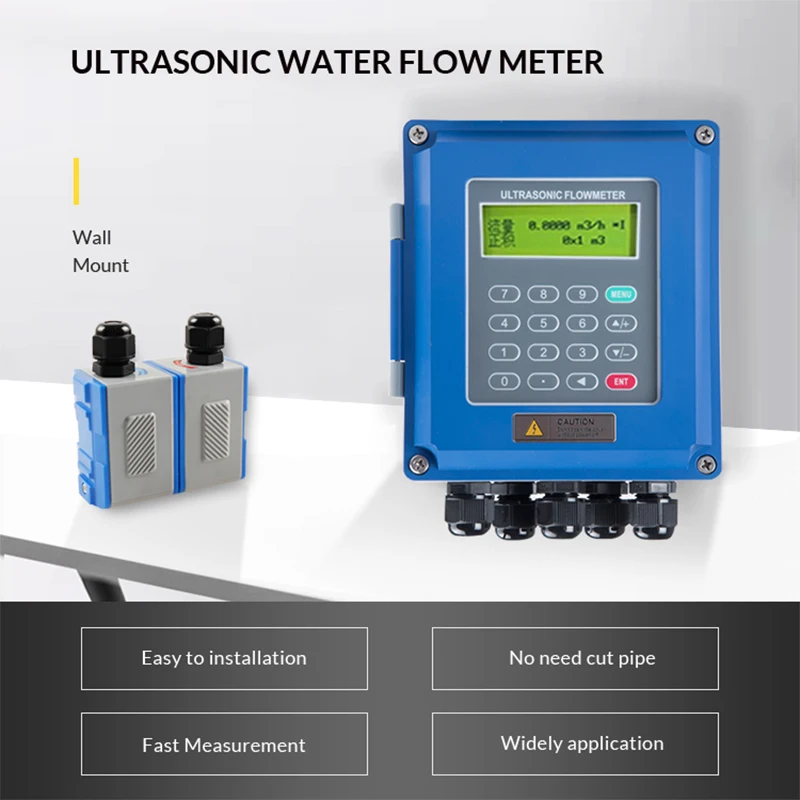
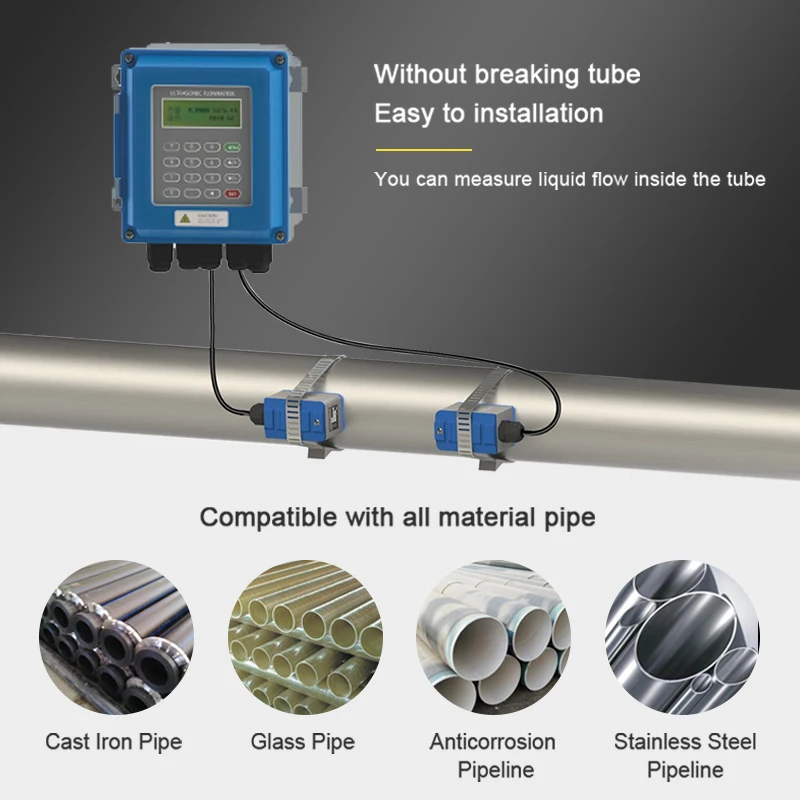
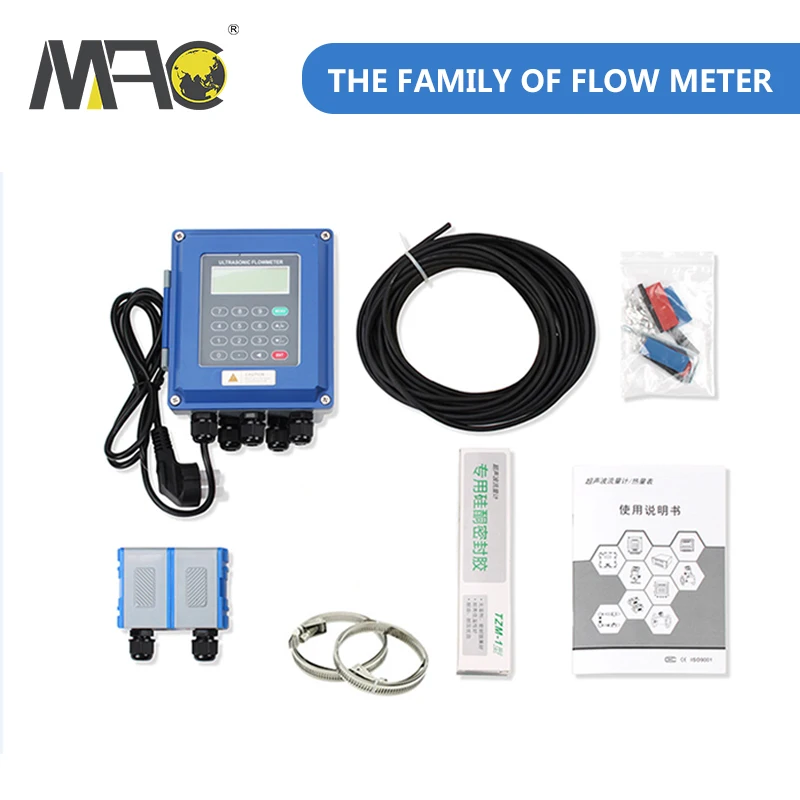
Wall Mounted Ultrasonic Flow Meter Measurement Sensor Flowmeter Sensor Price
- Category: >>>
- Supplier: Hunan Mac Sensor Co. Ltd.
Share on (1600930760784):
Product Overview
Description

Wall Mounted Ultrasonic Flow Meter Measurement Sensor Flowmeter Sensor Price
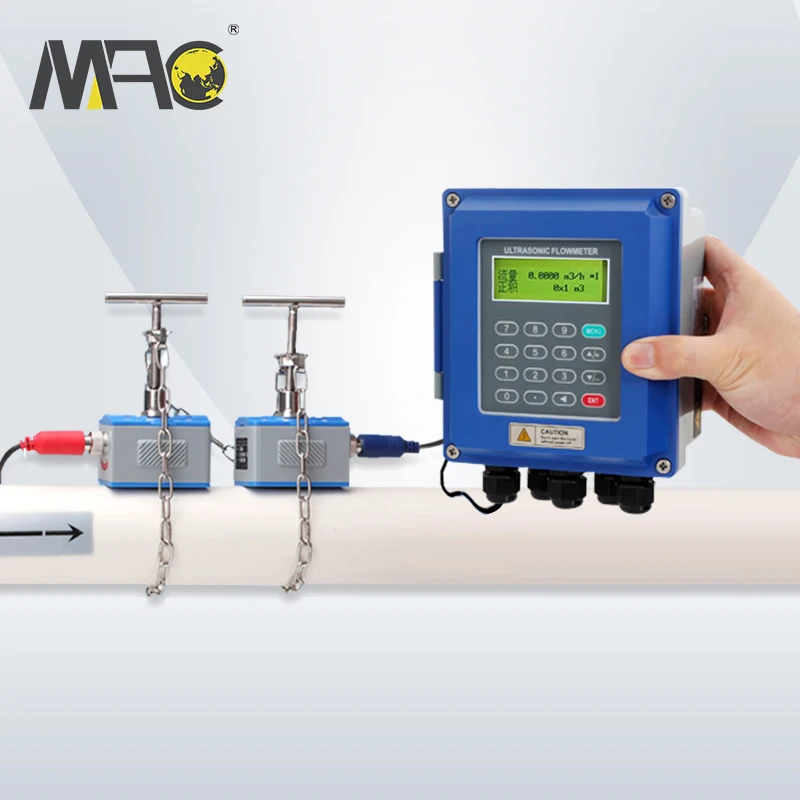
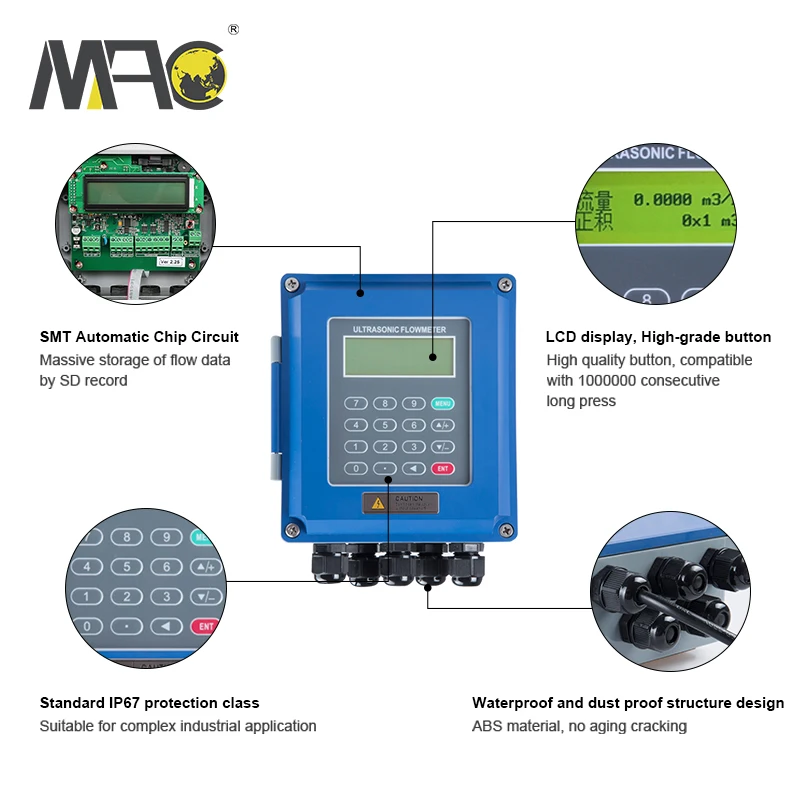
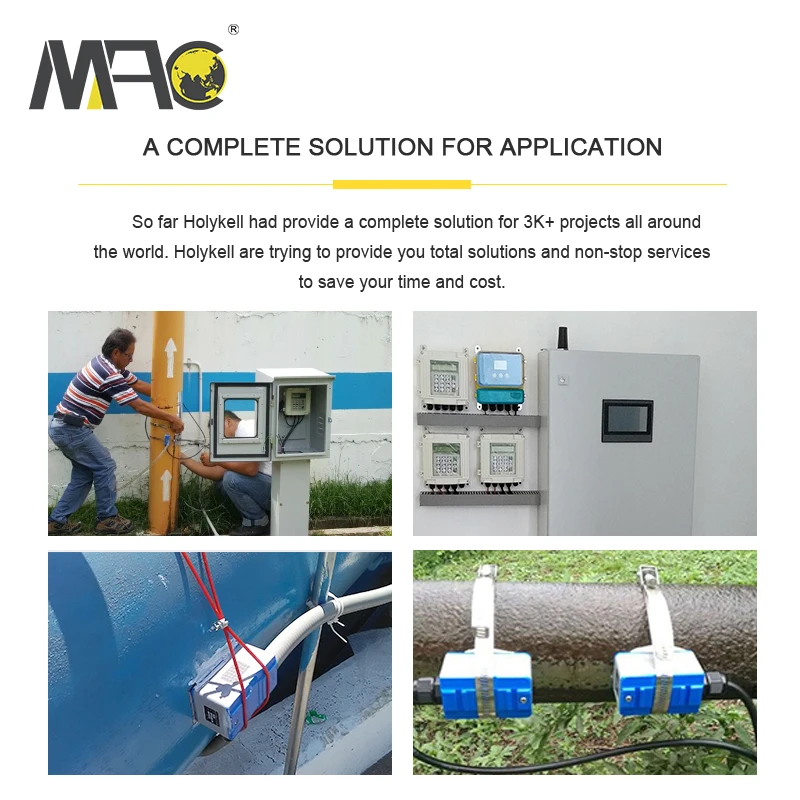
The UF2000-B flowmeter is one of the most reliable and versatile flowmeters on the market. With a measurement accuracy of 1%, it can be applied to a wide range of long-term online measurements, making it the perfect choice for any application. It features an IP67 converter protection class and an IP68 transducer protection class, ensuring the utmost safety when measuring liquids like ultra-pure liquids, portable water, chemicals, raw sewage, reclaimed water, cooling water, river water and plant effluent. It also has a wide measurement range and can be installed using three different methods: wall mounted, DIN-rail mounted or explosion-proof box mounted. Additionally, the UF2000-B can be connected to a temperature transducer to finish heat/energy measurements. Make your life easier with the UF2000-B - the perfect solution for all your flowmeter needs!
Products Description


How to Select
How to select a flowmeter between ultrasonic and electromagnetic type?
Choosing between ultrasonic and electromagnetic flowmeters depends on several factors, including the application, fluid properties, accuracy requirements, and budget constraints. Here are some key considerations to help you decide which type of flowmeter is more suitable for your needs:
1. Fluid Type:
- Electromagnetic Flowmeters: These meters are highly versatile and work well with conductive fluids (liquids with some level of electrical conductivity), including water, wastewater, acids, and slurries. They are not suitable for non-conductive fluids like oils and hydrocarbons.
- Ultrasonic Flowmeters: Ultrasonic meters can be used for both conductive and non-conductive fluids, making them suitable for a broader range of applications. They are commonly used for oils, hydrocarbons, chemicals, and gases.
2. Accuracy and Precision:
- Electromagnetic Flowmeters: Generally provide high accuracy and precision, especially for conductive fluids. They are well-suited for applications where precise measurements are critical, such as in water treatment and custody transfer.
- Ultrasonic Flowmeters: Offer good accuracy and can be suitable for a wide range of applications, but their performance may be influenced by factors like the fluid's composition, temperature, and pipe material.
3. Flow Range:
- Electromagnetic Flowmeters: Typically have a wide flow range and can handle both low and high flow rates. They are ideal for applications where the flow rates vary significantly.
- Ultrasonic Flowmeters: For transit-time type, ultrasonic flow meters may have limitations in terms of low flow detection.
4. Maintenance and Durability
- Electromagnetic Flowmeters: Tend to have no moving parts, which reduces the need for maintenance. They are suitable for long-term use in applications where durability is essential.
- Ultrasonic Flowmeters: Usually have no contact with the fluid and, therefore, experience less wear and tear. They are also considered low maintenance devices.
5. Installation and Pipe Size:
- Electromagnetic Flowmeters: Can be installed in a variety of pipe sizes, but they may require a minimum amount of straight pipe run before and after the sensor to ensure accurate measurements.
- Ultrasonic Flowmeters: Are suitable for a wide range of pipe sizes and often require less straight pipe run for installation.
6. Environmental Conditions:
- Consider the environmental conditions of your application. Electromagnetic flowmeters may be affected by high levels of electrical interference, while ultrasonic flowmeters are less susceptible to such interference.
7. Cost:
- Electromagnetic Flowmeters: Generally more expensive upfront but may provide long-term cost savings due to low maintenance and high accuracy.
- Ultrasonic Flowmeters: Typically have a lower initial cost, but the cost-effectiveness depends on the specific application and maintenance requirements.
8. Application-Specific Features:
- Some flowmeters come with specialized features tailored to specific industries or applications, such as custody transfer, irrigation, or wastewater management. Consider whether any of these features are necessary for your application.
Ultimately, the choice between ultrasonic and electromagnetic flowmeters should be based on a careful evaluation of your specific requirements and constraints. Contact our sales team to get a suitable model now!
1. Fluid Type:
- Electromagnetic Flowmeters: These meters are highly versatile and work well with conductive fluids (liquids with some level of electrical conductivity), including water, wastewater, acids, and slurries. They are not suitable for non-conductive fluids like oils and hydrocarbons.
- Ultrasonic Flowmeters: Ultrasonic meters can be used for both conductive and non-conductive fluids, making them suitable for a broader range of applications. They are commonly used for oils, hydrocarbons, chemicals, and gases.
2. Accuracy and Precision:
- Electromagnetic Flowmeters: Generally provide high accuracy and precision, especially for conductive fluids. They are well-suited for applications where precise measurements are critical, such as in water treatment and custody transfer.
- Ultrasonic Flowmeters: Offer good accuracy and can be suitable for a wide range of applications, but their performance may be influenced by factors like the fluid's composition, temperature, and pipe material.
3. Flow Range:
- Electromagnetic Flowmeters: Typically have a wide flow range and can handle both low and high flow rates. They are ideal for applications where the flow rates vary significantly.
- Ultrasonic Flowmeters: For transit-time type, ultrasonic flow meters may have limitations in terms of low flow detection.
4. Maintenance and Durability
- Electromagnetic Flowmeters: Tend to have no moving parts, which reduces the need for maintenance. They are suitable for long-term use in applications where durability is essential.
- Ultrasonic Flowmeters: Usually have no contact with the fluid and, therefore, experience less wear and tear. They are also considered low maintenance devices.
5. Installation and Pipe Size:
- Electromagnetic Flowmeters: Can be installed in a variety of pipe sizes, but they may require a minimum amount of straight pipe run before and after the sensor to ensure accurate measurements.
- Ultrasonic Flowmeters: Are suitable for a wide range of pipe sizes and often require less straight pipe run for installation.
6. Environmental Conditions:
- Consider the environmental conditions of your application. Electromagnetic flowmeters may be affected by high levels of electrical interference, while ultrasonic flowmeters are less susceptible to such interference.
7. Cost:
- Electromagnetic Flowmeters: Generally more expensive upfront but may provide long-term cost savings due to low maintenance and high accuracy.
- Ultrasonic Flowmeters: Typically have a lower initial cost, but the cost-effectiveness depends on the specific application and maintenance requirements.
8. Application-Specific Features:
- Some flowmeters come with specialized features tailored to specific industries or applications, such as custody transfer, irrigation, or wastewater management. Consider whether any of these features are necessary for your application.
Ultimately, the choice between ultrasonic and electromagnetic flowmeters should be based on a careful evaluation of your specific requirements and constraints. Contact our sales team to get a suitable model now!

Company Profile
MACSENSOR- Just For Your Needs!
Who is MACSENSOR?
MACSENSOR is a professional high-tech enterprise integrating R&D and manufacturing. Since 2009, it has been providing product design, development, manufacturing and one-stop solution services for measuring instruments and equipment. Our main products include various pressure sensors, liquid level sensors, flow meters, wireless IoT systems, weather monitoring products, water quality testing products, etc. Products are widely used in agriculture, water conservancy, oil field, coal mine, medicine, chemical industry, civil explosives, electric power, environmental protection, food and other industries. At the same time, it provides one-stop solutions for water monitoring system, flood warning system, wastewater treatment, weather monitoring, agricultural monitoring, oil and gas industry monitoring, etc. VR
VR

Why choose MACSENSOR?
InnovationWith 10+ years of research and development experience, the R&D team continues to grow and has obtained more than 40 national patents.
Major
The production base covers an area of 60000+㎡. It has Class100 clean workshops and has passed SGS certification.
The qualified rate of sensor processing is over 96%. The annual production capacity exceeds 20 million units.
Product
The product range is rich, and it is tailored based on the different needs of customers. The product has stable performance and high-cost performance. The main products have passed CE, FCC, RoHS, ATEX, IECEX and other certifications.
One-stop service
20+ years of experience in the sensor measurement industry, serving 3000+ measurement projects around the world every year. We provide you with unique custom solutions and support your needs well beyond your initial purchase.
Team
Our team is composed of excellent automation engineers, electronic engineers, mechanical engineers, computer experts and sales engineers in various fields, and 90% of them have bachelor's degrees or above.


Company Services
MACSENSOR takes honesty, satisfaction, and excellence as its quality policy, provides customers with on-site and prompt satisfactory services, and integrates relevant industrial resources to make MACSENSOR a professional one-stop solution provider.Customer Service:
Dedicate to customers with excellent quality; benefit customers with reasonable price; satisfy customers with more new products; win trust from customers with a good reputation and perfect after-sales service.We guarantee a 24h response rate of ≥99%, provide one-to-one professional sales engineer support, tailor-made economic solutions, one-stop service, fast and efficient logistics solutions, easy ordering with multiple payment methods, and considerate after-sales service. Online training services, and ongoing business development support. 98% of cooperative customers give five-star praise.

Contact the MACSENSOR team today to have all your questions answered and get exactly what you need.
We Recommend
New Arrivals
New products from manufacturers at wholesale prices