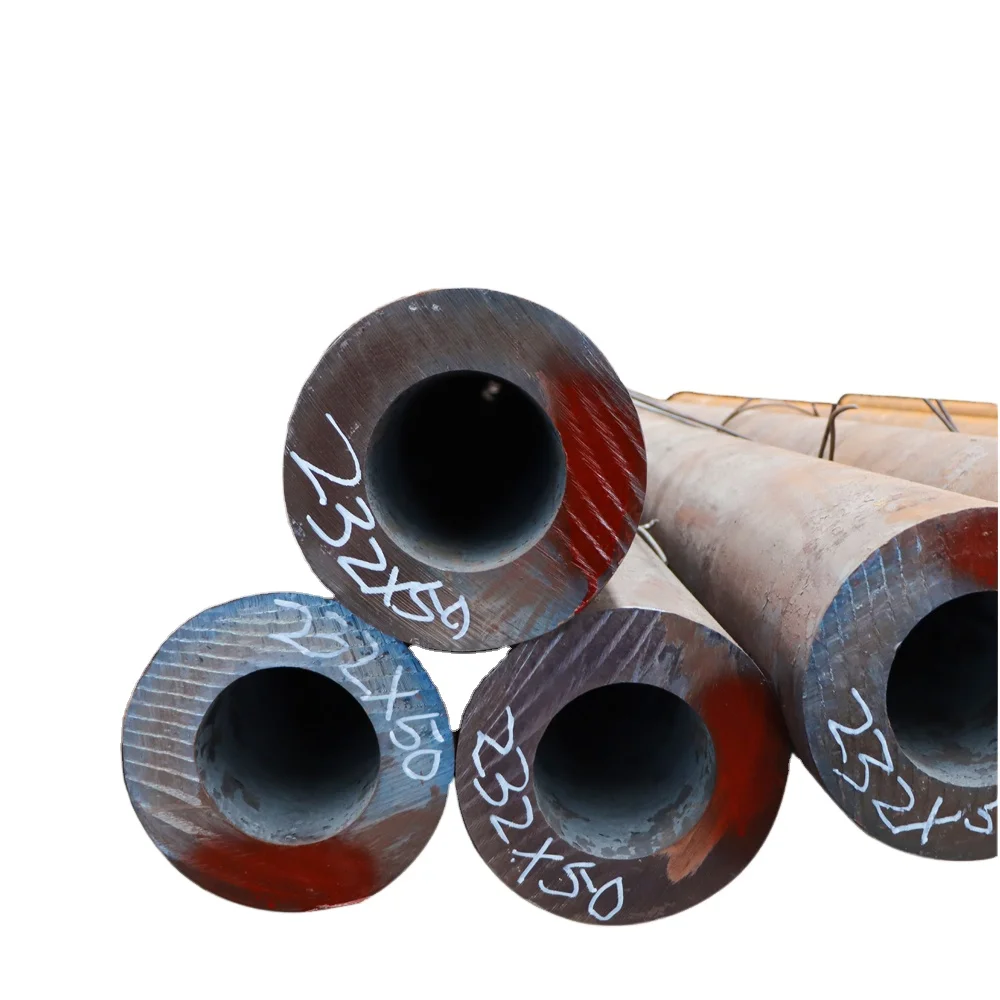
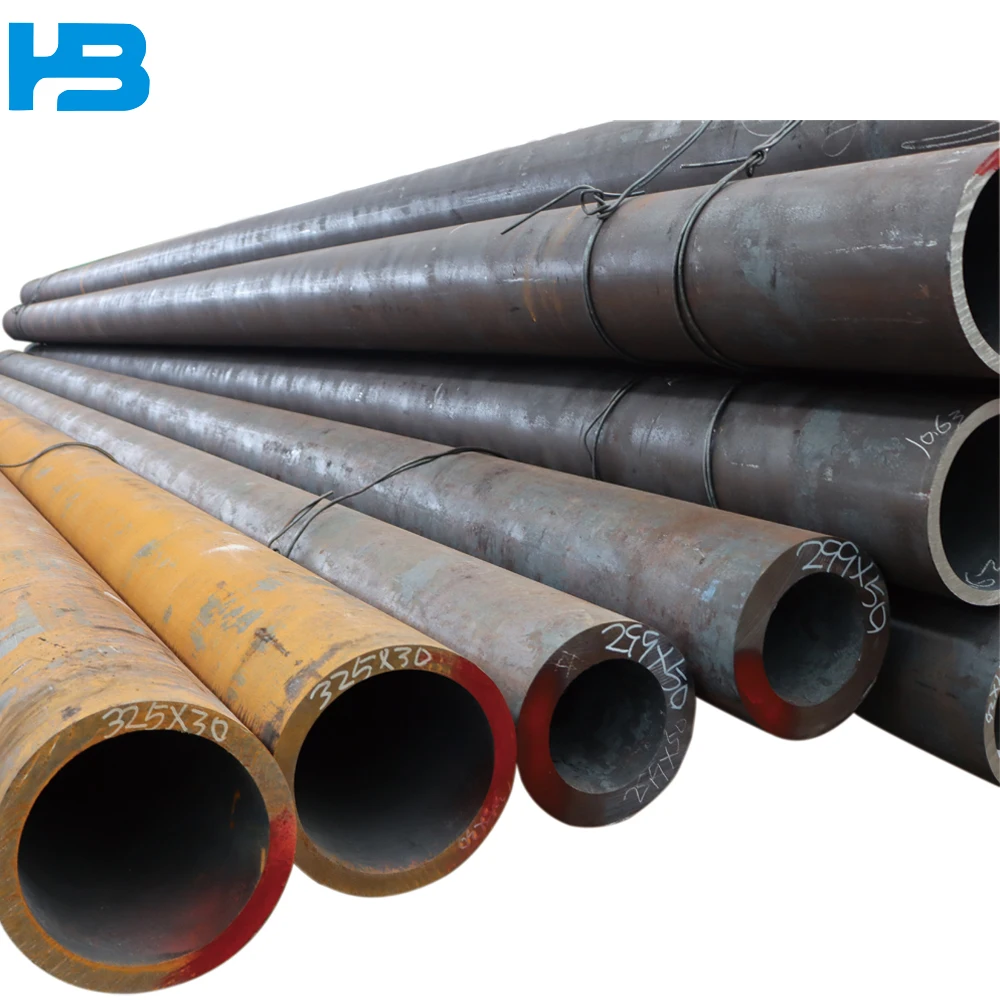
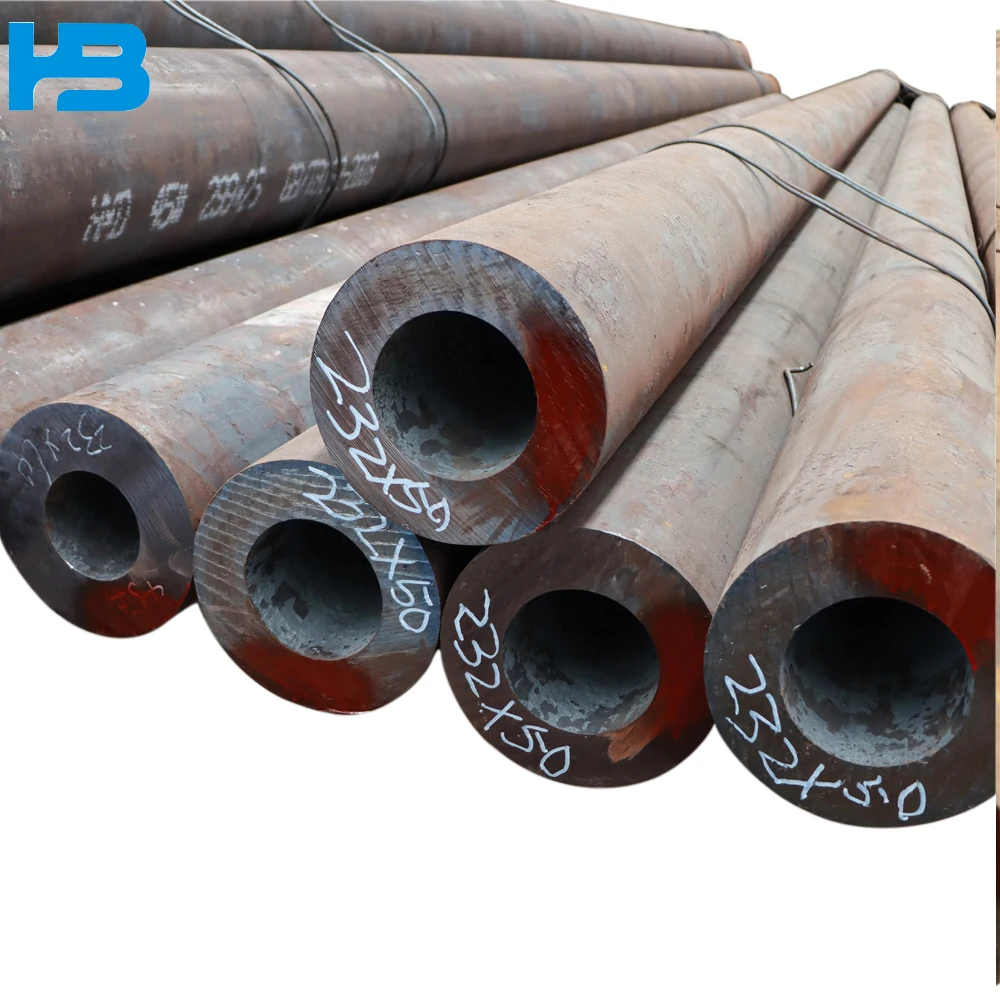
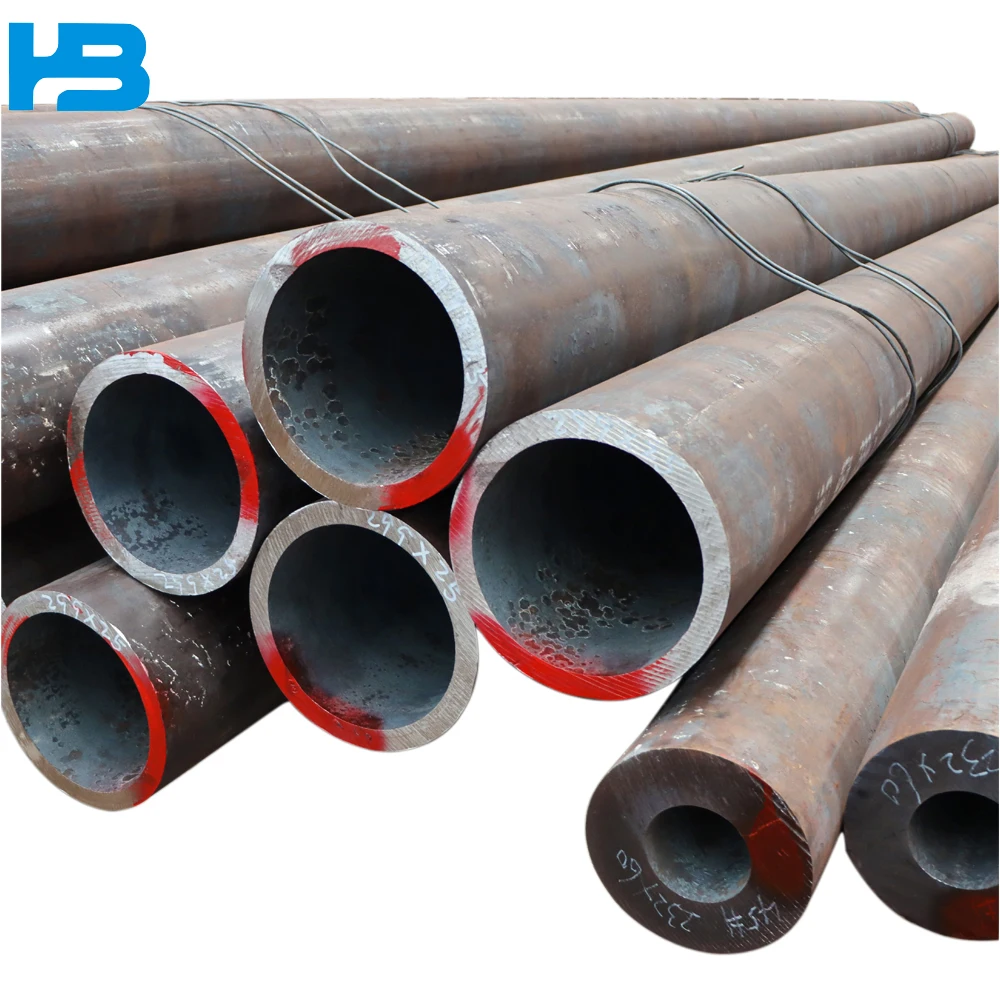
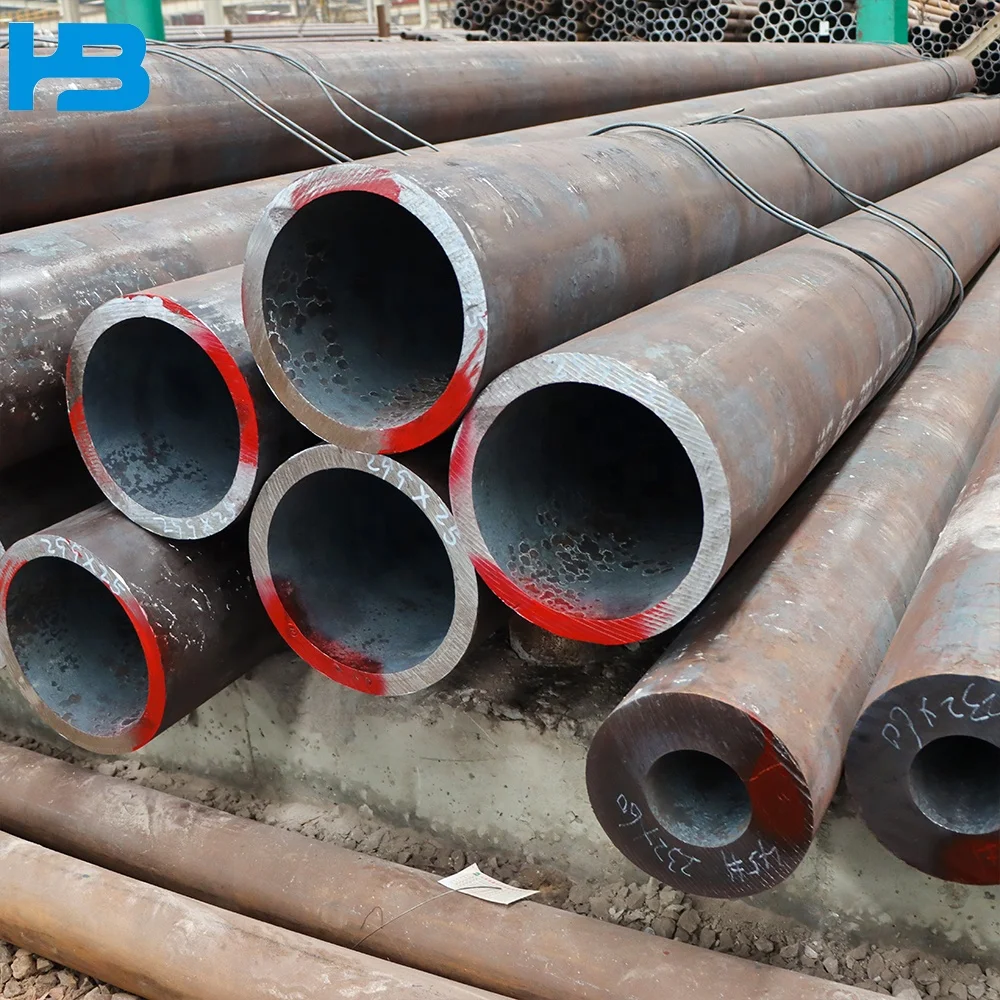
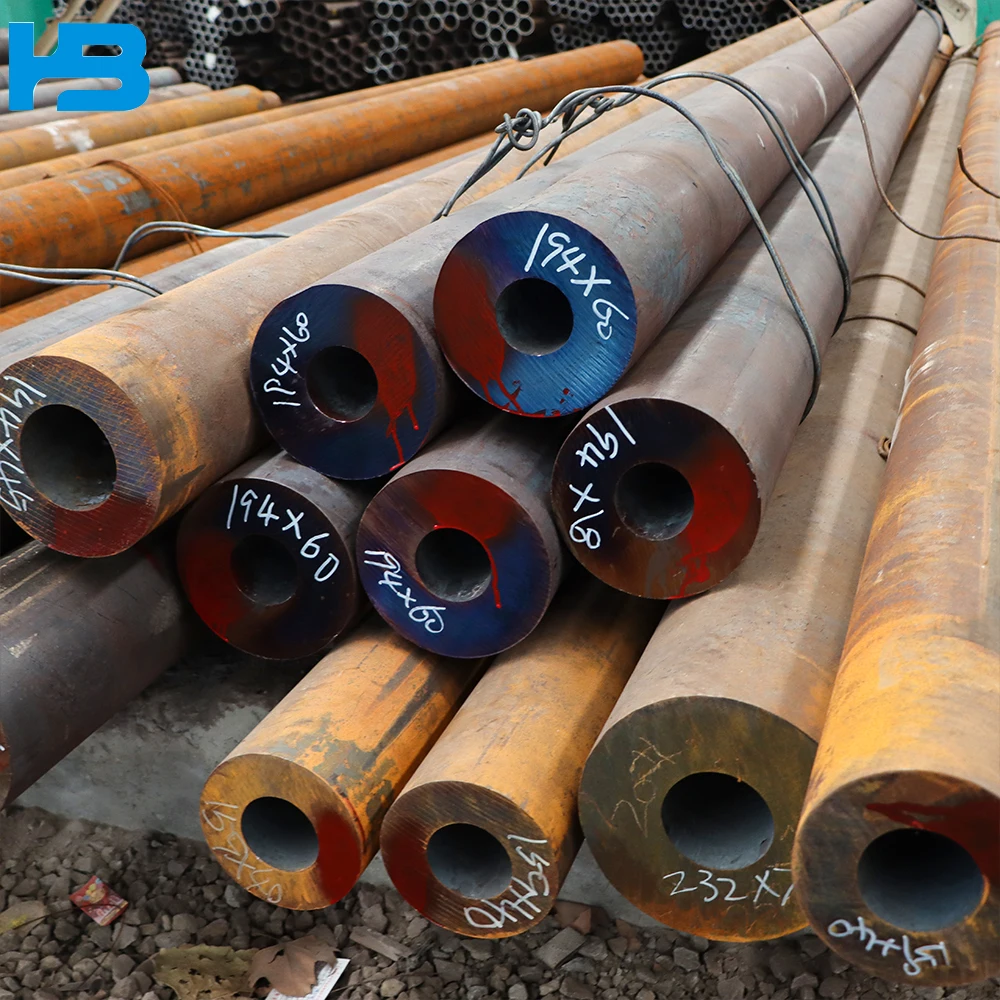
Hot rolled steel pipe mild steel pipe/ pipe manufacturer
- Category: >>>
- Supplier: Tianjin Bohai Hongda Metal Products Co. Ltd.
Share on (1600945955552):
Product Overview
Description
Product Description
Product Details
Product | dn125 galvanized mild steel pipe for fence |
GRADE | q195-q235 st37-st42 |
Standard | JIS, AiSi, ASTM, GB, DIN, EN, AISI, ASTM, DIN, EN, GB, JIS |
Length | According to requirement |
Thickness | 0.4-30mm as reques |
OD | 6-630mm as request |
Technique | cold drawn/rolled hot rolled |
Surface | oil or galvanized |
Technique | Hot rolled cold rolled/drawn |
Port | Tianjin port or Designated port |
Packaging Details | Bundle, bulk in container or as your demand. |
Payment Terms | L/C,T/T |

Introduction to seamless pipe
Seamless steel pipe is a pipe mainly used for fluid transportation. It is hollow in the middle and round or square around. The material is generally carbon steel or stainless steel and has no joints, hence the name.
Classification:
According to the production method, seamless steel pipes can be divided into hot-rolled seamless steel pipes, cold-rolled seamless steel pipes, cold-drawn seamless steel pipes, extruded seamless steel pipes, and pipe jacking. According to the cross-sectional shape, seamless steel tubes are divided into two types: round and special-shaped, and special-shaped tubes have various complex shapes such as square, oval, triangular, hexagonal, melon-shaped, star-shaped, and finned tubes. The maximum diameter is up to 900mm and the minimum diameter is 4mm. According to different uses, there are thick-walled seamless steel pipes and thin-walled seamless steel pipes.
Classification:
According to the production method, seamless steel pipes can be divided into hot-rolled seamless steel pipes, cold-rolled seamless steel pipes, cold-drawn seamless steel pipes, extruded seamless steel pipes, and pipe jacking. According to the cross-sectional shape, seamless steel tubes are divided into two types: round and special-shaped, and special-shaped tubes have various complex shapes such as square, oval, triangular, hexagonal, melon-shaped, star-shaped, and finned tubes. The maximum diameter is up to 900mm and the minimum diameter is 4mm. According to different uses, there are thick-walled seamless steel pipes and thin-walled seamless steel pipes.

The manufacturing methods of seamless steel pipe mainly include rolling and cold drawing:
The manufacturing methods of seamless steel pipe mainly include rolling and cold drawing:
*Hot rolling (extrusion of seamless steel pipe): round tube blank → heating → piercing → three-roll cross rolling, continuous
rolling or extrusion → tube stripping → sizing (or reducing) → cooling → straightening → hydraulic test (or flaw detection) →
marking → warehousing
*Cold drawn (rolled) seamless steel pipe: round tube blank → heating → piercing → heading → annealing → pickling → oiling (copper
plating) → multi-pass cold drawing (cold rolling) → blank tube → heat treatment → straightening → hydraulic test (flaw detection)
→ marking → warehousing.
*Hot rolling (extrusion of seamless steel pipe): round tube blank → heating → piercing → three-roll cross rolling, continuous
rolling or extrusion → tube stripping → sizing (or reducing) → cooling → straightening → hydraulic test (or flaw detection) →
marking → warehousing
*Cold drawn (rolled) seamless steel pipe: round tube blank → heating → piercing → heading → annealing → pickling → oiling (copper
plating) → multi-pass cold drawing (cold rolling) → blank tube → heat treatment → straightening → hydraulic test (flaw detection)
→ marking → warehousing.
Product Application

Use of seamless steel pipe
1. General-purpose seamless steel pipes are rolled from ordinary carbon structural steel, low-alloy structural steel or alloy structural steel, with the largest output, and are mainly used as pipes or structural parts for conveying fluids.
2. According to different purposes, there are three types of supply:
a. Supply according to chemical composition and mechanical properties;
b. Supply according to mechanical properties;
c. Supply according to hydraulic test. Steel pipes supplied by Types a and b, if used to withstand liquid pressure, are also subject to hydrostatic testing.
3. There are many kinds of seamless pipes for special purposes, such as seamless pipes for boilers, seamless pipes for chemical power, seamless steel pipes for geological use and seamless pipes for petroleum.
Seamless steel pipes have a hollow cross-section and are widely used as pipes for transporting fluids, such as pipes for transporting oil, natural gas, gas, water, and certain solid materials. Compared with solid steel such as round steel, the steel pipe is lighter in weight when the bending and torsional strength is the same, and it is an economical section steel.
Widely used in the manufacture of structural parts and mechanical parts, such as oil drill pipes, automobile drive shafts, bicycle frames, and steel scaffolds used in construction, etc. Steel pipes are used to make ring parts, which can improve material utilization, simplify manufacturing processes, and save materials and processing Man-hours have been widely used to manufacture steel pipes.
2. According to different purposes, there are three types of supply:
a. Supply according to chemical composition and mechanical properties;
b. Supply according to mechanical properties;
c. Supply according to hydraulic test. Steel pipes supplied by Types a and b, if used to withstand liquid pressure, are also subject to hydrostatic testing.
3. There are many kinds of seamless pipes for special purposes, such as seamless pipes for boilers, seamless pipes for chemical power, seamless steel pipes for geological use and seamless pipes for petroleum.
Seamless steel pipes have a hollow cross-section and are widely used as pipes for transporting fluids, such as pipes for transporting oil, natural gas, gas, water, and certain solid materials. Compared with solid steel such as round steel, the steel pipe is lighter in weight when the bending and torsional strength is the same, and it is an economical section steel.
Widely used in the manufacture of structural parts and mechanical parts, such as oil drill pipes, automobile drive shafts, bicycle frames, and steel scaffolds used in construction, etc. Steel pipes are used to make ring parts, which can improve material utilization, simplify manufacturing processes, and save materials and processing Man-hours have been widely used to manufacture steel pipes.
Packing & Delivery


In hexagonal seaworthy bundles packed by steel strips, with two nylon slings for each bundles.
standard seaworthy packing , or as per customer' s requirements
standard seaworthy packing , or as per customer' s requirements
Hot sales
Company Profile


Company Overview
Tianjin Bohai Metal Company is one of the leading and most respected suppliers in China. Our products include: metal materials, machinery, containers, construction materials, and mechanical products. Our company was founded in 2002 and since then has continuously strived to meet the needs of our global customer base to ensure absolute satisfaction. Reflecting our company's commitment to excellence, our team is dedicated to perfecting our three core components, "Service, Management and Craftsmanship".
Company Philosophy
Our Mission
The company's mission is to always be an industry leader, not a follower; this will be accomplished through a continuous commitment to innovation. We believe in putting our customers first by providing effective communication and producing the highest quality products that the industry must offer.
Our Vision
As a company, we have a vision to be the best in every way. As a company we never stop looking to improve, no one is perfect and we understand that, that's why we value your feedback so much so we can get as close to perfection as possible.
Our goal
To continuously earn customer satisfaction and trust
Tianjin Bohai Metal Company achieves its goals through
Service: In order to maintain a long-lasting relationship with our customers, Our company is committed to providing the best customer service, from guiding customers through every step of the process to providing after-sales service to ensure that our customers are satisfied with the product/service they receive. In addition, we are always seen as a trustworthy and responsible member of the community.
Management: In order to be a market leader, we embrace the leadership of each and every one of our employees to shape every aspect of our organization and constantly innovate the way we operate to meet the needs of our customers and the market. We are always willing to adapt so that we can respond to the ever-changing global industry and meet possible future needs.
Company Core
Bohai Metal has become one of the leading steel companies, headquartered in Tianjin, China. We have partners all over the world, with operations in the Americas, Europe and Asia Pacific.
Our company offers quality products and reliable services that reflect our company's commitment to excellence. Our goal is to be a reliable supplier and exporter of products that provide the highest level of technical sophistication and quality to the global and domestic markets.
Our highly qualified team of employees is keen to provide comprehensive consulting support. They will provide a personalized approach to each client; we will guide you through every step of the way.
Tianjin Bohai Metal Company is one of the leading and most respected suppliers in China. Our products include: metal materials, machinery, containers, construction materials, and mechanical products. Our company was founded in 2002 and since then has continuously strived to meet the needs of our global customer base to ensure absolute satisfaction. Reflecting our company's commitment to excellence, our team is dedicated to perfecting our three core components, "Service, Management and Craftsmanship".
Company Philosophy
Our Mission
The company's mission is to always be an industry leader, not a follower; this will be accomplished through a continuous commitment to innovation. We believe in putting our customers first by providing effective communication and producing the highest quality products that the industry must offer.
Our Vision
As a company, we have a vision to be the best in every way. As a company we never stop looking to improve, no one is perfect and we understand that, that's why we value your feedback so much so we can get as close to perfection as possible.
Our goal
To continuously earn customer satisfaction and trust
Tianjin Bohai Metal Company achieves its goals through
Service: In order to maintain a long-lasting relationship with our customers, Our company is committed to providing the best customer service, from guiding customers through every step of the process to providing after-sales service to ensure that our customers are satisfied with the product/service they receive. In addition, we are always seen as a trustworthy and responsible member of the community.
Management: In order to be a market leader, we embrace the leadership of each and every one of our employees to shape every aspect of our organization and constantly innovate the way we operate to meet the needs of our customers and the market. We are always willing to adapt so that we can respond to the ever-changing global industry and meet possible future needs.
Company Core
Bohai Metal has become one of the leading steel companies, headquartered in Tianjin, China. We have partners all over the world, with operations in the Americas, Europe and Asia Pacific.
Our company offers quality products and reliable services that reflect our company's commitment to excellence. Our goal is to be a reliable supplier and exporter of products that provide the highest level of technical sophistication and quality to the global and domestic markets.
Our highly qualified team of employees is keen to provide comprehensive consulting support. They will provide a personalized approach to each client; we will guide you through every step of the way.
FAQ
1. who are we?
We are based in Tianjin, China, start from 2008,sell to South America(30.00%),Southeast Asia(30.00%),Africa(20.00%),North America(10.00%),Western Europe(3.00%),Northern Europe(3.00%),Southern Europe(2.00%),Eastern Europe(2.00%). There are total about 5-10 people in our office.
2. how can we guarantee quality?
Always a pre-production sample before mass production;
Always final Inspection before shipment;
3.what can you buy from us?
Steel Pipe; Steel Plate; Round Steel; Coated Steel Plate; Copper Plate
4. why should you buy from us not from other suppliers?
We have been committed to steel production for 20 years with partners all over the world. We have an excellent production team and a complete quality assurance system to ensure delivery time and 100% customer satisfaction.
5. what services can we provide?
Accepted Delivery Terms: FOB,CFR,CIF;
Accepted Payment Currency:USD;
Accepted Payment Type: T/T,L/C;
Language Spoken:English,Chinese
We are based in Tianjin, China, start from 2008,sell to South America(30.00%),Southeast Asia(30.00%),Africa(20.00%),North America(10.00%),Western Europe(3.00%),Northern Europe(3.00%),Southern Europe(2.00%),Eastern Europe(2.00%). There are total about 5-10 people in our office.
2. how can we guarantee quality?
Always a pre-production sample before mass production;
Always final Inspection before shipment;
3.what can you buy from us?
Steel Pipe; Steel Plate; Round Steel; Coated Steel Plate; Copper Plate
4. why should you buy from us not from other suppliers?
We have been committed to steel production for 20 years with partners all over the world. We have an excellent production team and a complete quality assurance system to ensure delivery time and 100% customer satisfaction.
5. what services can we provide?
Accepted Delivery Terms: FOB,CFR,CIF;
Accepted Payment Currency:USD;
Accepted Payment Type: T/T,L/C;
Language Spoken:English,Chinese
We Recommend
New Arrivals
New products from manufacturers at wholesale prices