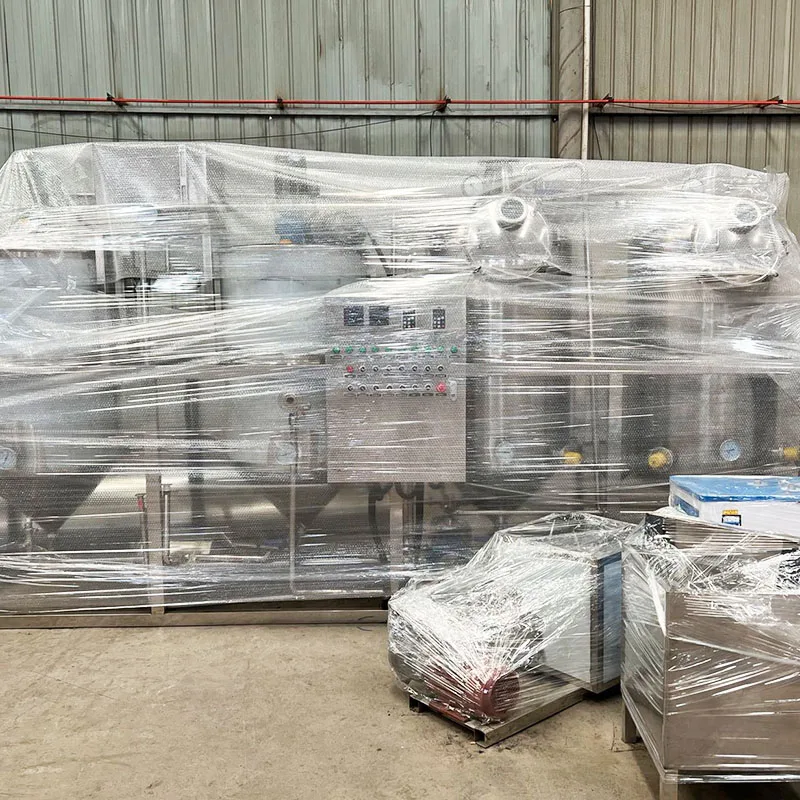
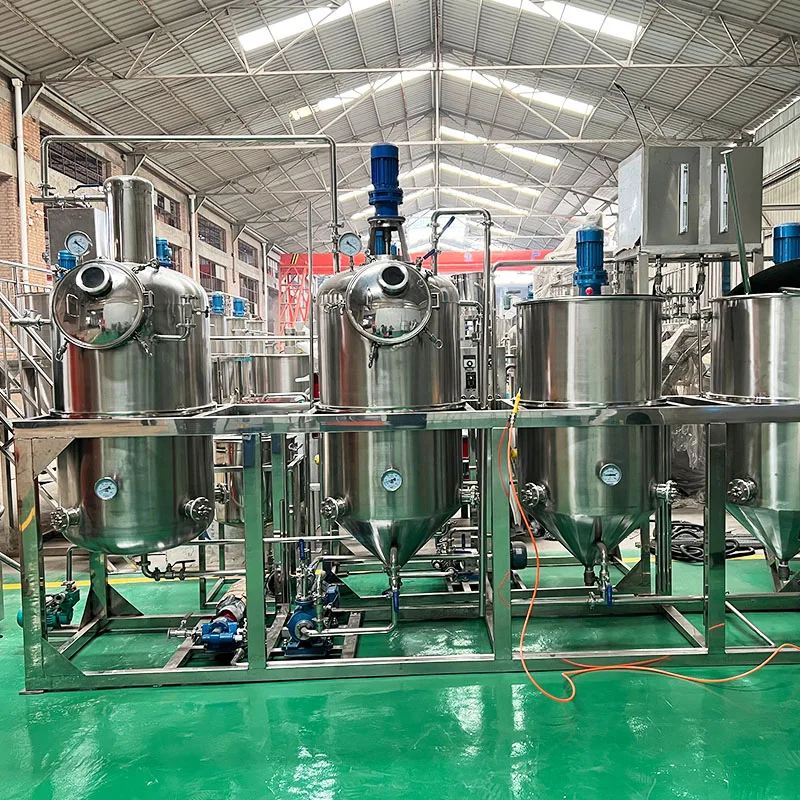
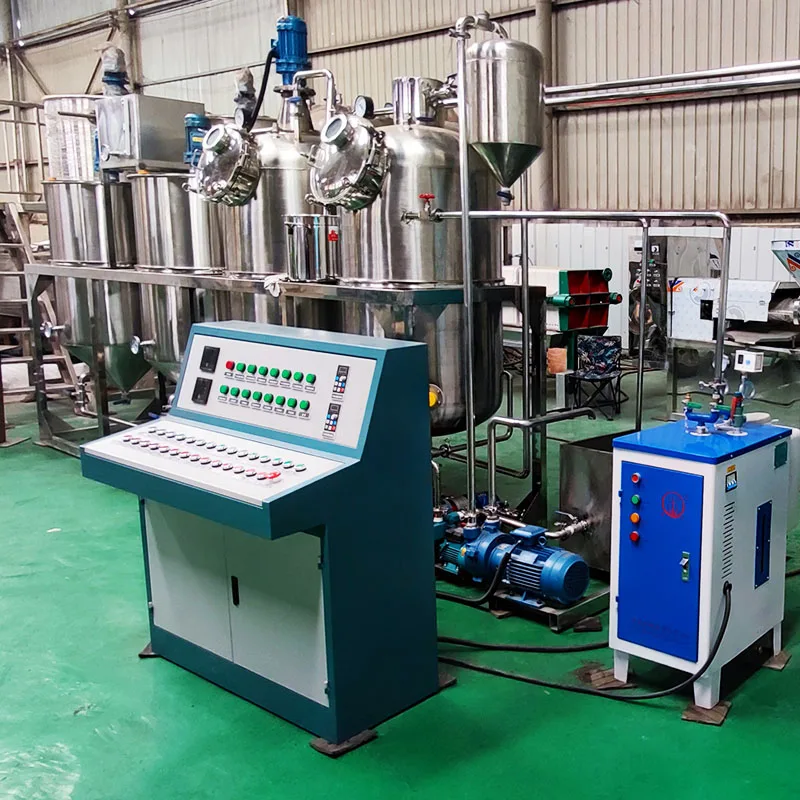
Crude oil Refinery machine cooking sunflower oil refining peanut oil refining machine
- Category: >>>
- Supplier: Gongyi Wanlong Machinery Manufacturing Co. Ltd.
Share on (1600946375259):
Product Overview
Description
Product Description
Crude oil refining usually refers to the refining of crude oil. The existence of impurities in the crude oil not only affects the edible value and safe storage of the oil, but also brings difficulties to deep processing, but the purpose of refining is not to remove all the impurities in the oil, but to remove the impurities that are harmful to consumption, storage, industrial production, such as protein, phospholipid, mucus, moisture, etc., and the beneficial "impurities" are removed. Such as tocopherol should be retained. Therefore, according to different requirements and uses, the unnecessary and harmful impurities are removed from the oil, and the finished oil that meets certain quality standards is the purpose of oil refining.
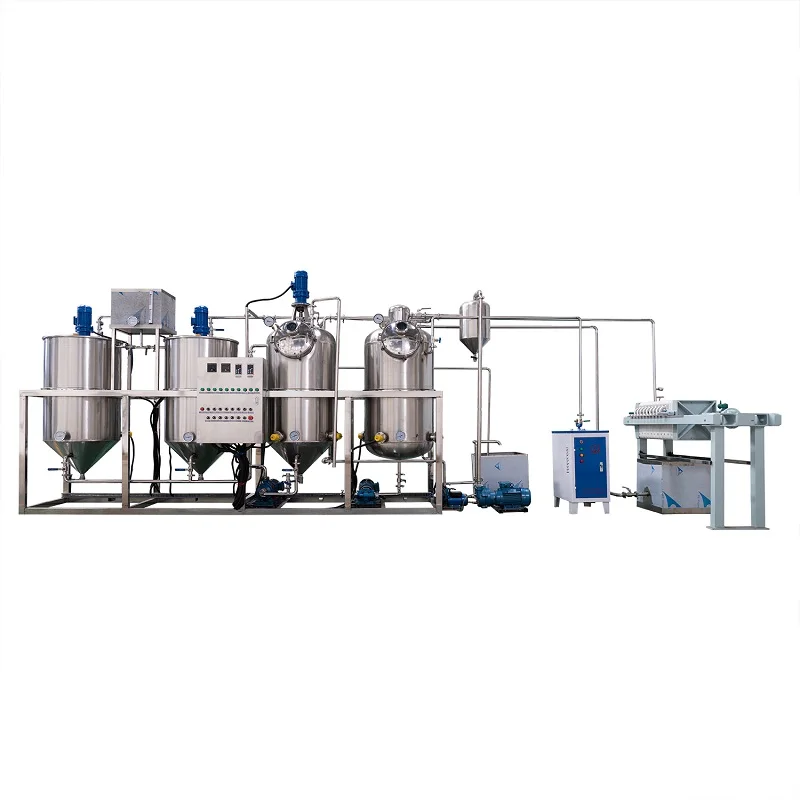
Leached crude oil refining. Using crude oil as raw material, refined oil is obtained through refining process. It mainly includes five processes of degumming, deacidification, decolorization, deodorization and dewaxing.
1.Degumming: of crude oil. Remove glia (mainly phospholipids) from the crude oil. Degumming technology mainly adopts hydration degumming method, that is, using the hydrophilicity of phospholipids and other gelatinsoluble impurities, adding a certain amount of water or electrolyte dilute solution under agitation to the gross oil, so that the gelatinsoluble impurities in the gross oil absorb water, expand, condense and separate.
2.Deacidify: It removes free fatty acids from hair oil. This is the most critical stage in the entire refining process. There are many methods of deacidification, the most widely used is the alkali refining method, that is, the use of alkali to neutralize free fatty acids, so that free fatty acids to produce soap separated from oil. Take out the color. The pigment, trace soap, phospholipid, polycyclic hydrocarbon and pesticide residues in the crude oil were removed by adsorption decolorization.
3.Deodorize: Deodorization can not only remove the odorous substances in the crude oil, improve the smoke point in the oil, improve the flavor of the oil, but also effectively remove pollution, but also remove the peroxide and its decomposition products, remove the volatile decomposition of protein in the moldy oil, remove the small molecular weight polycyclic aromatic hydrocarbons and other residues of pesticides, so that it can be reduced to a safe level. Deodorization of gross oil is that in the state of high vacuum, water vapor through the high-temperature oil containing odorous components, the gas-liquid surface in contact with the odorous components of the oil volatilized into the water vapor bubble, and according to the ratio of its partial pressure with the water vapor escape, in order to achieve the purpose of deodorization.
4.Dewaxing: According to the melting point difference between wax and oil and the solubility (or dispersion) of wax in oil and oil becomes smaller with the decrease of temperature, crystal wax is precipitated by cooling, and the purpose of dewaxing is achieved by filtration or centrifugal separation. A common point of dewaxing methods is that the temperature is below 25 ° C to achieve a good dewaxing effect.
The above is the description of the main steps and processes of the refining process.

Product parameters
Model | Heating Power | Air pump power | Capacity | Mixing Tanker | Voltage | Weight | Size |
500A | 3*2kw | 1.1kw | 300kg/day | 1unit | 380V 3 phase | 140kg | 1500*580*1350mm |
750B | 6*3kw | 1.1kw | 1-2t/day | 2unit | 380V 3 phase | 280kg | 3120*830*1550mm |
750C | 9*3kw | 1.1kw | 2t-3t/day | 3unit | 380V 3 phase | 350kg | 3900*830*1550mm |
Why Choose Us
1.We are Alibaba Assessed Gold Supplier for oil machine refinery.
2.We are a factory that manufacturing edible oil machine with best production capability, best quality control and best Service.
3.Oil press machine inspected by the Inspection Institution of SGS Certification.
4.100% factory QC inspection Before Shippment.
5. CE listed oil machine refinery with competitive price.


Edible oil refining is a set of processes or treatments necessary to turn vegetable raw oil into edible oil.
Raw vegetable oil, obtained from seeds by pressing, solvent extraction, contains free fatty acids and other components such as phospholipids, waxes, peroxides, aldehydes, and ketones, which contribute to undesirable flavor, odor, and appearance; for these reasons, all the oil has to be refined.
Product Model


------------------------------------------------------Our Company--------------------------------------------------------


------------------------------------------------------Our Company--------------------------------------------------------
1.Wan Long Machinery is a high-tech enterprise integrating scientific research, design, manufacturing, installation, commissioning and after-sales service. Our company is committed to the research, development and production of screw oil extractor and its auxiliary equipment for extracting oil from oil-bearing plants, such as seed dryer, oil filter, seed conveyor and oil refiner, as well as the application of new technologies.
2.We have passed International SGS certification and ISO9001 quality management system certification and CE certification.You can trust us.
3.Our production lines in different cities in China are running well. Welcome to visit us. In addition, we have also extended our support to Indonesia, Bangladesh, Pakistan, India, Kazakhstan, Uzbekistan, Azerbaijan, Saudi Arabia, Egypt, Ethiopia, Kenya, Tanzania, Uganda, Burundi, Cameroon, Congo, Senegal, Burkina Faso, Liberia, C ô te d'Ivoire, Ghana, Nigeria, South Africa, Peru, Chile, Russia, Italy Hungary and more than 20 other countries.
Customer Stories

Packaging delivery


FAQ
Q: If I don't know how to operate this machine? How can I do?
A: Our machine has been tested OK and fully assembled before
A: shipping, customer just needs to make2~4 hours wear-in and then can work.
A: shipping, customer just needs to make2~4 hours wear-in and then can work.
Q:Can i be a distributor of Wanlong oil press?
A: Of course you can.
Q:What are the benefits of being a Wanlong distributor?
A: - Special discount .
- Marketing protection.
-Supporting of marketing development
- Point to point technical supports and after sales services.
Q: How can i become a distributor of Wanlong?
A: Contact us immediately for further details by sending us an inquiry.
We Recommend


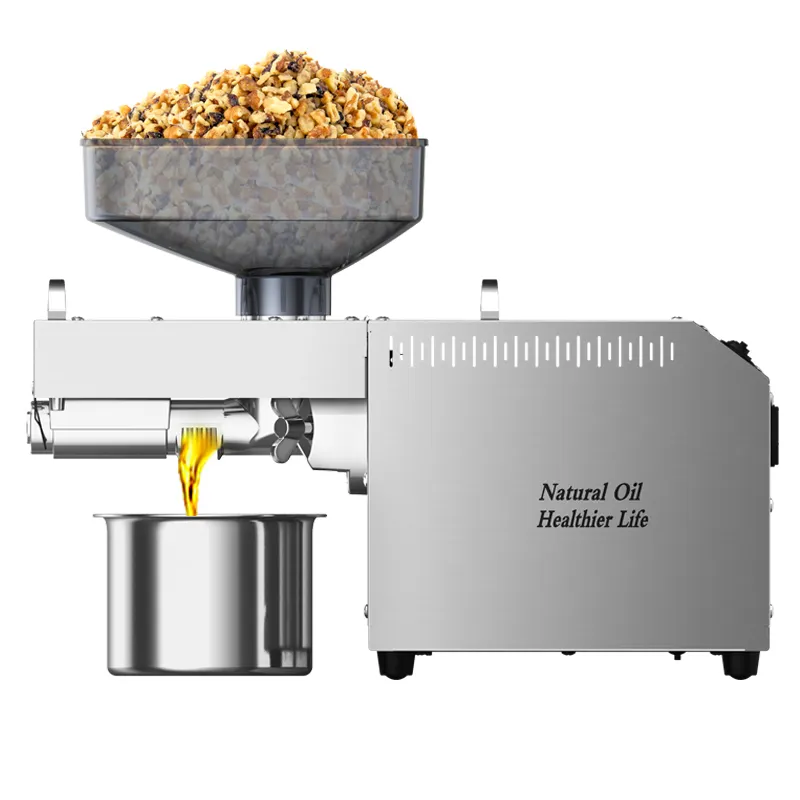

New Arrivals
New products from manufacturers at wholesale prices