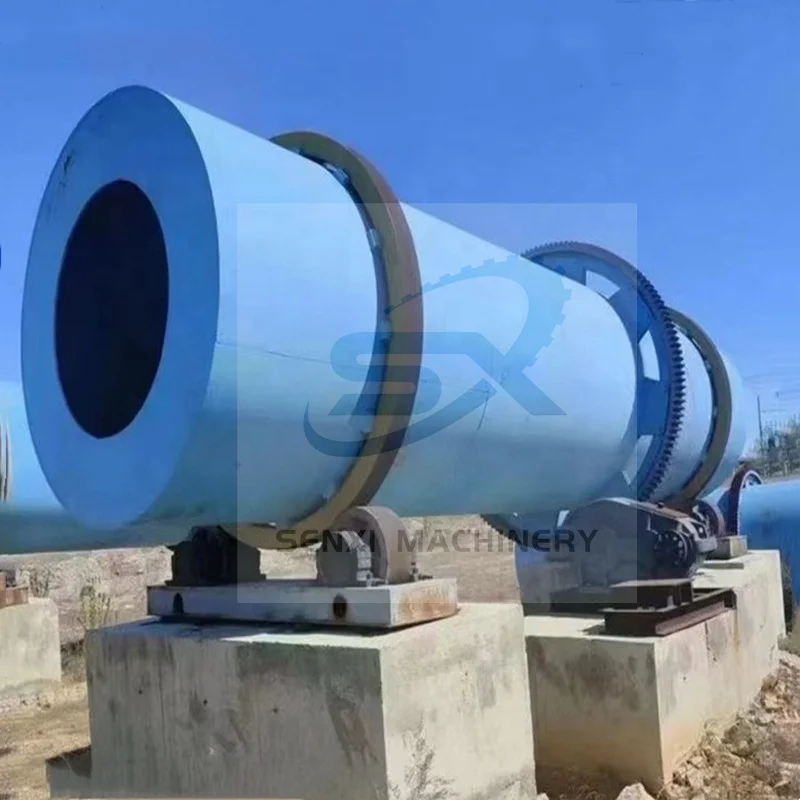
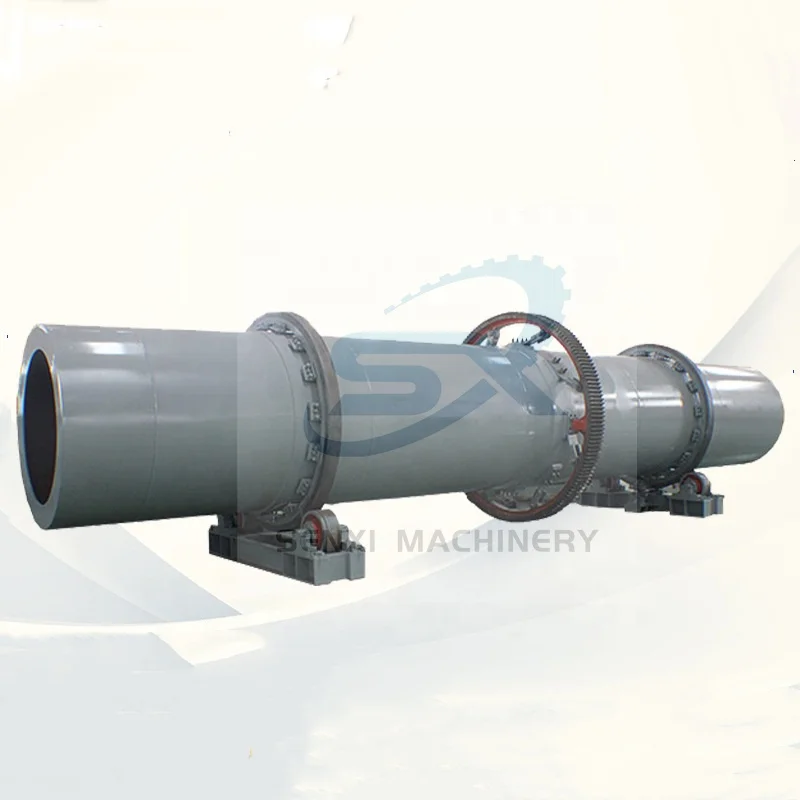
Biomass Production Line Single Drum Wood Dryer Machine Saw Dust Dryer Drying Machine Rotary Dryer Price
- Category: >>>
- Supplier: Henan Senxi Machinery Equipment Co. Ltd.
Share on (1600980455030):
Product Overview
Description
Biomass Production Line Single Drum Wood Dryer Machine Saw Dust Dryer Drying Machine Rotary Dryer Price
Product Overview
Sawdust rotary dryer price is widely used in building materials, metallurgy, mineral processing, chemical industry, cement and other industries.
It is mainly used in sawdust, coal, lignite, gypsum,slag, sludge, limestone, clay, river sand, quartz sand, water slag and other high moisture, large proportion of materials.
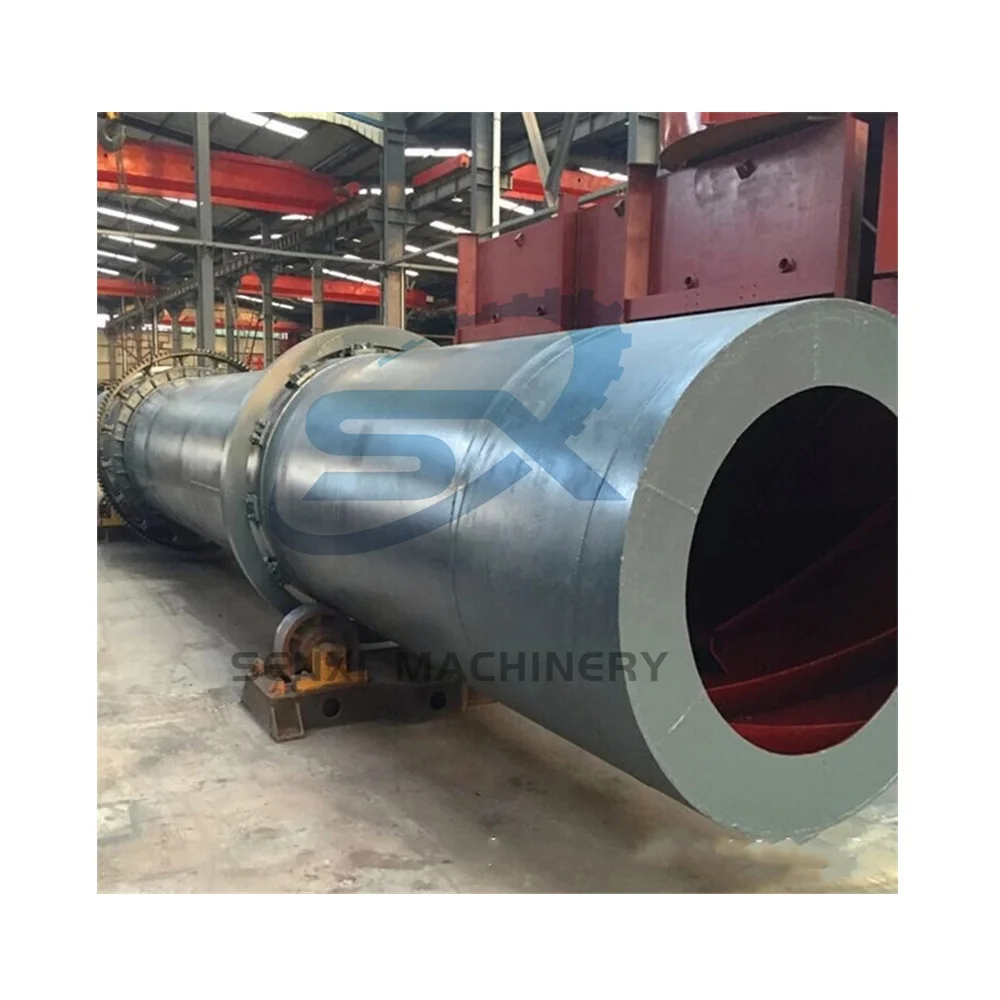
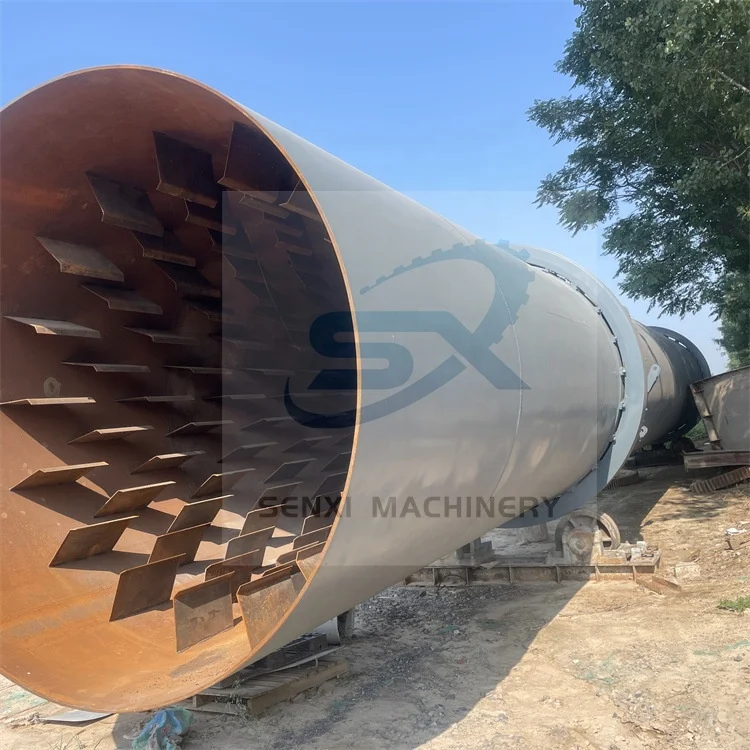
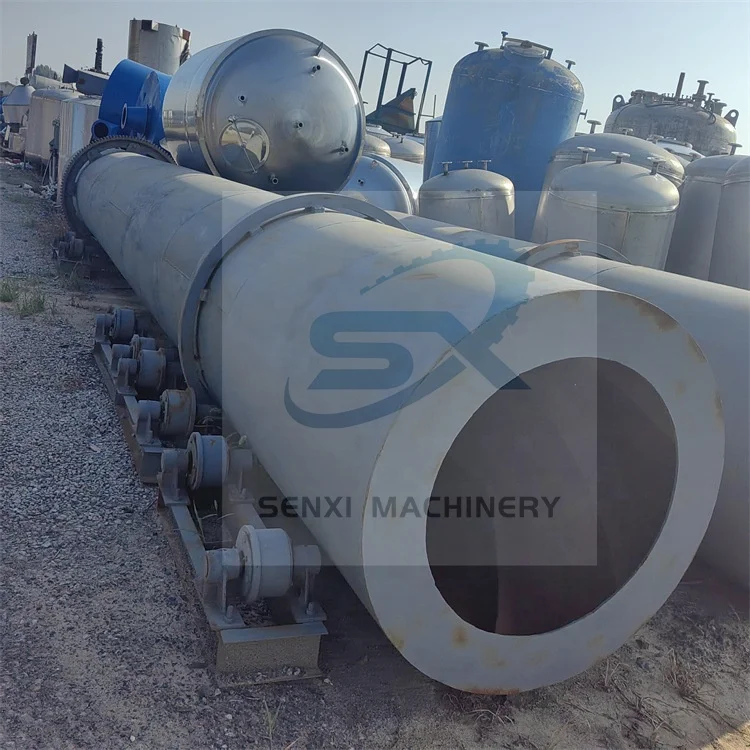
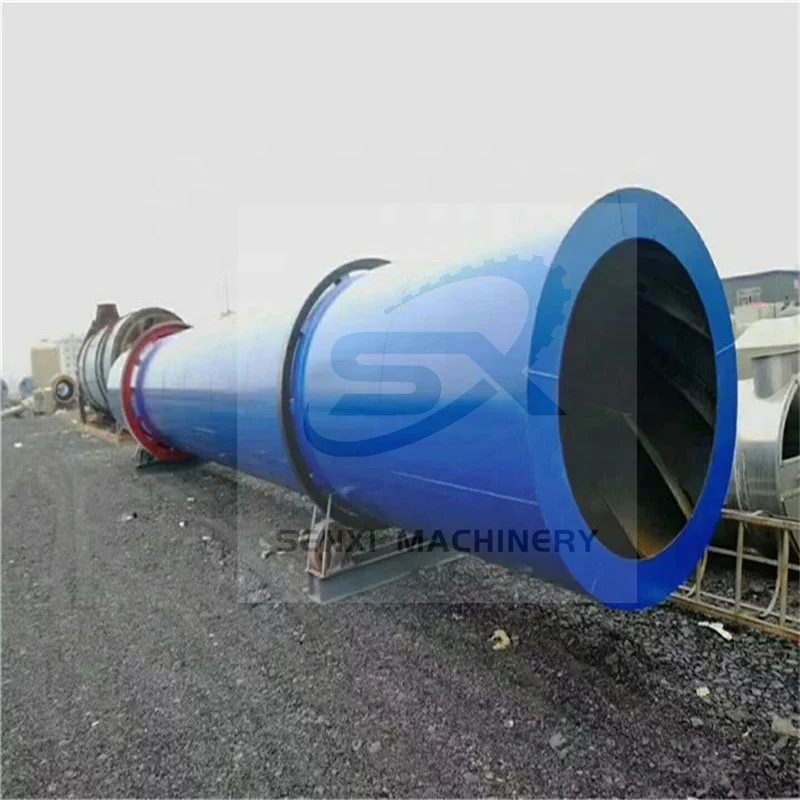
Sawdust rotary dryer price production line is mainly composed of rotary cylinder, air diversion equipment, lifting board, self cleaning device, transmission device, conveying equipment, hot air equipment, reducer, supporting device and sealing device.
It is mainly used in sawdust, coal, lignite, gypsum,slag, sludge, limestone, clay, river sand, quartz sand, water slag and other high moisture, large proportion of materials.
Sawdust rotary dryer price production line is mainly composed of rotary cylinder, air diversion equipment, lifting board, self cleaning device, transmission device, conveying equipment, hot air equipment, reducer, supporting device and sealing device.


Working Principle
(1)The dry wet material is transported to the hopper by a belt conveyor or bucket elevator, and then enters the feeding end through the feeding pipeline through the feeding machine of the hopper.
(2)The slope of the feeding pipeline should be greater than the natural inclination angle of the material, so that the material can flow smoothly into the dryer. The dryer cylinder is a rotating cylinder that is slightly inclined to the horizontal line. The material is added from the higher end, and the heat carrier enters from the lower end, forming a countercurrent contact with the material. There are also heat carriers and materials flowing together into the cylinder.
(3)As the cylinder rotates, the material moves to the lower end under the action of gravity. During the forward movement of the wet material in the cylinder, it directly or indirectly receives heat from the heat carrier, allowing the wet material to dry and then be sent out through a belt conveyor or screw conveyor at the discharge end.
(4)There is a board installed on the inner wall of the cylinder, which is used to pick up and scatter the material, increasing the contact surface between the material and the airflow, and improving the drying rate.
(5)Heat carriers are generally divided into hot air, flue gas, etc. After the heat carrier passes through the dryer, a cyclone dust collector is generally required to capture the materials carried in the gas. If it is necessary to further reduce the dust content in the exhaust gas, it should also be discharged after passing through a bag filter or wet dust collector

FEATURES AT A GLANCE

(1)The sawdust rotary dryer price has a large production capacity and can be operated continuously;
(2)Simple structure, few faults, convenient operation, low maintenance cost, and stable operation; production without affecting product quality.
(3) Widely applicable, it can dry powdery, granular, and blocky materials with high operating flexibility, allowing for significant changes in production without affecting product quality.

PRODUCT SPECIFICATIONS
Model (mm) | Obliquity (%) | Rotation speed (r/min) | Feeding temperature (degree) | Power (kw) | Capacity(t/h) | Weight (t) |
Ø600x6000 | 3-5 | 3-8 | <=700 | 3 | 0.5-1.5 | 2.9 |
Ø800x8000 | 3-5 | 3-8 | <=700 | 4 | 0.8-2.0 | 3.5 |
Ø800x10000 | 3-5 | 3-8 | <=700 | 4 | 0.8-2.5 | 4.5 |
Ø1000x10000 | 3-5 | 3-8 | <=700 | 5.5 | 1.0-3.5 | 5.6 |
Ø1200x10000 | 3-5 | 3-8 | <=700 | 7.5 | 1.8-5 | 14.5 |
Ø1200x12000 | 3-5 | 3-8 | <=700 | 11 | 2-6 | 14.8 |
Ø1500x12000 | 3-5 | 2-6 | <=800 | 15 | 3.5-9 | 17.8 |
Ø1800x12000 | 3-5 | 2-6 | <=800 | 18 | 5-12 | 25 |
Ø2200x12000 | 3-5 | 1.5-6 | <=800 | 18.5 | 6-15 | 33 |
Ø2200x18000 | 3-5 | 1.5-6 | <=800 | 22 | 10-18 | 53.8 |
Ø2200x20000 | 3-5 | 1.5-6 | <=800 | 30 | 12-20 | 56 |
Ø2400x20000 | 3-5 | 1.5-5 | <=800 | 37 | 18-30 | 60 |
Ø3000x20000 | 3-5 | 1.5-5 | <=800 | 55 | 25-35 | 78 |
Ø3000x25000 | 3-5 | 1.5-5 | <=800 | 75 | 32-40 | 104.9 |
Working Site Pictures


Company Profile
Henan Senxi Machinery Equipment Co., Ltd. is located in the Central Plains region of China, is a professional supplier of dry powder mortar plant equipment,grinding mill,concrete mixer, hydrated lime machine,dryers, crushers, shredder, wood crusher,equipment,pellet machine and other machines. We have exported the equipment to more than 30 countries like Uzbekistan, Saudi Arabia,Philippines, Lithuania, Germany, Korea,Thailand etc. We aim to provide customers with professional, stable, durable, and reliable equipment according to customer’ needs.
What we offer: (1) Good quality (2)Highly competitive prices (3) Smooth communication (4) Custom service (5)Technical support (6)Complete pre-sales, during sales, and after-sales service
Looking forward to collaborating with customers from all over the world!
Looking forward to collaborating with customers from all over the world!


FAQ
1. What is the minimum order quantity?
One set.
2.How long is the warranty period?
One year. Wearing parts are excluded.
3. What is the after-service of your company?
We can provide the customers foundation drawing, installation service, work training as well as other service according to the customer's requirements.
4.How long is the delivery time?
About 20 working days after we receive the payment.
5. What are the payment terms?
T/T is the best, it can be adjustable according to different situations.
--------------------------------------------------------------------------------------
Kindly Note:
1. Please pay attention to the capacity. It's what you must take into consideration in choosing a suitable machine.
2. Please Inform us the follow figures:
1).What is the raw material and raw material size?
One set.
2.How long is the warranty period?
One year. Wearing parts are excluded.
3. What is the after-service of your company?
We can provide the customers foundation drawing, installation service, work training as well as other service according to the customer's requirements.
4.How long is the delivery time?
About 20 working days after we receive the payment.
5. What are the payment terms?
T/T is the best, it can be adjustable according to different situations.
--------------------------------------------------------------------------------------
Kindly Note:
1. Please pay attention to the capacity. It's what you must take into consideration in choosing a suitable machine.
2. Please Inform us the follow figures:
1).What is the raw material and raw material size?
2) Initial moisture and final moisture
3). Capacity ( t/h)
4). Final product application
4). Final product application
Upon we got your message we shall give you our favorable offer in short time.
We Recommend

New Arrivals
New products from manufacturers at wholesale prices