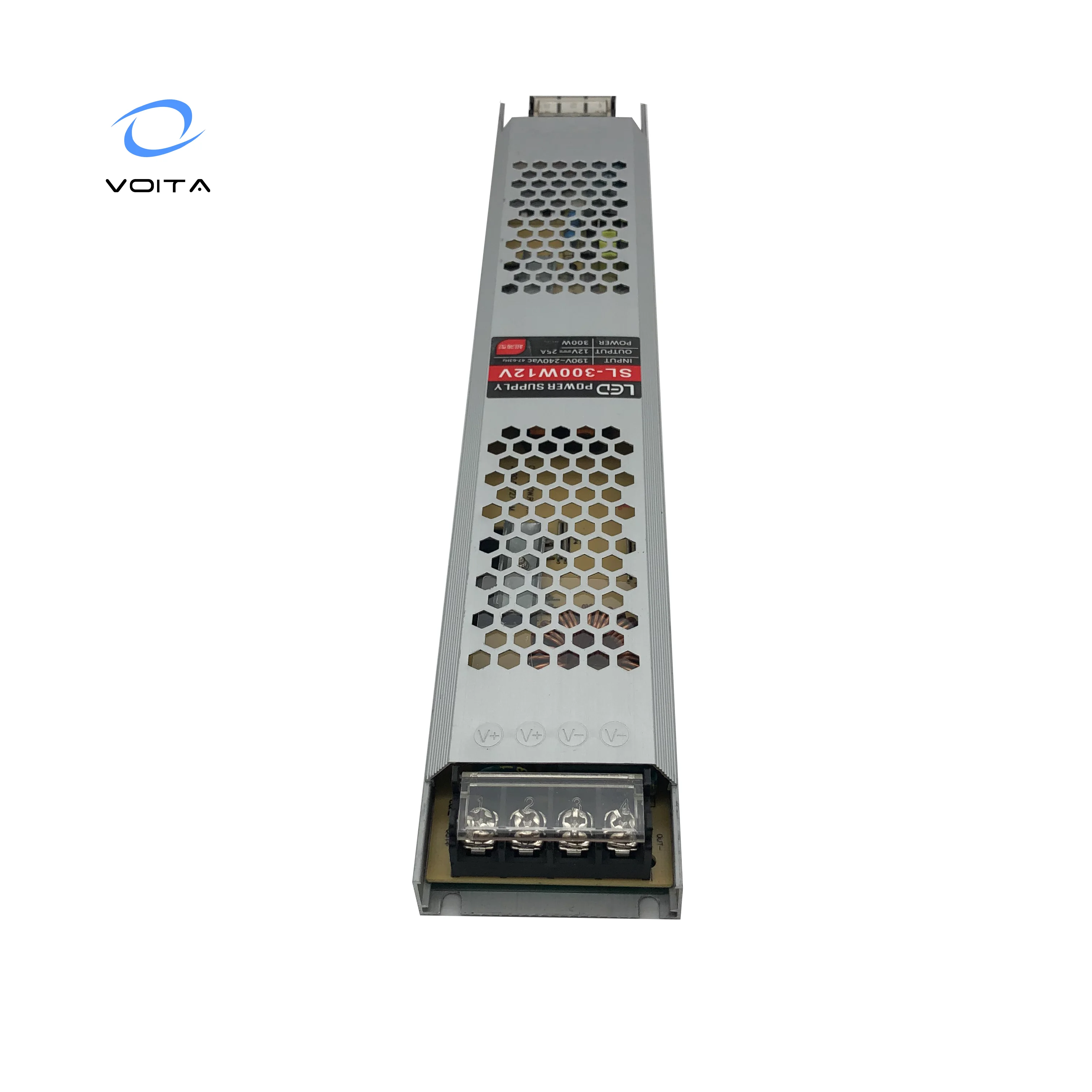
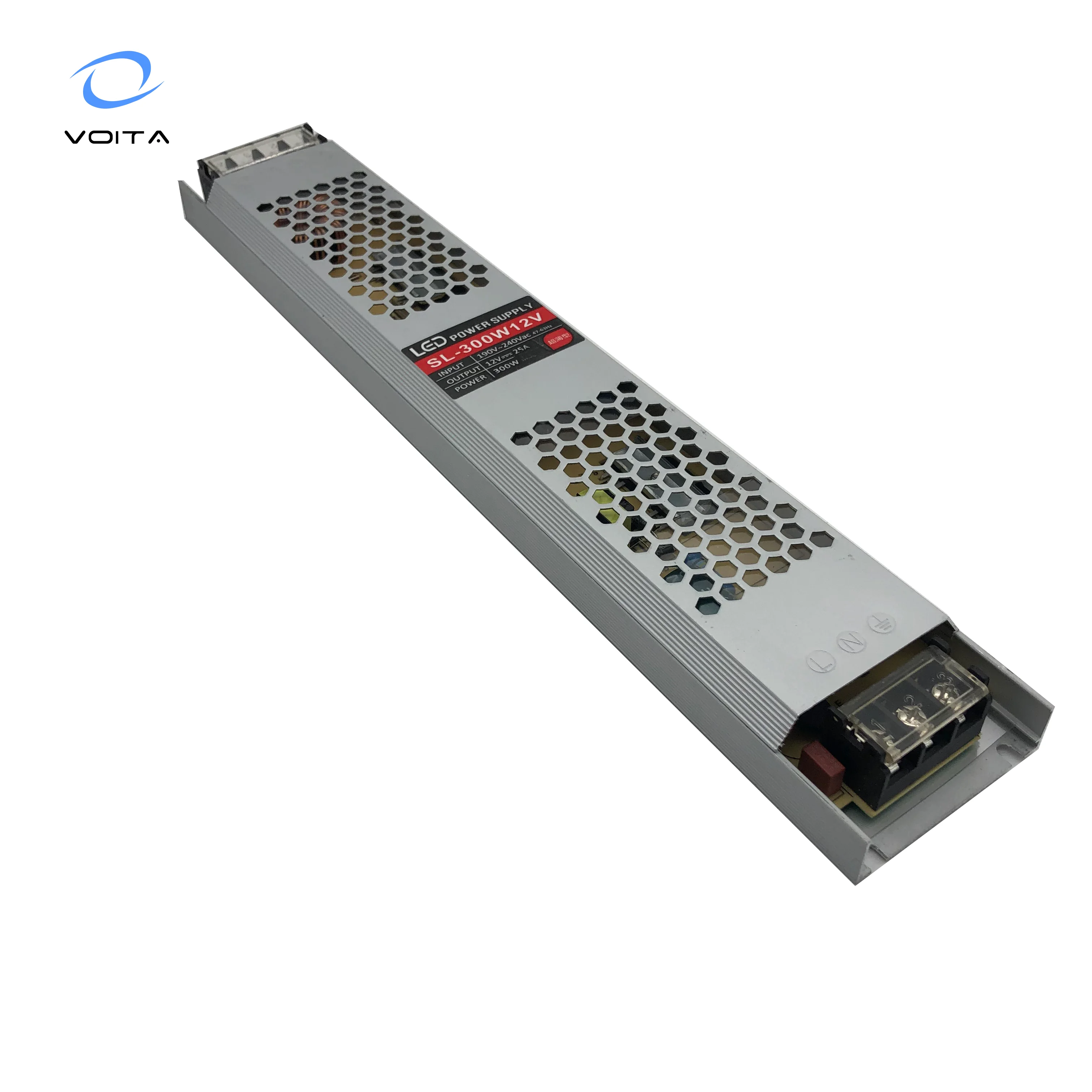
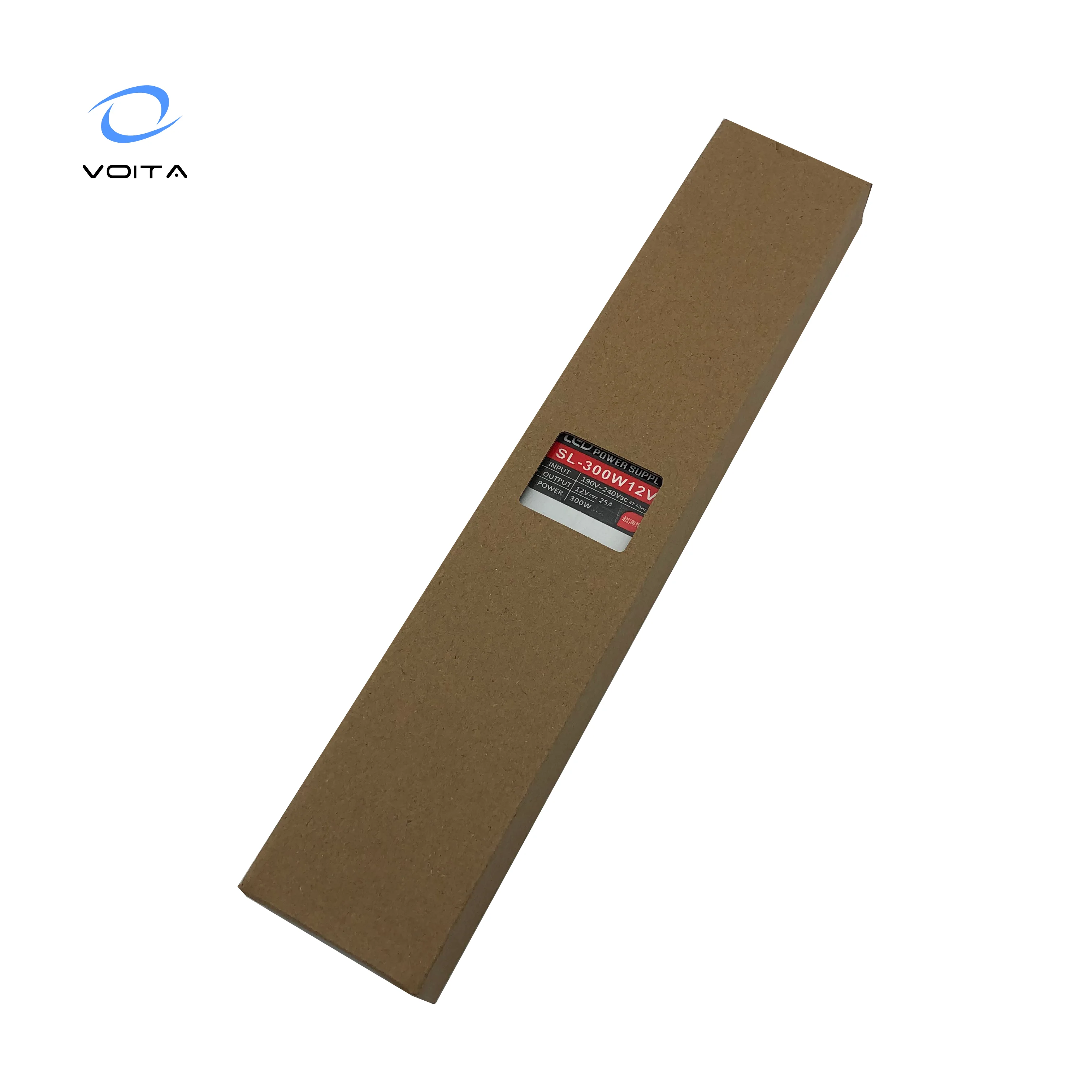
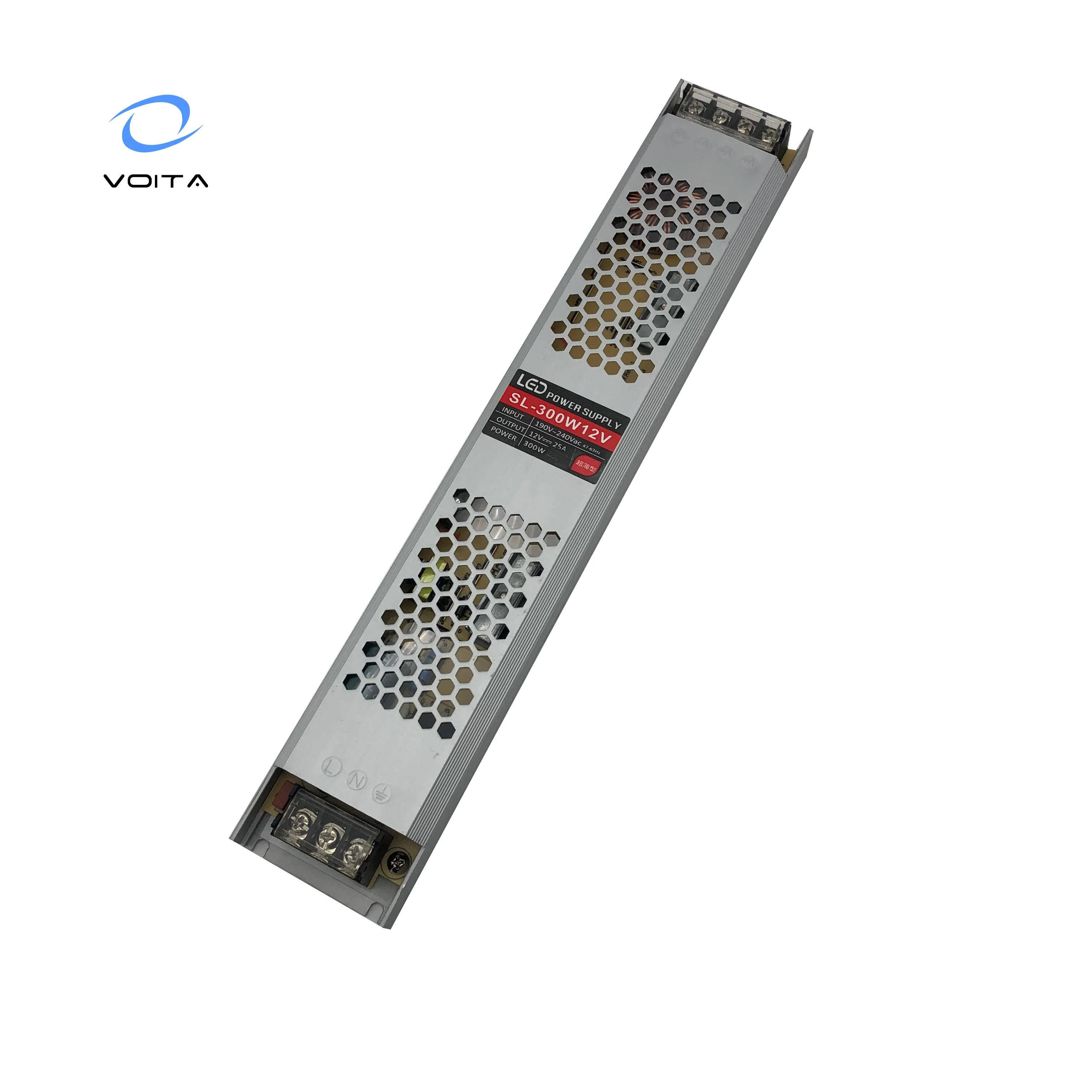
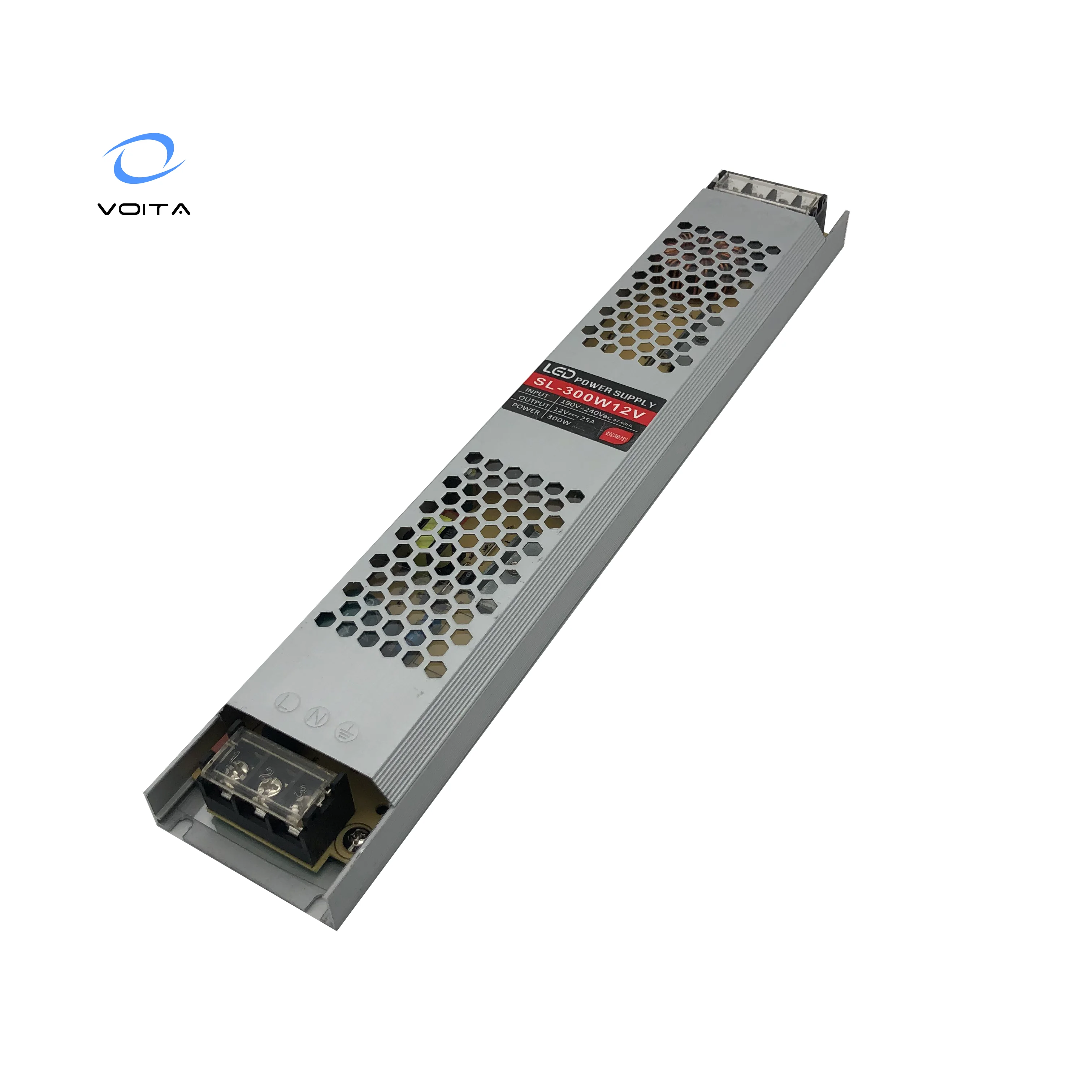
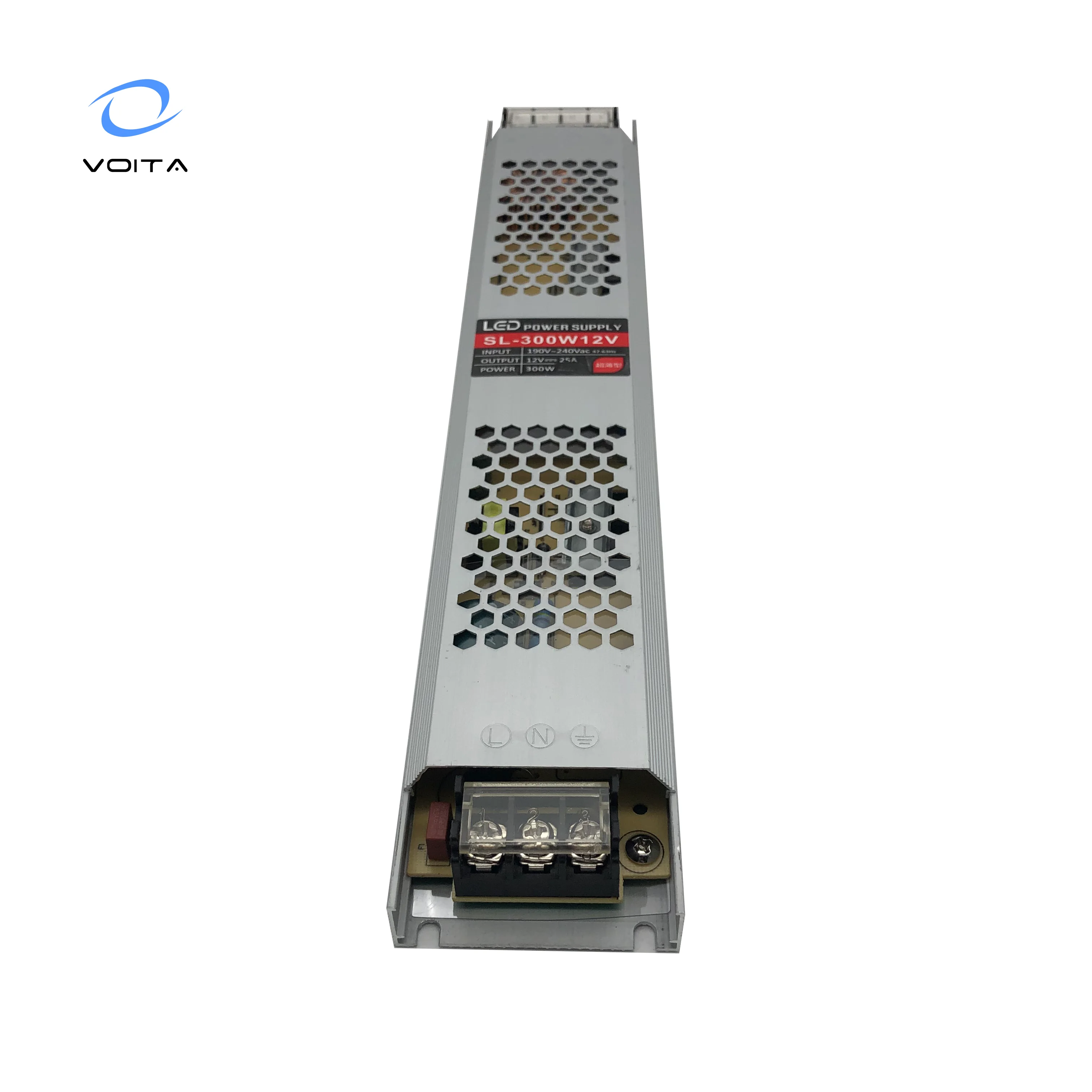
220v input 12v output ac to dc power supply 300w for light strip/security/industrial control
- Category: >>>
- Supplier: Guangzhou Voita Electronic Technology Co. Ltd.
Share on (1600997247249):
Product Overview
Description


Feature
1. 0-5V or 0-10V external control signal
2. Control voltage and current through PLC microcontroller touch screen
3. Protection: overload protection, short circuit protection, overcurrent protection, etc.
4. Imported filter ring capacitor, anti-interference, small ripple
2. Control voltage and current through PLC microcontroller touch screen
3. Protection: overload protection, short circuit protection, overcurrent protection, etc.
4. Imported filter ring capacitor, anti-interference, small ripple
Specification
Model | VT-S-300-12 |
type | LED power supply |
modulation mode | Pulse width modulation (PWM) type |
Transistor connection method | Half bridge type |
input voltage | AC190-240V |
output power | 60-400W |
output voltage | 12/24V |
work efficiency | 89 |
Output ripple noise | 120mVp-p |
Output voltage accuracy | 98 |
Product certification | CE ROHS |
Output curren | 0-33A |
working frequency | 47-63 |
specifications | 60W, 100W, 150W, 200W, 300W, 400W |
Applicable scope | LED card cloth lightbox, light strip, security, industrial control |
Working environment temperature | -40 ℃~65 ℃ |
Wiring at both ends | Protection level |
protection grade | IP20 |
Rated power | 60-400W |
Cooling fan type | Natural cooling |
Detailed Images
Our Service
1. Your inquiry will be replied within 24hrs.
2. OEM&ODM are welcome.
3. Distributorship will be offered for your unique design and some of our current models.
4. Protection of your sales area, ideas of design and all your private information.
5. Free replacement and maintaining are guaranteed in warranty period.
6. Skilled workers and strict quality inspection(QA Report)
7. 100% product quality protection. All of our products will be tested 100% before packing.
2. OEM&ODM are welcome.
3. Distributorship will be offered for your unique design and some of our current models.
4. Protection of your sales area, ideas of design and all your private information.
5. Free replacement and maintaining are guaranteed in warranty period.
6. Skilled workers and strict quality inspection(QA Report)
7. 100% product quality protection. All of our products will be tested 100% before packing.
Our Company



1. Is your industrial power supply constant voltage or constant current ?
Both support. It is constant voltage and constant current.
2.How does a constant voltage and current power supply maintain stability?
A constant voltage and current power supply uses various control mechanisms such as voltage feedback and current-limiting circuits to regulate the output. These mechanisms continuously monitor the output and make adjustments to maintain a steady voltage and current, even when the load or input voltage fluctuates.
3. Can a constant voltage and current power supply be used for any application?
Yes, a constant voltage and current power supply can be used in a wide range of applications. It is commonly used in electronics laboratories, manufacturing processes, telecommunications, and industrial automation. It is particularly beneficial when precision, stability, and reliability of the power source are essential.
4. What are the advantages of using a constant voltage and current power supply?
Some advantages of using a constant voltage and current power supply include protection against voltage or current spikes, prevention of damage to sensitive components, improved performance and efficiency of connected devices, and reduced risk of electrical hazards. Additionally, it allows for precise control and adjustment of the power output to meet specific requirements.
5. Is it possible to adjust the voltage and current output of a constant voltage and current power supply?
Yes, most constant voltage and current power supplies offer a range of adjustment options. They typically have controls or knobs that allow users to set the desired voltage and current levels within specific limits. This flexibility enables compatibility with a variety of devices and applications.
6. Can a constant voltage and current power supply protect against short circuits?
Yes, most constant voltage and current power supplies have built-in protection against short circuits. When a short circuit occurs in the connected circuit, the power supply automatically detects the excessive current and shuts off or limits the output to prevent damage to the power supply or the connected devices.
7.What is the difference between a constant voltage power supply and a constant current power supply?
A constant voltage power supply maintains a steady output voltage regardless of the load resistance, while a constant current power supply keeps the current flowing through the circuit constant. Constant voltage power supplies are more common and suitable for most applications, while constant current power supplies are commonly used in applications such as LED lighting or electroplating.
8. Can a constant voltage and current power supply be used for charging batteries?
Yes, a constant voltage and current power supply can be used for charging batteries. It provides a controlled and regulated output to ensure that the battery is charged properly without being overcharged or damaged. The power supply adjusts the charging voltage and current based on the battery’s requirements to optimize the charging process.
9. Are there any safety precautions to consider when using a constant voltage and current power supply?
Yes, it is essential to follow safety guidelines when using a constant voltage and current power supply. Always ensure that the power supply is properly grounded and connected to the appropriate voltage source. Avoid short circuits, handle high current outputs with care, and read and understand the manufacturer’s instructions and warnings before use. Additionally, it is advisable to use appropriate personal protective equipment when working with any electrical equipment.
10.Can industrial power supplies be used in harsh environments?
Both support. It is constant voltage and constant current.
2.How does a constant voltage and current power supply maintain stability?
A constant voltage and current power supply uses various control mechanisms such as voltage feedback and current-limiting circuits to regulate the output. These mechanisms continuously monitor the output and make adjustments to maintain a steady voltage and current, even when the load or input voltage fluctuates.
3. Can a constant voltage and current power supply be used for any application?
Yes, a constant voltage and current power supply can be used in a wide range of applications. It is commonly used in electronics laboratories, manufacturing processes, telecommunications, and industrial automation. It is particularly beneficial when precision, stability, and reliability of the power source are essential.
4. What are the advantages of using a constant voltage and current power supply?
Some advantages of using a constant voltage and current power supply include protection against voltage or current spikes, prevention of damage to sensitive components, improved performance and efficiency of connected devices, and reduced risk of electrical hazards. Additionally, it allows for precise control and adjustment of the power output to meet specific requirements.
5. Is it possible to adjust the voltage and current output of a constant voltage and current power supply?
Yes, most constant voltage and current power supplies offer a range of adjustment options. They typically have controls or knobs that allow users to set the desired voltage and current levels within specific limits. This flexibility enables compatibility with a variety of devices and applications.
6. Can a constant voltage and current power supply protect against short circuits?
Yes, most constant voltage and current power supplies have built-in protection against short circuits. When a short circuit occurs in the connected circuit, the power supply automatically detects the excessive current and shuts off or limits the output to prevent damage to the power supply or the connected devices.
7.What is the difference between a constant voltage power supply and a constant current power supply?
A constant voltage power supply maintains a steady output voltage regardless of the load resistance, while a constant current power supply keeps the current flowing through the circuit constant. Constant voltage power supplies are more common and suitable for most applications, while constant current power supplies are commonly used in applications such as LED lighting or electroplating.
8. Can a constant voltage and current power supply be used for charging batteries?
Yes, a constant voltage and current power supply can be used for charging batteries. It provides a controlled and regulated output to ensure that the battery is charged properly without being overcharged or damaged. The power supply adjusts the charging voltage and current based on the battery’s requirements to optimize the charging process.
9. Are there any safety precautions to consider when using a constant voltage and current power supply?
Yes, it is essential to follow safety guidelines when using a constant voltage and current power supply. Always ensure that the power supply is properly grounded and connected to the appropriate voltage source. Avoid short circuits, handle high current outputs with care, and read and understand the manufacturer’s instructions and warnings before use. Additionally, it is advisable to use appropriate personal protective equipment when working with any electrical equipment.
10.Can industrial power supplies be used in harsh environments?
Yes, industrial power supplies are specifically built to withstand challenging environments often found in industries. They are constructed with rugged enclosures, protected circuitry, and insulation against dust, moisture, and temperature extremes. Industrial power supplies are designed to meet industry-specific standards for environmental resistance and operational reliability.

We Recommend

New Arrivals
New products from manufacturers at wholesale prices