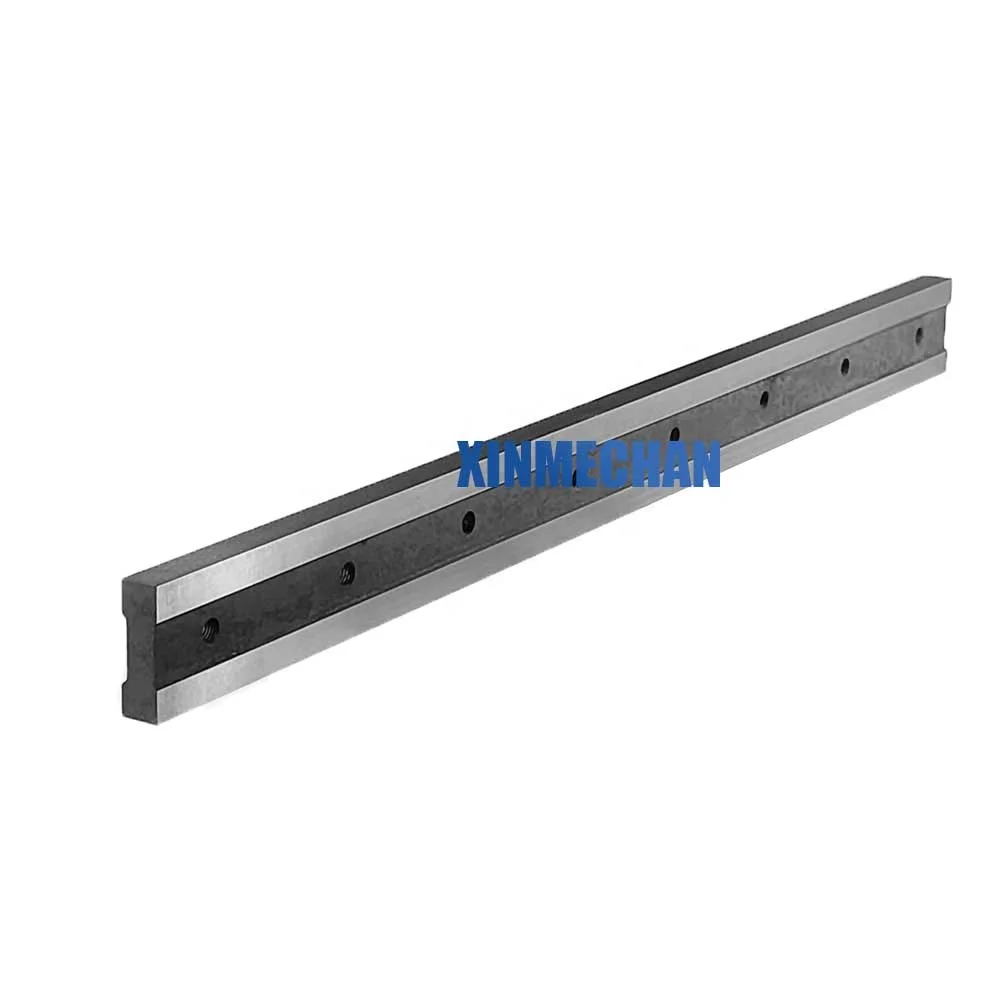
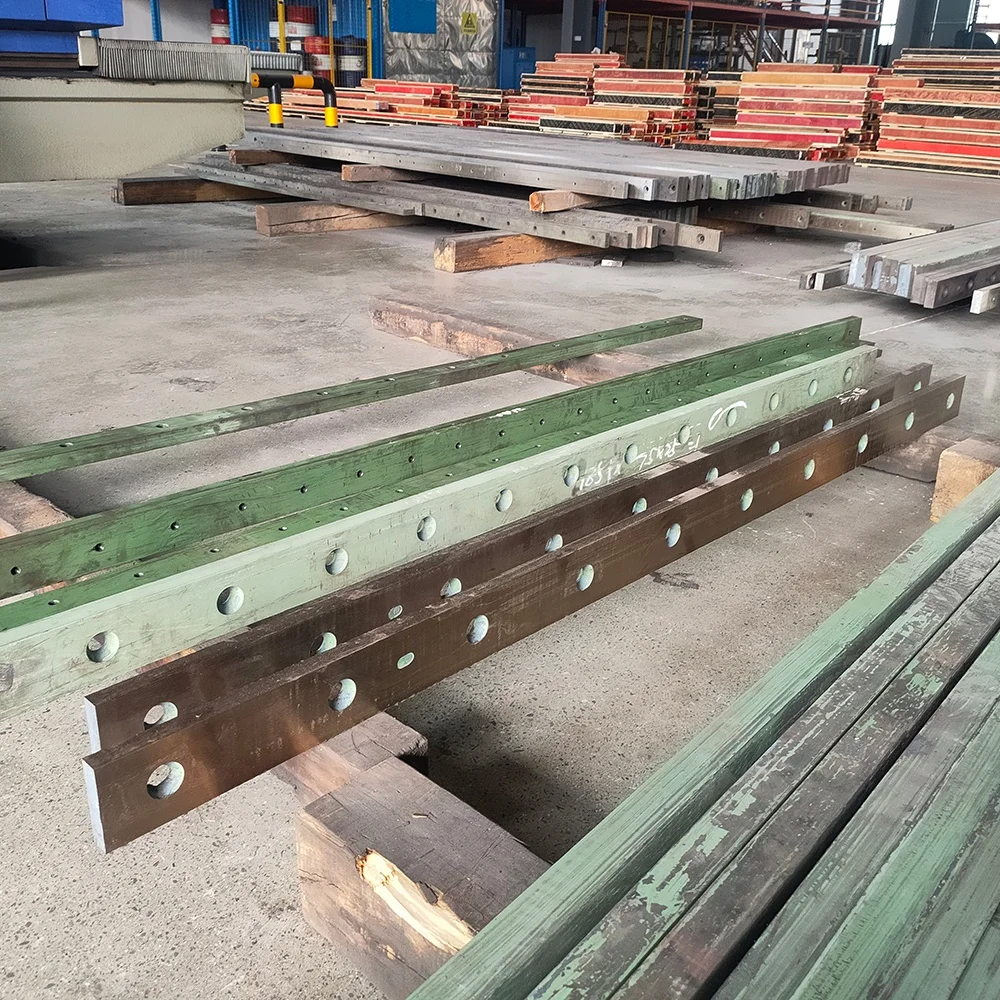
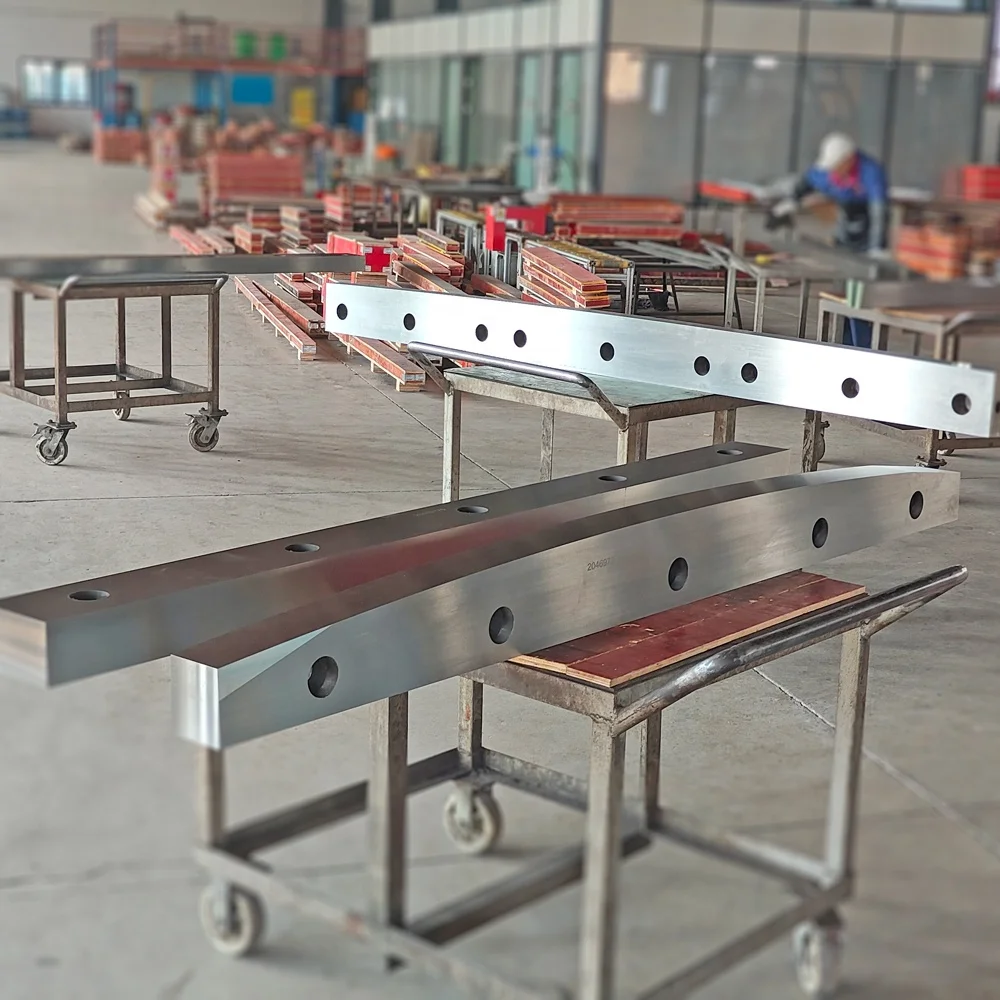
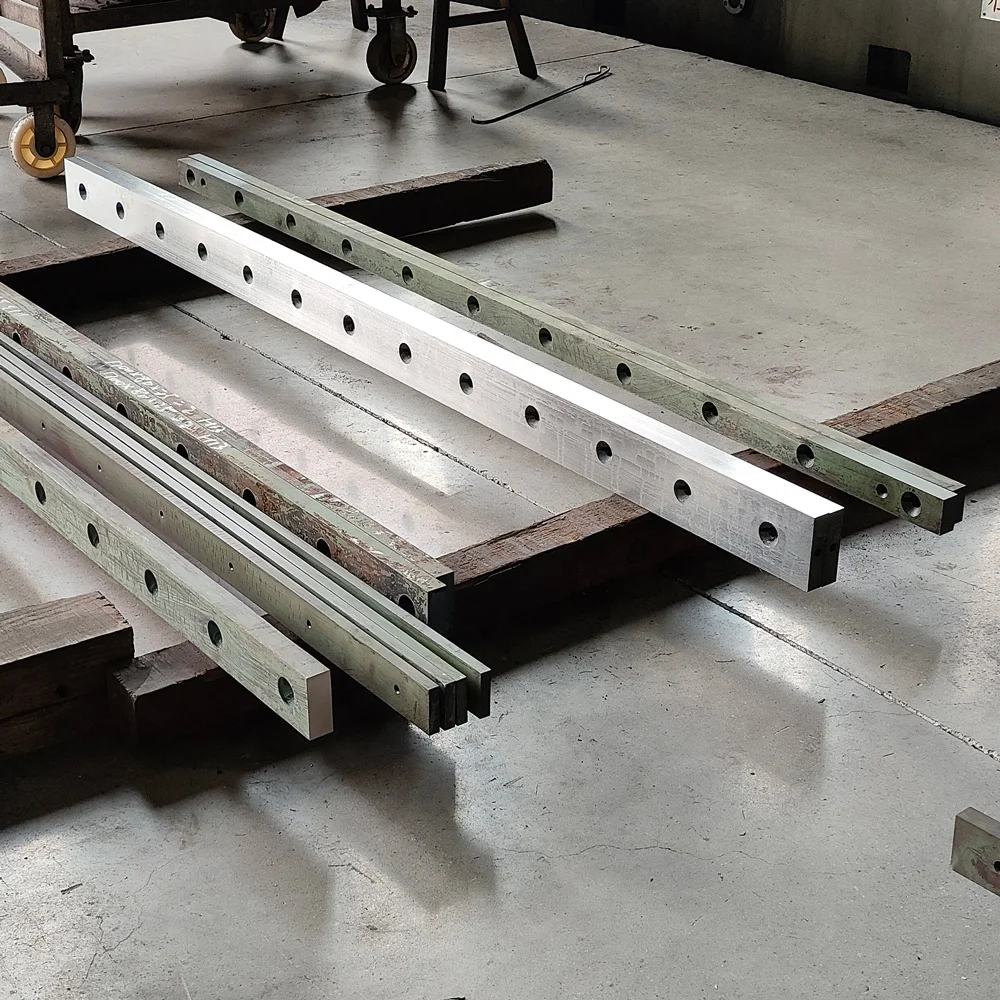
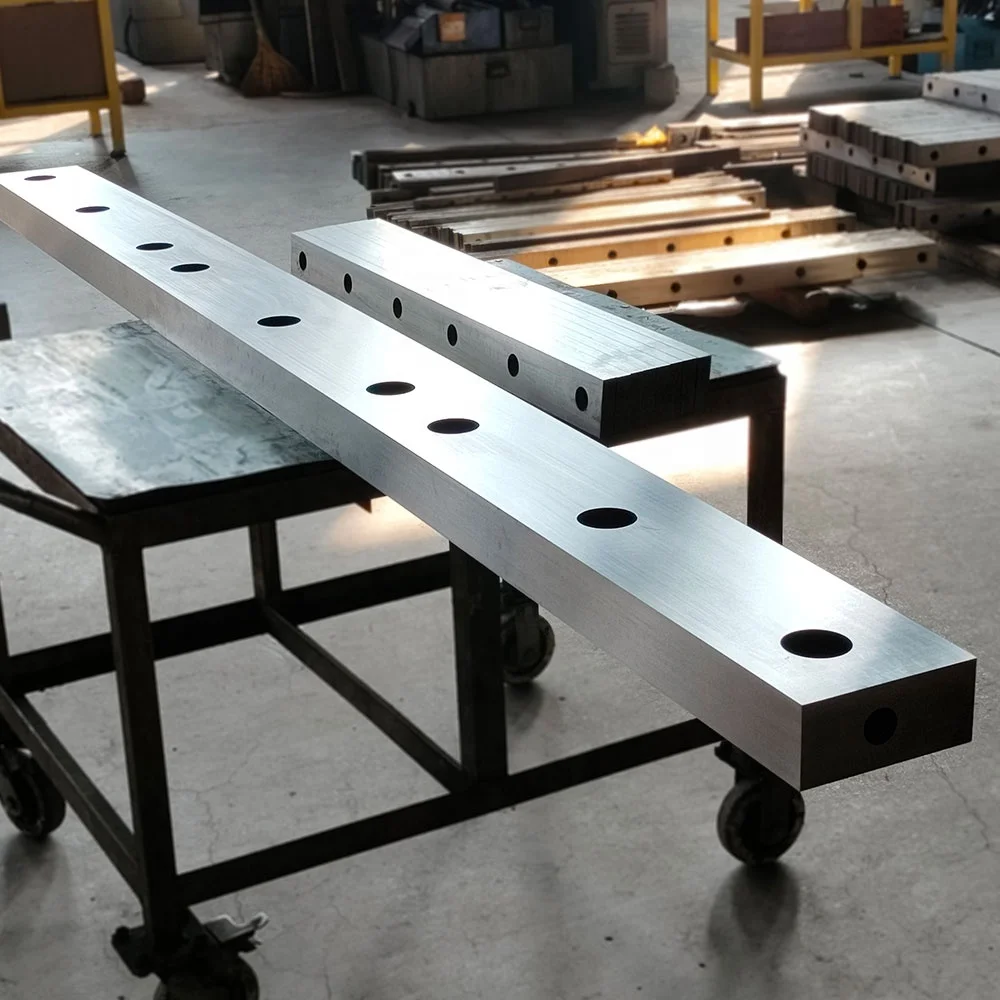
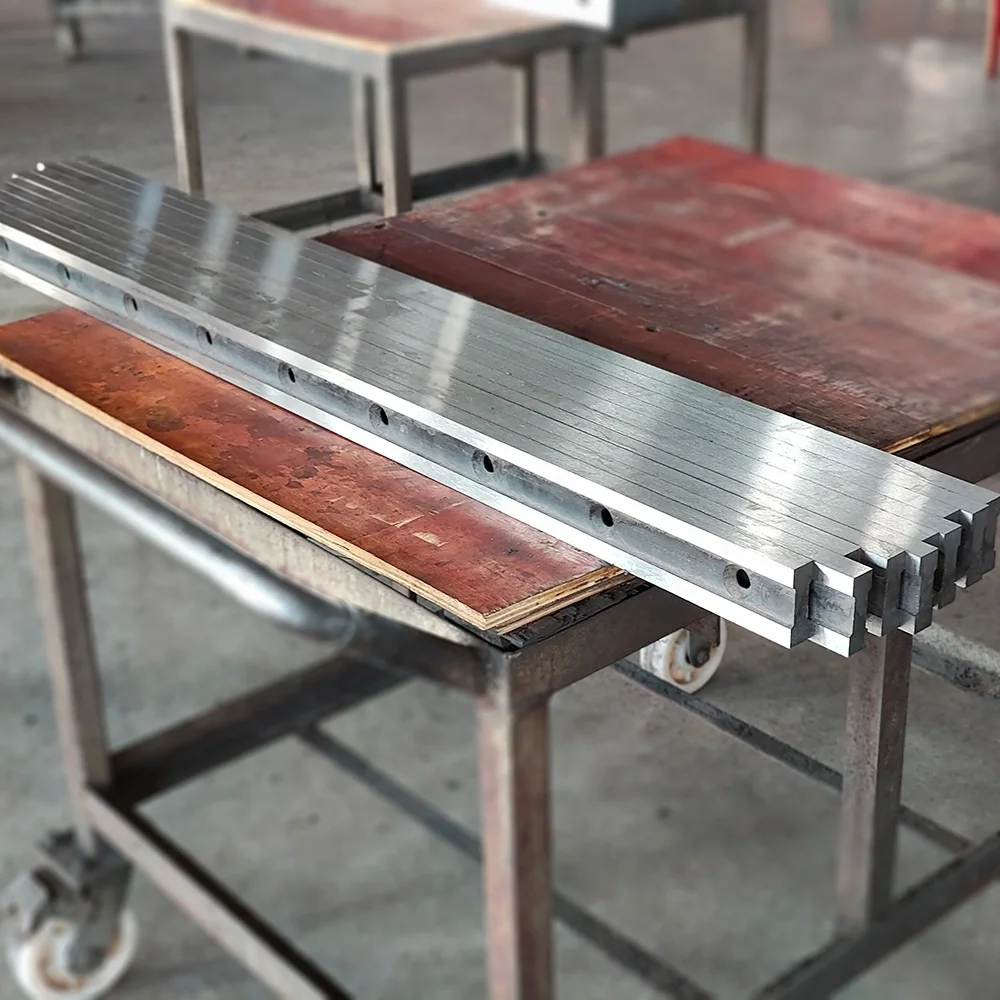
Guillotine Shear Blade for Hydraulic Shearing Machine
- Category: >>>
- Supplier: Jiangsu Xinmechan Technology Co. Ltd.
Share on (1601019967482):
Product Overview
Description
Product Description


Specification | ||
Length | 1050mm, 3150mm, or customized | |
Material | Alloy tool steel 9CrSi/Cr12MoV/D2/1.2379/SKD11/H13, High Speed Steel, ASP, or customized | |
Hardness | Optimized hardness for enhanced wear resistance and cutting performance | |
Tolerance | Exceed OEM specification | |
OEM Service | Available | |
Packing | Wooden boxes, standard export packaging | |
Application | Metal Sheet Processing Shear Machine knife & blade | |
Delivery time | 30 days after deposit be received | |
Our shear blades are expertly designed and manufactured to deliver precise and efficient cutting performance. Made from
premium-grade materials, such as alloy steel or high-speed steel, our shear blades offer exceptional durability and longevity.With their sharp cutting edges and excellent wear resistance, they ensure clean and accurate cuts every time.
premium-grade materials, such as alloy steel or high-speed steel, our shear blades offer exceptional durability and longevity.With their sharp cutting edges and excellent wear resistance, they ensure clean and accurate cuts every time.

Key Features
1. Superior Cutting Performance
2. Durability and Longevity
3. Precision and Accuracy
4. Optimal Efficiency
5. Versatile Applications

Choose Us
1. Exceptional cutting performance and durability
2. Precision-engineered for clean and accurate cuts3. Reliable and trusted supplier with a proven track record
Materials - 1 | ||||||||
GB | ASTM | JIS | DIN | W-Nr | ||||
9CrSi | - | 90CrSi5 | 1.2108 | |||||
6CrW2Si | - | - | 60WCrV7 | 1.255 | ||||
Cr12MoV | - | SKD11 | X165CrMov12 | 1.2601 | ||||
Cr12Mo1V1 | D2 | - | X155Cr12Mo12-1 | 1.2379 | ||||
4Cr5MoSiVl | H13 | SKD61 | X40CrMoV5-1 | 1.2344 | ||||
LD | - | - | - | - | ||||
W18Cr4V | T1 | SKH2 | S18-0-1 | 1.3355 | ||||
W6Mo5Cr4V2 | M2 | SKH9 | S6-5-2 | 1.3343 | ||||
45 | 1450 | S45C | C45E | 1.1191 | ||||
42CrMo | 4140 | SCM44O | 42CrMo4 | 1.7225 | ||||
T8 | w1a-8 | SK5 | C80W2 | 1.1625 | ||||
Materials - 2 | ||||||
GB | NF | ROCT | ISO | |||
9CrSi | - | 9XC | - | |||
6CrW2Si | 55WC20 | 6XB2C | 60WCrV7 | |||
Cr12MoV | - | X12M | - | |||
Cr12Mo1V1 | X160CrMoV12 | - | 160CrMoV12 | |||
4Cr5MoSiVl | X40CrMoV5 | 4X5MO1C | 40CrMoV5 | |||
LD | - | - | - | |||
W18Cr4V | HS18-0-1 | P18 | HS18-0-1 | |||
W6Mo5Cr4V2 | - | P6M5 | HS6-5-2 | |||
45 | C45E | 45 | C45EC | |||
42CrMo | 42CD4 | - | 42CrMo4 | |||
T8 | C80E2U | Y6 | TC80 | |||
Company Introduction

At XINMECHAN, we take pride in being a trusted manufacturer and supplier of high-quality shear blades. With years of
experience and expertise in the industry, we are committed to providing our customers with precision-engineered blades that deliver exceptional cutting performance.
experience and expertise in the industry, we are committed to providing our customers with precision-engineered blades that deliver exceptional cutting performance.
Our Commitment to Quality | ||||
Impeccable Craftsmanship | Precision Engineering | Rigorous Quality Control | ||
Customization and Flexibility | Customer Satisfaction | Wide Range of Applications | ||
Choose XINMECHAN as your trusted partner for high-quality shear blades that excel in performance and durability. Contact us today to discuss your blade needs and experience the precision and reliability our blades offer.
Certifications

Product packaging

Recommend Products
FAQ
Q1: What are shear blades?
A1: Shear blades are specialized cutting tools used in industrial machinery, such as shearing machines,for cutting various materials, including metal sheets, coils, tubes, and bars. They are designed to deliver clean and precise cutswith high efficiency.
Q2: What materials are shear blades made of?
Q3: What factors should I consider when choosing shear blades?
Q4: How often should shear blades be sharpened or replaced?
Q5: Can shear blades be customized for specific cutting applications?
Q6: How to maintain shear blades for optimal performance?
Q7: Are shear blades compatible with all shearing machines?
Q8: How can I find a reliable supplier for shear blades?
Q9: Can shear blades be resharpened or reconditioned?
Q10: What are the typical industries that utilize shear blades?
Q2: What materials are shear blades made of?
A2: Shear blades are typically made of high-quality materials, such as alloy steel or high-speed steel. These materials offer excellent hardness, wear resistance, and toughness, ensuring durability and long-lasting performance.
Q3: What factors should I consider when choosing shear blades?
A3: When choosing shear blades, consider factors such as the specific application, material to be cut, required blade thickness, blade length, and hardness. It’s also important to select blades from a reliable supplier with a proven track record in manufacturing high-quality shear blades.
Q4: How often should shear blades be sharpened or replaced?
A4: The frequency of sharpening or replacing shear blades depends on several factors, including the type of material being cut, the intensity of use, and the quality of blade maintenance. As a general guideline, blades should be inspected regularly, and sharpening or replacement should be done when there is a noticeable decline in cutting performance.
Q5: Can shear blades be customized for specific cutting applications?
A5: Yes, shear blades can be customized to meet specific cutting requirements. Customization options may include blade thickness, length, and blade profile, tailored to match the material and cutting process. It’s recommended to consult with shear blade manufacturers who offer customization services.
Q6: How to maintain shear blades for optimal performance?
A6: Proper maintenance is essential for maximizing the performance and lifespan of shear blades. Regular cleaning, lubrication, and inspection for damage or wear are recommended. Additionally, following recommended cutting parameters and storing blades in a safe and dry environment can help extend their longevity.
Q7: Are shear blades compatible with all shearing machines?
A7: Shear blades come in various sizes and configurations to fit different types of shearing machines. It’s important to ensure compatibility between the shear blades and the specific machine model and design. Consulting with the manufacturer or supplier can help determine the right blade for your shearing machine.
Q8: How can I find a reliable supplier for shear blades?
A8: Finding a reliable supplier for shear blades involves conducting thorough research, considering factors such as the supplier’s experience, reputation, product quality, and customer reviews. It’s recommended to request samples or references and thoroughly evaluate the supplier’s capabilities before making a decision.
Q9: Can shear blades be resharpened or reconditioned?
A9: Yes, shear blades can often be resharpened or reconditioned to restore their cutting performance. Resharpening can involve grinding the blade’s cutting edge to regain sharpness. Reconditioning may involve repairing any damage, restoring the blade’s original shape and profile. It’s advisable to consult with a professional service provider for blade resharpening or reconditioning.
Q10: What are the typical industries that utilize shear blades?
A10: Shear blades are widely used in industries such as metal fabrication, automotive manufacturing, appliance manufacturing, steel service centers, and more. These blades play a crucial role in cutting.

We Recommend
New Arrivals
New products from manufacturers at wholesale prices