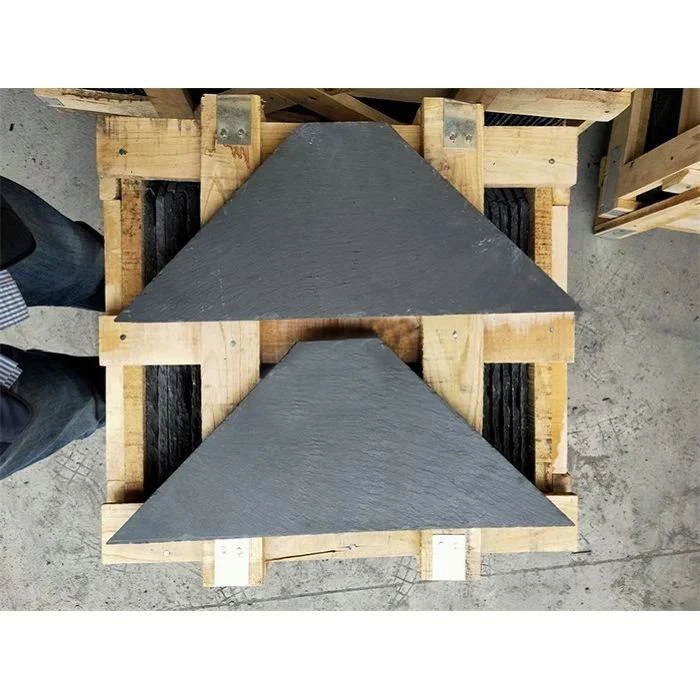
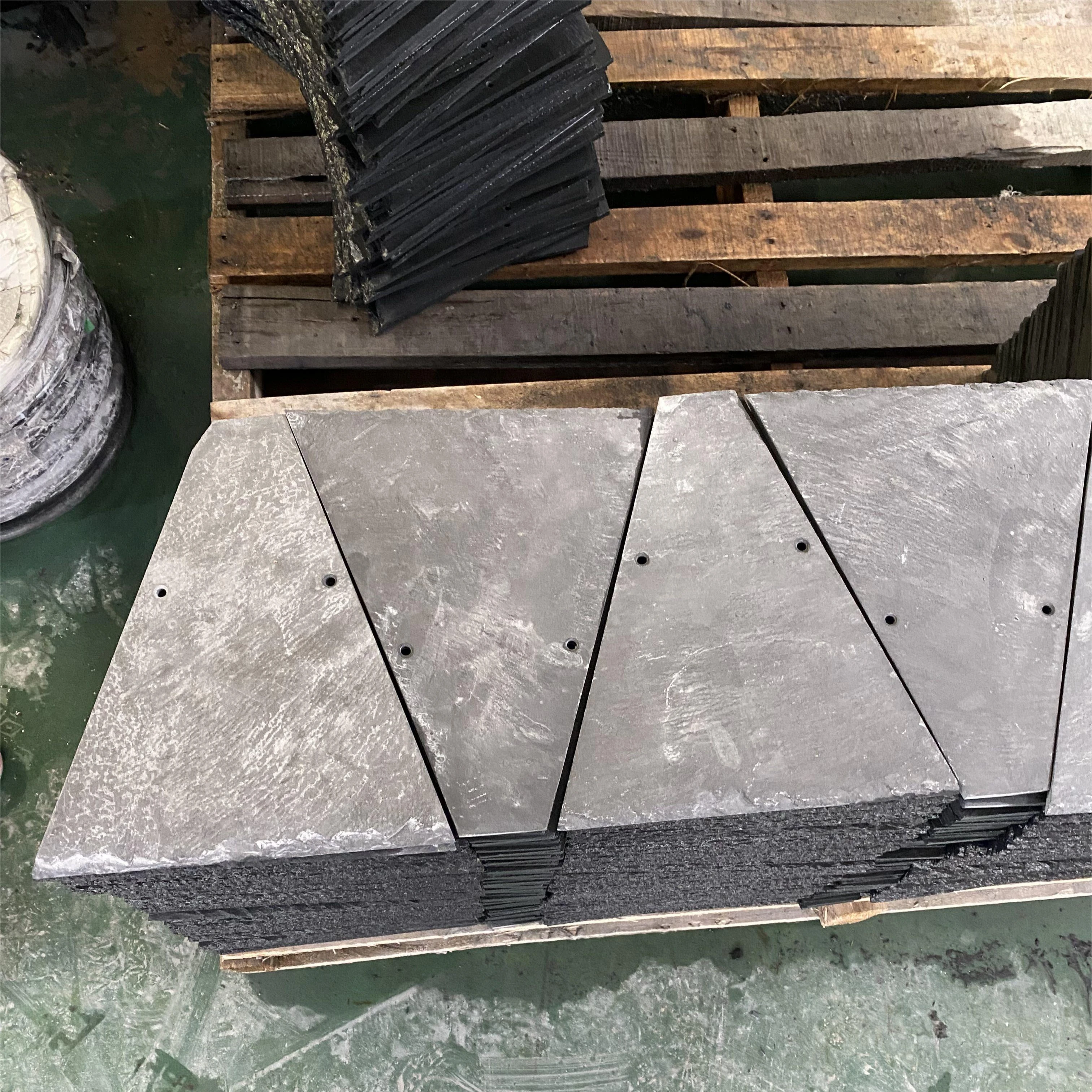
Outdoor Roof Sheet Panels Custom Stone Roofing Tiles Black Shingles Slate Triangular Roof Tiles Decorative With Pointed Angles
- Category: >>>
- Supplier: Lushan Shenlan Stone Co. LTD
Share on (1601024748845):
Product Overview
Description

Product details

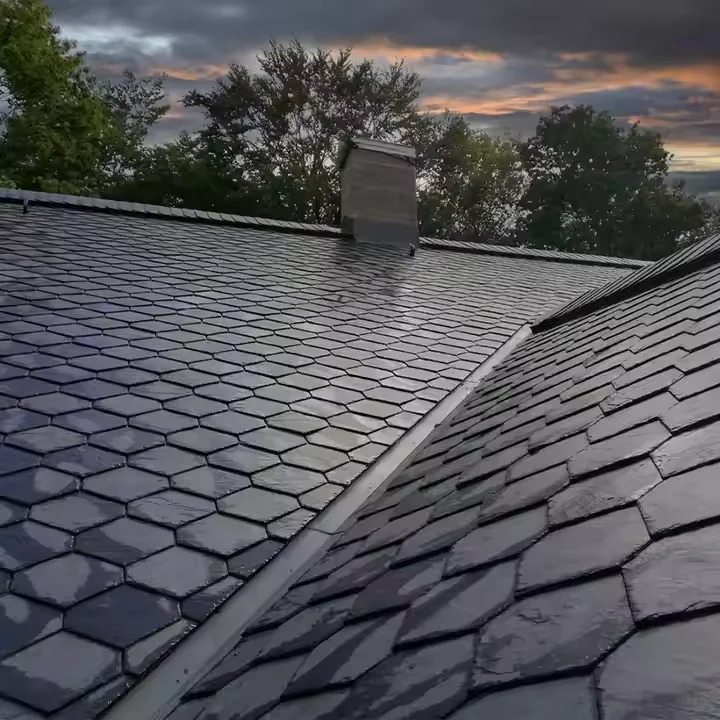
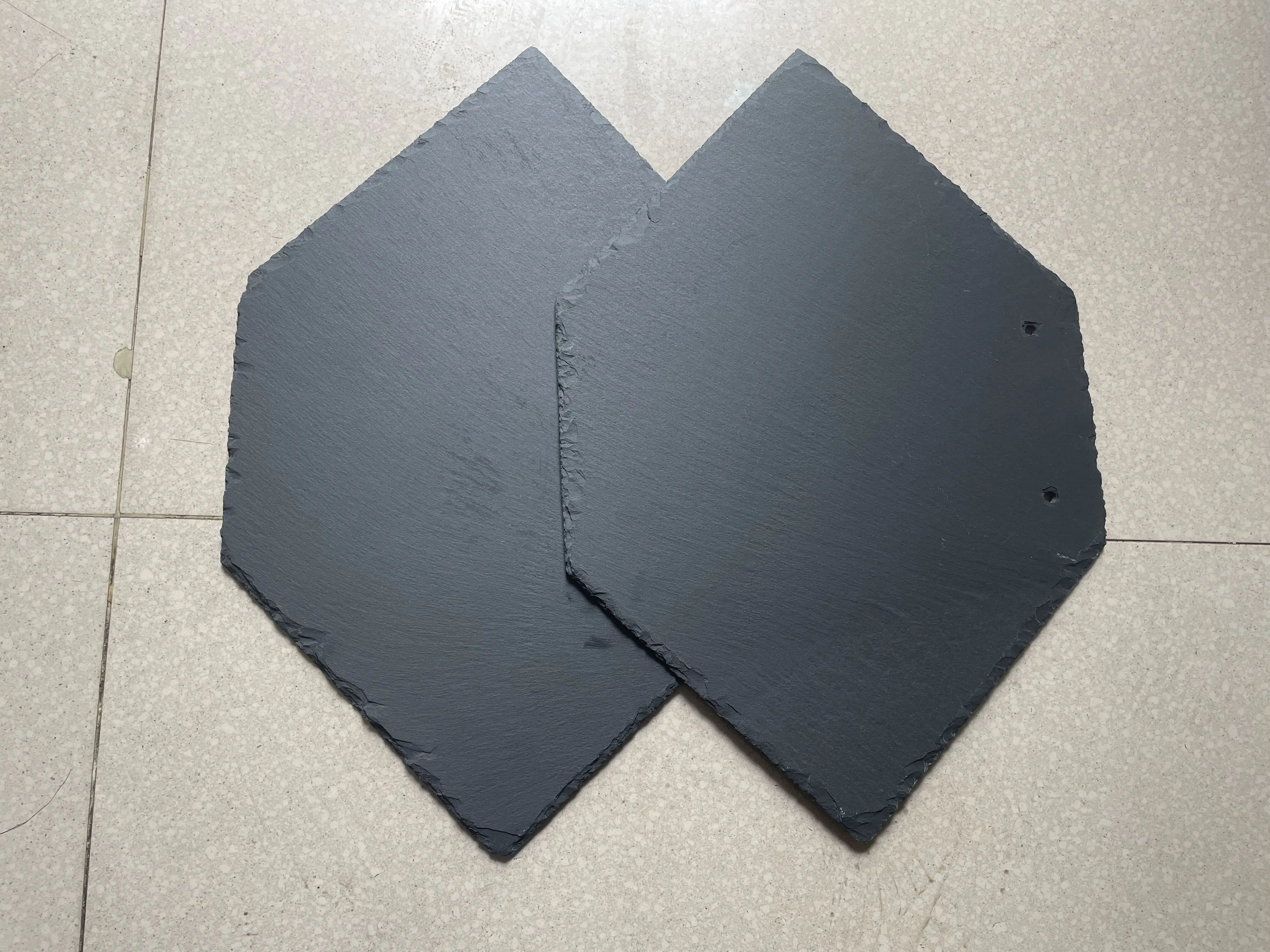
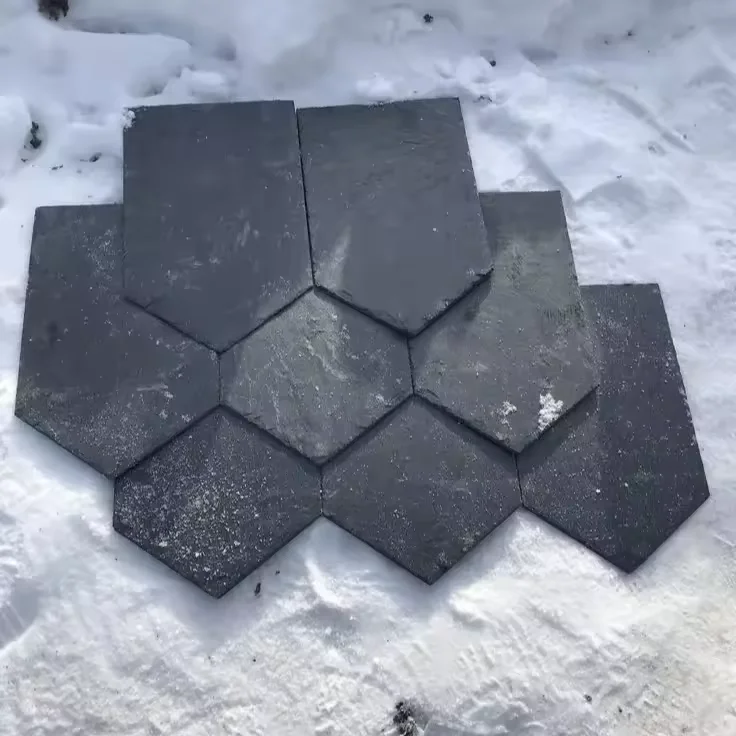
Black slate.
A heavy texture, non-weathering and unfading stone ,Split to an average thickness of 4-7mm.7-9mm,Its extra thickness of 7-8 mm gives it the perfect strength to withstand any weather conditions while boosting the value of any property.
color | blcak ,green ,rust |
surface | natural split |
size | 300x200mm 350x220mm 400x200mm 400x250mm 500x250mm 600x300mm 450x250mm and etc |
thicknesses | 4-7 to 7-9mm |
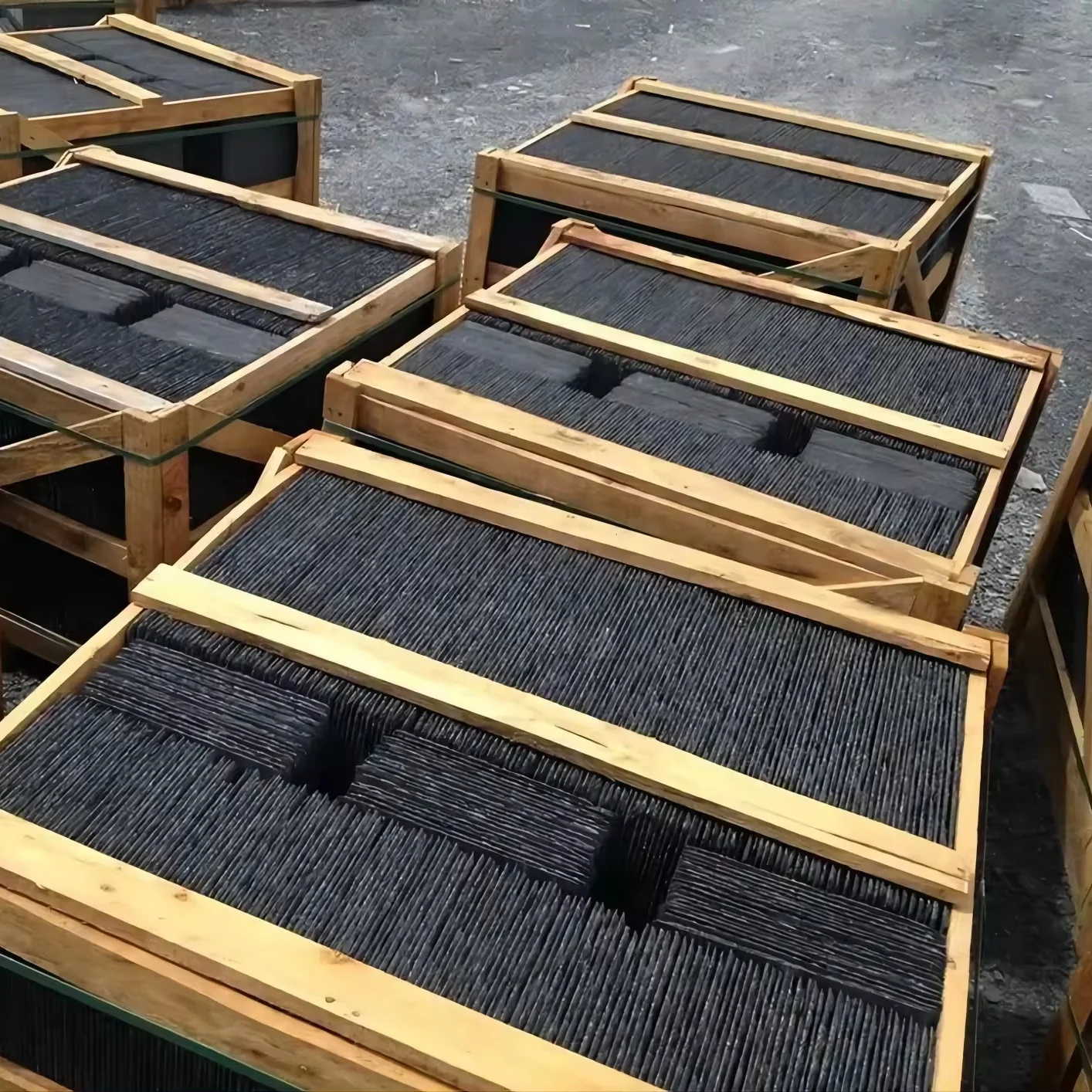
Packing | Seaworthy Fumigated Wooden Crate |
Warranty | Eligible for 75-year |
Certification | CE, SGS |
Formats
Rectangular is the most common model(Type A). If you are interested in other formats or sizes please contact us.
Rectangular is the most common model(Type A). If you are interested in other formats or sizes please contact us.


All slate roofing slates are pre-dilled with two nail holes.


Contact us for free samples
Product Gallery
-------


Who We Serve
Homeowners
Slate is a mark of distinction for homes around the world.
Contractors
Attention to detail, superior quality, and on time delivery.
Architects
Want a slate sample?
We have stock to provide free samples.We value our clients, and it shows in every interaction Good things happen when you talk to us!
Product packaging


Recommend to you

Company View

Our Advantages

Certifications

Payment Term


FAQ
Weathering vs. Non-Weathering
Weathering Slates
Weathering slates will change color as they age with most weathering occurring in the first 1 to 3 years but can continue to change infinitely. Weathering slate provides the natural earth tones of bronze, browns, buffs, cream colors which eventually become a blend on the roof. Colors tend to be on the lighter end of the spectrum with light grays, greens which can provide a more natural “country cottage” or “old world” look to a home. Almost all domestic slate weathers to some degree.
Non-Weathering Slates
Non-Weather slates, as their namesake states, hold their colors and tend to be the darker colors of blacks and grays.
Non-Weathering slates are most visible on the more formal structures in Georgian and Gothic styles of architecture.
Non-Weathering slates are most visible on the more formal structures in Georgian and Gothic styles of architecture.
Existing Slate Roofs
Existing slate roofs on residences are probably about 50% Weathering vs. 50% Non-Weathering, commercial (churches, courthouses,universities, etc.) are about 20% Weathering vs. 80% Non-Weathering. This percentage changes on the region. For instance:Weathering is more common on homes in the Northeast, while Non-Weathering slate is more common in the Southeast.
Random Width vs. Constant Width
Random Width Slate Roof
Random width is the combination of two or more widths of slate roofing tiles randomly installed to provide a “broken” or random pattern of key way spacing the side space between the slate in one horizontal course. Random width is most common on residential installations and tends to the more natural look.
Constant Width Slate Roof
Constant width installations are where a single width of slate tile is installed on the roof. In this case the key way spaces in alternate horizontal courses line up to create a more uniform pattern on the roof and provide a more formal style. Constant width is often seen on commercial projects, churches, courthouses, educational/institutional buildings and large very formal residential projects.
On residential slate roofing projects:
16″ to 18″ random width, 16″ x 8″ or 10″, 18″ x 12″, and 20″ x 10″ constant width are the most common sizes.
On commercial slate roofing projects:
16″, 18″ and 20″ random are often seen, but 20″ x 10″ and 24″ x 12″ are more common on large formal projects. The standard thickness of slate is 3/16″ to 1/4″ for smooth textured products and 1/4″ to 3/8″ for heavier textured stone. About 90% of all slate projects use standard thickness, but the other 10% can range from 3/16″ all the way to 1″. A “Graduated thickness” slate roof is an installation where the lower sections of the slate roof have “heavy” or extra thick slate and then the slate goes down in thickness as it progresses up toward the peak. These installations are somewhat more complicated but can provide a more dramatic texture on the slate roof. “Graduation” tends toward the more natural and is almost unseen in combination with constant width jobs. Weight Consideration: Most homes, where slate is a consideration, can support the weight of standard thickness slate roof with out modification. Standard slate weighs about 8 lbs. per square foot, but varies with color and texture. In situations where the weight is too high, bracing of rafter spans is usually relatively inexpensive. We can provide guidelines and recommend roof structure consultants to determine the feasibility. In the end it is “better to be safe than sorry” so if the house is not designed for the weight of “hard roof products”, it should be investigated.
Standard vs. Custom (Size & Thickness)
Expressed as Length x Width x Thickness
On residential slate roofing projects, 16″ to 18″ random width, 16″ x 8″ or 10″, 18″ x 12″, and 20″ x 10″ constant width are the most common sizes.
On commercial slate roofing projects 16″, 18″ and 20″ random are often seen, but 20″ x 10″ and 24″ x 12″ are more common on large formal projects.
The standard thickness of slate is 3/16″ to 1/4″ for smooth textured products and 1/4″ to 3/8″ for heavier textured stone. About 90% of all slate projects use standard thickness, but the other 10% can range from 3/16″ all the way to 1″. A “Graduate thickness” slate roof is an installation where the lower sections of the slate roof have “heavy” or extra thick slate and then the slate goes down in thickness as it progresses up toward the peak. These installations are somewhat more complicated but can provide a more dramatic texture on the slate roof. “Graduation” tends toward the more natural and is almost unseen in combination with constant width jobs.
On commercial slate roofing projects 16″, 18″ and 20″ random are often seen, but 20″ x 10″ and 24″ x 12″ are more common on large formal projects.
The standard thickness of slate is 3/16″ to 1/4″ for smooth textured products and 1/4″ to 3/8″ for heavier textured stone. About 90% of all slate projects use standard thickness, but the other 10% can range from 3/16″ all the way to 1″. A “Graduate thickness” slate roof is an installation where the lower sections of the slate roof have “heavy” or extra thick slate and then the slate goes down in thickness as it progresses up toward the peak. These installations are somewhat more complicated but can provide a more dramatic texture on the slate roof. “Graduation” tends toward the more natural and is almost unseen in combination with constant width jobs.
Weight Consideration:
Most homes where slate is a consideration can support the weight of standard thickness slate roof with out mondification. Standard slate weighs about 8 lbs. per square foot, but varies with color and texture. In situations where the weight is too high, bracing of rafter spans is usually simple and relatively inexpensive. We can provide guidelines and recommend roof structure consultants to determine the feasibility. In the end it is “better to be safe than sorry” so if the house is not designed for the weight of “hard roof products”, it should be investigated.
We Recommend


New Arrivals
New products from manufacturers at wholesale prices