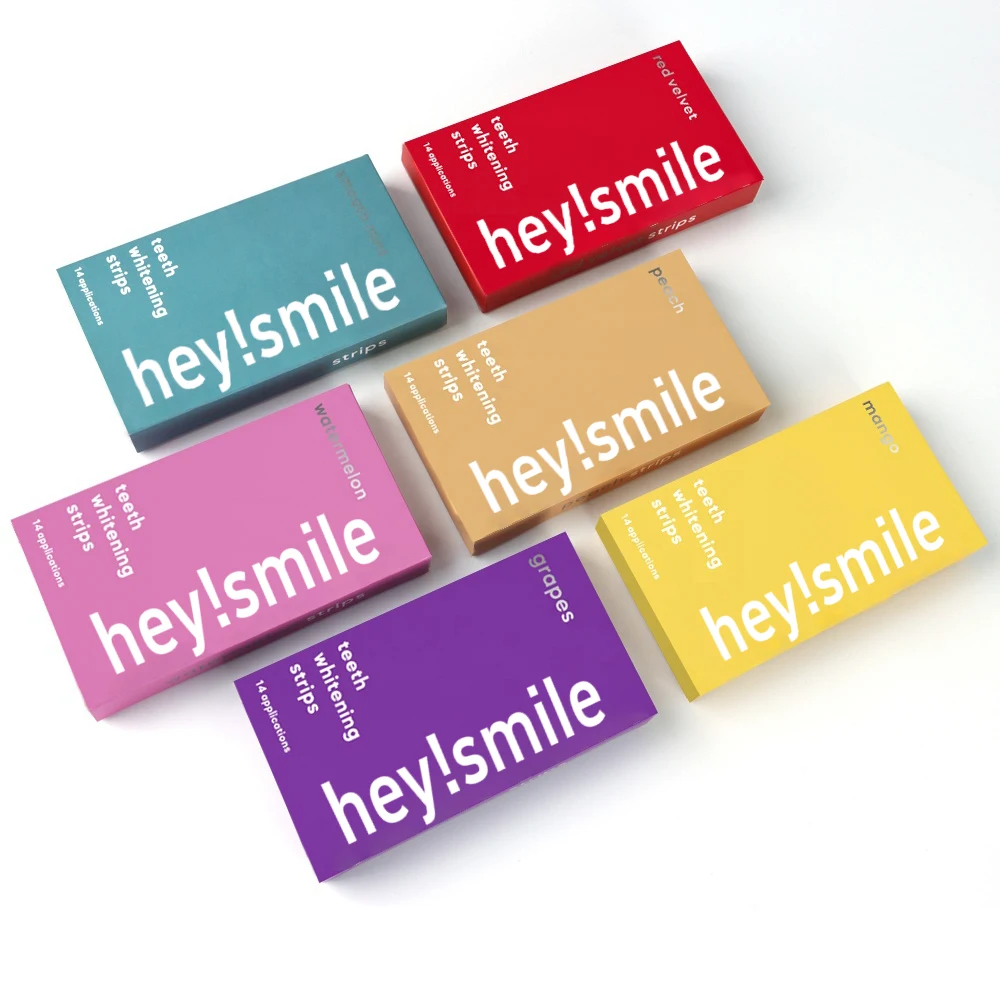
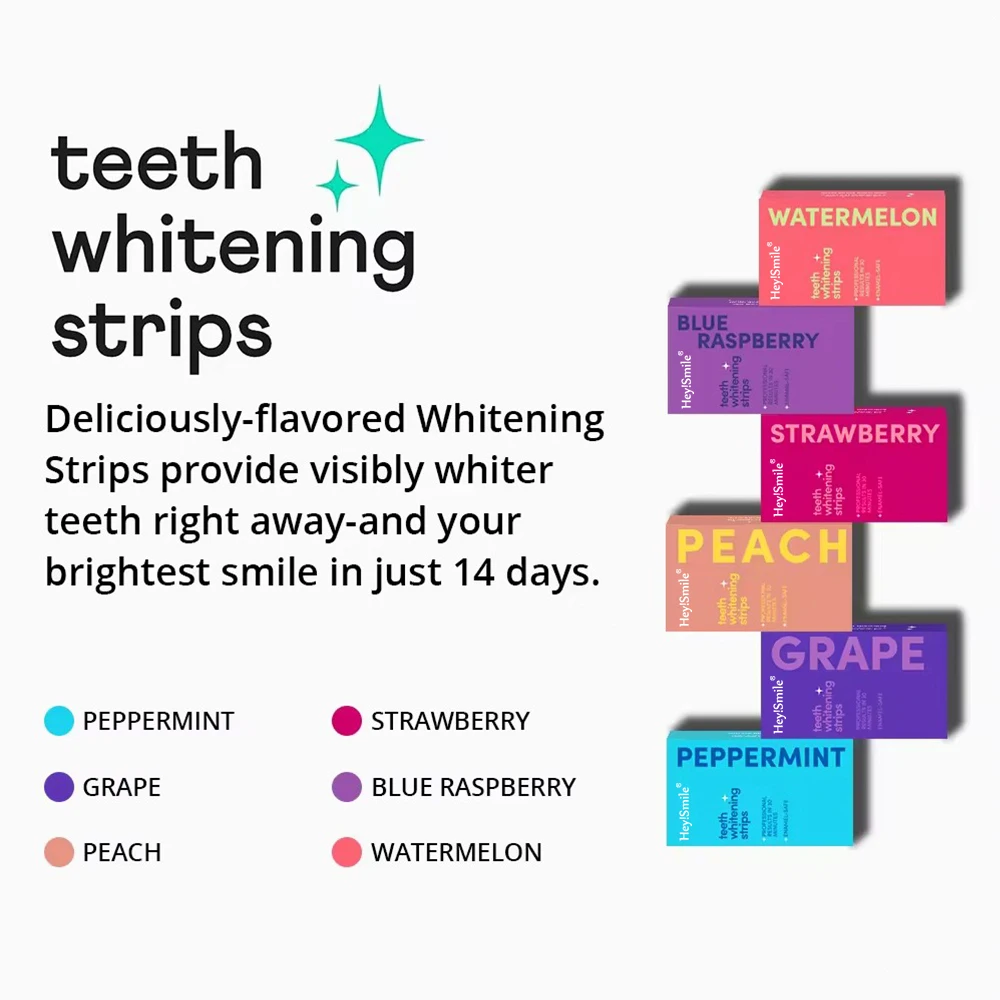
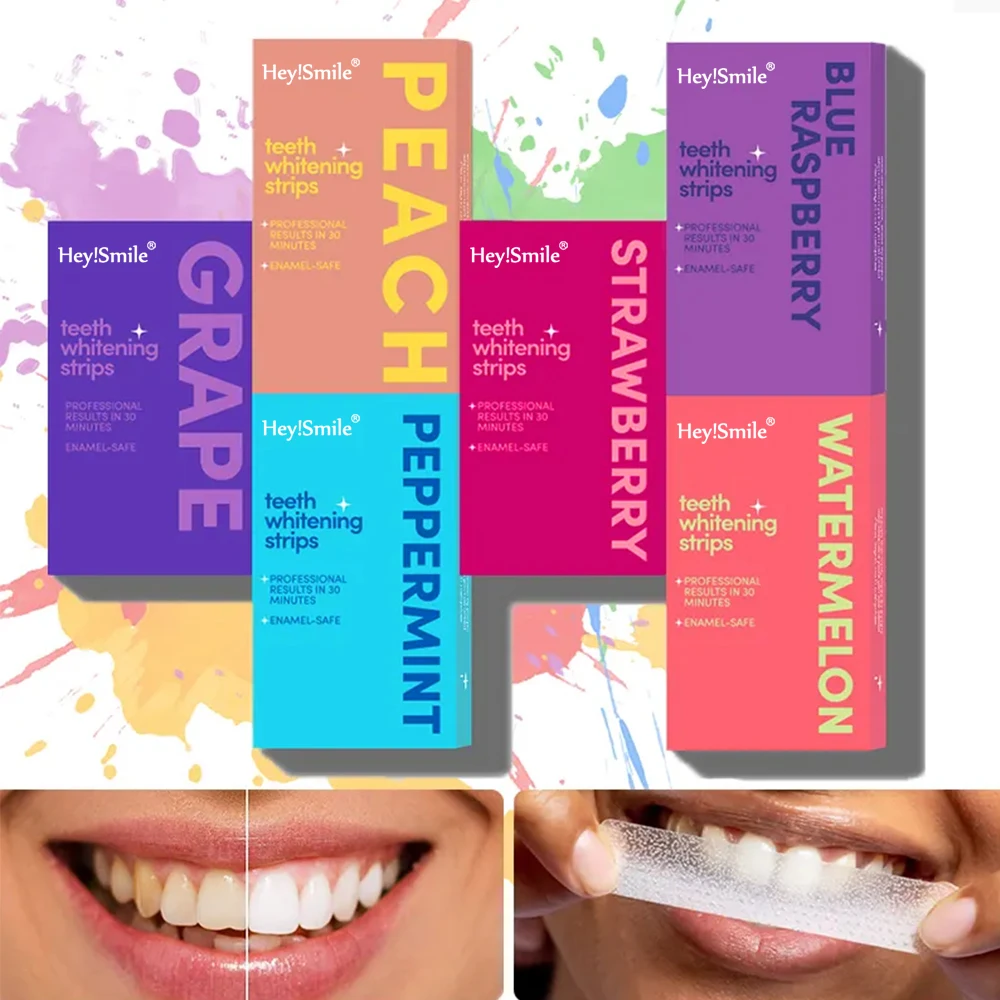
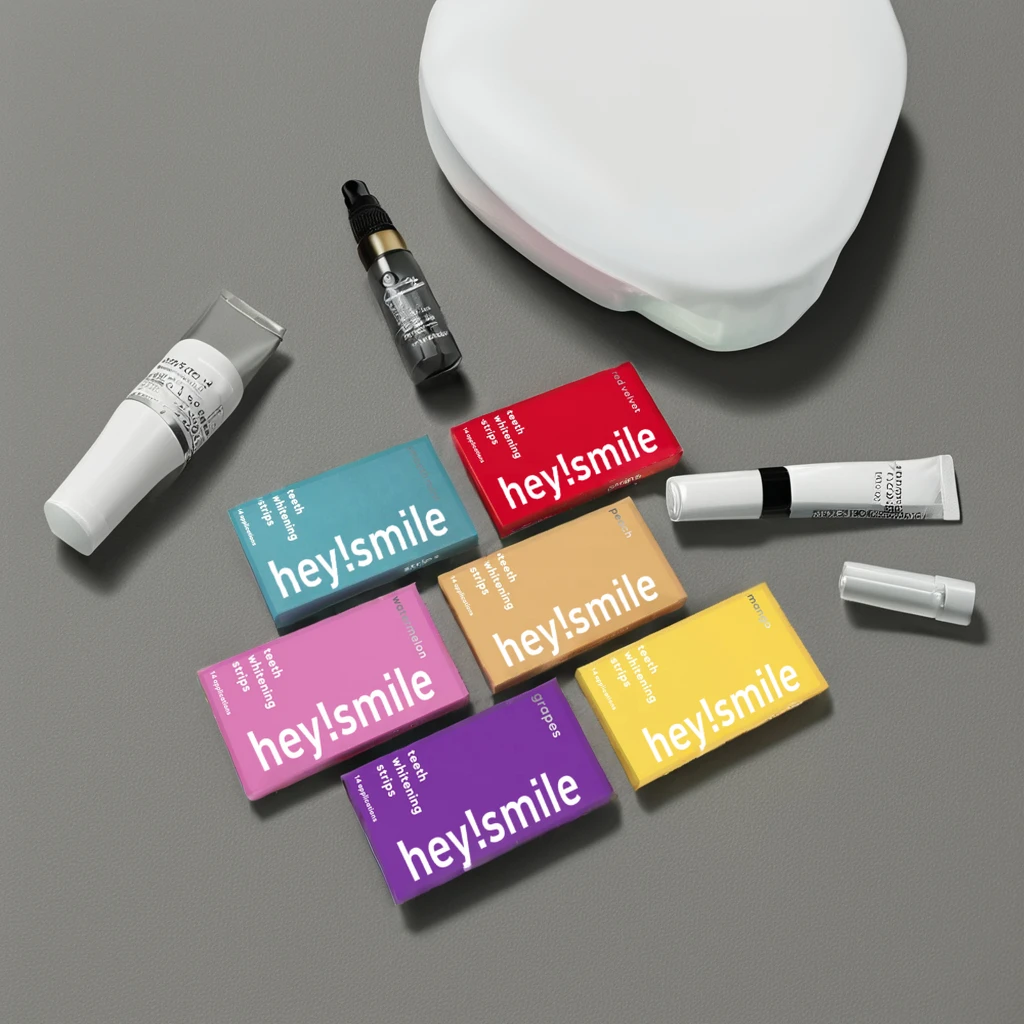
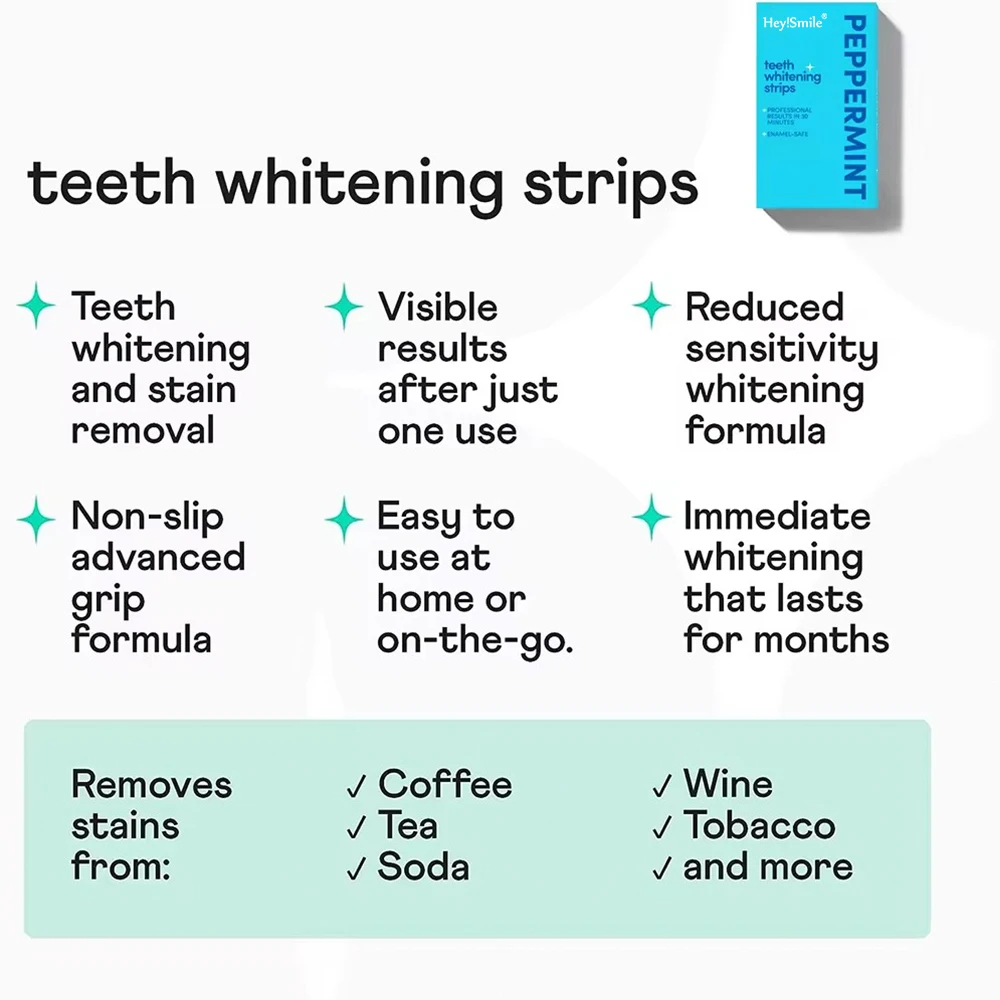
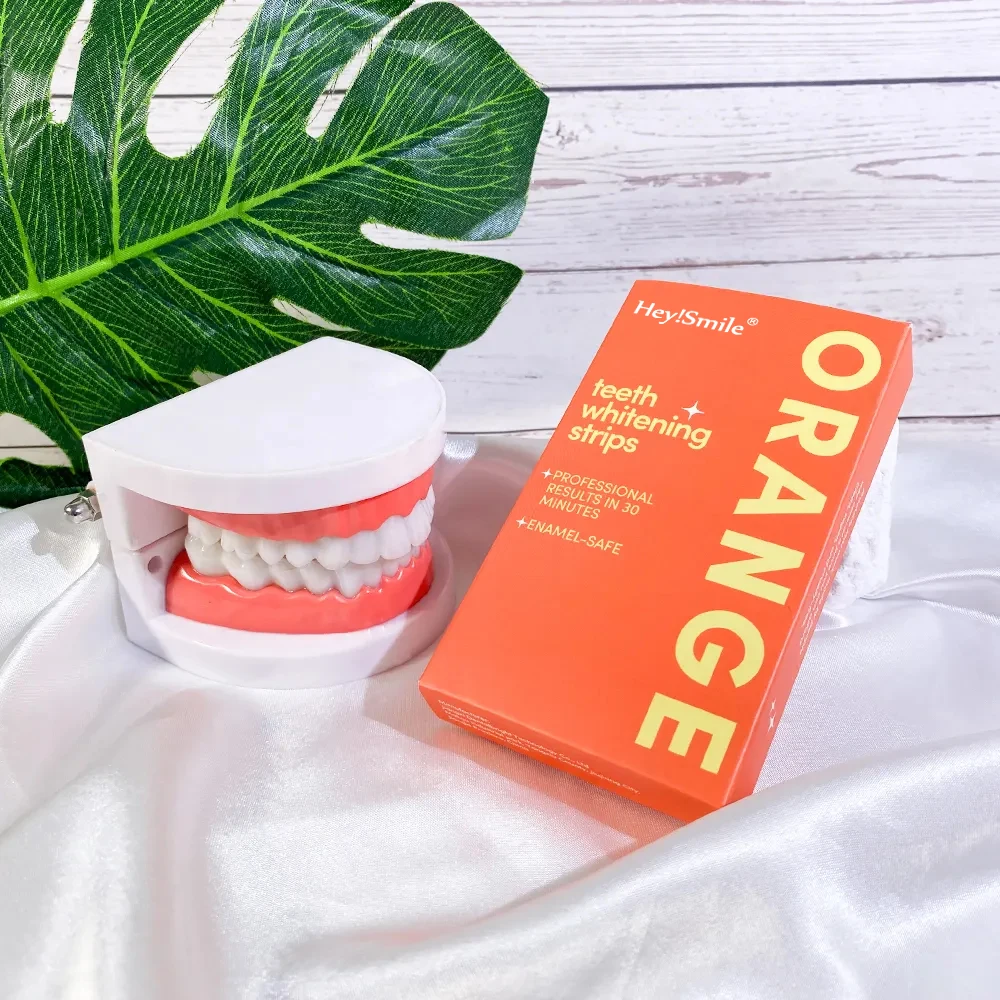
heysmile Oral Hygiene Non Peroxide PAP Fruit Flavor Dental Bleaching Tooth Strip Whitening Teeth Home Whitening Strips
- Category: >>>
- Supplier: Dongguan Laboer Technology CO. LTD
Share on (1601042339735):
Product Overview
Description
Product Description
Specification
item | value |
Place of Origin | China |
Guangdong | |
Brand Name | heysmile |
Model Number | Fruit Flavor Teeth Whitening Strips |
Application | For Home Use |
Name | Fruit Flavor Teeth Whitening Strips |
Ingredient | Non Peroxide/6%hp |
Service | OEM ODM Private Label |
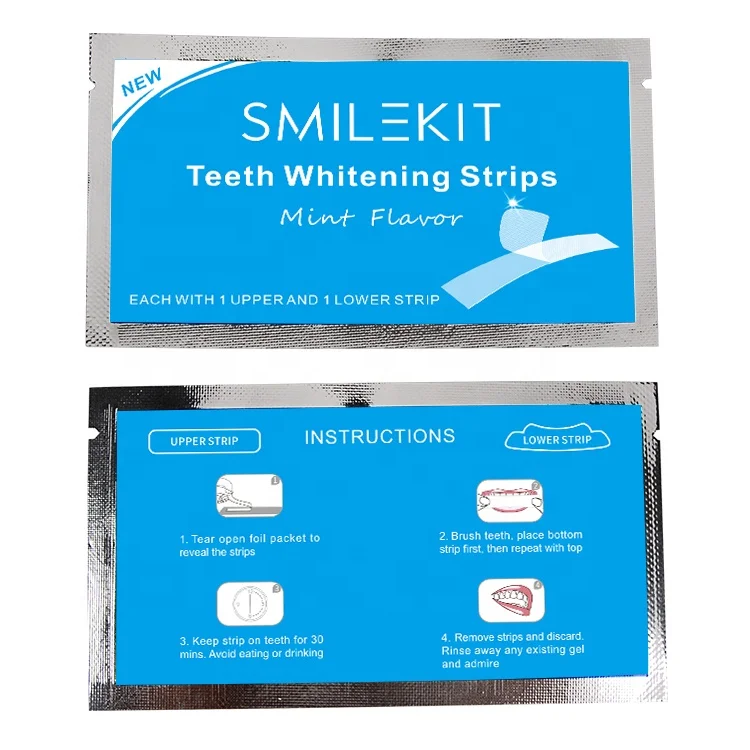
Usage | one pair a day, 2 weeks use |
Package | 7 /14 pack /Foil Bag |
Flavor | Mint Flavor |
Payment | Paypal.western Union.TT |
Shelf life | 12 Months |
Certificate | CE |
Maybe You have there Questions


Company Profile
Dongguan Laboer Technology Co.,Ltd, the area of our factory is in Dongguan,
We have over 100 employees , We specialize in Oral teeth whitening products , our main products are teeth whitening kits, teeth whitening strips, teeth whitening gel ,
teeth whitening light, teeth whitening powder, dental impression material and other oral care products.
Our products are mainly exported to the North America, Europe, Australia and other Countries.
As a manufacturer who has over 14 years OEM experience, we can provide custom service on the formula and packing material.
We also can help you with basic designs and professional marketing pictures.
We have over 100 employees , We specialize in Oral teeth whitening products , our main products are teeth whitening kits, teeth whitening strips, teeth whitening gel ,
teeth whitening light, teeth whitening powder, dental impression material and other oral care products.
Our products are mainly exported to the North America, Europe, Australia and other Countries.
As a manufacturer who has over 14 years OEM experience, we can provide custom service on the formula and packing material.
We also can help you with basic designs and professional marketing pictures.


Customer feedback


Certifications


FAQ
Q1. Are you a source factory?
Yes, we are direct manufacturer with 13 years production experience in teeth whitening industry.We have corporate brands and also can provide customized services for customers.
Q2. why should you buy from us not from other suppliers?
1,Our factory have ISO 13485, ISO 22716, GMP, BSCI.
2, Our product have CE, RoHS, EMC, LVD, CPSR, 510K,Microbiological test report, Heavy metal test report, Anti corrosion challenge test report and so on
3, We have 13 years of OEM customization experience and export experience to help your products comply with regulations and customs clearance smoothly.
Yes, we are direct manufacturer with 13 years production experience in teeth whitening industry.We have corporate brands and also can provide customized services for customers.
Q2. why should you buy from us not from other suppliers?
1,Our factory have ISO 13485, ISO 22716, GMP, BSCI.
2, Our product have CE, RoHS, EMC, LVD, CPSR, 510K,Microbiological test report, Heavy metal test report, Anti corrosion challenge test report and so on
3, We have 13 years of OEM customization experience and export experience to help your products comply with regulations and customs clearance smoothly.
Q3. Do you offer OEM, private label, custom logo service?
Yes, customized orders are welcomed. We have professional packaging designers to help you design your packaging to ensure that your packaging is popular in the market.
Yes, customized orders are welcomed. We have professional packaging designers to help you design your packaging to ensure that your packaging is popular in the market.
Q4. Can we customize the formula?
We can customize the formula. We have chemical engineers to analyze and customize the formula for you. Our chemical laboratory has a deep cooperation with the school of chemistry of Nanchang University
We can customize the formula. We have chemical engineers to analyze and customize the formula for you. Our chemical laboratory has a deep cooperation with the school of chemistry of Nanchang University
Q5. Can we customize the shape of teeth whitening light?
Of Course. We mechanical and electrical engineers can help you realize your idea.
Of Course. We mechanical and electrical engineers can help you realize your idea.
Q6. How many shipping methods do you have ?
We support DHL, FeEex, air or sea shipping. we also can send the goods to your Chinese forwarder if needed.
We support DHL, FeEex, air or sea shipping. we also can send the goods to your Chinese forwarder if needed.
Q7. Can i have free samples?
Yes of course. But you need pay shipping cost. If customized, maybe need pay a little fee, but we can refund the cost when you placing a bulk order after sample-testing.
Yes of course. But you need pay shipping cost. If customized, maybe need pay a little fee, but we can refund the cost when you placing a bulk order after sample-testing.
Q8. Can you send the goods to our Amazon warehouse?
Yes, we will do DDP terms for you, just send the labels to us.
Yes, we will do DDP terms for you, just send the labels to us.
Q9. Do you provide the after-sale service?
Yes, we will handle your problems if the goods have any quality issue after received in 10 days.
Yes, we will handle your problems if the goods have any quality issue after received in 10 days.
How does the PAP+ formula whiten?
When PAP+ whitens, it oxidises tooth stains without releasing harmful molecules known as free radicals. These radicals are what
can cause damage to the enamel and cause severe sensitivity.
This means during the whitening process with PAP+, there is no damage or erosion to the enamel, meaning the outer layers of the
tooth remain intact and can continue to protect the nerves whilst being effectively whitened.
The PAP+ whitening process targets a wide variety of tooth stains internally and externally. Based on our instant PAP+ formula,
we’ve designed our PAP+ Whitening Pen as a gradual whitening product to use daily, or to touch up your whitening on the go.
can cause damage to the enamel and cause severe sensitivity.
This means during the whitening process with PAP+, there is no damage or erosion to the enamel, meaning the outer layers of the
tooth remain intact and can continue to protect the nerves whilst being effectively whitened.
The PAP+ whitening process targets a wide variety of tooth stains internally and externally. Based on our instant PAP+ formula,
we’ve designed our PAP+ Whitening Pen as a gradual whitening product to use daily, or to touch up your whitening on the go.


And how does the process of teeth whitening work?
Tooth discolouration and staining are a result of various dyes and pigments attaching to the organic matter of your tooth. The
process of lifting these stains is most commonly achieved by two methods: physical removal and chemical bleaching.
Physical removal targets superficial staining (surface level daily stains) through an abrasive method of action. Chemical
bleaching works on both superficial and embedded stains (stains embedded in the tooth enamel), so it's the most common and
effective method of teeth whitening.
process of lifting these stains is most commonly achieved by two methods: physical removal and chemical bleaching.
Physical removal targets superficial staining (surface level daily stains) through an abrasive method of action. Chemical
bleaching works on both superficial and embedded stains (stains embedded in the tooth enamel), so it's the most common and
effective method of teeth whitening.
So how does chemical bleaching remove stains from teeth?
Teeth whitening through chemical bleaching oxidises stains and alters the molecules that are responsible for holding colour.
Simply put, the bleaching agents enter through the enamel of teeth and break down these molecules into smaller, simpler forms. The
smaller the molecule, the lighter in colour, resulting in an overall whiter appearance of the tooth.
Some common bleaching agents include Hydrogen Peroxide, Carbamide Peroxide, and Phthalimidoperoxycaproic Acid (we call it PAP, for
short).
Simply put, the bleaching agents enter through the enamel of teeth and break down these molecules into smaller, simpler forms. The
smaller the molecule, the lighter in colour, resulting in an overall whiter appearance of the tooth.
Some common bleaching agents include Hydrogen Peroxide, Carbamide Peroxide, and Phthalimidoperoxycaproic Acid (we call it PAP, for
short).
What’s the difference between Peroxide & PAP?
Both PAP whitening and peroxide-based teeth whitening treatments use oxidising action to break down stains and lighten tooth
appearance.
As part of this process, peroxide releases something known as free radicals. Free radicals readily attack organic molecules to reduce discolouration, but are also likely to cause unwanted side effects such as sensitivity, gum irritation, and demineralisation.
PAP similarly reacts with tooth stains, only without the release of free radicals. This means that the molecules responsible for
discolouration are broken down safely, without any risk of sensitivity or pain.
appearance.
As part of this process, peroxide releases something known as free radicals. Free radicals readily attack organic molecules to reduce discolouration, but are also likely to cause unwanted side effects such as sensitivity, gum irritation, and demineralisation.
PAP similarly reacts with tooth stains, only without the release of free radicals. This means that the molecules responsible for
discolouration are broken down safely, without any risk of sensitivity or pain.
Why isn’t PAP more widely used?
Most dentists continue to use peroxide-based whitening treatments in their practices, as a professional in-chair application is
most likely to limit the side effects of free radical oxidisation. However, with the increase of access and popularity of at-home
peroxide products, the safety of these treatments becomes questionable at best.
The use of PAP hasn't been widely explored by dentists, possibly due to its difficulty in formulation and stability. The higher
the pH level of PAP, the more effective. Unfortunately, this means that the formula loses its effectiveness after a short amount
of shelf time.
most likely to limit the side effects of free radical oxidisation. However, with the increase of access and popularity of at-home
peroxide products, the safety of these treatments becomes questionable at best.
The use of PAP hasn't been widely explored by dentists, possibly due to its difficulty in formulation and stability. The higher
the pH level of PAP, the more effective. Unfortunately, this means that the formula loses its effectiveness after a short amount
of shelf time.

We've spent years perfecting the optimal formulation process that maximises the benefits of PAP whilst maintaining its stability.
The result is PAP+, a formula that effectively whitens teeth, without any of the unwanted side effects.
The result is PAP+, a formula that effectively whitens teeth, without any of the unwanted side effects.
Can heysmile be used with veneers, caps, implants, bridges, or bonded teeth?
Veneers, caps, implants, bonding or bridges aren’t designed to be whitened and require special care from your dentist. The PAP+ whitening formula works to oxidise stains from natural teeth, however, it may be helpful at keeping your surrounding teeth the
same shade as the ones that have had dental work.
We always advise checking with your dentist before using, to ensure it is a suitable product for you.
same shade as the ones that have had dental work.
We always advise checking with your dentist before using, to ensure it is a suitable product for you.
PAP , HP , and CP focusing on concentration, safety, effectiveness, and their pros and cons
Compound | Safety | Effectiveness | Pros | Cons |
PAP (Phthalimidoperoxycaproic acid) | High | Mild whitening | Minimal irritation to teeth and gums, suitable for sensitive teeth | Limited research, fewer long-term effectiveness data compared to HP and CP |
HP (Hydrogen Peroxide) | Lower than PAP, higher than CP (at high concentrations) | Fast and significant | Rapid and noticeable whitening effects, extensively researched and validated | May cause tooth sensitivity and enamel erosion, especially at higher concentrations |
CP (Carbamide Peroxide) | Higher than HP, comparable to PAP | Gentle and sustained | Gentle whitening, breakdown produces urea which helps alleviate sensitivity | Whitening process may be slower, long-term high concentration use can still lead to sensitivity |
FAQ
1. What is the market demand for PAP whitening products?
The market demand for PAP whitening products has been growing in recent years, especially among consumers who have higher requirements for ingredient safety and are sensitive to traditional products. Compared to traditional hydrogen peroxide whitening products, PAP products are increasingly popular due to their mildness.
2. Who are some reputable suppliers of PAP products?
There are several well-known suppliers of PAP products who typically have GMP-certified production facilities and hold a high reputation in the industry. The choice of suppliers should be based on a comprehensive evaluation of product quality, supply capability, and pricing.
3. What are the cost and pricing strategies for PAP products?
The cost of PAP products is generally slightly higher than traditional whitening products, reflecting the special requirements for raw materials and production processes. Pricing strategies should consider the consumer's ability to pay in the target market and the competitive pricing of rivals while ensuring a reasonable profit margin.
4. How is the safety and compliance of products ensured?
Ensuring product safety and compliance typically requires tests and certifications by third-party laboratories. It is crucial that products meet the safety standards for cosmetics or medical devices in various countries/regions.
5. What is the minimum order quantity?
The minimum order quantity (MOQ) depends on the supplier's strategy. Generally, the MOQ might be higher for initial orders to reduce production and logistics costs.
The market demand for PAP whitening products has been growing in recent years, especially among consumers who have higher requirements for ingredient safety and are sensitive to traditional products. Compared to traditional hydrogen peroxide whitening products, PAP products are increasingly popular due to their mildness.
2. Who are some reputable suppliers of PAP products?
There are several well-known suppliers of PAP products who typically have GMP-certified production facilities and hold a high reputation in the industry. The choice of suppliers should be based on a comprehensive evaluation of product quality, supply capability, and pricing.
3. What are the cost and pricing strategies for PAP products?
The cost of PAP products is generally slightly higher than traditional whitening products, reflecting the special requirements for raw materials and production processes. Pricing strategies should consider the consumer's ability to pay in the target market and the competitive pricing of rivals while ensuring a reasonable profit margin.
4. How is the safety and compliance of products ensured?
Ensuring product safety and compliance typically requires tests and certifications by third-party laboratories. It is crucial that products meet the safety standards for cosmetics or medical devices in various countries/regions.
5. What is the minimum order quantity?
The minimum order quantity (MOQ) depends on the supplier's strategy. Generally, the MOQ might be higher for initial orders to reduce production and logistics costs.
MOQs can be adjusted as the partnership progresses.
6. What promotional and marketing support is available?
Some suppliers may provide marketing materials such as product brochures, before-and-after comparison images, and promotional support during significant holidays or events, including discounts, rebates, or co-marketing activities.
7. What are the product's shelf life and storage requirements?
The shelf life of PAP whitening products typically ranges from 12 to 24 months. Storage conditions should avoid high temperatures and direct sunlight to maintain product stability and effectiveness.
8. Is it possible to obtain samples for market testing?
Most suppliers are willing to provide samples for market testing and quality assessment. This may incur a small fee or be provided for free, depending on the supplier's policies and willingness to cooperate.
9. What customer service and post-sales support are offered?
Quality suppliers generally offer comprehensive customer service and post-sales support, including product training, rapid response to customer inquiries, and effective return and exchange policies.
10. What are the unique selling points (USP) of the products?
The unique selling points of PAP whitening products include suitability for users with sensitive teeth, gentle yet effective whitening results, and a lower risk of side effects. Additionally, some products may have added benefits like antibacterial properties or odor-eliminating ingredients to enhance the product's appeal.
6. What promotional and marketing support is available?
Some suppliers may provide marketing materials such as product brochures, before-and-after comparison images, and promotional support during significant holidays or events, including discounts, rebates, or co-marketing activities.
7. What are the product's shelf life and storage requirements?
The shelf life of PAP whitening products typically ranges from 12 to 24 months. Storage conditions should avoid high temperatures and direct sunlight to maintain product stability and effectiveness.
8. Is it possible to obtain samples for market testing?
Most suppliers are willing to provide samples for market testing and quality assessment. This may incur a small fee or be provided for free, depending on the supplier's policies and willingness to cooperate.
9. What customer service and post-sales support are offered?
Quality suppliers generally offer comprehensive customer service and post-sales support, including product training, rapid response to customer inquiries, and effective return and exchange policies.
10. What are the unique selling points (USP) of the products?
The unique selling points of PAP whitening products include suitability for users with sensitive teeth, gentle yet effective whitening results, and a lower risk of side effects. Additionally, some products may have added benefits like antibacterial properties or odor-eliminating ingredients to enhance the product's appeal.
We Recommend
New Arrivals
New products from manufacturers at wholesale prices