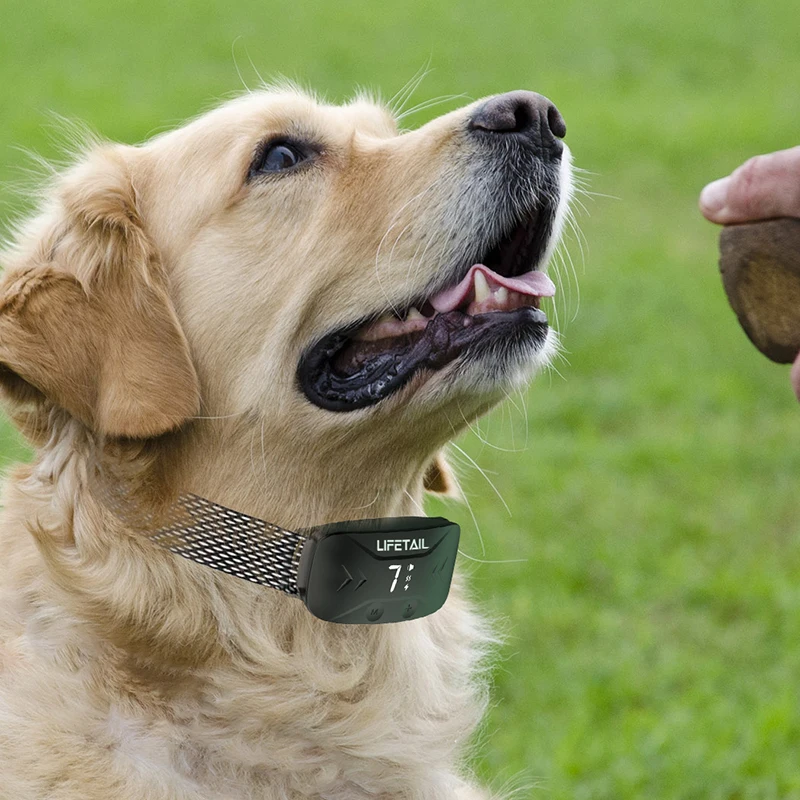
Wireless Fence Training Collar Wireless Dog Fence Portable Pets Safe Containment System for Outdoor,Yard,Indoor,Camping
- Category: >>>
- Supplier: Shenzhen Wellturn Technology Co. Ltd.
Share on (1601043200426):
Product Overview
Description
Products Description

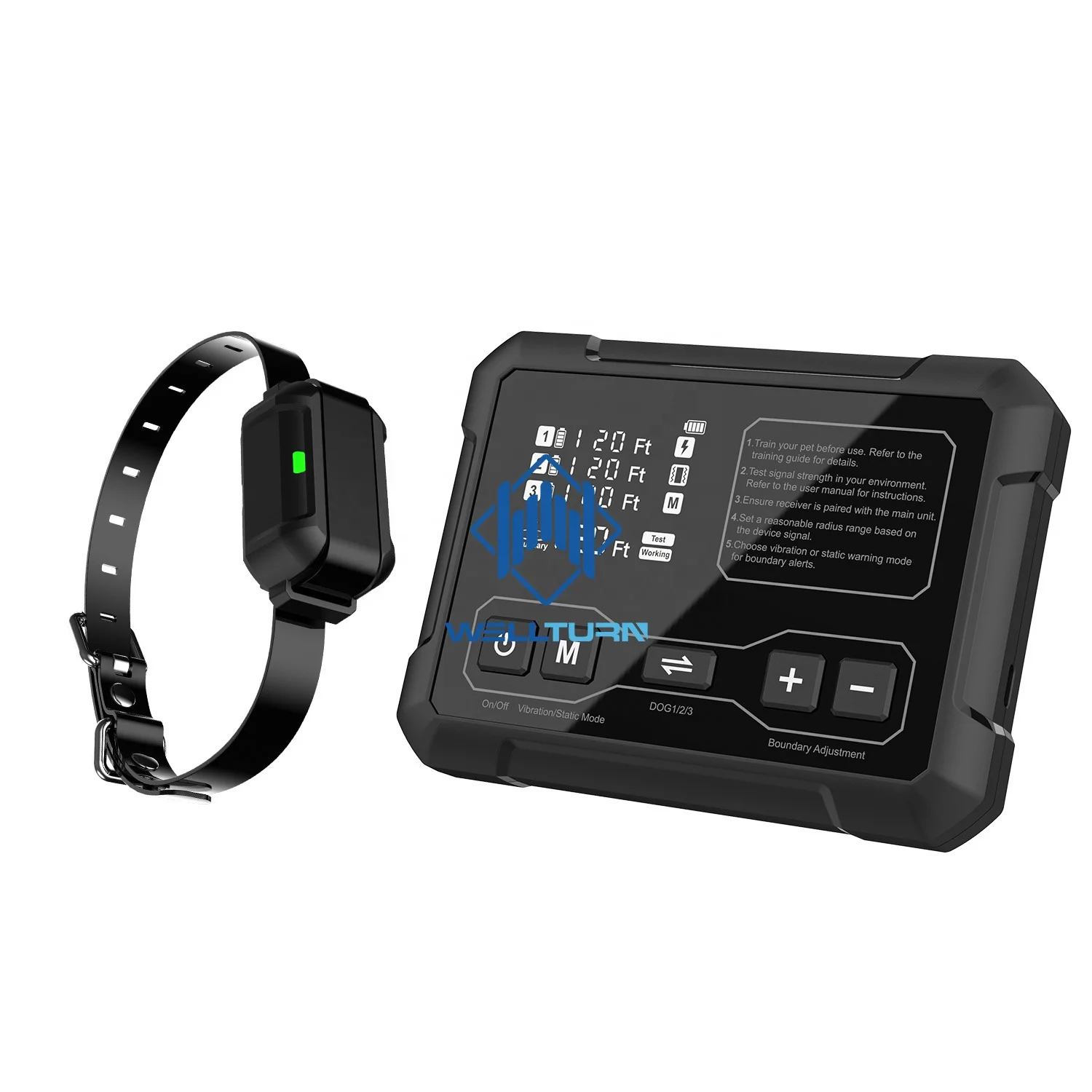
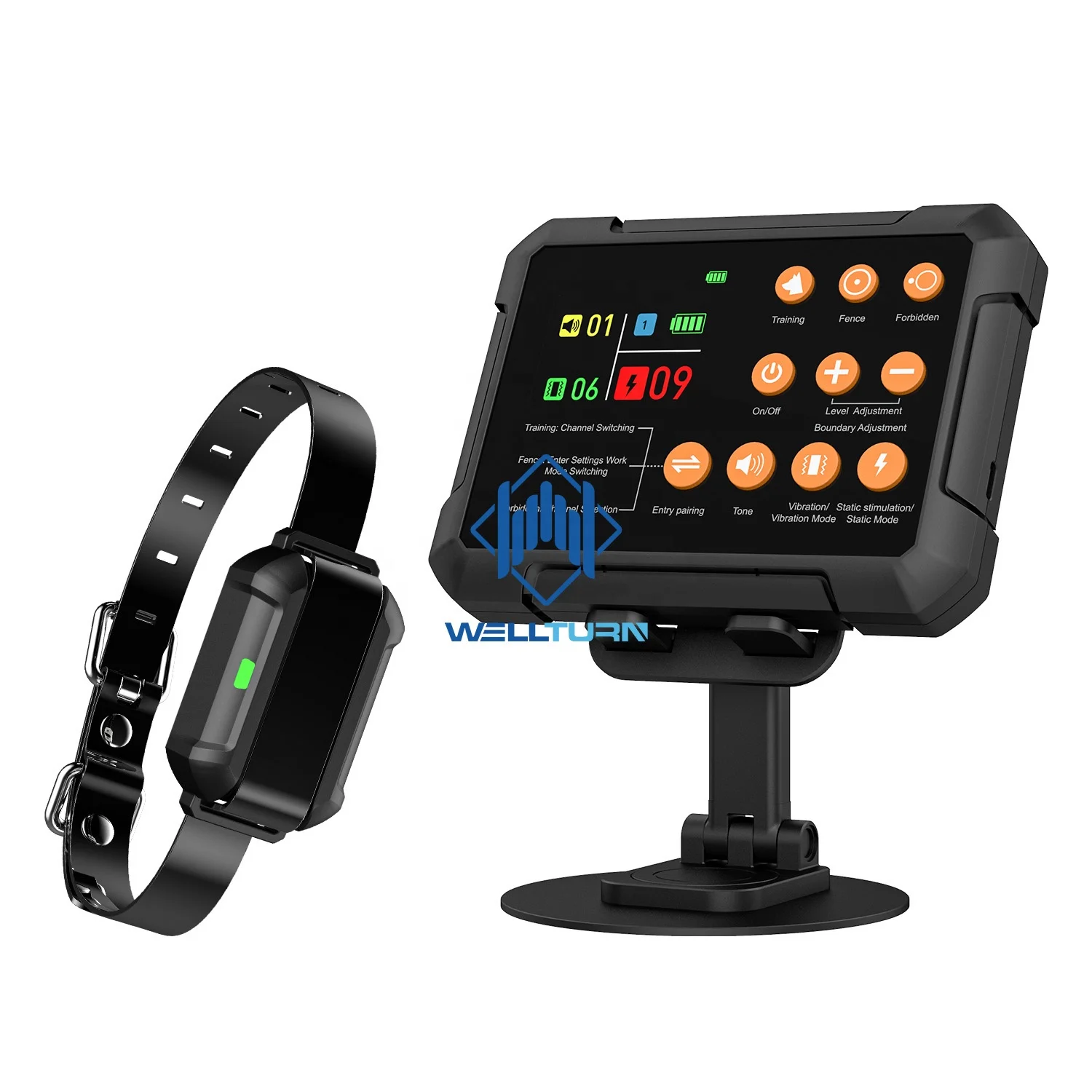
F900 Three-in-one Wireless Dog Electric Fence-Patented New Product
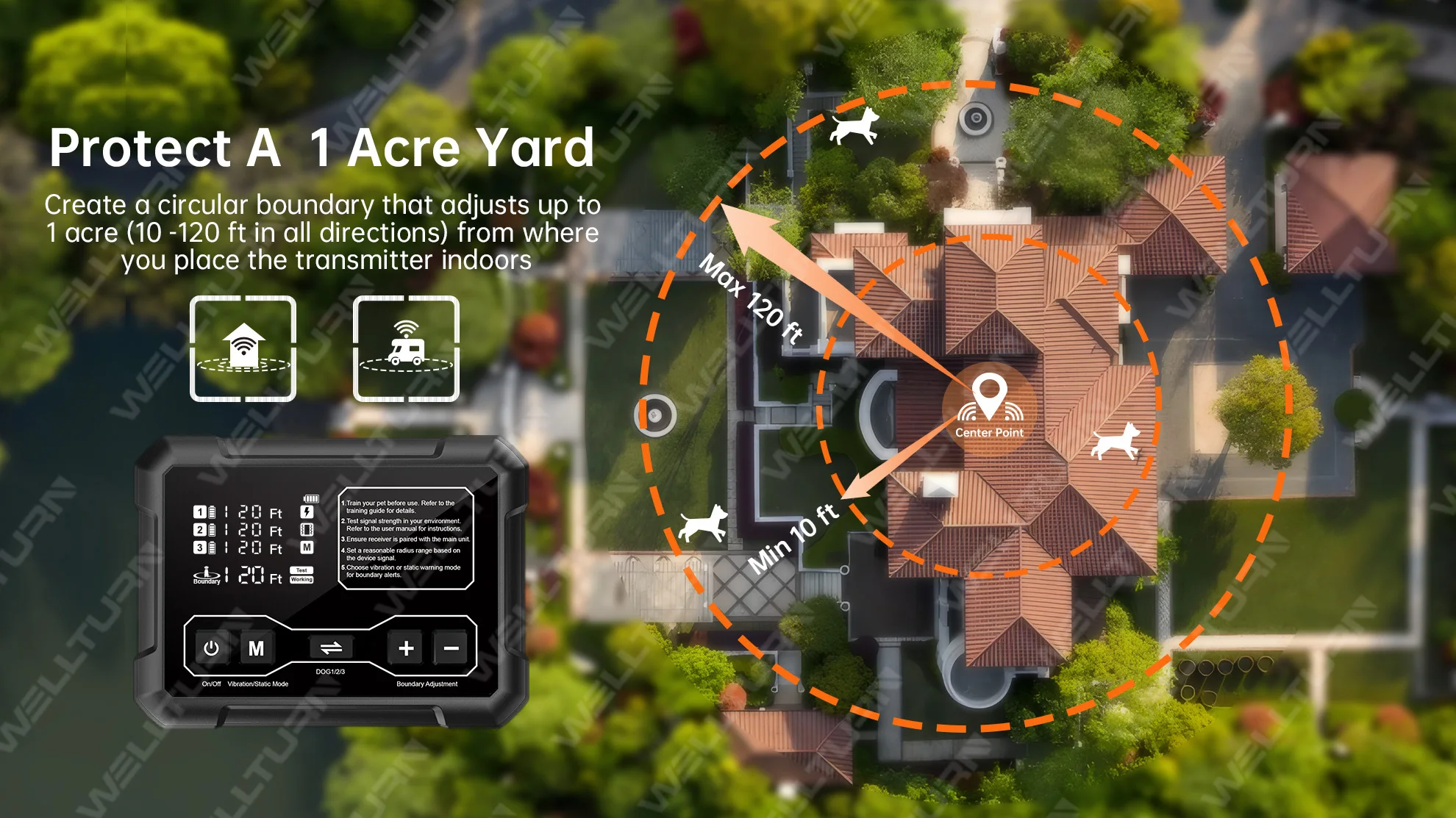
1.Accuracy of Distance(Radar technology,Higher precision,within 2FT margin of error in the signal range);
2.Suitable indoor and outdoor 10-120 FT in all directions 1 ACRE YARD;
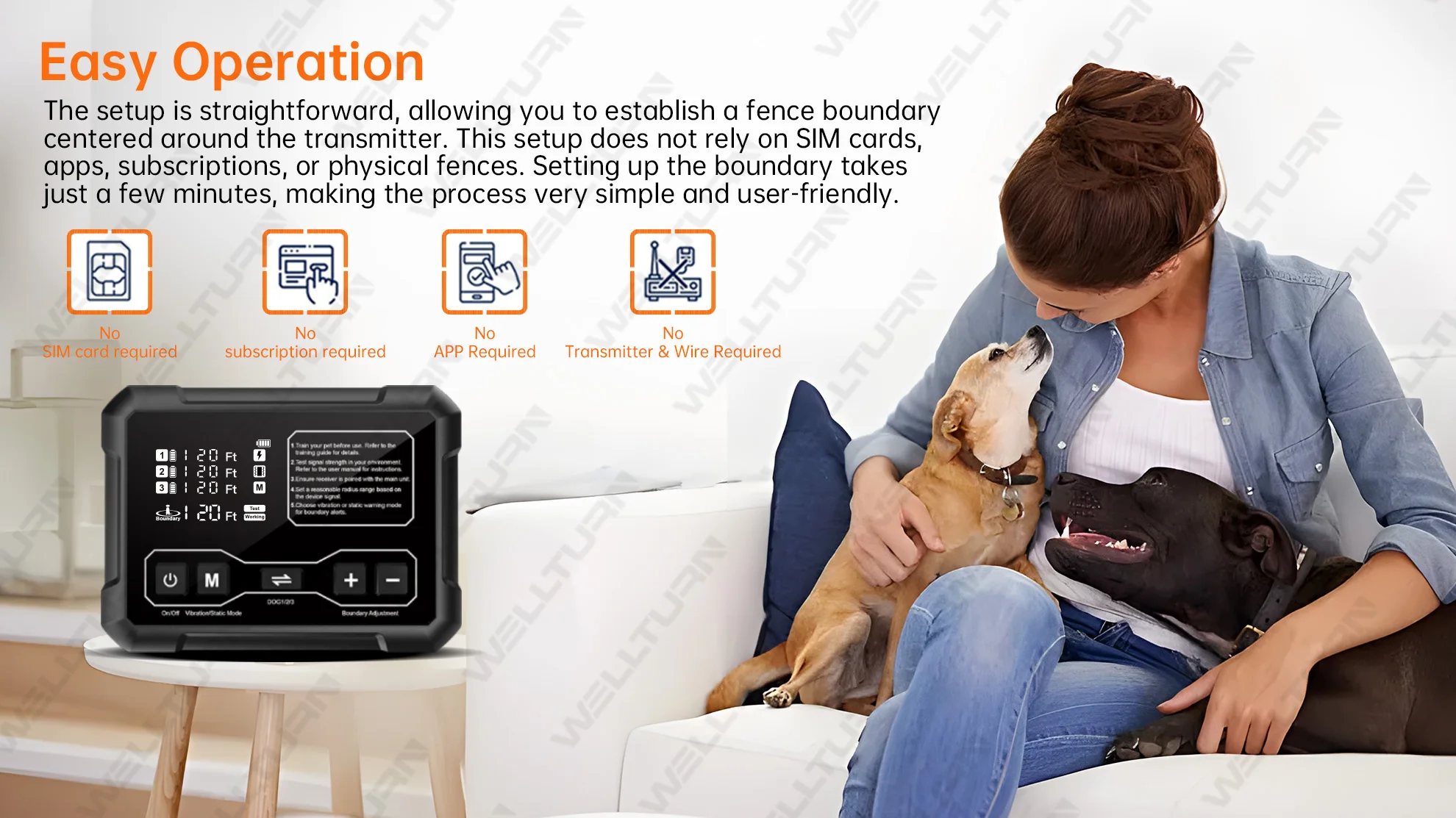
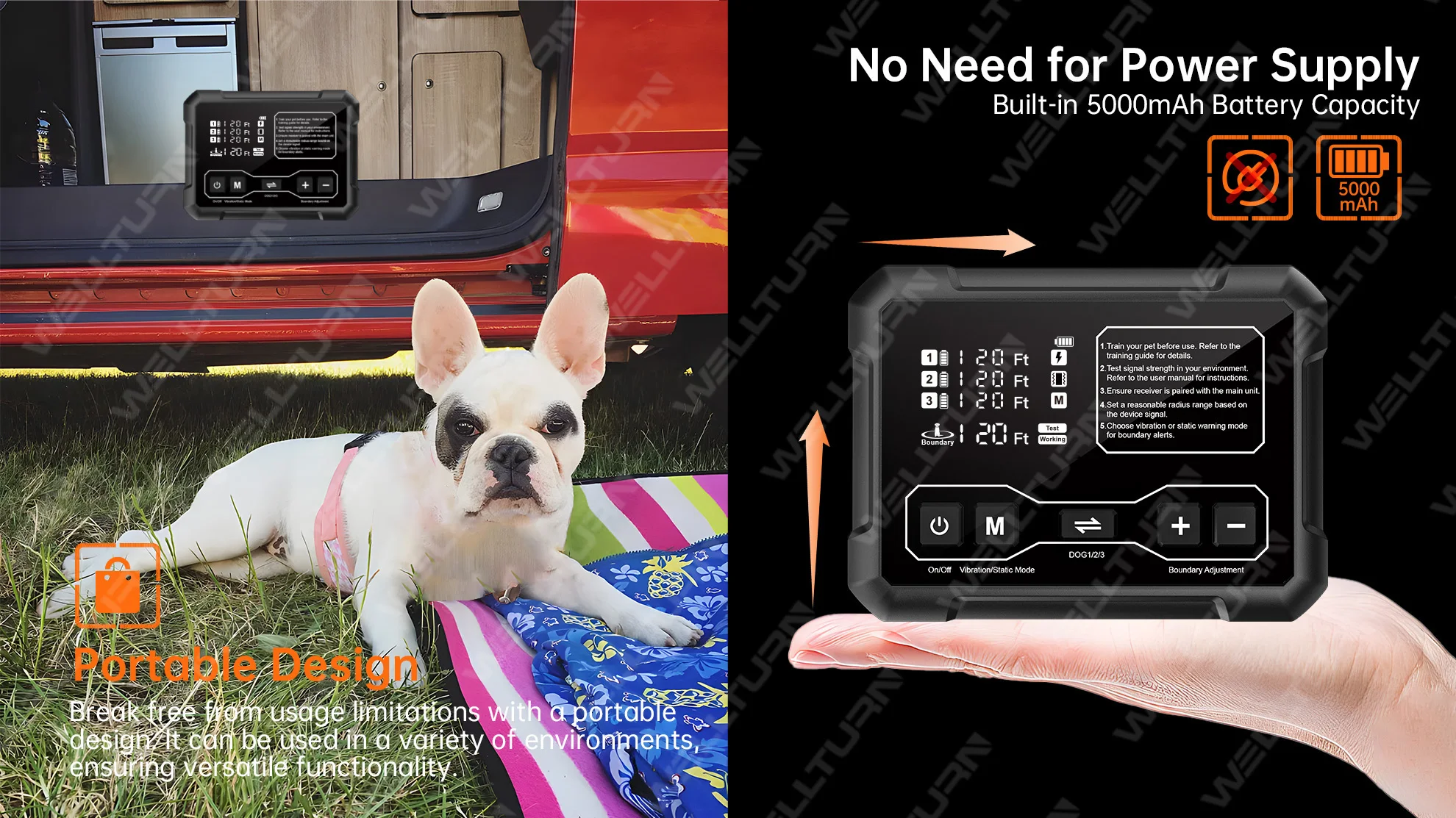
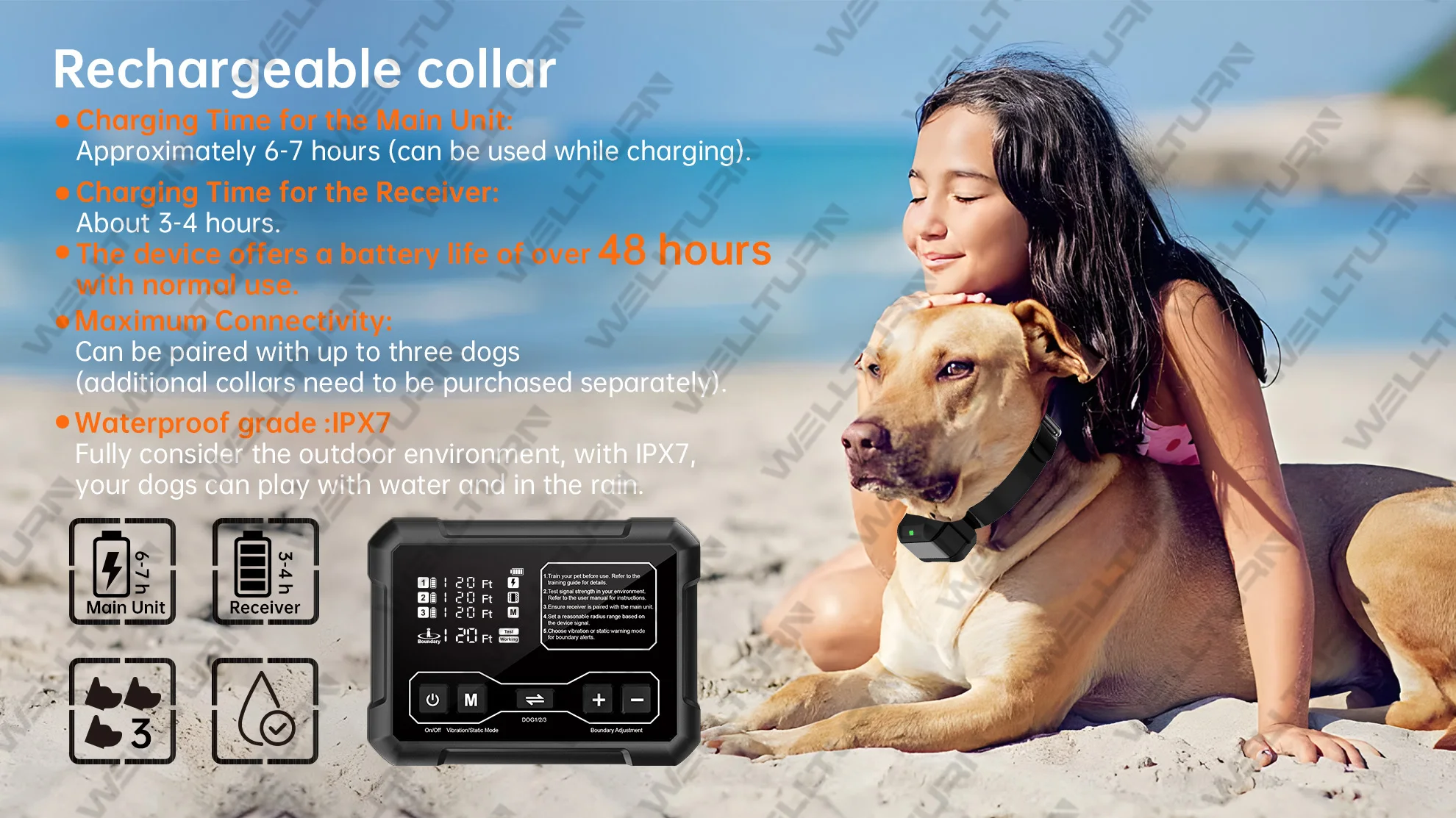
3.IPX7 Waterproof;Support training 3 dogs;Visual Monitoring Interface;5000mAh rechargeable;Portable design;Easy operation;
Product Paramenters
F900
F900 Plus
Model | F900 | F900 Plus | |
Support | 3 dogs | 3 dogs | |
Screen | LCD Screen | TFT Color Screen | |
Material | Product:ABS +PC/Collar:TPU | Product:ABS +PC/Collar:TPU | |
Charging Method | Type-C | Type-C | |
Battery Capacity | Receiver:1000mAh / Transmitter:5000mAh | ||
Charging Time | Receiver:3-4 hours / Transmitter:6-7 hours(usable while charging) / Battery Life:Sufficient for over 48 hours of normal use | ||
Waterproof | Receiver: IPX7 Waterproof / Transmitter: Not waterproof | ||
Working Mode | Fence | Training + Fence + Forbidden Zone | |
Trigger Mode | Beep+Vibration | Beep+Vibration | |
Function | Fence mode: Beep1+Vibration6+Shock6 | Training mode: Beep1+Vibration8+Shock16 Fence & Forbidden Zone mode: Beep1+Vibration6+Shock6 | |
Range | Fence:10-120 FT | Fence:10-120 FT / Training:300 FT / Forbidden Zone:5-15 FT | |
Application | Indoor, Yard, Beach, Farm, Camping | ||
Certificate | CE, ROHS, FCC SDOC, UN38.3, MSDS, IPX7 | ||
Single Package Size | 26*16.3*7cm/1088g | ||
Single Gross Weight | 300g( Receiver:69g/Transmitter:231g ) | ||
Packaging Detail | Wireless Dog Fence*1, Receiver*1, Boundary flag*10, Test Light*1, Charging Cable*1, Contact point*4, User Manual*1, Training Manual*1, Remote Holder*1 | ||
Features | Fence mode | Dog Training + Fence + Forbidden mode three in one | |
1、Accuracy of Distance(Radar technology,Higher precision, within 2FT margin of error in the signal range)2、Easy operation; 3、Suitable indoor and outdoor 10-120 ft in all directions 1 ACRE YARD; 4、Portable design, breaking through usage scenario limitations, usable in a wider range of environments; 5、5000mAh rechargeable, supports simultaneous charging and operation; 6、Support training 3 dogs; 7、Receiver IPX7 Waterproof; 8、Visual Monitoring Interface, provides real-time notifications to users about unusual situations, such as pets escaping or entering forbidden zones. | |||
Latest Exhibiton


2023 Global Pet Expo(Orlando, Florida, American)
FAQ
Questions | Troubleshootings | ||
1 | Is static stimulation safe to use? | Static stimulation is very safe, with intensity similar to a mild static shock, posing no harm to pets. If you or your pet are sensitive to static stimulation, you can opt for the vibration mode, which does not include static warnings. | |
2 | What is the appropriate duration for wearing the collar? | It is recommended not to exceed 12 hours of wear, and adjust the collar's position and tightness every 2 hours to prevent discomfort or pressure on the pet. | |
3 | What actions should be taken if the collar causes discomfort to the dog? | 1.Ensure the collar is properly fitted and avoid using it to lead or pull the pet. 2.Regularly clean the pet's neck and the contact points of the collar. 3.Monitor the pet's skin for any reactions. If discomfort occurs, stop using the collar until the area has healed. | |
4 | What is the purpose and appropriate timing for using the test mode? | Test mode is used to assess signal stability in various environments, such as indoors or outdoors. Before setting up the fence, test mode should be used to determine the optimal distance where the signal is stable. | |
5 | What are the differences between test mode and working mode? | Test mode is primarily for checking signal stability and does not set up a fence boundary. During testing, the pet collar will only alert if the signal is lost. Before regular use, switch to working mode and set the fence boundary. | |
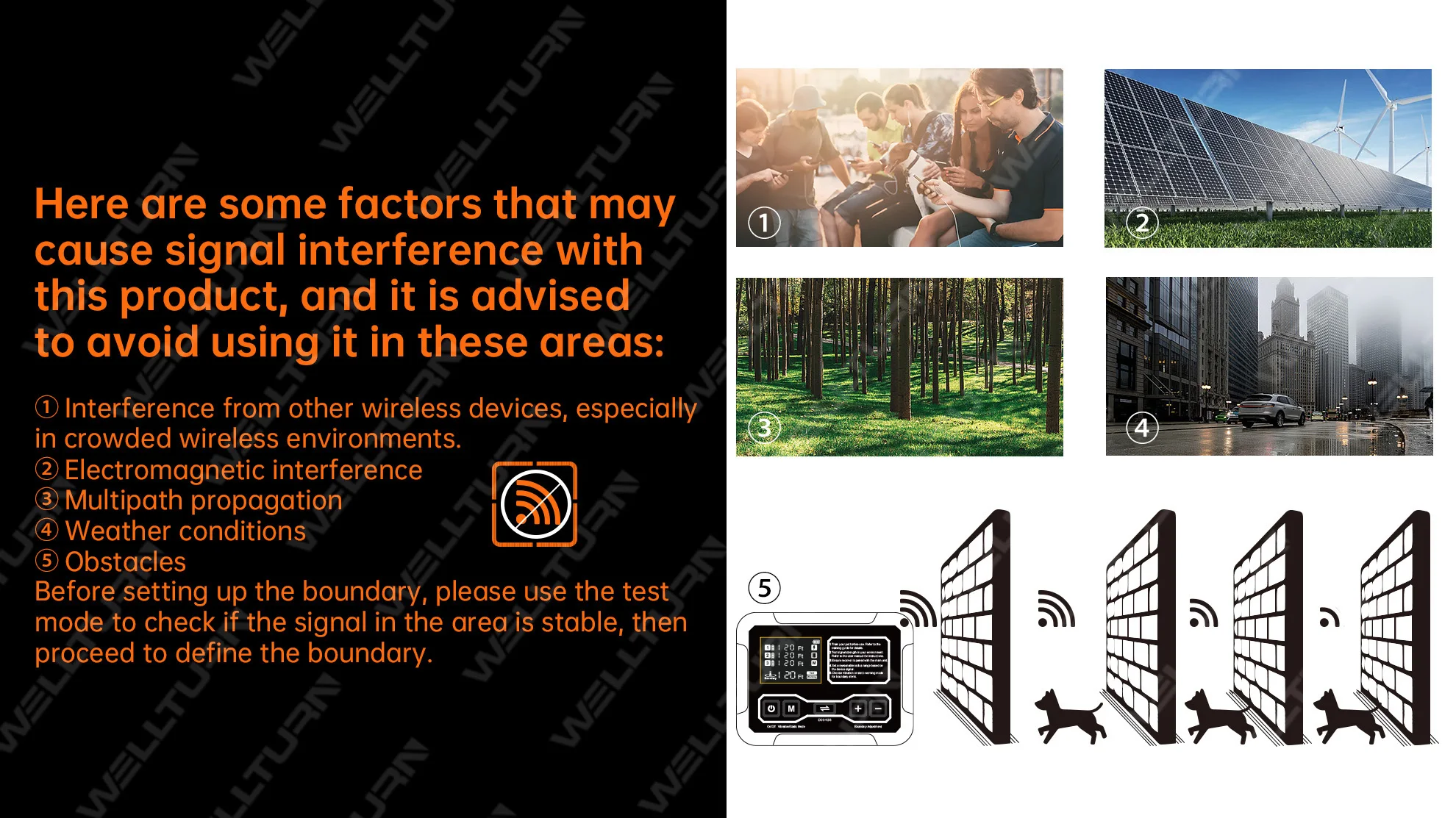
6 | What causes signal interruption and what are the environmental requirements for using the product? | Exceeding the range of 10-120FT or encountering interferences like Wi-Fi can cause signal interruption. It's advised to test for signal stability before use. | |
7 | What are typical environments that can interfere with the signal? | 1.Wireless devices such as Wi-Fi and Bluetooth can cause signal interference. 2.Strong electromagnetic fields, multipath effects, changes in weather, and physical barriers can affect the signal's strength and stability. | |
8 | What are the specific purposes of test mode and working mode? | Test mode is designed to help you find the best location for your fence by checking for signal interference, allowing you to identify suitable areas for fence placement. Once switched to working mode, the fence function is activated to ensure your pet's safety. | |
9 | How accurate is the distance displayed on the main unit? | The main unit displays the straight-line distance, which may have a slight margin of error. Use test mode to accurately determine fence boundaries. | |
10 | What are the recommended guidelines for placing the main unit? | The main unit should be placed at the center of the fence for optimal coverage. Choose an open and clear area for placement, ensuring it's not too close to home appliances or other devices that could cause interference. | |
11 | Do dogs need special training to use the fence feature? | Yes, appropriate training is required for dogs before using the fence mode. Detailed training guidance can be found in the training manual we provide. | |
12 | Can this product be used with other animals such as cats, cows, or sheep? | This product is specifically designed for dogs due to their intelligence and adaptability. It is not recommended for use with cats or other livestock, as their behaviors and reactions may differ significantly from those of dogs. | |
13 | What happens with the warning system when there is no signal? | When there is no signal, the warning system will not be activated. This means that if the dog is in an area without a signal, it will not receive any alerts. | |
14 | Why does the system sometimes not give a warning when the signal is fine, but the boundary is crossed? | 1.Ensure the device is in working mode. Warnings for crossing boundaries are only activated in this mode. 2.Verify the boundary settings to ensure they meet your requirements. 3.If the main unit is moved, the fence boundary will change accordingly, which might result in no warning being issued if the boundary is crossed. | |
15 | How do you determine the battery levels of the main unit and the collar? | The main unit displays the battery levels of both the collar and itself. When the battery is low, there will be an alert, indicating that it's time to charge. | |
16 | What should be done if there are problems with charging the device? | Use a 5V2A charger for charging. If you encounter difficulties, try replacing the charging cable or check again after charging for 2 hours. A charger with lower power output may cause slow charging. | |
17 | What happens to the collar when the main unit runs out of battery? | When the main unit has no power, the collar will not function. However, the collar can still be used normally while the main unit is being charged. | |
18 | What is the charging duration for the device? | Using a 5V2A charger, it takes about 6-7 hours to fully charge the main unit and 3-4 hours for the collar. It's recommended to charge when the battery is low to maintain battery life. | |
19 | What is the operational duration of the device after being fully charged? | The usage duration depends on the frequency and mode of use. For instance, with continuous use of the fence test mode, both the main unit and the collar can last for about 20 hours. | |
20 | How many dogs can be simultaneously controlled with this system? | This product can control up to three dogs simultaneously. Additional collar receivers need to be purchased separately. | |
21 | How waterproof is the product? | The collar receiver is waterproof, but the main control unit is not. Please keep the main unit away from water. | |
22 | For what sizes of dogs is this product appropriate? | This product is suitable for medium to large breeds of dogs. | |
Customer Photos


We Recommend
New Arrivals
New products from manufacturers at wholesale prices