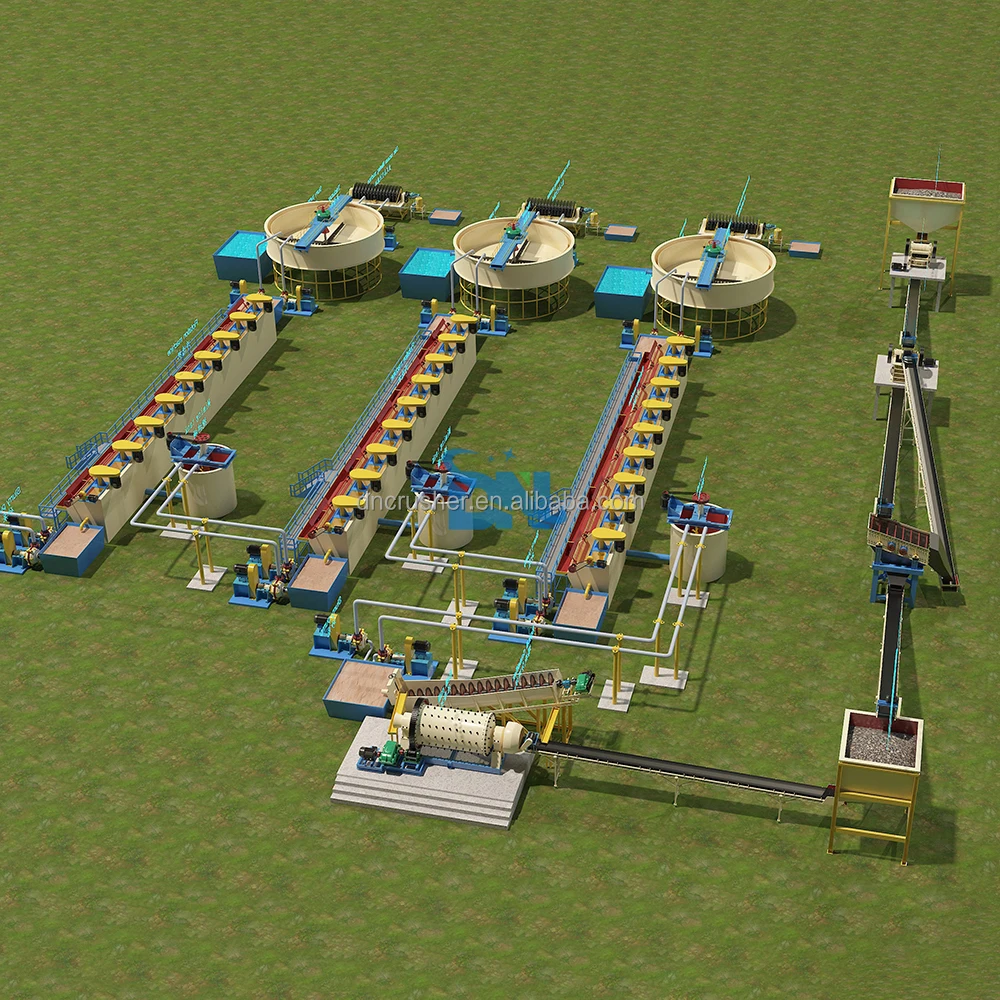
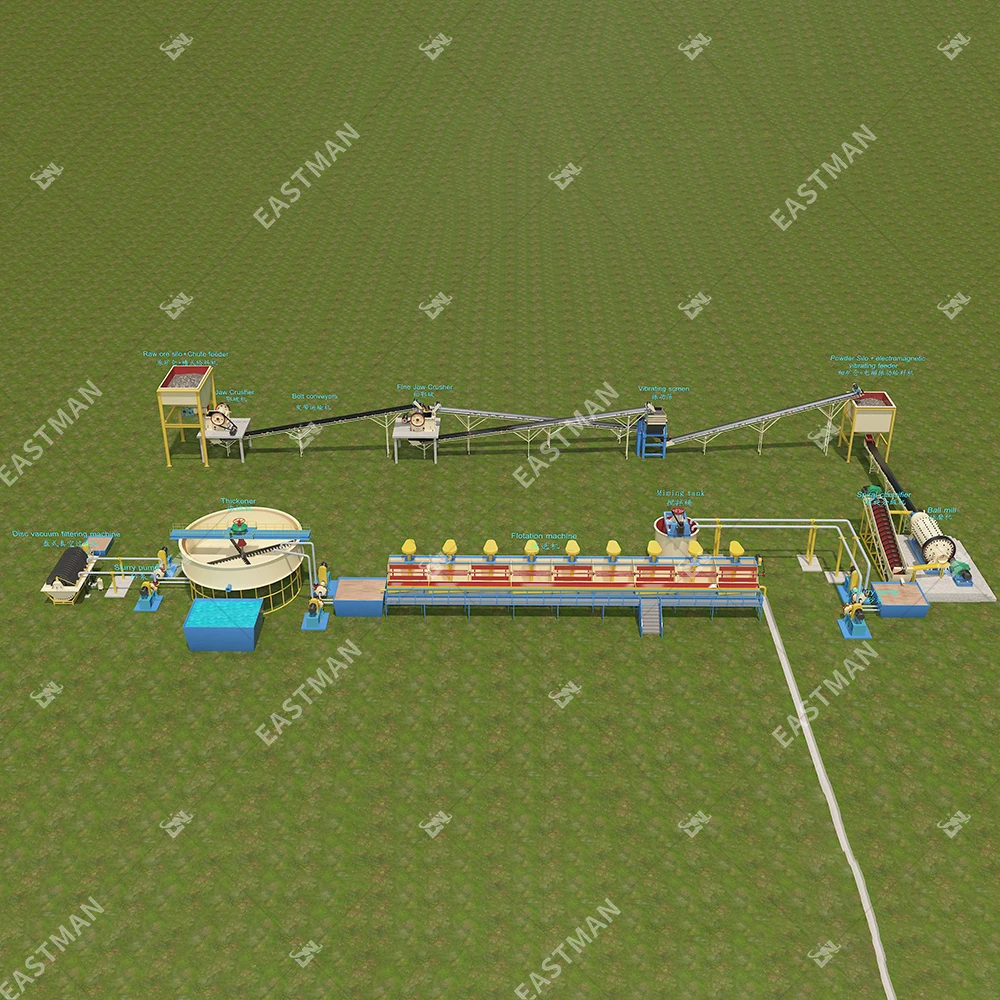
High Recovery Mining Dressing Production Line Antimony Mining Plant For Sale
- Category: >>>
- Supplier: Ganzhou Eastman Technology Co. Ltd
Share on (1601137757244):
Product Overview
Description
Product Introduction


Antimony
A native element, antimony metal is extracted primarily from stibnite, which contains 72 percent antimony and 28 percent sulfur. Antimony ore proportion is heavy than matrix , normally gravity separation is more efficient , its efficiency , economic , environment protection and concentrate the lower grade ore , after gravity use flotation for extraction .
Introduction
Generally , the separation process including manual , gravity , flotation separation , most of the time , use unite
processes . No matter oxide ore or sulfide ore , they all heavier than matrix , so we could choose gravity separation for most of the antimony ore . For the ore with thick grain , manual separation is more useful .
processes . No matter oxide ore or sulfide ore , they all heavier than matrix , so we could choose gravity separation for most of the antimony ore . For the ore with thick grain , manual separation is more useful .
Gravity separation
Gravity separation divides into heavy medium separation , jig separation , sluice separation and shaking table separation .
Flotation process
After grinding and flotation the tailings from the gravity separation , use one rough , three concentrate , two scavenging process . After flotation is the antimony concentrate . The tailings introduced to shaking table , and recover the fine oxide antimony , obtain the high grade antimony concentration and tailings .
Antimony ore processing
The problem discussed in this antimony process study is limited to a concentrator capable of beneficiating 150 tons per day of antimony ore. The antimony in this study occurs as the mineral stibnite (Sb2S3) in association with small amounts of pyrite, arsenopyrite, galena and lead sulfantimonides. The gangue is composed largely of quartz but contains, in addition, a small amount of talc. The talc mineral is particularly trouble some since it tends to float with the stibnite and hence lowers the grade of the final antimony concentrate.

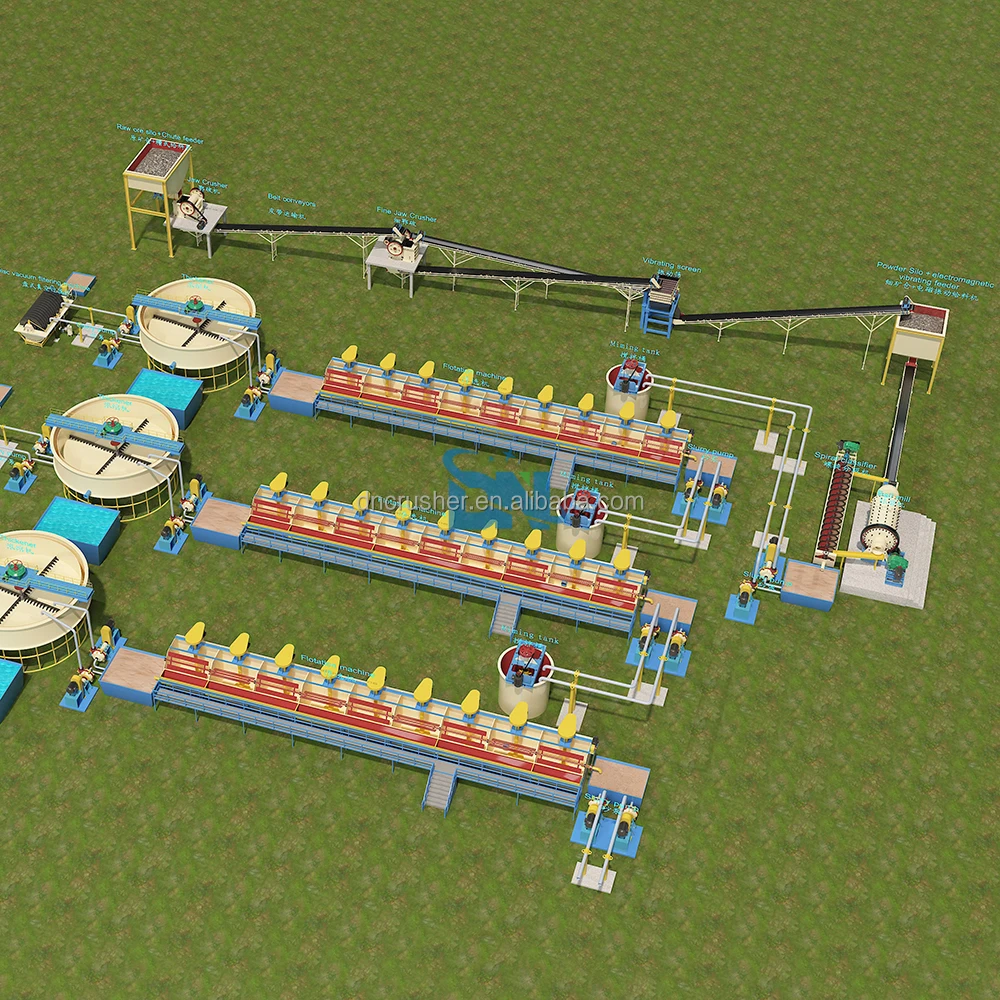
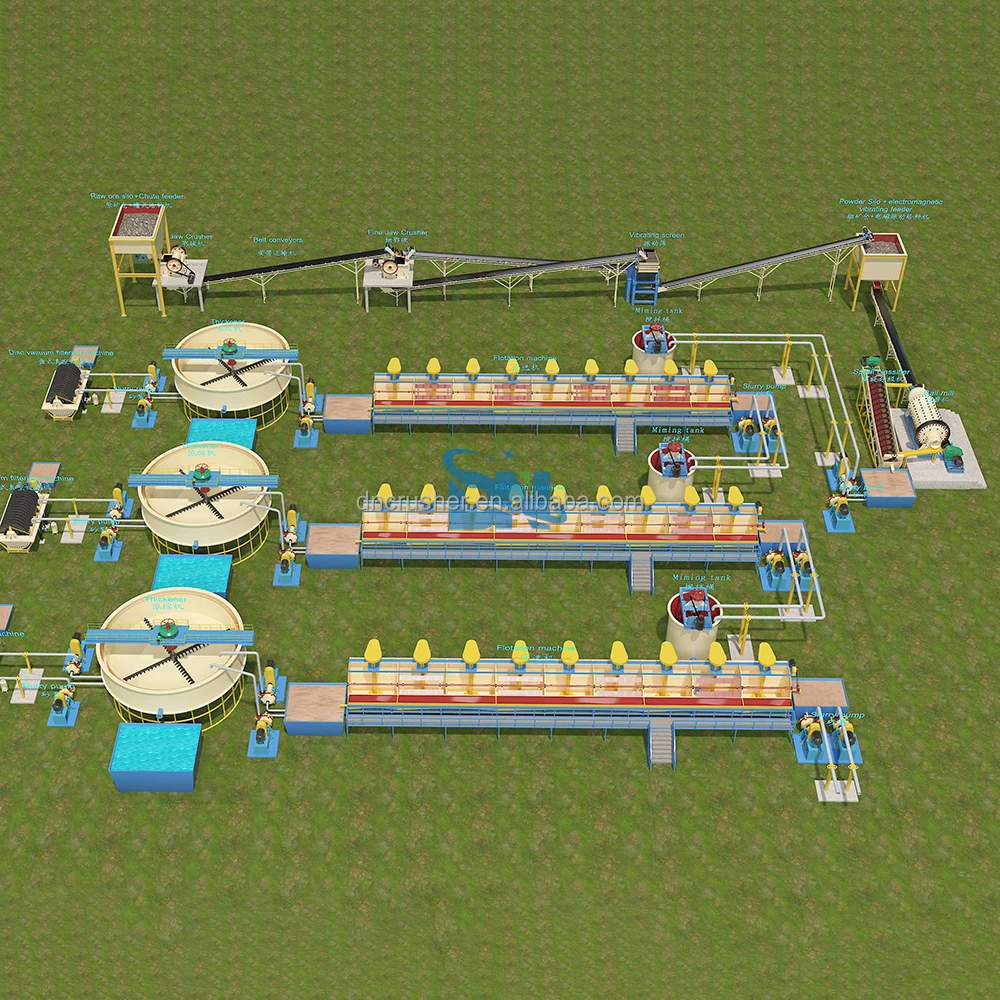
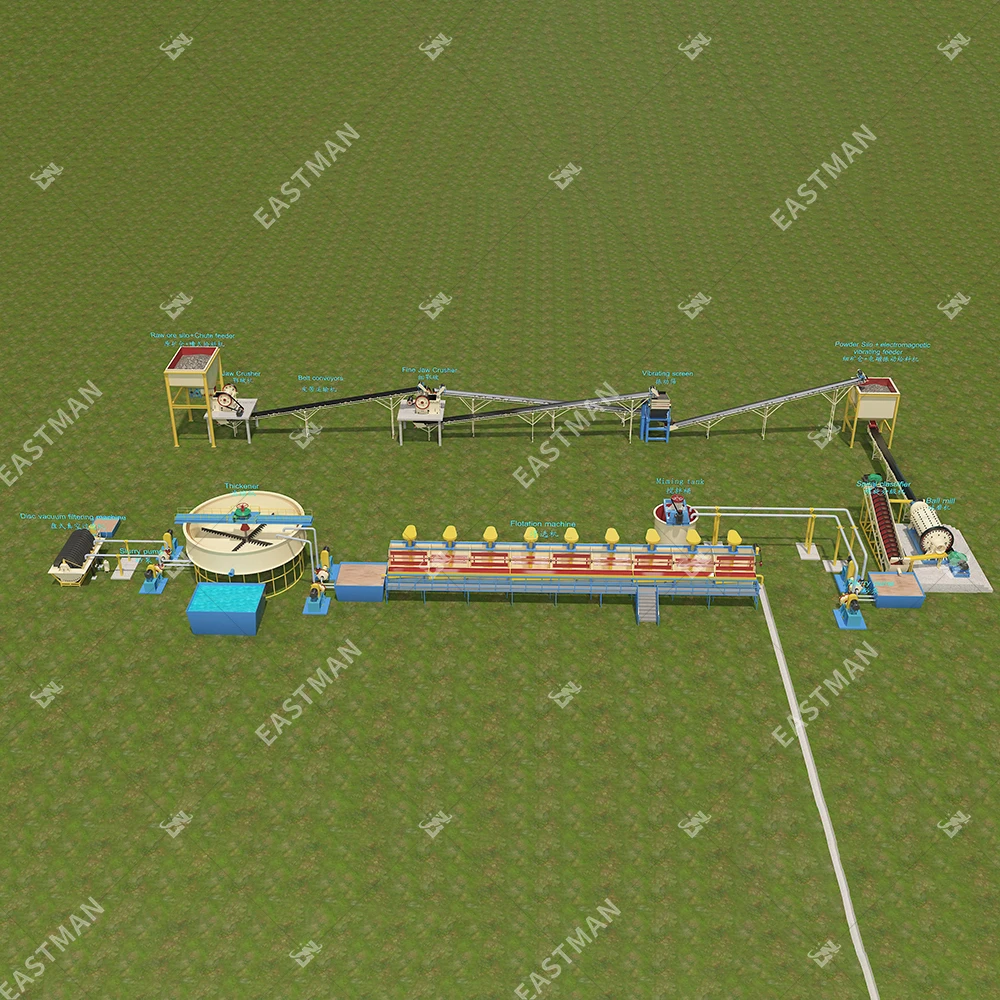
CRUSHING SECTION
The crushing section with two-stage reduction is suitable for tonnages of from 100 to 300 tons of ore per 24 hours. It is designed to permit crushing sufficient ore during one 8 hour shift to operate the mill during a full 24 hours. Removing the fines with a grizzly before the jaw crusher and with a vibrating screen ahead of the secondary crusher increases the efficiency of size reduction since the crushers are working only on material that must be reduced. Removal of tramp iron to prevent damage to the secondary crusher is accomplished with an electromagnet and a magnetic head pulley.
GRINDING CIRCUIT
The crushed ore is fed from the fine ore storage bin at a controlled rate by a Adjustable Stroke or Variable Speed Ore Feeder. Fine grinding is accomplished in a Ball Mill operating in closed circuit with a Spiral Classifier. To reduce overgrinding of the friable stibnite it is generally desirable to carry a relatively large circulating load in the ball mill-classifier circuit. If necessary sufficient lime or soda ash should be added to the ball mill feed to provide the proper pH for subsequent conditioning and flotation operations.
A head-ore sample is cut from the classifier overflow to use as the flotation circuit control and metallurgical balance. A Automatic Sampler is used. Normally the sampling interval is one cut each 15 minutes which is collected each shift as a composite sample. A Unit Flotation Cell has not been included in the ball mill-classifier circuit of this study. However, in certain instances a Unit Flotation Cell may prove particularly effective in that it is capable of recovering a significant portion of the total stibnite as a relatively high grade grannular concentrate. Thus, overall plant recovery may be increased by reducing slime losses due to overgrinding of the soft, high specific gravity stibnite.


CONDITIONING AND FLOTATION
The classifier overflow adjusted to a pH of approximately 7.5 to 7.8 is conditioned with a stibnite activator such as copper sulfate or lead acetate and a collector such as Z-11 or a liquid type Aerofloat. Depending upon the mineralogy of the ore, other auxiliary reagents may also be required to depress sulfides which tend to float with and thus lower the grade of the stibnite concentrate. For example, bleaching powder has been used effectively for the depression of arsenopyrite and cyanide for the depression of pyrite.
The conditioner overflow passes to an 8-cell “Sub-A” Flotation Machine, arranged to provide four rougher cells, two scavenger cells and one cell for each of two stages of cleaning. The distinctive cell-to-cell design of “Sub-A” Flotation Machines permits the transfer of the various pulp streams within the flotation circuit without the use of pumps. Extremely fine talcose slimes which floated with the stibnite in the rougher cells are effectively depressed in the cleaners with the aid of a small quantity of yellow dextrine.
CONCENTRATE THICKENING AND FILTERING
The cleaned antimony concentrate is pumped to a Spiral Rake Thickener to remove excess water prior to filtering. A Adjustable Stroke Diaphragm Pump meters the thickened flotation concentrate to a Disc Filter. Where water must be reclaimed for re-use, the rougher tailings are thickened in a Spiral Rake Thickener and the plant water is reclaimed.
SAMPLING
For the efficient control of milling operations, reliable sampling is required. For this purpose Automatic Samplers are used on the heads, concentrates and tailings. A metallurgical balance is run for each shift. Sampling interval of one cut each 15 minutes has proved adequate except where quality of ore is spotty or unusual conditions are encountered.
LABORATORY TESTING
The beneficiation of stibnite ores by flotation can frequently be a difficult problem because of the complex nature of the mineral associations often encountered. It is essential, therefore, that a comprehensive laboratory test program be carried out on a representative sample of the ore before planning a milling installation.

Main Product
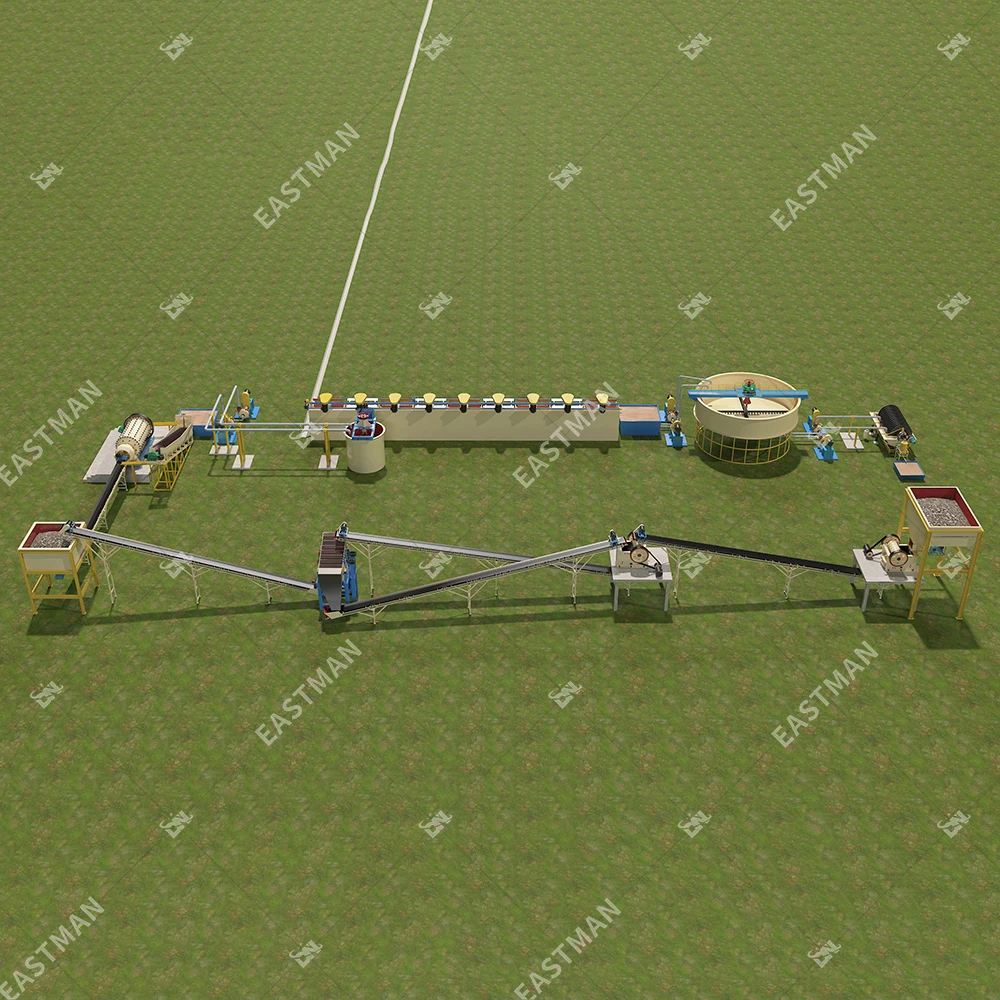
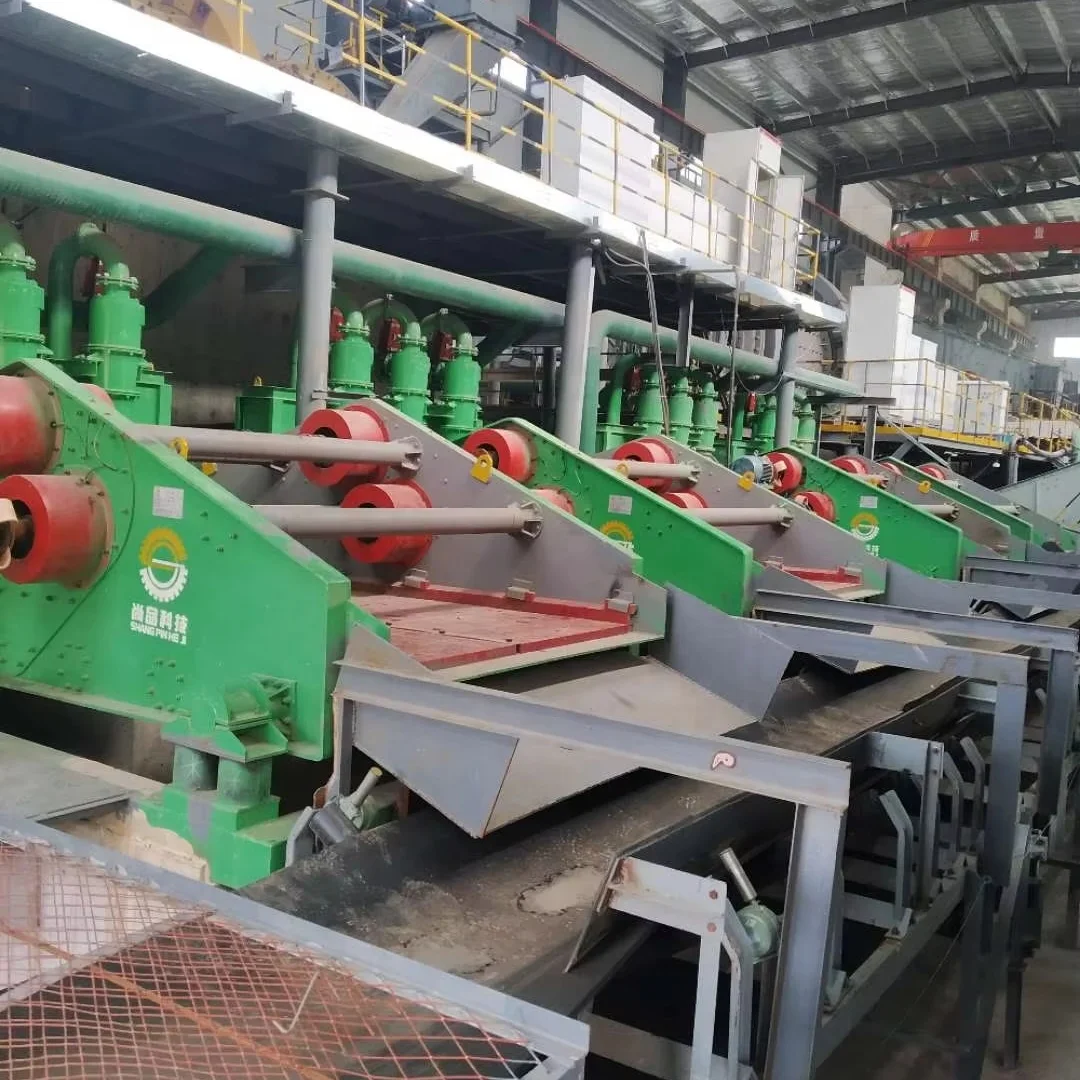
We have professional engineers team to draw flowchart based on customer's mine site details. We supplied full set antimony ore processing plant: hopper, vibrating screen, Shaking table, Jig separator, ball mill, Roll mill, magnetic sepatrator, flotation separator, slurry pump, belt conveyor, etc.


Successful cases


Packaging&Dilvery
●Ways Of Packing
● Shiping by sea/air freight
1.Small parts packed in the wooden cases. | or any way the customer requires. |
2.Big parts packed by plastic membrane. | |
3.The whole big machine is loaded in the container. |

Our Company

1.Inquiry and consulting support.
2.Ore sample testing support.
3.View our Factory.
4.Design Flowchart.
2.Ore sample testing support.
3.View our Factory.
4.Design Flowchart.
1.Training how to instal the machine, training how to use the machine.
2. 1 year warranty .
3.Engineers available to service machinery overseas.
FAQ
1.How is the quality of your products?(mining equipment/machine)
Answer: Our products are manufactured strictly according to national and international standard, and we will do a test on every machine before delivery.
2.Guaranteed?
Answer: All of our products are guaranteed for one year. If products quality is not consistent with the description or promise we made before you place order, we promise 100% refund.
3.How about price?
Answer: For the complete same machine, we can promise our quality is the best when the price same as other competitors, and our price can be lowest when the quality at standard level.
4.Service and Payment Terms?
Answer: We can accept T/T and L/C; 30% deposit, 70% balance before factory delivery, which is international trade practice; Finished product pictures will be provided to customers before delivery.
Contacts
If you are interested in our products, please don't hesitate to contact us. Could you tell me the following questions, so that I can give you a complete solution, including best Exw-works Price Quotation!
1. Which machine do you need? like gold washing machine, spiral chute, vibrating screen, Jig separator, Shaking table, etc.
2. What is your raw ore that you plan to process? like gold ore, diamond ore, tantalite or silica sand, etc.
3. What is the capacity you need? Like 10 tones per hour.
4. What is the feeding size to the machine? and what is the discharging-material size that you require?
Answer: Our products are manufactured strictly according to national and international standard, and we will do a test on every machine before delivery.
2.Guaranteed?
Answer: All of our products are guaranteed for one year. If products quality is not consistent with the description or promise we made before you place order, we promise 100% refund.
3.How about price?
Answer: For the complete same machine, we can promise our quality is the best when the price same as other competitors, and our price can be lowest when the quality at standard level.
4.Service and Payment Terms?
Answer: We can accept T/T and L/C; 30% deposit, 70% balance before factory delivery, which is international trade practice; Finished product pictures will be provided to customers before delivery.
Contacts
If you are interested in our products, please don't hesitate to contact us. Could you tell me the following questions, so that I can give you a complete solution, including best Exw-works Price Quotation!
1. Which machine do you need? like gold washing machine, spiral chute, vibrating screen, Jig separator, Shaking table, etc.
2. What is your raw ore that you plan to process? like gold ore, diamond ore, tantalite or silica sand, etc.
3. What is the capacity you need? Like 10 tones per hour.
4. What is the feeding size to the machine? and what is the discharging-material size that you require?
Sincerely welcome to send your inquiry,you can get best quotation and professional service.
We Recommend
New Arrivals
New products from manufacturers at wholesale prices