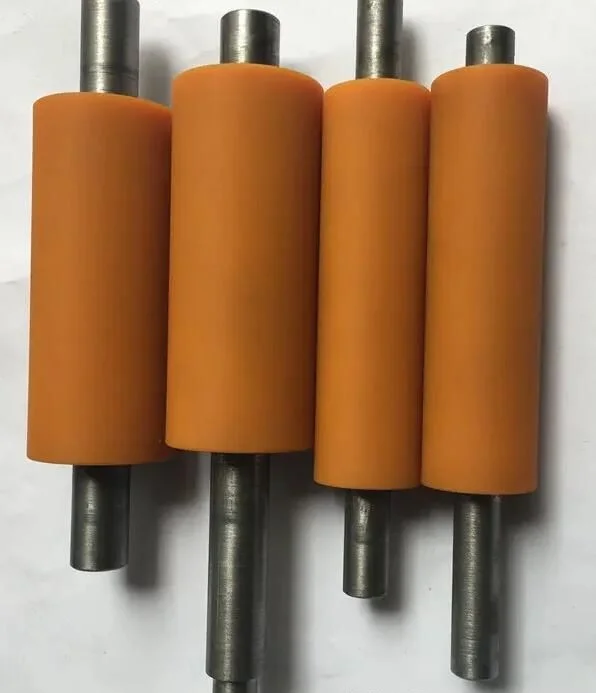
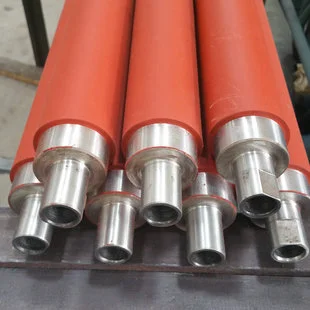
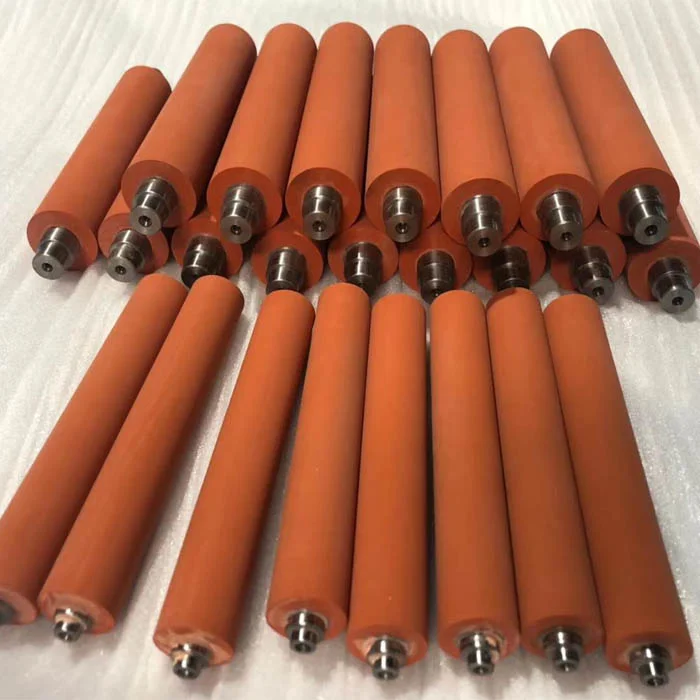
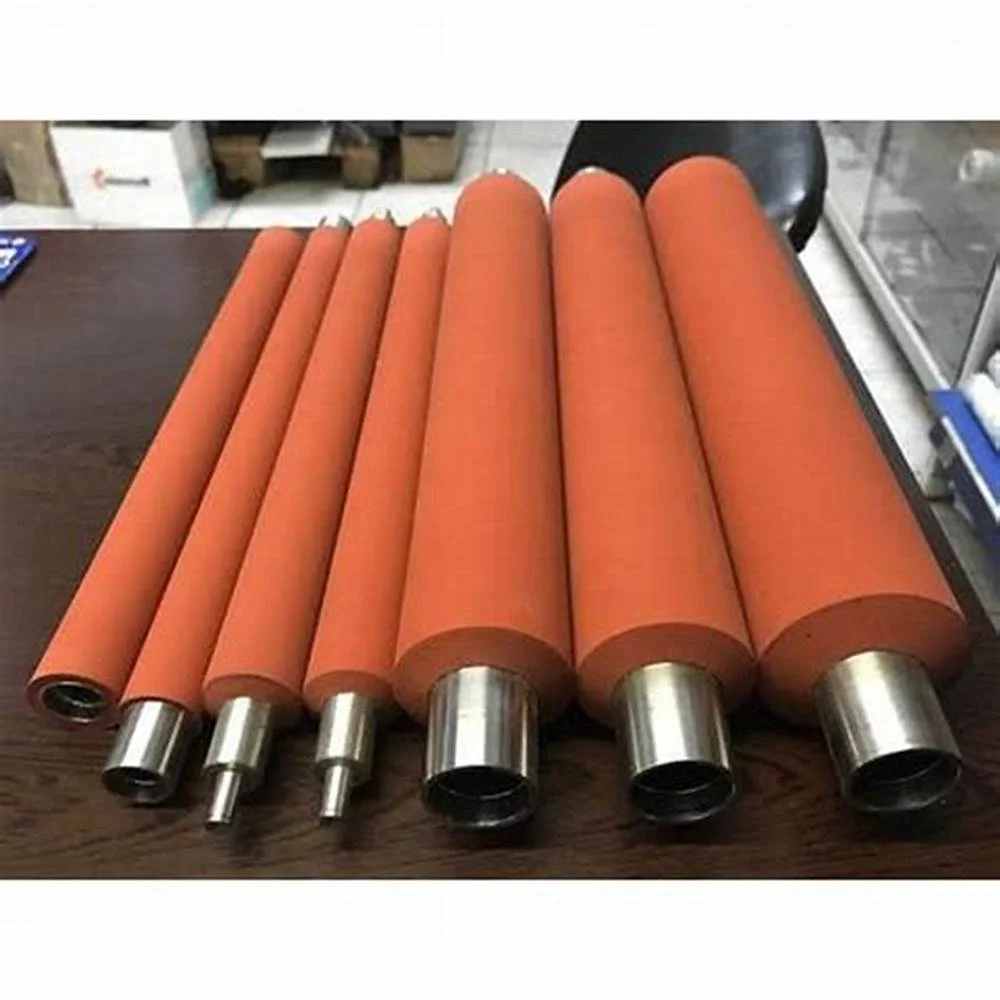
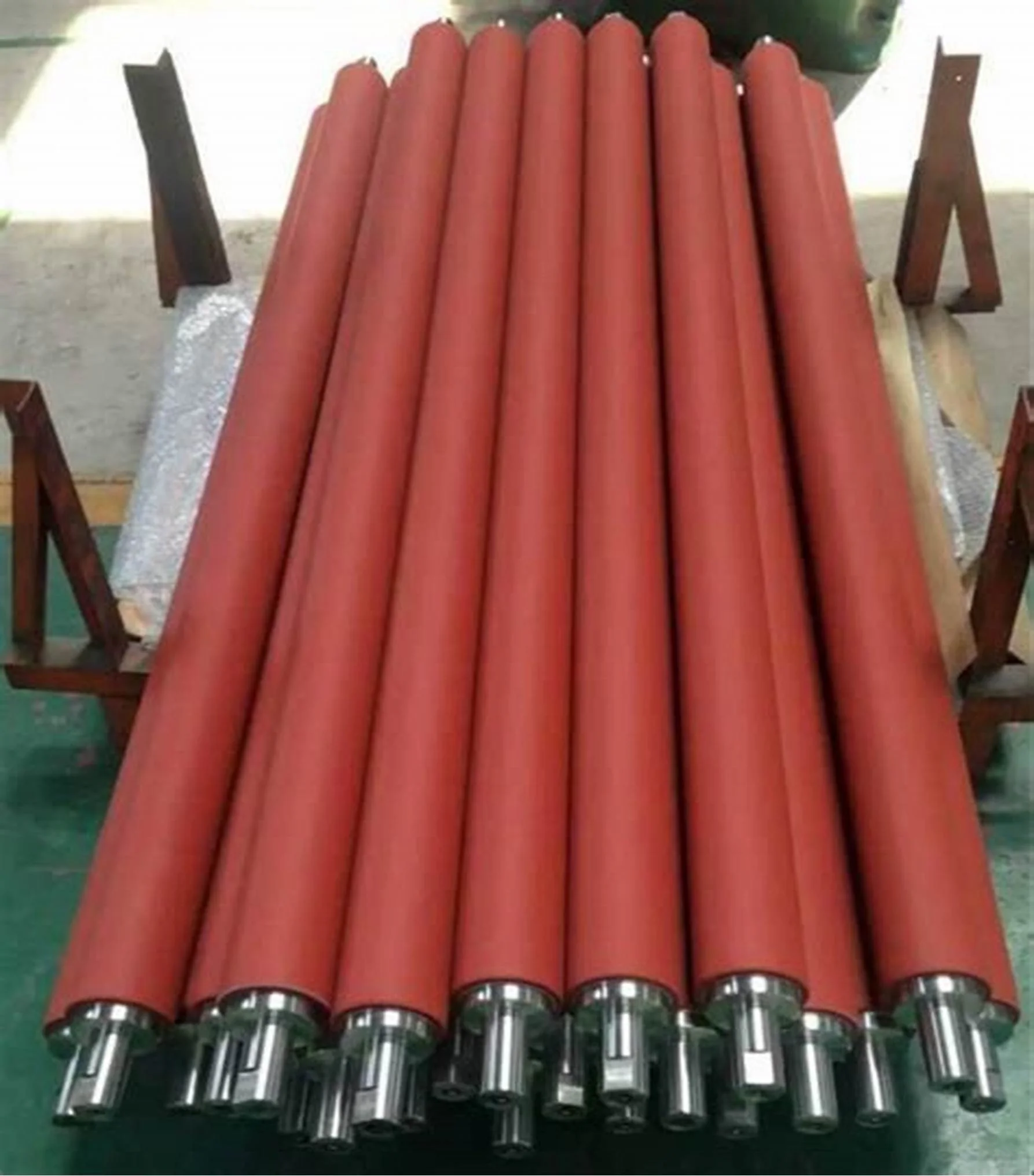
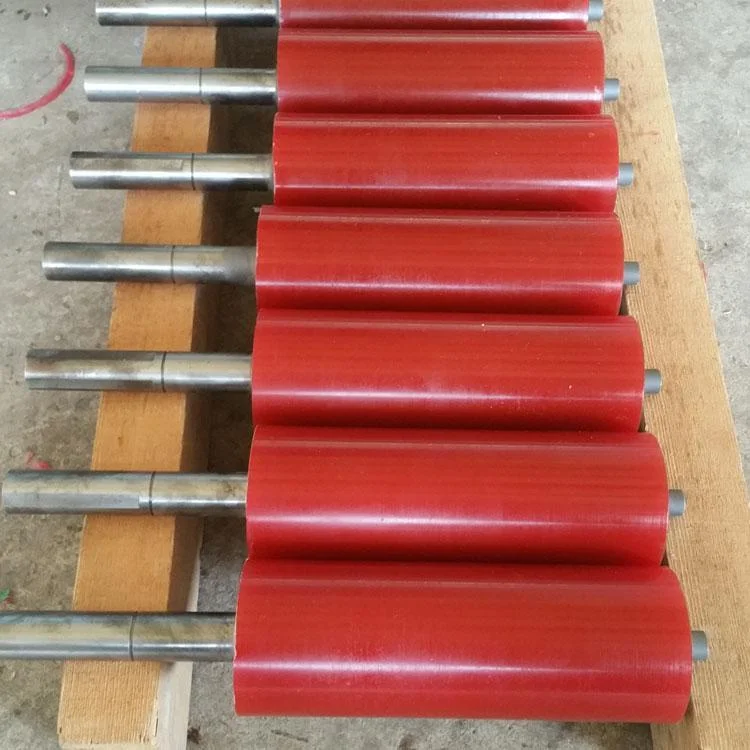
Custom industrial silicone rubber roller PU rubber coated rubber roller
- Category: >>>
- Supplier: Xian Decai Honorise New Material Co. Ltd.
Share on (1601206192565):
Product Overview
Description
Product Description

Use and maintenance
First, the pressure between the rollers. The pressure between the rollers is too heavy, will increase the friction between the rollers, heat up the rollers, increase the extrusion expansion between the rollers, accelerate the aging and deformation of the rollers, accelerate the emulsification process of ink and water, which is not conducive to the transfer of ink.
The solution is: the pressure between the rollers should be basically the same as the pressure of the contact plate. Experience is to use a 1500 wire, 3cm wide plug inserted between the rubber roller, can feel a certain tight force.
After scrubbing, wipe again with a clean cloth and then install the roller on the machine for next use.
Second, the roller surface crystallization treatment. The surface crystallization closes the pores on the surface of the roller, which will make the roller lose its inophilic function, resulting in uneven ink transfer and easy emulsification of ink.
The solution is to remove the rubber roller on the machine, lay it flat with a shelf, take a cloth to stick kerosene and pumice powder, rub the surface of the rubber roller evenly, wipe off the crystallization layer on the surface of the rubber roller, show the rubber color of the original rubber roller, and then use car wash water or gasoline to clean the kerosene and pumice powder remaining on the rubber roller, reinstall and adjust the pressure of the rubber roller.
Maintenance of the bearing on the rubber roller. In the high-speed operation of the machine, the bearing wear on the roller is very obvious, especially the operator usually does not pay attention to the maintenance of the bearing, and the wear is more severe. When the bearing of the roller is damaged to a certain extent, it will produce the runout friction and extrusion of the roller, and shorten the service life of the roller. And will make the printed products have "ink, water bar" phenomenon. Therefore, the operator is required to take the rubber roller down every week, butter the bearing, and replace the badly worn and poorly rotating bearings to ensure the normal use of the rubber roller.
Fourth, the impact of the workshop environment on the roller. In hot and humid weather and dust from the surrounding environment, the high-speed operation of the machine makes the surface temperature of the roller rise, the roller expands in heat, and increases the friction of the roller, which will shorten the service life of the roller.
Therefore, in the factory with conditions, the offset printing plug-in requires the installation of air conditioning, keep the workshop clean and clean, so that the machine can produce and operate in a good environment, and only in a good workshop environment can it produce high-quality products.
When preparing the silicone roller, rubber roller and crutch accessories, the suitable raw rubber should be selected according to the requirements of the use conditions, and the physical properties of the outer rubber of the rubber roller can be further adjusted by a variety of reinforcing agents and plasticizers. The characteristics of several kinds of rubber commonly used on rubber rolls and their application on rubber rolls are introduced respectively.
① Neoprene rubber: suitable for the production of soft printing roller, photographic plate printing roller, etc. Roll forming can be used in molding, film wrap forming, winding forming or extrusion forming. Due to the poor storage stability of the compound, attention should be paid to avoid parking in direct sunlight in the manufacturing process. At the same time, the temperature condition of the rubber material should be controlled.
② Nitrile rubber: used in the manufacture of printing rollers, food industry rollers, textile printing rollers, soft rollers in contact with solvents, etc. Nitrile rubber has poor ozone resistance, so it should avoid operating in an environment with high ozone concentration during processing. The compound with good ozone resistance and weather resistance can be obtained by combining NBR with PVC.
③ Polyurethane rubber: has outstanding tensile strength, wear resistance and crack resistance characteristics, polyester polyurethane rubber has good resistance to a variety of solvents. In addition, continuous exposure to high temperature and humidity will also adversely affect performance. It is used for polyurethane roller under high speed and high pressure, and it is important to improve the dynamic roll stripping and crack phenomenon.
4.Silicone rubber: heat resistance of 200-250 degrees, chemical corrosion resistance is very good, the main disadvantage is low tensile strength. Typical uses of silicone rubber rollers are fabric heat setting, plastic heat setting embossing, calendering, copier fixing and so on. The molded silicone rubber roll adopts the film wrap molding, and the operation must be careful due to the low strength.
⑤ chloro-sulfonated polyethylene; It has high toughness and elasticity. Abrasion resistance, heat resistance up to 150 degrees, good resistance to various chemicals, oils, excellent insulation. It can be manufactured by various methods other than casting, and the rubber material should be avoided from sunlight during production.
6.Ethylene propylene rubber: can be used at 150 degrees high temperature conditions, has excellent chemical resistance, resistance to polar solvents, but not resistant to hydrocarbon solvents and oils can be used to make extrusion roller, conveying roller, contact with ink containing acetone and ester solvents printing roller. The roller can be wrapped and extruded, and attention should be paid to avoid contact with oil and hydrocarbon solvents during the process operation.
The solution is: the pressure between the rollers should be basically the same as the pressure of the contact plate. Experience is to use a 1500 wire, 3cm wide plug inserted between the rubber roller, can feel a certain tight force.
After scrubbing, wipe again with a clean cloth and then install the roller on the machine for next use.
Second, the roller surface crystallization treatment. The surface crystallization closes the pores on the surface of the roller, which will make the roller lose its inophilic function, resulting in uneven ink transfer and easy emulsification of ink.
The solution is to remove the rubber roller on the machine, lay it flat with a shelf, take a cloth to stick kerosene and pumice powder, rub the surface of the rubber roller evenly, wipe off the crystallization layer on the surface of the rubber roller, show the rubber color of the original rubber roller, and then use car wash water or gasoline to clean the kerosene and pumice powder remaining on the rubber roller, reinstall and adjust the pressure of the rubber roller.
Maintenance of the bearing on the rubber roller. In the high-speed operation of the machine, the bearing wear on the roller is very obvious, especially the operator usually does not pay attention to the maintenance of the bearing, and the wear is more severe. When the bearing of the roller is damaged to a certain extent, it will produce the runout friction and extrusion of the roller, and shorten the service life of the roller. And will make the printed products have "ink, water bar" phenomenon. Therefore, the operator is required to take the rubber roller down every week, butter the bearing, and replace the badly worn and poorly rotating bearings to ensure the normal use of the rubber roller.
Fourth, the impact of the workshop environment on the roller. In hot and humid weather and dust from the surrounding environment, the high-speed operation of the machine makes the surface temperature of the roller rise, the roller expands in heat, and increases the friction of the roller, which will shorten the service life of the roller.
Therefore, in the factory with conditions, the offset printing plug-in requires the installation of air conditioning, keep the workshop clean and clean, so that the machine can produce and operate in a good environment, and only in a good workshop environment can it produce high-quality products.
When preparing the silicone roller, rubber roller and crutch accessories, the suitable raw rubber should be selected according to the requirements of the use conditions, and the physical properties of the outer rubber of the rubber roller can be further adjusted by a variety of reinforcing agents and plasticizers. The characteristics of several kinds of rubber commonly used on rubber rolls and their application on rubber rolls are introduced respectively.
① Neoprene rubber: suitable for the production of soft printing roller, photographic plate printing roller, etc. Roll forming can be used in molding, film wrap forming, winding forming or extrusion forming. Due to the poor storage stability of the compound, attention should be paid to avoid parking in direct sunlight in the manufacturing process. At the same time, the temperature condition of the rubber material should be controlled.
② Nitrile rubber: used in the manufacture of printing rollers, food industry rollers, textile printing rollers, soft rollers in contact with solvents, etc. Nitrile rubber has poor ozone resistance, so it should avoid operating in an environment with high ozone concentration during processing. The compound with good ozone resistance and weather resistance can be obtained by combining NBR with PVC.
③ Polyurethane rubber: has outstanding tensile strength, wear resistance and crack resistance characteristics, polyester polyurethane rubber has good resistance to a variety of solvents. In addition, continuous exposure to high temperature and humidity will also adversely affect performance. It is used for polyurethane roller under high speed and high pressure, and it is important to improve the dynamic roll stripping and crack phenomenon.
4.Silicone rubber: heat resistance of 200-250 degrees, chemical corrosion resistance is very good, the main disadvantage is low tensile strength. Typical uses of silicone rubber rollers are fabric heat setting, plastic heat setting embossing, calendering, copier fixing and so on. The molded silicone rubber roll adopts the film wrap molding, and the operation must be careful due to the low strength.
⑤ chloro-sulfonated polyethylene; It has high toughness and elasticity. Abrasion resistance, heat resistance up to 150 degrees, good resistance to various chemicals, oils, excellent insulation. It can be manufactured by various methods other than casting, and the rubber material should be avoided from sunlight during production.
6.Ethylene propylene rubber: can be used at 150 degrees high temperature conditions, has excellent chemical resistance, resistance to polar solvents, but not resistant to hydrocarbon solvents and oils can be used to make extrusion roller, conveying roller, contact with ink containing acetone and ester solvents printing roller. The roller can be wrapped and extruded, and attention should be paid to avoid contact with oil and hydrocarbon solvents during the process operation.
Related Products
Product show

Payment and Shipping


About Us


Customer Feedback

FAQ
1.Are you trading company or manufacturer ?
We are a factory integrating R & D, production and sales.
2.How should I get a quote ?
(1)Size Specification,such as inner dia,outer dia and length
(1)Size Specification,such as inner dia,outer dia and length
(2)Hardness :30-90 Shore A.
(3)Let me know what products you print ?
(4)What's the quantity you need ?
(4)What's the quantity you need ?
(5)Special rubber roller, drawings are required
3.What is your delivery time ?
Around 3 days delivery for stock products
Around 7-10 days delivery for customized production
4.What's the MOQ of roller ?
Conventional Silicone Rubber Roller is 60CM;
Customized special roller will 1-20pcs.
Customized special roller will 1-20pcs.
5.How do you package the roller ?
Conventional Silicone Rubber Roller was packaged by carton;
Customized special big roller will package by wooden case.
Customized special big roller will package by wooden case.
6.What is mode of transport ?
By express or air or sea.
7.What's your payment method ?
T/T,Westem Union.
8.Can I get a sample before mass order ?
Low cost sample fee +freight charge by yourself;
After you purchase a large quantity, we refund the sample fee.
9.Other Special Support?
Trade Assurance Order By Alibaba


We Recommend


Silicone Rubber Roller High Pressure Hot Stamping 40 Mm
US $0.10-$5.00


10 inch brown dehusker rice rubber rollers on iron drum
US $10.00-$16.00
New Arrivals
New products from manufacturers at wholesale prices