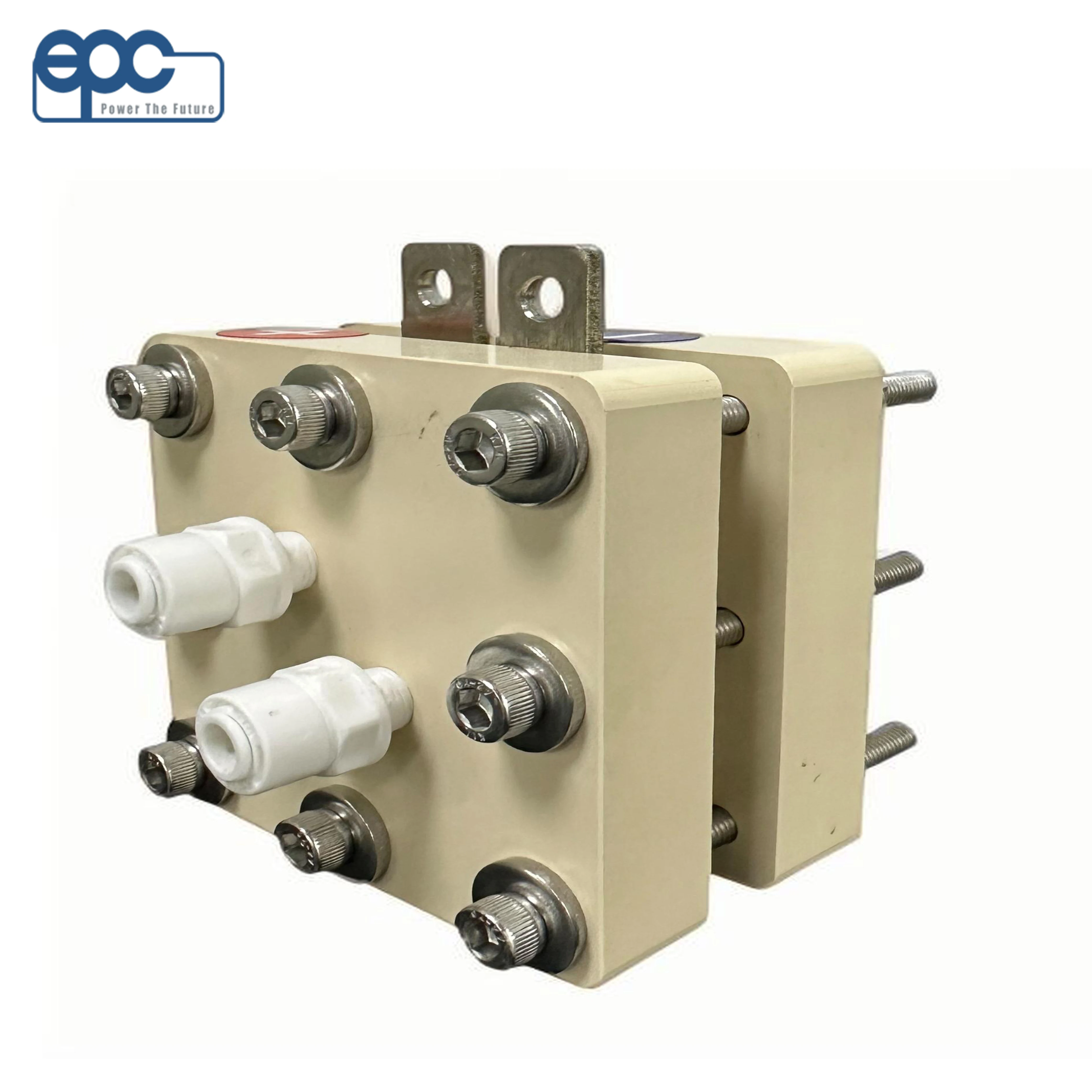

Hydrogen Energy Storage Carbon Dioxide Test Fixture CO2 Electroreduction Electrolytic Cell
- Category: >>>
- Supplier: Electro Power Cell Energy Technology (shanghai) Co. Ltd.
Share on (1601237479637):
Product Overview
Description
Carbon dioxide electric reduction test fixture is an important tool used to test the performance of carbon dioxide electric reduction reaction in electrochemical research. The following is a detailed introduction to the carbon dioxide electric reduction test fixture:
Definition and function
Carbon dioxide electric reduction test fixtures are mainly used in electrochemical environments to convert carbon dioxide gas into other valuable chemicals (such as carbon monoxide, methane, ethanol, etc.) through electrochemical reduction reactions. The fixture evaluates the catalytic activity and selectivity of the catalyst or electrode material for the electroreduction of carbon dioxide by providing stable electrochemical conditions, such as voltage, current and electrolyte environment.
Structure and composition
Carbon dioxide electric reduction test fixture usually consists of the following parts:
Electrolytic cell: The electrolytic cell is the core part of the fixture and is used to house the electrolyte solution and electrodes. The design of the cell should ensure good sealing and corrosion resistance to withstand the pressure and corrosive substances that may be generated during the electrochemical reaction.
Electrode system: including working electrode, opposite electrode and reference electrode. The working electrode is the catalyst or the electrode material to be measured, the opposite electrode is used to provide or receive electrons, and the reference electrode is used to measure and stabilize the potential in the electrolytic cell.
Gas supply system: used to pass carbon dioxide gas into the electrolytic cell and ensure the uniform distribution of gas in the electrolytic cell.
Potential control system: Used to control the potential in the electrolytic cell to achieve the desired electrochemical reduction reaction.
Data acquisition system: used to record and analyze current, voltage, gas yield and other data in the electrochemical reaction process.
Types and characteristics
According to the structure of the electrolytic cell and the different electrode materials, the carbon dioxide electric reduction test fixture can be divided into many types. For example, a type H cell is a commonly used type of cell characterized by the cell being divided into two separate chambers separated by an ionic membrane to avoid mixing between cathode and anode products. In addition, there are a number of specially designed electrolytic cells, such as flow cells and microreactors, for the study of carbon dioxide electroreduction reactions under specific conditions.
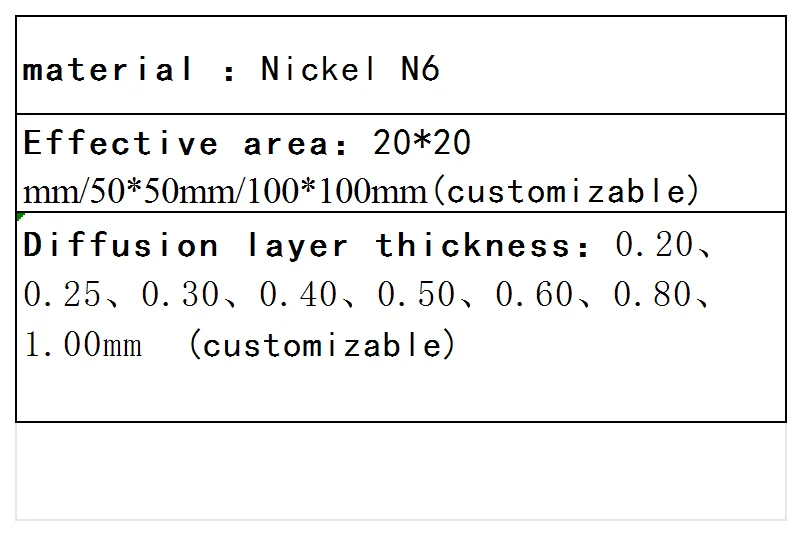
| material :Nickel N6 |
| Effective area:20*20 mm/50*50mm/100*100mm(customizable) |
| Diffusion layer thickness:0.20,0.25,0.30,0.40,0.50,0.60,0.80,1.00mm (customizable) |


We Recommend
New Arrivals
New products from manufacturers at wholesale prices