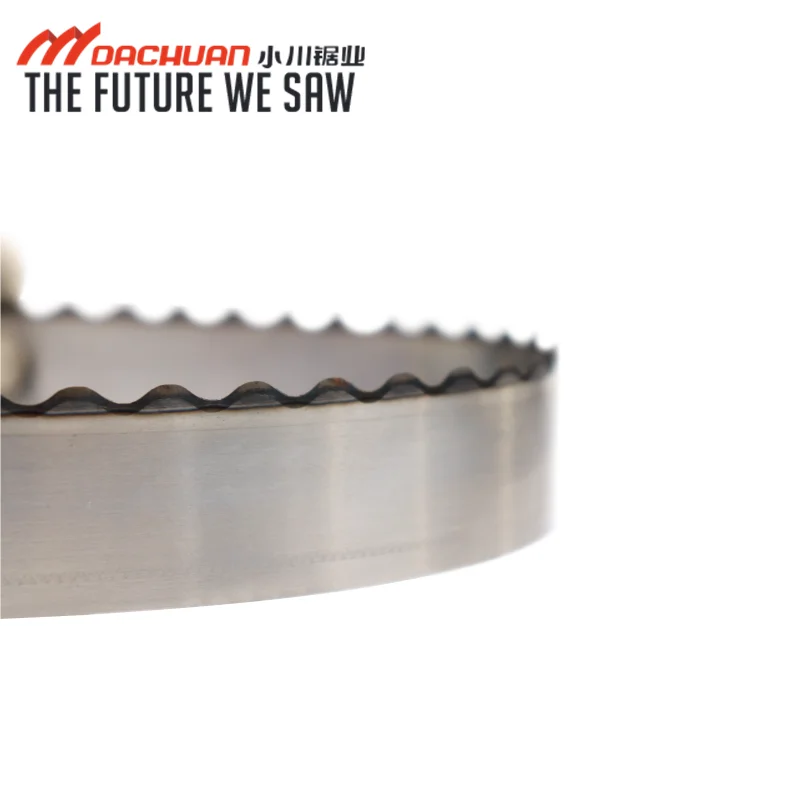
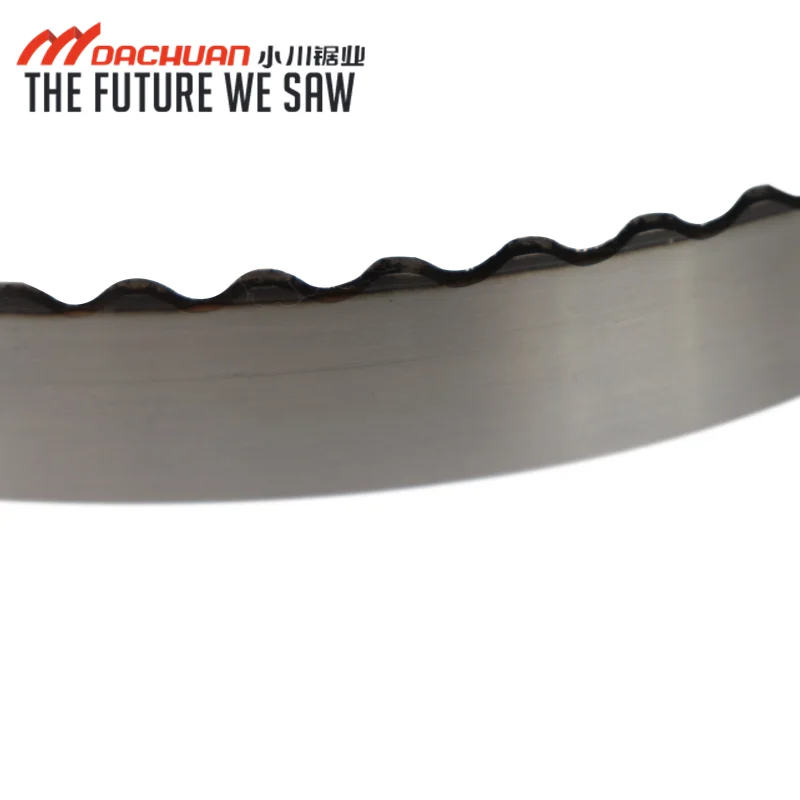
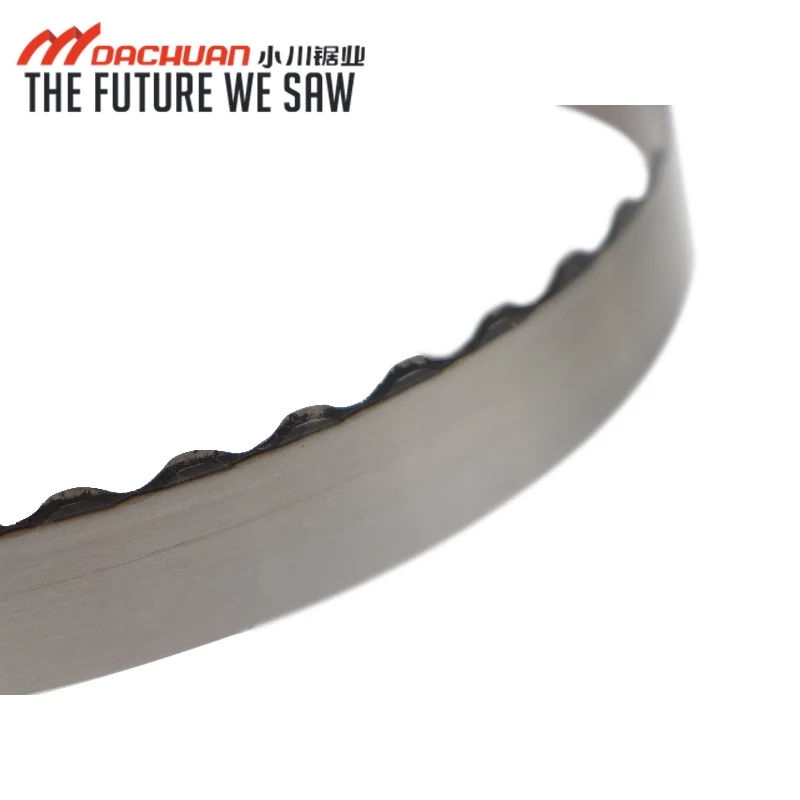
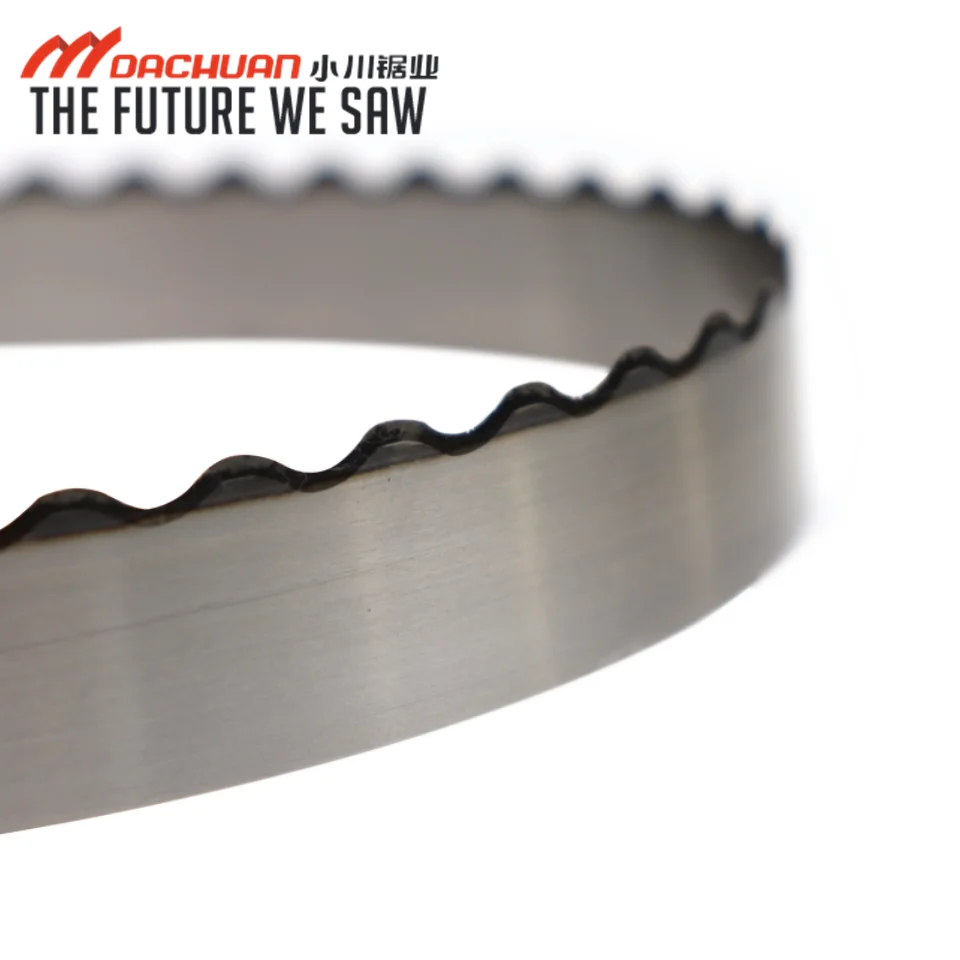
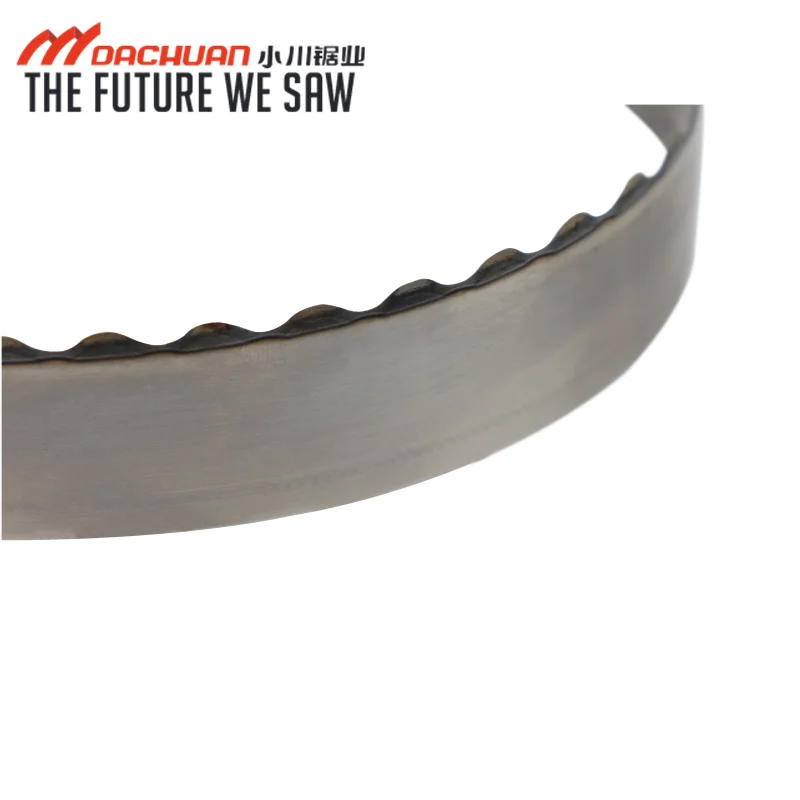
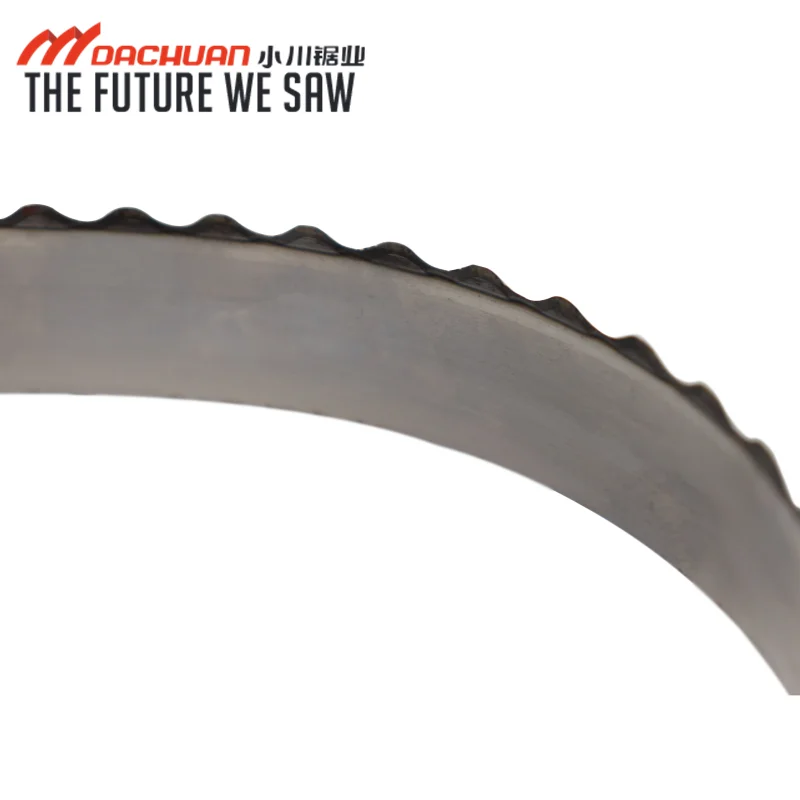
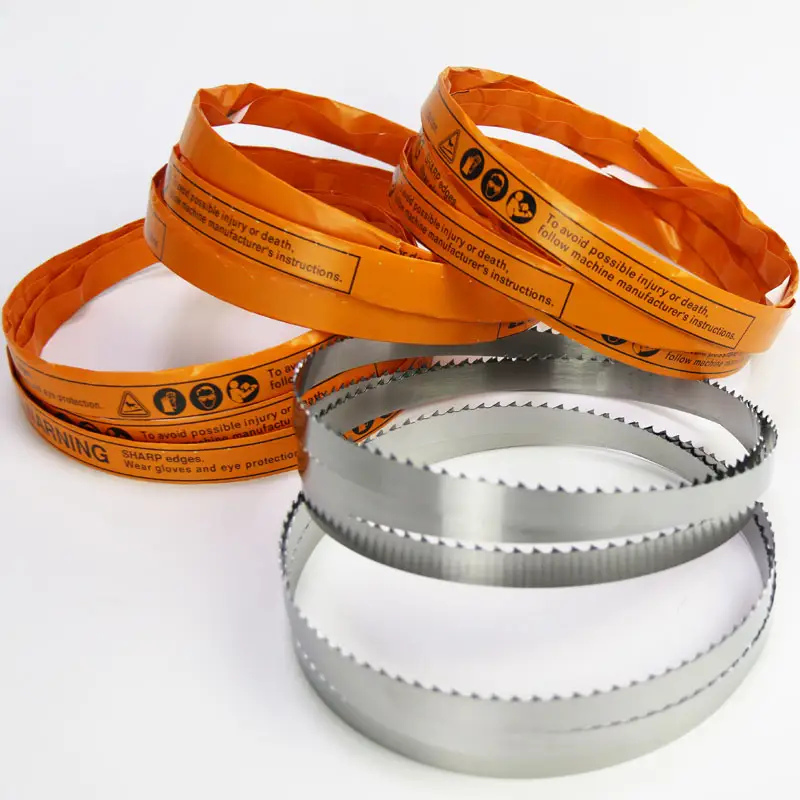
Paper Band Knife Saw Blades Cardboard Bandsaw Blade Band Wavy Knife Saw Blades For Paper Cutting 0.65 x 20mm
- Category: >>>
- Supplier: Foshan Shunde Xiaochuan Saw Industry Co. Ltd.
Share on (1601244333974):
Product Overview
Description


Q: Can we get samples for testing?
A: Yes, we can provide our standard products for free samples, but not contain freight charge.
A: Yes, we can provide our standard products for free samples, but not contain freight charge.
Q: can we make to order?
A:We can make to order according to your requirement ,such as size,material,toother form,tooth pitch,set tooth etc.
A:We can make to order according to your requirement ,such as size,material,toother form,tooth pitch,set tooth etc.
Q: what material you have?
A: We have 65Mn, SK5,SK51,SK85,51crV4,X32.
Q:can you accept OEM or ODM?
A: Yes!
How to extend your blade life?
1. SHARPEN YOUR BLADE
Use Xiaochuan's blade sharpening machine or your own blade maintenance equipment to ensure your bandsaw blades maintain maximum precision and performance.
2.PAY ATTENTION TO DETAIL
When installing a new sawmill blade, make a few cuts at a moderate speed to "break in" the blade. Also, minimize skim cuts when only one side of the set tooth is sawing. Carbide Tippedband saw blades are the exception and should not be broken in.
3. MAINTAIN DRIVE BELT TENSION
Keep drive belts tight to transmit higher horsepower to the sawmill blade, especially with new belts that need tightened more frequently.
4.UNDERSTAND DIFFERENT WOOD SPECIES AND MOISTURE CONTENT
Trees vary in density, which requires different cutting techniques and feed rates. Wood density change as logs dry which makes sawing more difficult.
5. LUBRICATE YOUR BLADES
Lubricating the sawmill blade can lead to higher sawing performance, reduced pitch build up, longer life between blade sharpenings, and overall blade life.
6. CLEAN BEFORE YOU CUT
Dirt, rocks, sand, and other foreign material that may be in the log will wear the teeth considerably faster. A debarker can help with this.
7. MEASURE BLADE TENSION
Periodically check hydraulic tensioners, air bags, and springs, because proper tension is critical for maximum bla8. EXAMINE BLADE WHEEL BELTSde performance and cutting speeds.
8. EXAMINE BLADE WHEEL BELTS
The blade wheel belts must be in good condition to reach peak performance because worn belts can lead to blade tracking problems. Swapping drive side and idle side can extend belt life.
9. EXAMINE BLADE GUIDE ALIGNMENT
If the blade guides are tipped upward or downward, they will cause the blade to cut in the same direction. Keep rollers tight and make sure the blade is not continuously contacting the back guide or roller flange.

We Recommend

115mm 4.5 inches diameter marble tile diamond saw blade
US $0.96-$2.20

High quality band saw blade carbide for meat cutting for food
US $15.10-$15.90


New Arrivals
New products from manufacturers at wholesale prices