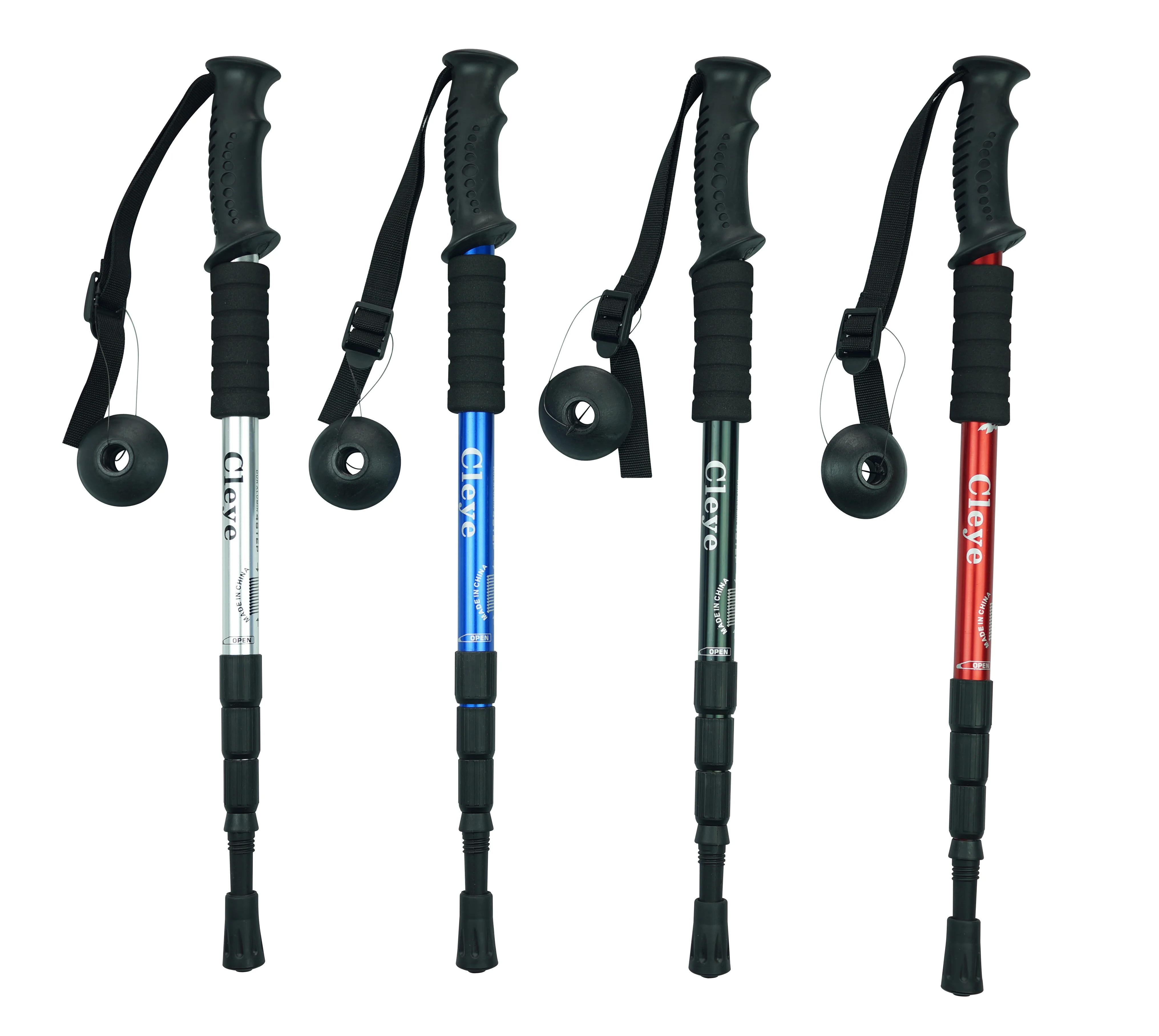
Nordic Ultralight Trekking Telescoping Poles Walking Hiking Foldable Cork Handle Pull String Rope Locking Rubber Tip Outdoor
- Category: >>>
- Supplier: Dalian Rcve Technology Co. Ltd.
Share on (1601246389697):
Product Overview
Description
Buyer reviews


Company Profile

About RCVE:(The picture above is our city)
RCVE is located in Dalian, a beautiful coastal city in Liaoning, China. The beaches and mountains are great places for hiking,outdoor camping, and more, and on most dinner hours,while we’re out finding fresh air or fresh tracks of one kind or another. The sound of waves can wash away our inner anxiety and restlessness.
RCVE excels in outdoor sports products. The Company is built on the principle of obsessive, precise design and production. we carefully evaluate materials and resources to find the ideal balance between sustainability and performance. RCVE favor high-quality components and environmentally sound production processes. Our production facilities, as well as our vendors, are long-term partners. And we are proud to equip outdoor enthusiasts for their lifetime of experience.
RCVE excels in outdoor sports products. The Company is built on the principle of obsessive, precise design and production. we carefully evaluate materials and resources to find the ideal balance between sustainability and performance. RCVE favor high-quality components and environmentally sound production processes. Our production facilities, as well as our vendors, are long-term partners. And we are proud to equip outdoor enthusiasts for their lifetime of experience.
The goal of RCVE is to provide better products and services to get people out camping. It was a simple idea rooted in providing a place for souls who love life and sports, and allowing people to enjoy high-quality outdoor living and sports experiences.Now. The demand to enjoy, protect, and preserve the outdoors and sports has only grown stronger. We continue outfitting and inspiring all people with the gear they need to camp in comfort, explore public lands, and have fun. Like you, we are more motivated than ever to get out on the trails and set up camp, again and again.
We will take life seriously, doing what we know is right to build products and relationships that last.
We will take life seriously, doing what we know is right to build products and relationships that last.


Product Description
About this item
* 100% Polyester
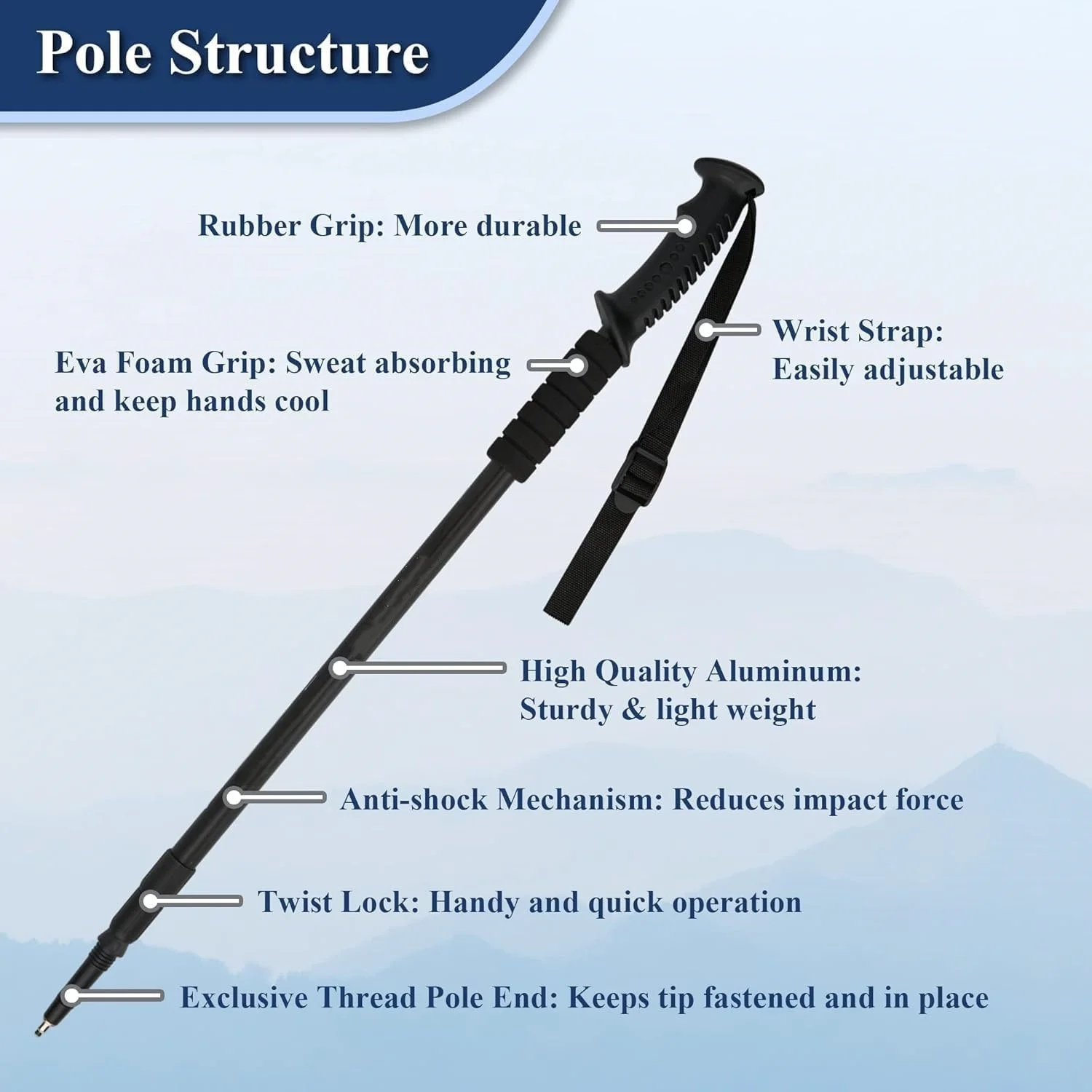
* Anti shock/ shock, absorbing poles: With the high quality aluminum material, the shock-absorbing effect can strongly reduce damage from the impact force.
* Extra long eva foam handles with straps: Soft and comfortable, absorbs moisture from sweaty hands and very comfortable to hold your walking sticks.
* Built to last: We use high quality Aluminum to make the more stronger & lighter hiking poles in the outdoor market. they can reduce compressive impact on knees, legs, ankles.
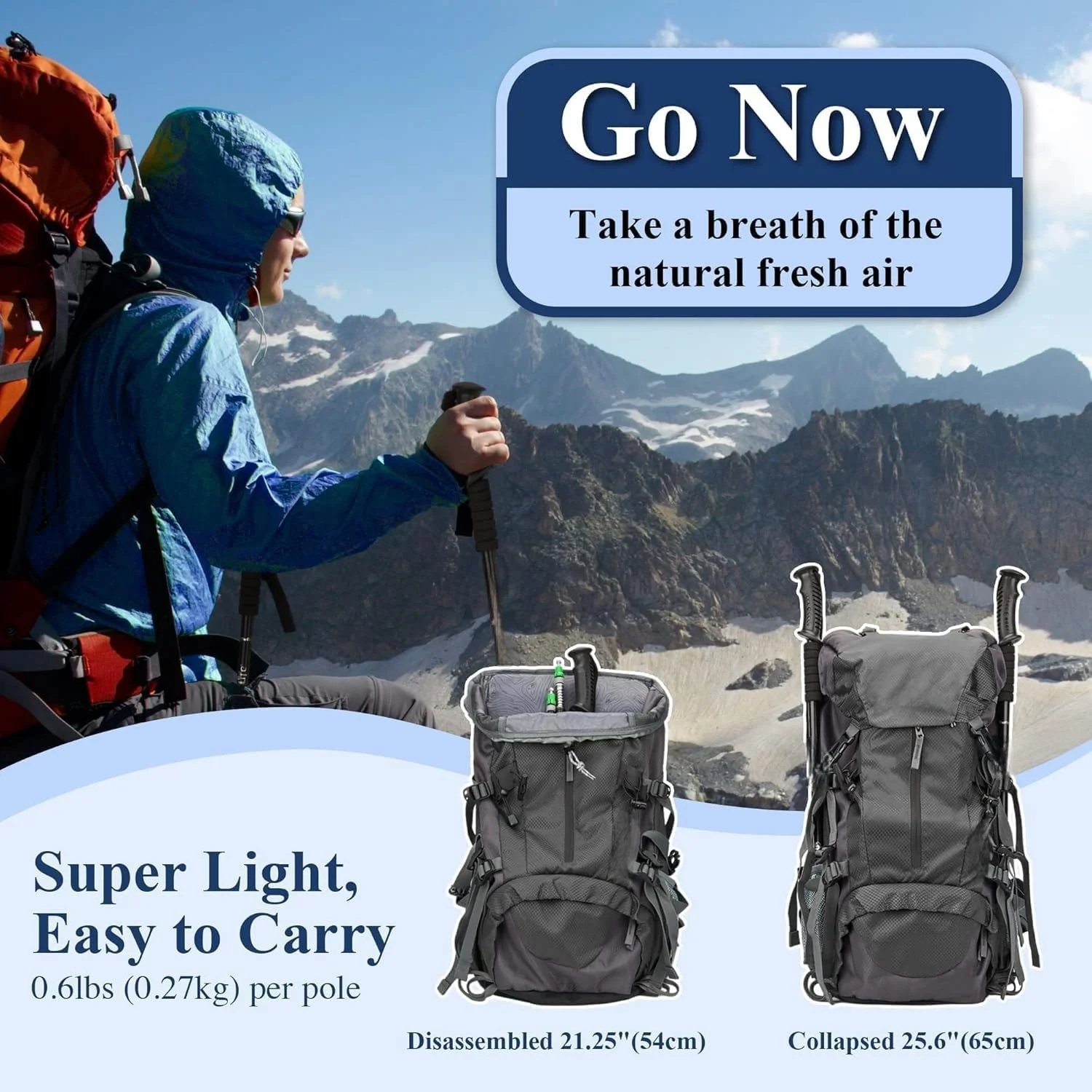
* Extendable: The poles suit for men or women, adult, seniors, kids, children. When not in use, these are easy to collapsible, small and light enough to be stored within your backpack.
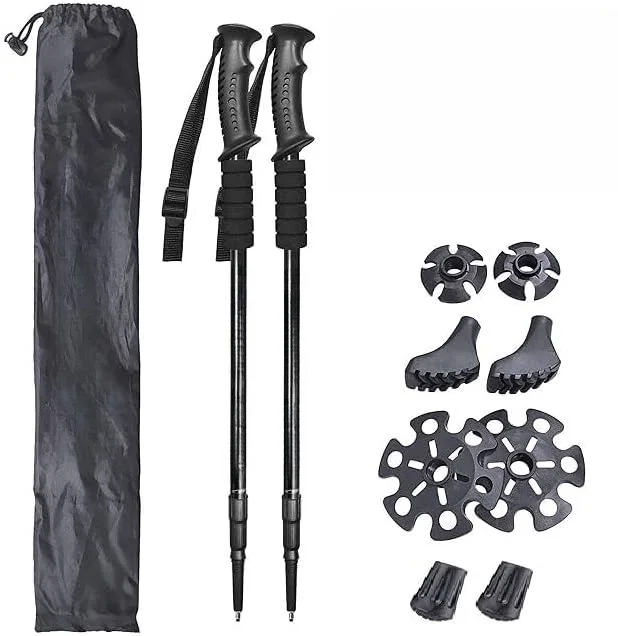
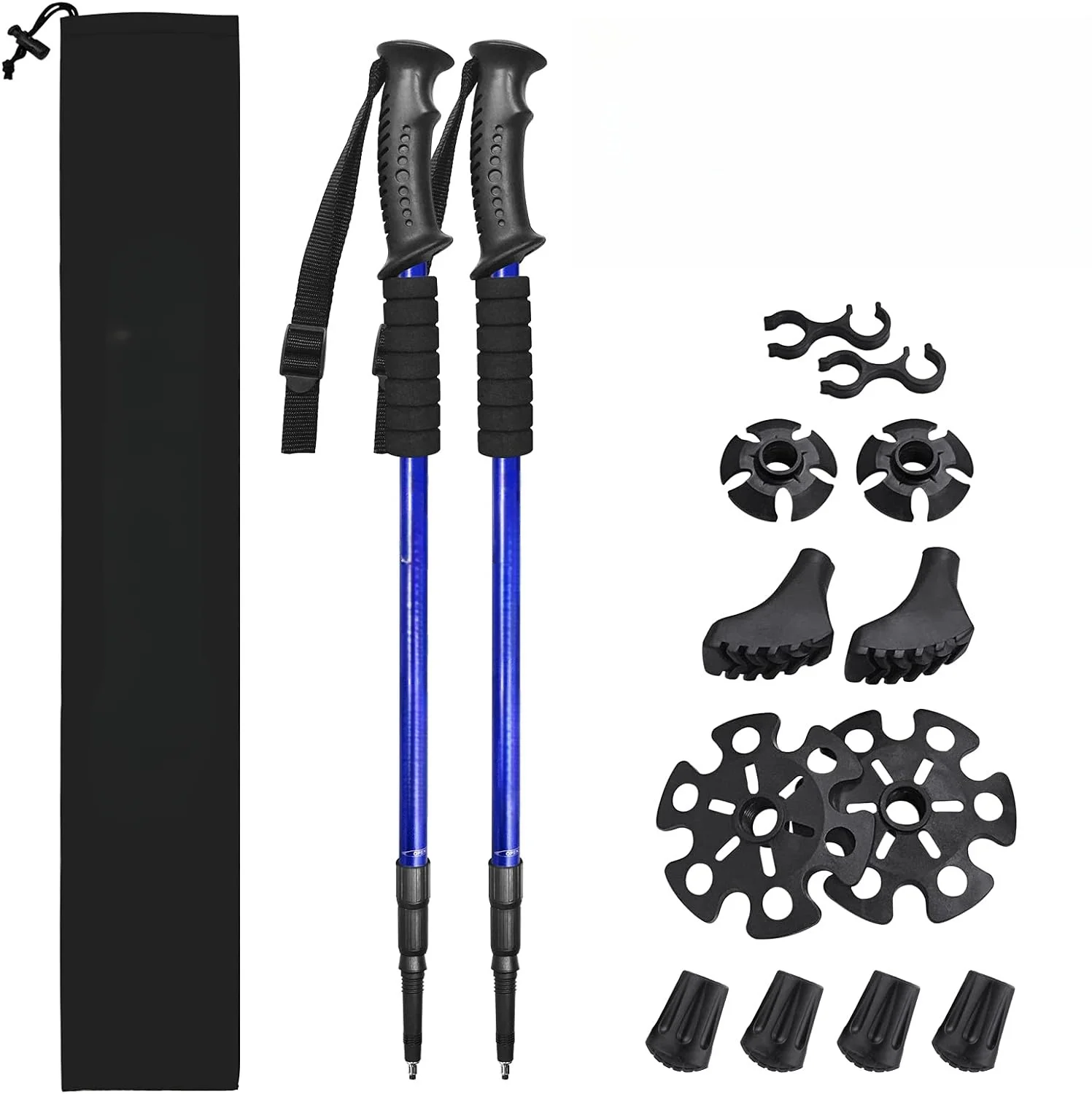
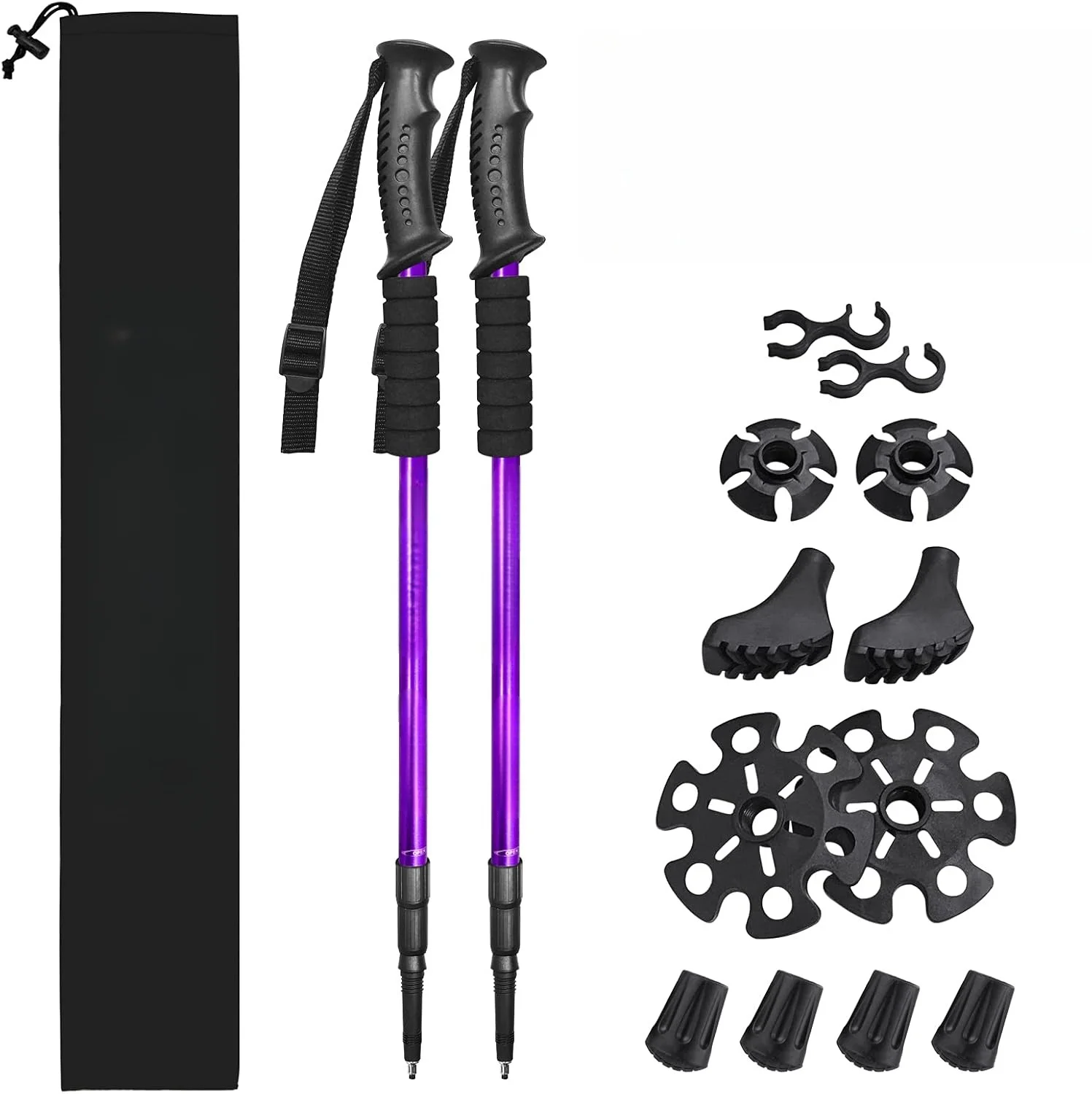
* Satisfy your thirst for adventure: You’ll feel 100% satisfaction from the moment you received the trekking poles. They come with a carrying bag and a full set of rubber accessories for trekking, hiking, nordic walking and backpacking, etc. We arequite sure that you will be super-impressed with the durability, portability, versatility and high quality of our trekking poles
* Anti shock/ shock, absorbing poles: With the high quality aluminum material, the shock-absorbing effect can strongly reduce damage from the impact force.
* Extra long eva foam handles with straps: Soft and comfortable, absorbs moisture from sweaty hands and very comfortable to hold your walking sticks.
* Built to last: We use high quality Aluminum to make the more stronger & lighter hiking poles in the outdoor market. they can reduce compressive impact on knees, legs, ankles.
* Extendable: The poles suit for men or women, adult, seniors, kids, children. When not in use, these are easy to collapsible, small and light enough to be stored within your backpack.
* Satisfy your thirst for adventure: You’ll feel 100% satisfaction from the moment you received the trekking poles. They come with a carrying bag and a full set of rubber accessories for trekking, hiking, nordic walking and backpacking, etc. We arequite sure that you will be super-impressed with the durability, portability, versatility and high quality of our trekking poles


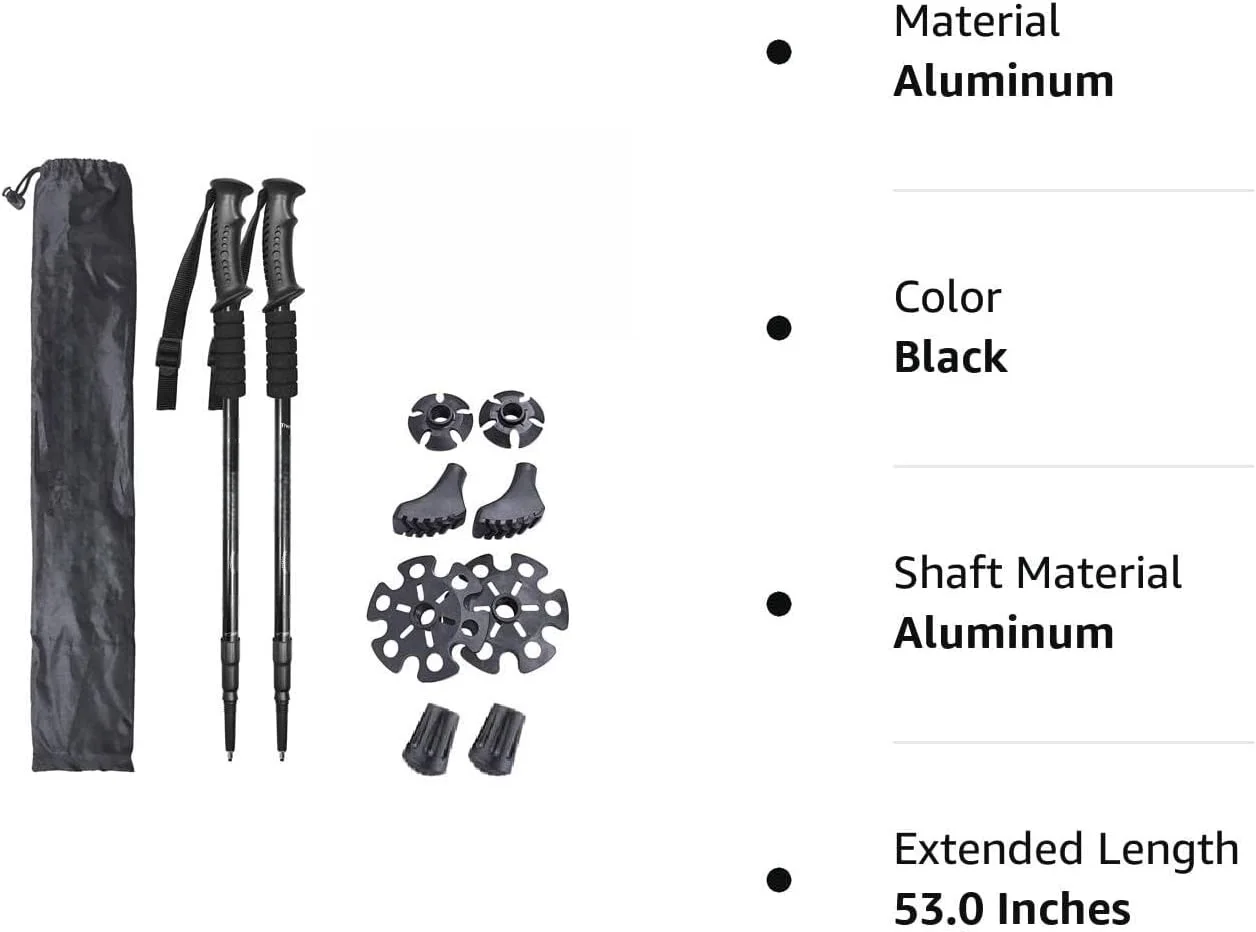
Brand:RCVE | Folded Size:26 inches | Handle Material:Rubber, Aluminum, Ethylene Vinyl Acetate | Lock Type:Quick |
Material:Aluminum | Item Weight:700 Grams | Maximum Height Recommendation:53 Inches | Base Material:Rubber |
Shaft Material:Aluminum | OEM/ODM:Yes | Target audience: adults, elderly, children | Color:Customizable |


Hot selling products


RCVE Camping Tips

How to choose a Trekking pole
1. T-handle and straight handle
T-handle, relatively short, only one is needed. If the legs and feet are not agile, you can choose it, and the T-handle can provide relatively stable support.
Straight handle, two are needed, one for each hand. If you are a healthy person, it is recommended to use two straight handles, which can improve balance and walking assistance.
T-handle, relatively short, only one is needed. If the legs and feet are not agile, you can choose it, and the T-handle can provide relatively stable support.
Straight handle, two are needed, one for each hand. If you are a healthy person, it is recommended to use two straight handles, which can improve balance and walking assistance.
2. Adjustable vs Non Adjustable
In general, it is recommended to choose hiking poles with adjustable length to provide better stability and grip when going up and down hills. And the storage volume is smaller, making it easy to fit into a backpack.
In general, it is recommended to choose hiking poles with adjustable length to provide better stability and grip when going up and down hills. And the storage volume is smaller, making it easy to fit into a backpack.
3. Shock absorption. A hiking stick with shock absorption function helps with wrist impact and is of great help to people with injuries. But the shock absorber is a bit heavy, which will increase the weight of the entire hiking pole. And the shock absorber will release force, reducing the stability of the hiking pole.
4. Weight.
4. Weight.
The weight of the hiking stick is crucial during long hikes. Due to waving your arm at least tens of thousands of times a day, choosing an ultra light hiking stick can significantly reduce fatigue.
5. Wristband.
5. Wristband.
Most hiking poles use polyester fiber as the wristband, which is cheap and quick drying due to water absorption, but prone to wear and tear. Nylon wristbands are light and sturdy, but they can be worn on the hands. Some hiking poles also choose leather wristbands, which are relatively expensive but skin friendly and durable, and will not absorb water or sweat.
6. Material.
6. Material.
Aluminum alloy: The weight is mostly above 200g, and aluminum alloy hiking poles that are too light must reduce the thickness of the pipe wall.
Carbon fiber: The mass is mostly below 180g, lighter than aluminum alloy, but also more expensive. Carbon fiber has good elasticity, but under strong lateral forces, it may break directly
7.Grip handle
Plastic/rubber grip: Rubber material grip is wear-resistant and has good anti slip performance, suitable for various environments. Its advantages lie in durability and anti slip, suitable for use in various weather conditions, and is a relatively neutral choice
Foaming material: foam grip is light and comfortable, suitable for short hiking. Its advantages lie in its lightweight and comfort, suitable for short distance hiking or daily use
Cork: Cork has a good hand feel and excellent sweat absorption properties, making it suitable for long-term use, especially in humid or dry environments. It is recommended due to its sweat absorption properties. However, most of the materials used to make hiking poles are recycled cork, which reduces the hand feel and becomes heavier.
Plastic/rubber grip: Rubber material grip is wear-resistant and has good anti slip performance, suitable for various environments. Its advantages lie in durability and anti slip, suitable for use in various weather conditions, and is a relatively neutral choice
Foaming material: foam grip is light and comfortable, suitable for short hiking. Its advantages lie in its lightweight and comfort, suitable for short distance hiking or daily use
Cork: Cork has a good hand feel and excellent sweat absorption properties, making it suitable for long-term use, especially in humid or dry environments. It is recommended due to its sweat absorption properties. However, most of the materials used to make hiking poles are recycled cork, which reduces the hand feel and becomes heavier.
8.Length
When making a purchase, choose the appropriate length of hiking poles based on your own height. There are pictures above specifically introducing the length that is suitable for one's height. When using, follow the double 90 degree principle: use a hiking stick of the exact length, with the forearm and upper arm at a 90 degree angle, and the hiking stick and forearm also at a 90 degree angle. Due to the fact that the hiking stick has always been in front of us as a supporting force, we need to adjust it flexibly according to our own situation when going up and down hills. Shorten uphill by 5-10 centimeters and extend downhill by 5-10 centimeters.
When making a purchase, choose the appropriate length of hiking poles based on your own height. There are pictures above specifically introducing the length that is suitable for one's height. When using, follow the double 90 degree principle: use a hiking stick of the exact length, with the forearm and upper arm at a 90 degree angle, and the hiking stick and forearm also at a 90 degree angle. Due to the fact that the hiking stick has always been in front of us as a supporting force, we need to adjust it flexibly according to our own situation when going up and down hills. Shorten uphill by 5-10 centimeters and extend downhill by 5-10 centimeters.
Our Advantages


FAQ
Can you customize sup board according to customer’s design?
Yes, we can make board according to customer requirements, like size, color, shape and graphic exactly.
Is sample available?
Yes, sample can be sent for checking before bulk production.
The production time for sample is about 7 days, and we will ship samples by express (FedEx, TNT, DHL etc.)
How long is your production time for regular order?
Usually 15-30 days depends on order quantity, but might be longer if there is holiday or the quantity is too large.
How about your quality control?
We pay much attention to the quality control. All our products will be inspected after each process and before package to
guarantee the quality.
Yes, we can make board according to customer requirements, like size, color, shape and graphic exactly.
Is sample available?
Yes, sample can be sent for checking before bulk production.
The production time for sample is about 7 days, and we will ship samples by express (FedEx, TNT, DHL etc.)
How long is your production time for regular order?
Usually 15-30 days depends on order quantity, but might be longer if there is holiday or the quantity is too large.
How about your quality control?
We pay much attention to the quality control. All our products will be inspected after each process and before package to
guarantee the quality.
1. Order details: Model + Size + Color + Quantity ( For example: LW101 15cm 003 10pcs )
2. Shipping info : Address + post code + Tel number
3. Mode of shipping: Air, sea, express or forwarder or others.
Any question, please Contact us.
Faster or Cheaper Express, Your Choice :
1. Fast & Expensive : 3-7 days DHL,UPS FedEx, DPEX
2. Slower & Cheaper: 10-25 days EMS, e-Package .etc
Any problem, please Contact us.
Payment:
Credit card,Bank Transfer or PayPal are available.
Failed In Payment, Do Not Worry. Please Try Again. Never Give Up.
Any question, please Contact us.
Lower Minimum Order Quantity, Of Course, WE CAN :
We provide drop shipping service for most products. Please leave the right address of your customer.
Mix model and color is OK. Get your order ready, and any question, please Contact us.
Free Sample:
We are very willing and support our customers to test the quality of our products.
As long as you are a business partner, we can provide Free Samples for you. (Not included Shipping Fee)Any question, please
Contact us.
OEM&ODM:
1. Over 10 years professional factory,
2. More than 50 workers and 3 R&D engineers
3. Free to Make A Proof .
Please Contact us. The best sale team are waiting for you.
Mixing Purchase:
1. Mixed Model and Mixed Size are OK.
2. Please list the details of your order , please Contact us to get your Quotation and Exclusive service
Contact Us

We Recommend
New Arrivals
New products from manufacturers at wholesale prices