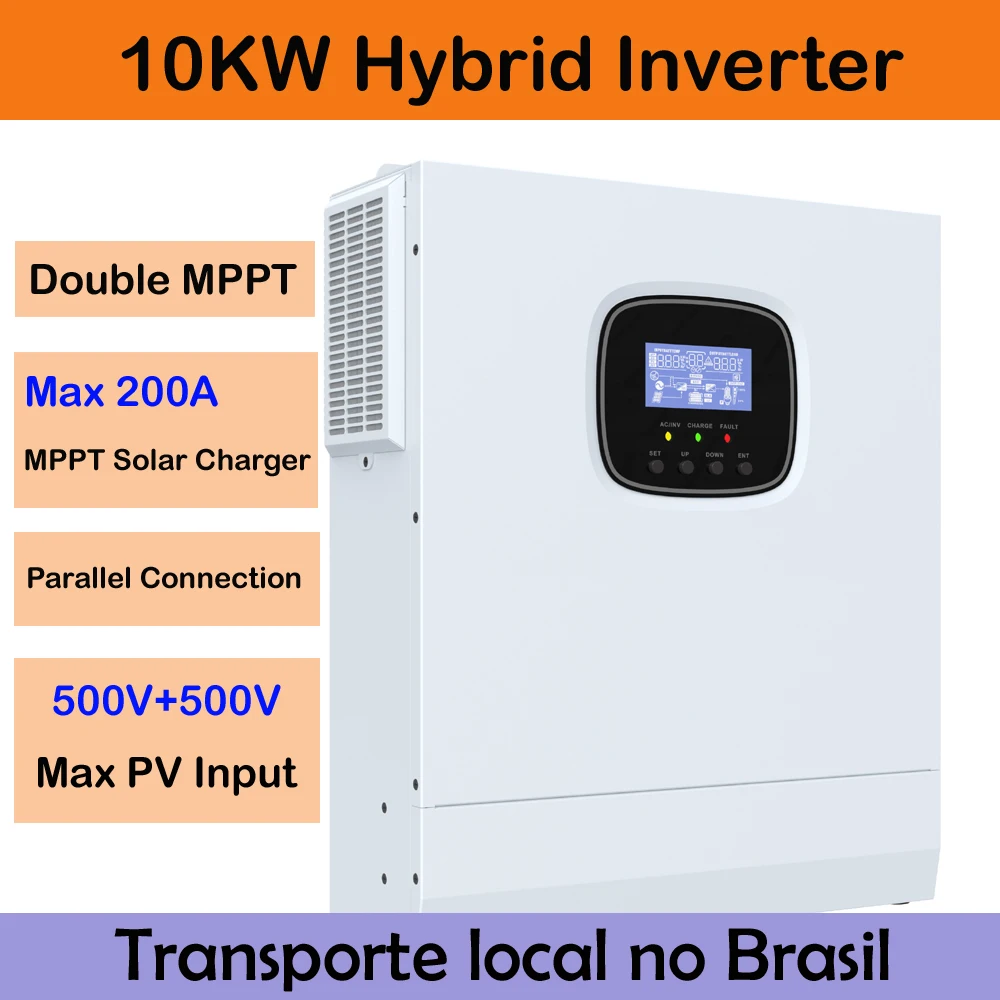
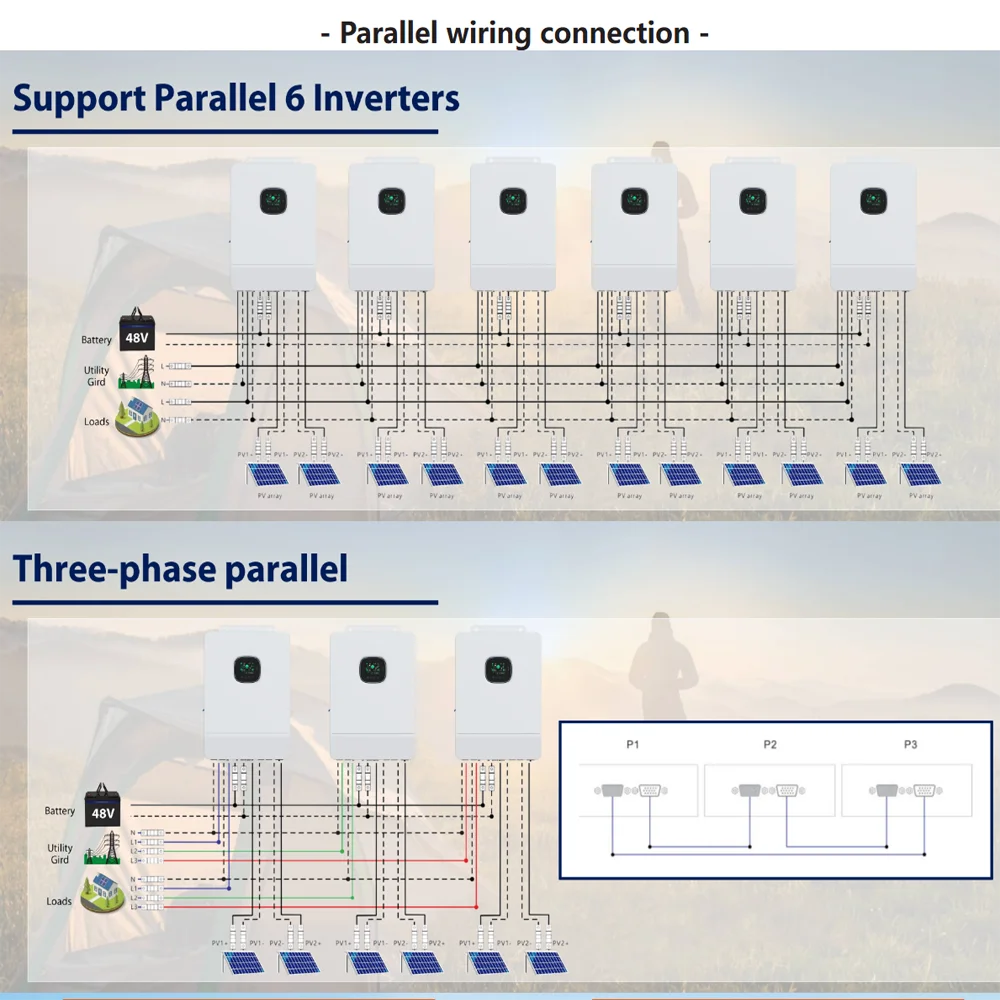
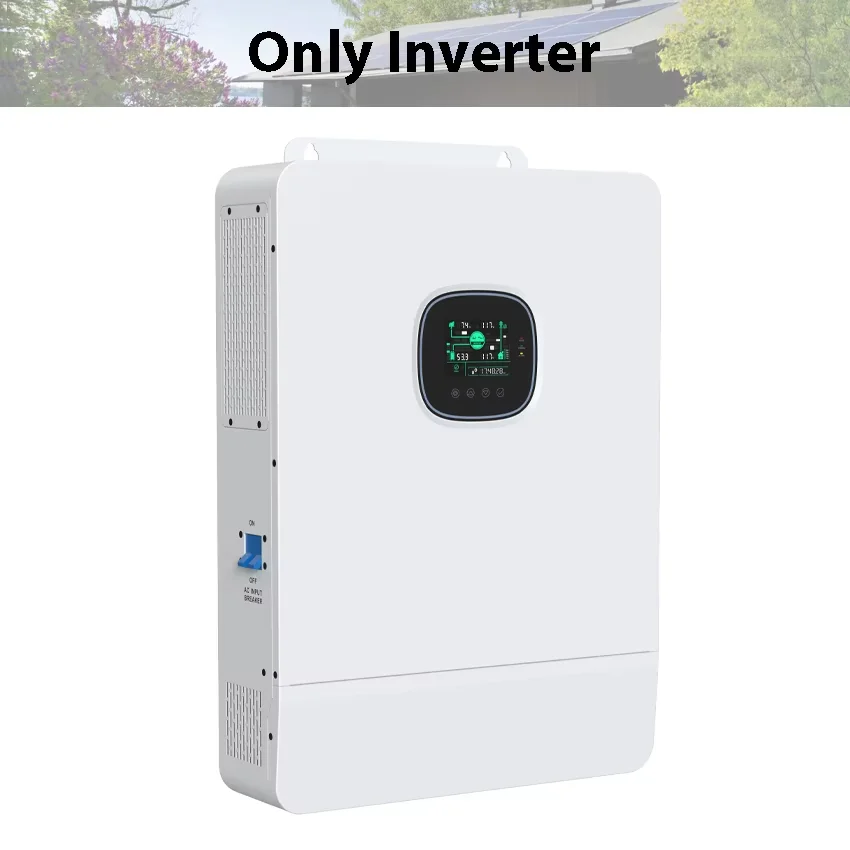
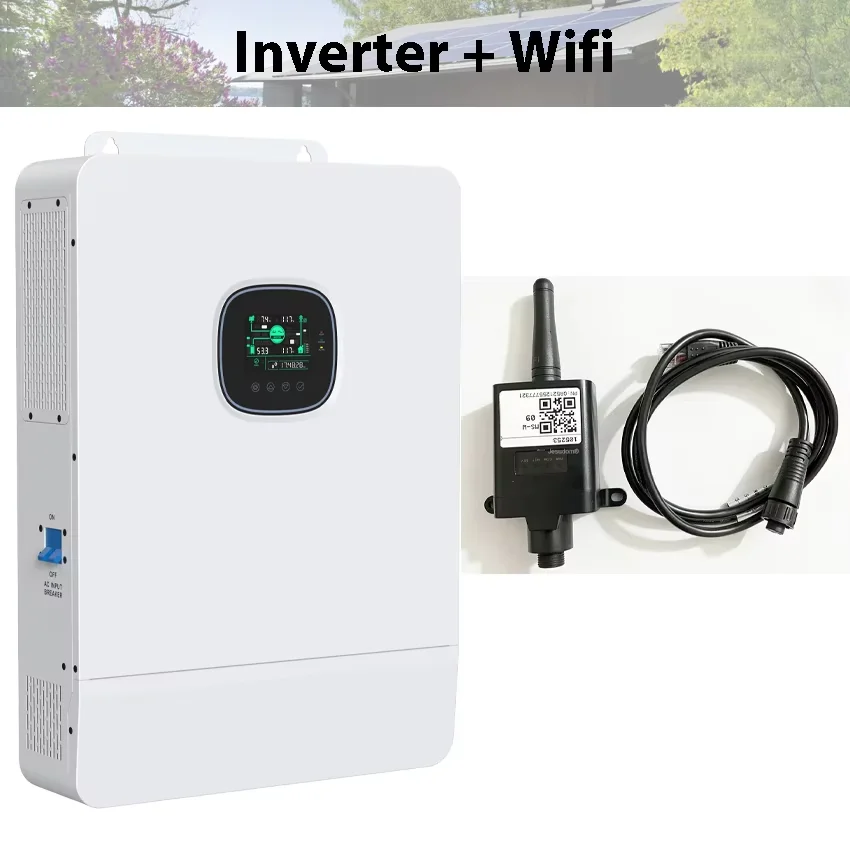
Parallelled Connection Function10KW Hybrid Solar Inverter 48Vdc to 230Vac Output Double MPPT Input Support 200A Charging Current
- Category: >>>
- Supplier: Shanghai Tingen Electric Co. Ltd.
Share on (1601249155374):
Product Overview
Description
Parallelled Connection Function10KW Hybrid Solar Inverter 48Vdc to 230Vac Output Double MPPT Input Support 200A Charging Current

Supports lead acid battery and li-ion battery connections.
- With a dual activation function when the li-ion battery is dormant; either mains or photovoltaic power supply access can trigger the activation of the li-ion battery.
- Supports single-phase parallel and parallel three-phase pure sine wave output.
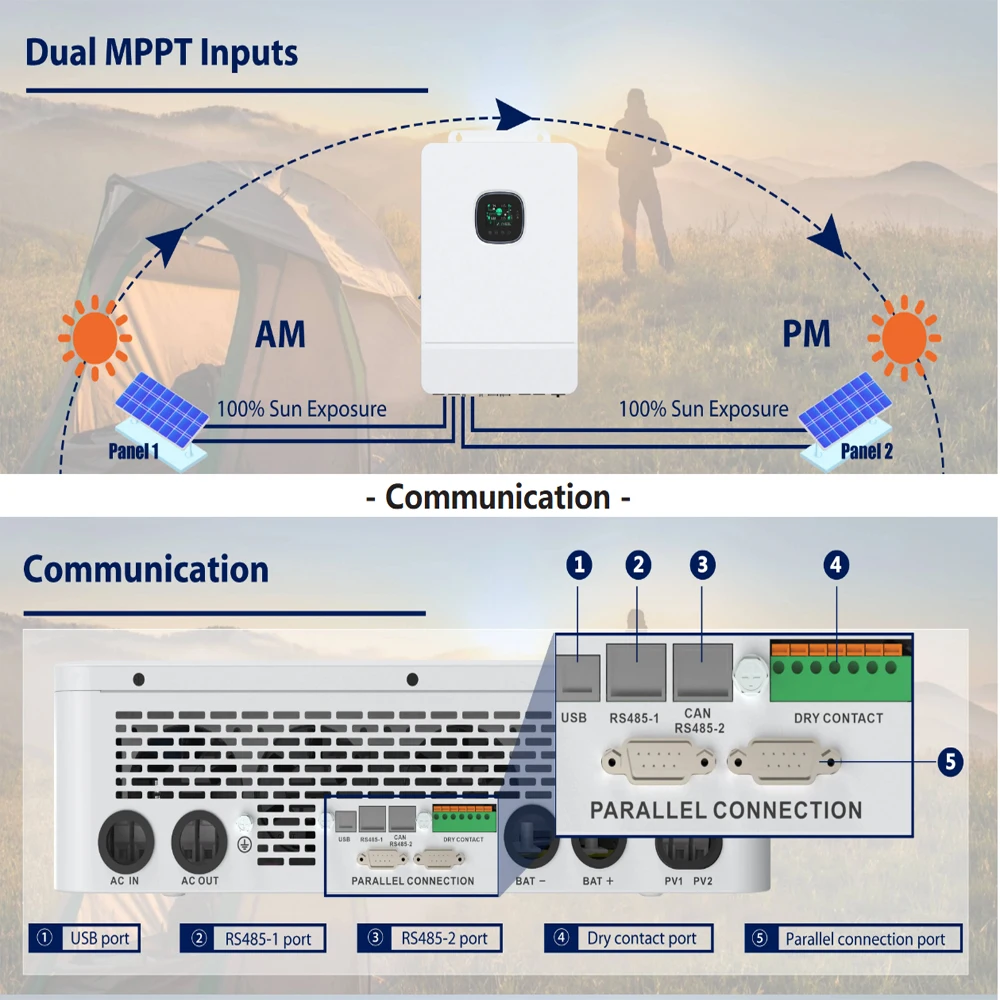
- Stand-alone or parallel systems support 200, 208, 220, 230 and 240Vac voltage levels upports two solar inputs and simultaneous tracking of two solar maximum power charging/carrying capacity functions.
- Dual MPPT with 99.9% efficiency and maximum 22A current in a single circuit, perfectly adapted to high power modules.
- 4 charging modes are available: solar only, mains priority, solar priority, and mixed mains and PV charging.
- Time-slot charging and discharging setting function is available in both off-grid and hybrid grid-connected modes.
- Stand-alone energy saving mode function to reduce no-load energy losses.
- With two output modes of utility bypass and inverter output, with uninterrupted power supply function.
- LCD large screen dynamic flow diagram design, easy to understand the system data and operation status.
- 360° protection with complete short circuit protection, over current protection, over under voltage protection,overload protection, etc.
- Support CAN, USB, and RS485 communication.
- With N grounding option.


• Hybrid Charging (Default)
Solar and utility charging the battery at the same time, solar at the first priority, utility power as a supplement when solar power is not sufficient. This is the fastest way to charge and is suitable for areas with low power supply, providing customers with sufficient back-up power.(Source priority: solar>utility)
• Utility Priority Charging
The utility power gives priority to charging the battery, and PV charging is only activated when the utility power is not available.(Source priority: utility>solar)
• Solar Priority Charging
Solar priority charging, with utility charging only activated when the solar fails. By making full use of solar power during the day and switching to utility charging at night, battery power can be maintained and is suitable for applications in areas where the grid is relatively stable and electricity prices are more expensive.(Source priority: solar>utility)
• Only Solar Charging
Solar charging only, no mains charging is activated. This is the most energy-efficient method, with all the battery power coming from solar energy, and is usually used in areas with good radiation conditions.
- AC output mode -
• Utility Priority Output (Default)
Utility at first priority, utility and solar provide power to load at the same time when solar is available, battery will provide power to load only when utility power is not available.(Priority: utility>solar>battery)
• Solar and Utility Hybrid Output
When not connected to the battery or when the battery is full, the solar and the utility supply power to the load at the same time.(Priority: solar>utility>battery)
• Solar Priority Output
Solar provides power to the loads as first priority.If solar is not available, the utility grid will provide power to the loads. This mode maximizes solar energy while maintaining battery power and is suitable for areas with relatively stable power grids.(Priority: solar>utility>battery)
• Inverter Priority Output
Solar provides power to the loads as first priority.If solar is not sufficient or not available, the battery will be used as a supplement to provide power to the loads. When the battery voltage reaches the value of parameter 04 (Voltage point of battery switch to utility ) will switch to utility to provide power to the load,This model makes maximum use of DC energy and is used in areas where the grid is stable. (Priority: solar>battery>utility)
- Time-slot charging/discharging function -
The SPI series is equipped with a time-slot charging and discharging function, which allows users to set different charging and discharging periods according to the local peak and valley tariffs, so that the utility power and PV energy can be used rationally.
When mains electricity is expensive, the battery inverter is used to carry the load; when the mains electricity is cheap, the mains electricity is used to carry the load and charge, which can help customers to save electricity costs to the greatest extent.


We Recommend
New Arrivals
New products from manufacturers at wholesale prices