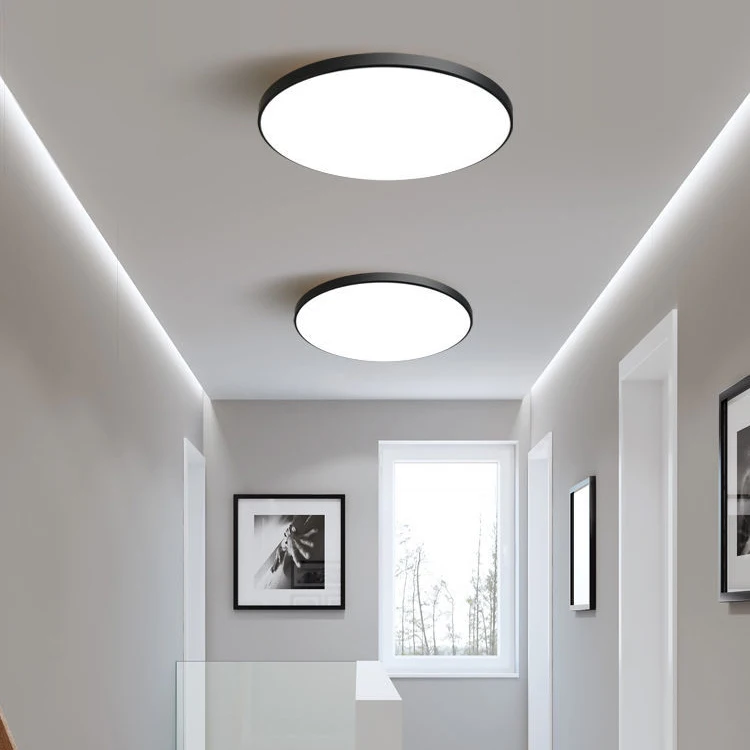



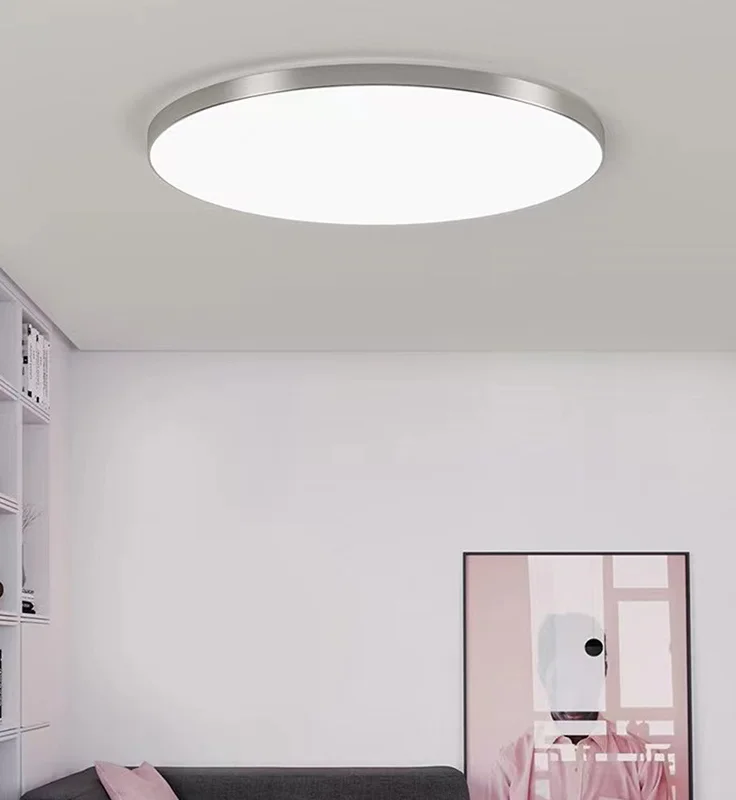
Modern Dimmable 3 Color Surface Mounted Bedroom Living Room Home Lighting Round Ceiling Light,Led Ceiling Lamp,Led Ceiling Light
- Category: >>>
- Supplier: GUANGDONG MEISHAN ELECTRICAL CO. LTD.
Share on (1601250558481):
Product Overview
Description

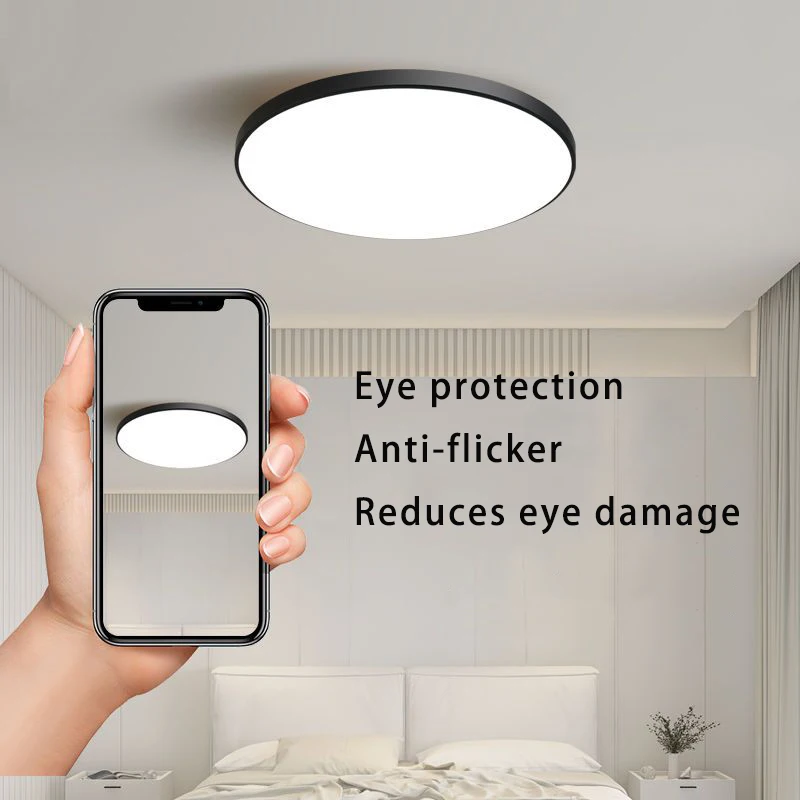
Stroboscopic harm is mainly due to the constant fluctuation of luminous flux, resulting in visual cell damage vision loss, the use of anti-frequency flicker IC chip, the output of stable light source.
Thickened iron chassis design;
Anti-moisture/dust/mosquito resistant;
One-piece sealed design, slim lamp body.
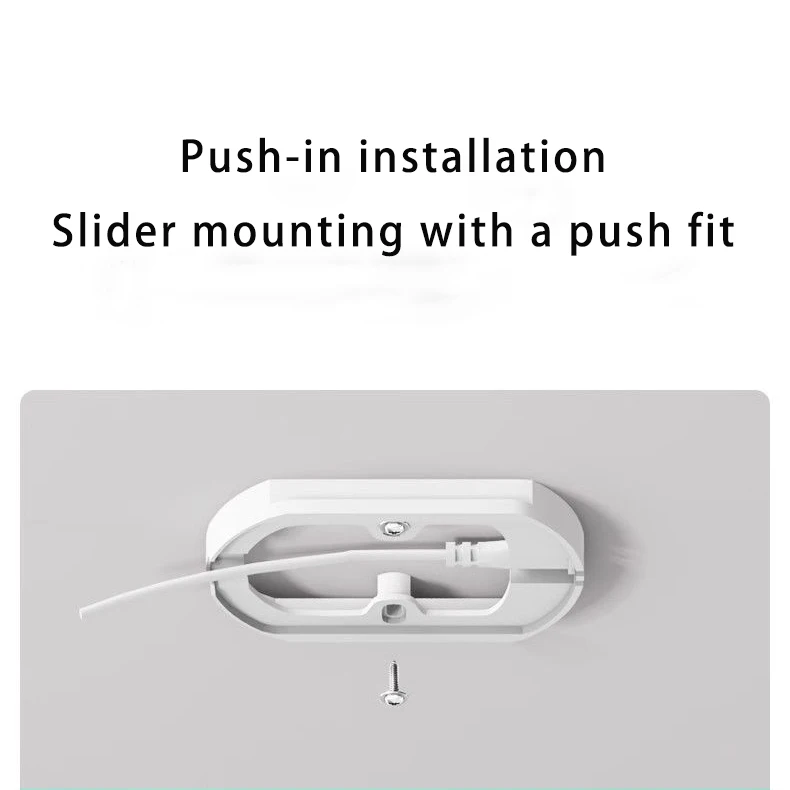
Push-in installation;
Superior heat dissipation;
Sliding Back-plate;
Slider mounting with a push fit;
All our products will not use the recycle raw materials to ensure the quality
The whole production process is inspected to ensure product quality.
Strict implementation of incoming material testing to ensure the quality of materials.

All our products will have more than 5 times testings and inspection in every processing, which include IQC for raw materials, IPQC inspection in production ,100% testing before package and sampling inspection for OQC.
Material | Aluminum+Plastic |
Sample | Free samples |
Shape/ Appearance | Customized Shape/ Appearance Accpet |
Drive | IC Constant Current Constant Voltage Drive |
Logo | LaserPrinting/ Ink Printing |
Package | Box package or Blister Card, Accept Customzied |
Delivery Time | 1)Sample order: 3-7days 2)Usual order:7-15days 3)Custom order:it depends on your quantity Terms |
IC constant current constant voltage drive, no flicker, no glare, reduce eye fatigue and protect vision.
Certification
1)7 certification certificates: CE, ROHS, SGS, Intertek, SASO,EMC , etc....... | ||||||||
2)9 product technology appearance patent certificates Our product technology patents include 9 product technology certificates such as ....... | ||||||||
3)Privide Test Report of the detection of the photoelectric color of the integral sphere LED for every order if you need. | ||||||||


Product packaging

Design product packaging for free online
We provide customers with different packaging designs for led light products. You only need to provide logo or packaging images. We design and render renderings for you until you are satisfied, and we will keep your designs confidential.
Our Service


✓Online customize LOGO graphic design colors packaging | ||||||||
✓Online free design product images and details page | ||||||||
✓Provided to print SKUS label for free | ||||||||
✓Provided to print FBA Shipping Marks for free | ||||||||
Company Profile

Meet Our Team & Company Introductione
Meishan Electrical was established in 2009 and is a rapidly developing led lighting product enterprise. The productis in dependently developed and has over 7+ patent certificates. The factory has SGS, Intertek system certification, and provides CE, LVD, EMC test report etc.
Mature and independent R&D department
More than 15 years of deep plowing in lighting industry, with independent R&D and testing team, accepting various OEM and ODM orders.
Exhibition
Regular participation in different exhibitions at home and abroad,such as Hong Kong Lighting Fair etc.
Shell mold production
Mature process design and production steps.
PCB board production
Independent circuit board and driver design to ensure the most suitable product design..
Clean workshop and production line
Neat and organized, each production line is equipped with QC to check the process at any time.
Finished product warehouse
We are factory, can provide one stop service from manufacturing to shipment.
Supervision of shipment
We can provide the best products with competitive price and satisfying service .
Tips on Choose Right Color Temperature for home lighting
In home decoration, the selection of lighting color temperature plays a crucial role as it can significantly impact the overall ambiance and comfort of the room. Today, let's delve into understanding the distinctive characteristics of different color temperatures and how to subtly choose them based on specific needs in order to create a perfect home atmosphere.
please don't hesitate to contact our professional team directly if you have any questions.
What is color temperature?
The color temperature is typically measured in Kelvin (K), and varying color temperatures
yield distinct lighting effects. In general, the perception of light by the human eye involves distinguishing between yellow or
white hues, as well as perceiving cold or warm tones. Consequently, individuals have diverse requirements for color temperature depending on different periods. A lower value of color temperature corresponds to a warmer light color, while a higher value indicates a colder light color. Ultimately, different color temperatures create entirely unique atmospheres.
yield distinct lighting effects. In general, the perception of light by the human eye involves distinguishing between yellow or
white hues, as well as perceiving cold or warm tones. Consequently, individuals have diverse requirements for color temperature depending on different periods. A lower value of color temperature corresponds to a warmer light color, while a higher value indicates a colder light color. Ultimately, different color temperatures create entirely unique atmospheres.
1. Warm white light: Warm family space
With a color temperature of 3500-4000K, the warm white light creates an overall cozy ambiance reminiscent of the soft evening sun. It emits a warm and tranquil atmosphere that provides people with a comforting sensation, allowing them to fully unwind and alleviate the day's fatigue. This lighting is particularly suitable for use in living rooms, dining areas, and bedrooms. However, it is important to note that if LED lamps with a color temperature exceeding 4000K are used in the bedroom, the excessive blue light emitted by these lamps can hinder the release of melaton in the human brain. Consequently, individuals may experience heightened alertness similar to being in an office environment before bedtime. This can increase difficulty falling asleep, reduce sleep quality, and impact both physical and mental well-being.
2. Natural white light: optimal for efficiency
Natural white light, ranging from 4000K to 5000K, closely resembles daylight and is commonly utilized in areas that necessitate enhanced brightness and clear visibility, such as kitchens, study rooms, and offices. This color temperature heightens alertness and concentration levels, facilitating easier focus and making it suitable for cooking, studying, and working.
3. Cool White light: crisp and luminous task area
Cool white light, ranging from 5000K to 6500K, emits a bright and clear illumination ideal for task-oriented spaces requiring high levels of brightness like reading areas or workbenches. This color temperature provides a sharper quality of light that aids in maintaining alertness while stimulating the mind. In work environments demanding prolonged periods of concentration, cool white light can enhance work efficiency.
Natural white light, ranging from 4000K to 5000K, closely resembles daylight and is commonly utilized in areas that necessitate enhanced brightness and clear visibility, such as kitchens, study rooms, and offices. This color temperature heightens alertness and concentration levels, facilitating easier focus and making it suitable for cooking, studying, and working.
3. Cool White light: crisp and luminous task area
Cool white light, ranging from 5000K to 6500K, emits a bright and clear illumination ideal for task-oriented spaces requiring high levels of brightness like reading areas or workbenches. This color temperature provides a sharper quality of light that aids in maintaining alertness while stimulating the mind. In work environments demanding prolonged periods of concentration, cool white light can enhance work efficiency.
4.Intelligent dimming technology: Personalized home experience
Enhanced by intelligent dimming technology, modern home lighting offers a personalized
experience. With the availability of intelligent dimming functions in many lamps, you can effortlessly adjust the brightness andcolor temperature according to the time of day and activity. This enables you to create tailored lighting effects for various situations, thereby enhancing your overall home experience.
experience. With the availability of intelligent dimming functions in many lamps, you can effortlessly adjust the brightness andcolor temperature according to the time of day and activity. This enables you to create tailored lighting effects for various situations, thereby enhancing your overall home experience.
We Recommend
New Arrivals
New products from manufacturers at wholesale prices