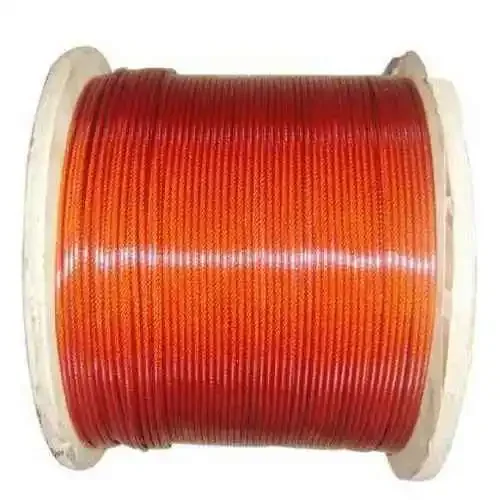
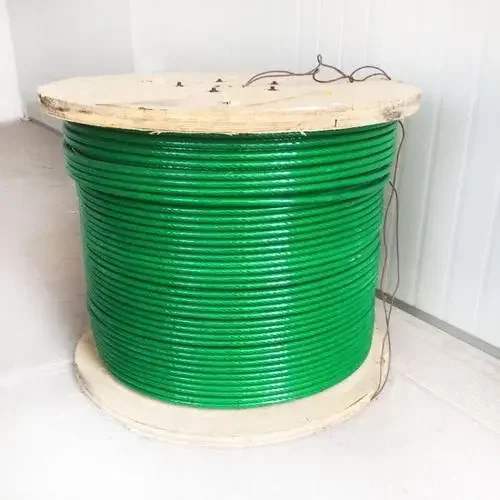
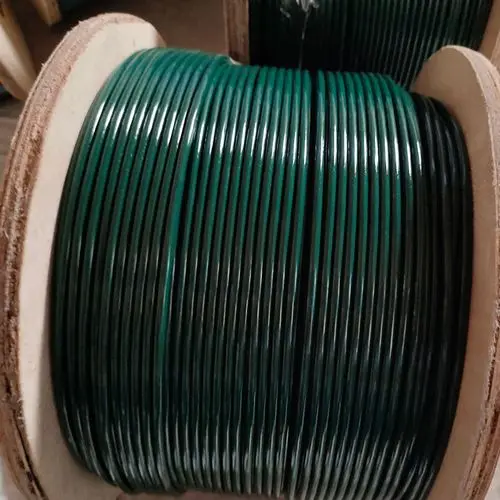
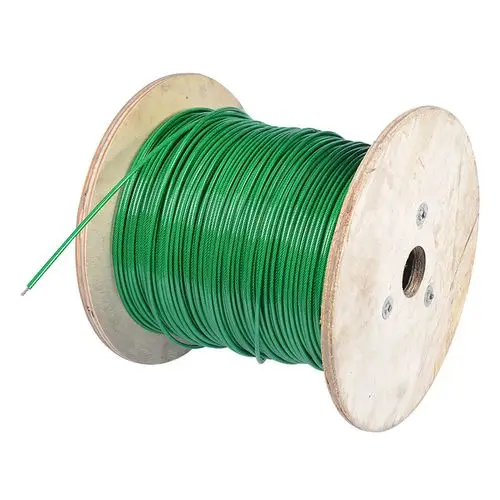
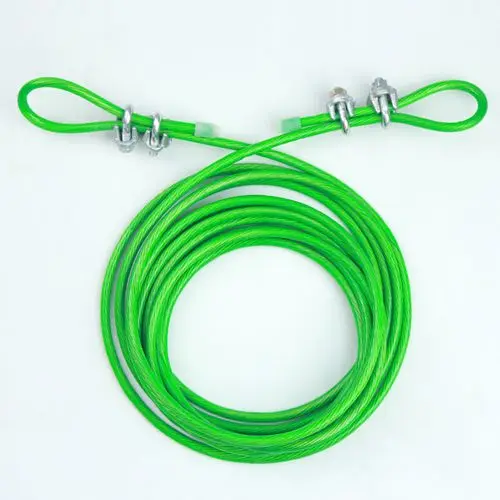
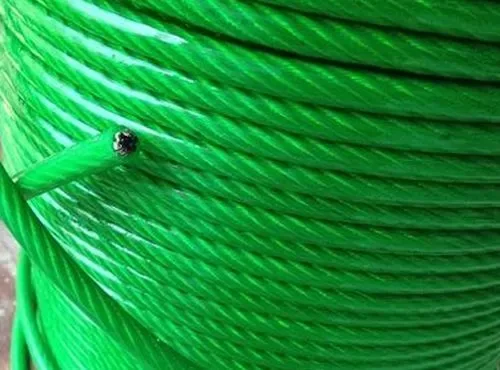
High quality High Tensile Strength SS304 SS316 Stainless Steel Plastic Coated FluorescentWire Rope 3mm
- Category: >>>
- Supplier: Tianjin Hardware Co. Ltd.
Share on (1601257083265):
Product Overview
Description
Products Description
High Tensile Strength SS304 SS316 Stainless Steel Wire Rope 3mm
Tianjin Hardware Supply SS304 /SS304L/ SS316/SS316L 7*7 Stainless Steel Wire Rope.This complies with EN12385 and US standards so you can be reassured of quality products from Tianjin Hardware.
Tianjin Hardware 7x7 AISI316 stainless steel wire rope is used for a wide range of applications. More flexible than 1x19 but more rigid than 7x19,the 7x7 construction is often used where 1x19 lacks enough flexibility for an application or where 7x19’s weaker breaking load is too low for an application. Used extensively throughout the marine industry as well as for general engineering applications, 7x7 wire rope excellent breaking load and flexibility in the smaller diameters make it a favourite for control cable and a variety of marine
rigging applications
rigging applications
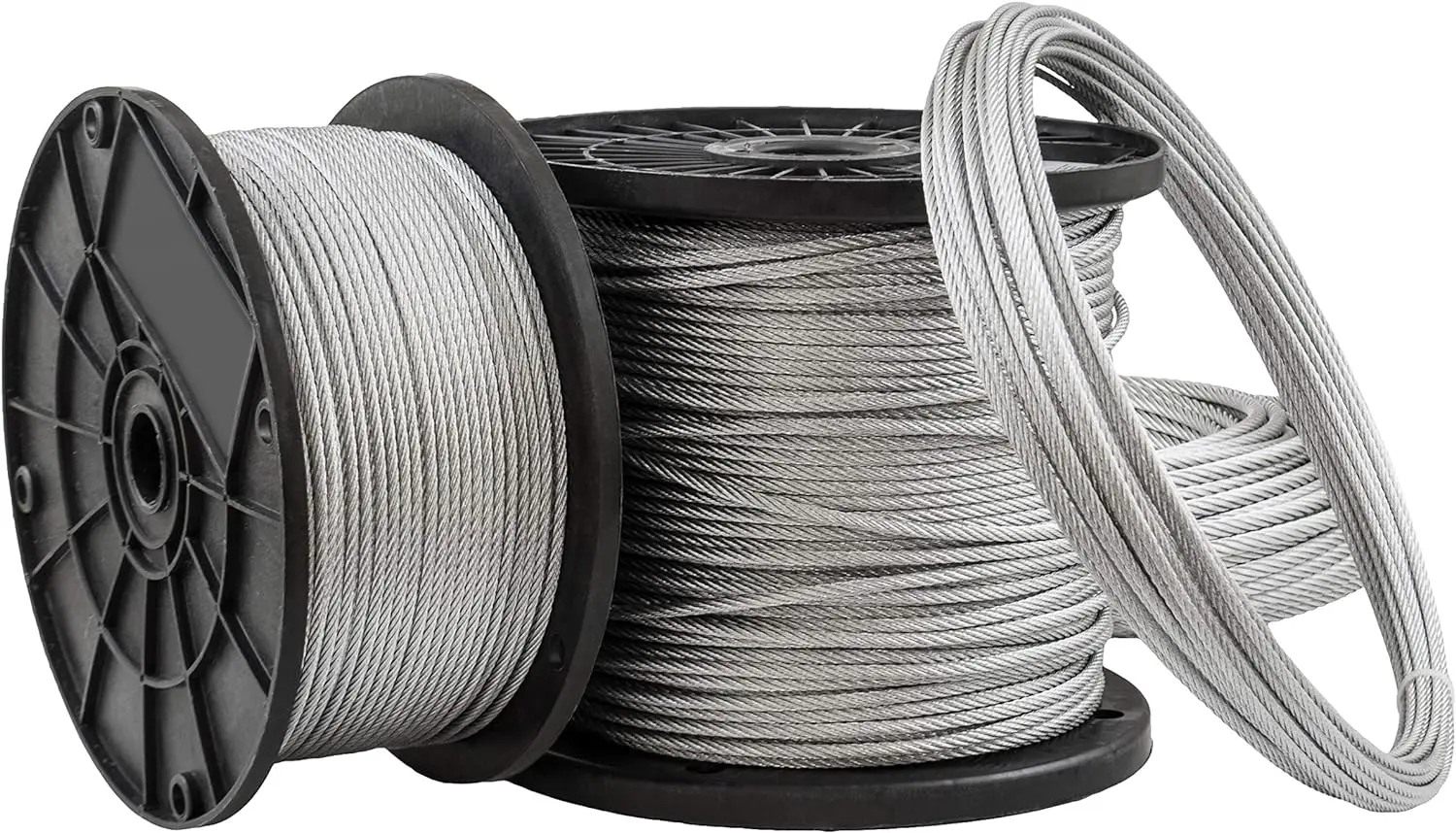
Product Name: | High Tensile Strength SS304 SS316 Stainless Steel Wire Rope 3mm | ||||||
Standard: | EN12385/MIL/GB | ||||||
Material: | SS304, SS304L, SS316, SS316L | ||||||
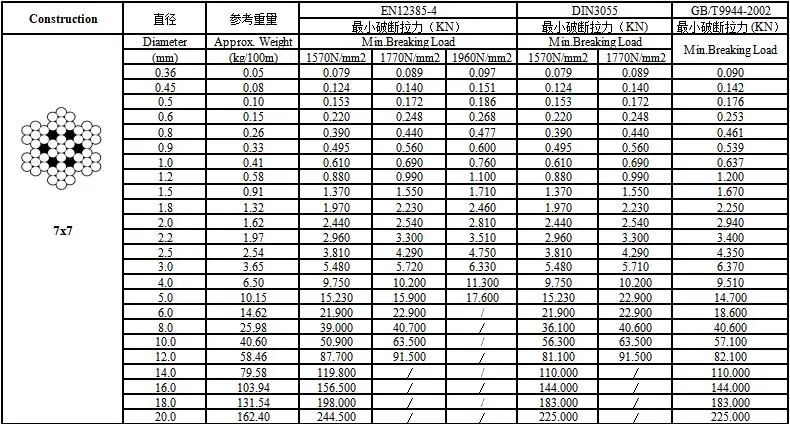
Contruction: | 7X7 Wire Rope | ||||||
Size: | 0.25mm-6mm 1/16"/1.6mm, 3/32"/2.4mm, 1/8"/3.2mm, 5/32"/4mm, 3/16"/4.8mm, 1/4"/6.4mm, 5/16"/7.9mm, 3/10"/7.94mm, 3/8"/9.5mm, 1/2"/12.7mm | ||||||
Tensile Strength: | 1570MPA/1770MPA/1960MPA | ||||||
Breaking Load: | Depends on Tensile Strength 480LBS(1.6mm), 800LBS(2.4mm), 1440LBS(3.2mm), 2200LBS(4mm), 3700LBS(4.8mm), 5780LBS(6.4mm), 9000LBS(7.9mm), 12000LBS(9.5mm),20166LBS(12.7mm) | ||||||
Length: | 500Ft/152m, 1000Ft/305m, 2000Ft/610m | ||||||
Application : | Cable Railing, Rope Net,Trellis, Shade Sail, Stage, Aircraft, Marine | ||||||
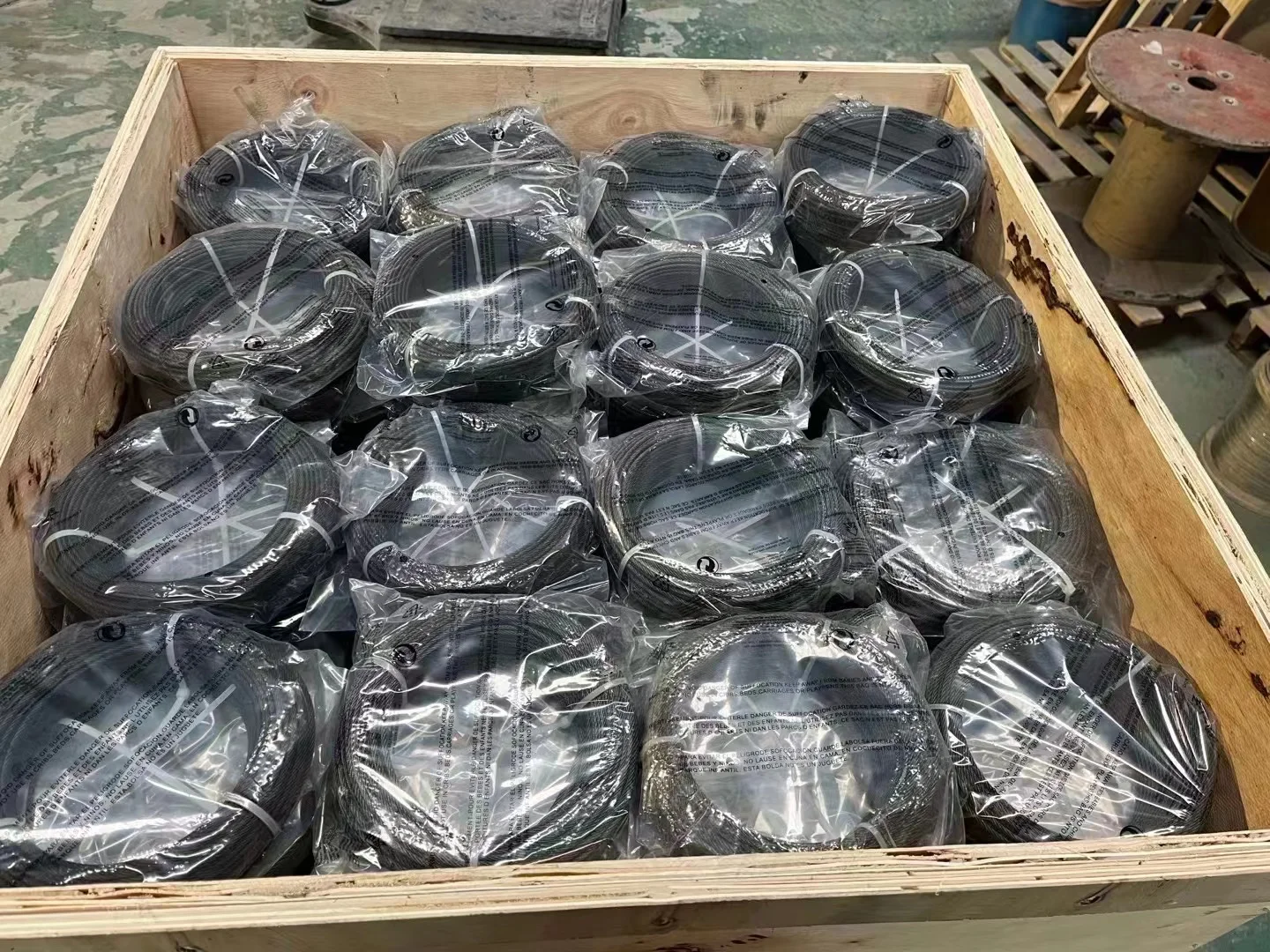
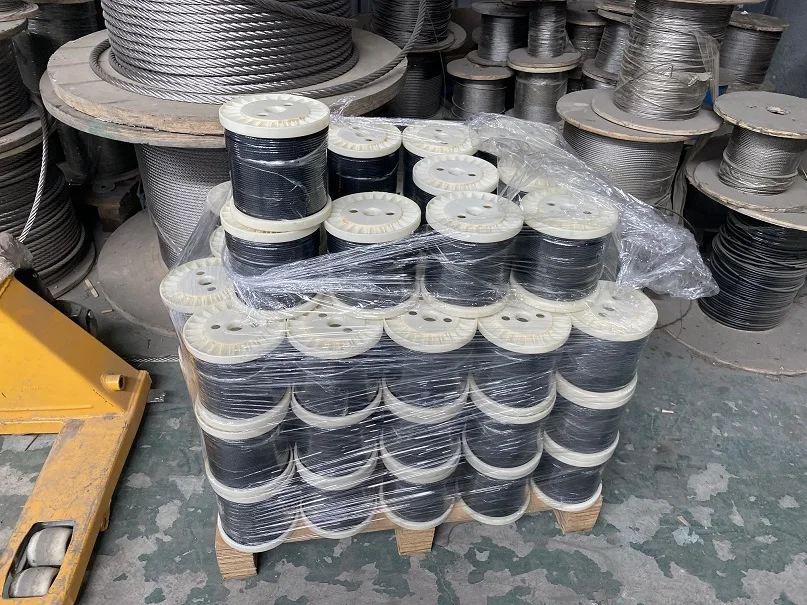
Package: | Wooden Reel, Plastic Reel, Coil Packing, Sea worthy Packing | ||||||
Specifications
Reference Picture


Workshop


Quality Control
Salt Spray Test
Breaking Load Test
Breaking Load Test
Application


FAQ
1. What is wire rope?
Wire rope is a flexible steel cord that is extremely strong. Typical uses for wire rope are: hoisting,
towing,and anchoring heavy loads. The core is the foundation of a wire rope. The three most commonly used core designations are: fiber core (FC), independent wire rope core (IWRC), and wire strand core (WSC).
2. What are the factors affecting the selection of wire rope?
1) Strength-resistance to breaking (The wire rope should be strong enough to handle the maximum potential load including safety factors)
2) Resistance to bending fatigue (Fatigue is caused by repeatedly bending rope around drums, sheaves, etc. A wire
rope with strands made up of many small wires will be more resistant to fatigue, but less resistant to abrasion)
3) Resistance to vibrational fatigue (Energy is absorbed at the end fittings or at the tangent point where the rope contacts the sheave)
4) Resistance to abrasion (Abrasion occurs when a rope is dragged over the ground or other surfaces. A wire rope with strands made of fewer, larger wires will be more resistant to abrasion, but less resistant to fatigue)
5) Resistance to crushing (During use, a wire rope may encounter crushing forces or be struck against hard objects. This can cause the rope to become flattened or distorted, resulting in premature breakage. Wire rope must have sufficient lateral stability to withstand the crushing pressures it may encounter. Regular lay ropes have greater lateral stability than Lang's lay, and six strand wire ropes have greater lateral stability than eight strand)
6) Reserve strength (Combined strength of all the wires contained within the strands)
3. What are options in the finished rope lay?
The finished rope has either a right or left hand lay, which refers to the direction in which the strands were wrapped around the core.
towing,and anchoring heavy loads. The core is the foundation of a wire rope. The three most commonly used core designations are: fiber core (FC), independent wire rope core (IWRC), and wire strand core (WSC).
2. What are the factors affecting the selection of wire rope?
1) Strength-resistance to breaking (The wire rope should be strong enough to handle the maximum potential load including safety factors)
2) Resistance to bending fatigue (Fatigue is caused by repeatedly bending rope around drums, sheaves, etc. A wire
rope with strands made up of many small wires will be more resistant to fatigue, but less resistant to abrasion)
3) Resistance to vibrational fatigue (Energy is absorbed at the end fittings or at the tangent point where the rope contacts the sheave)
4) Resistance to abrasion (Abrasion occurs when a rope is dragged over the ground or other surfaces. A wire rope with strands made of fewer, larger wires will be more resistant to abrasion, but less resistant to fatigue)
5) Resistance to crushing (During use, a wire rope may encounter crushing forces or be struck against hard objects. This can cause the rope to become flattened or distorted, resulting in premature breakage. Wire rope must have sufficient lateral stability to withstand the crushing pressures it may encounter. Regular lay ropes have greater lateral stability than Lang's lay, and six strand wire ropes have greater lateral stability than eight strand)
6) Reserve strength (Combined strength of all the wires contained within the strands)
3. What are options in the finished rope lay?
The finished rope has either a right or left hand lay, which refers to the direction in which the strands were wrapped around the core.
Regular lay means the individual wires were wrapped around the centers in one direction and the strands were wrapped around the core in the opposite direction. Lang's lay means the wires were wrapped around the centers in one direction and the strands were wrapped around the core in the same direction. The length of lay is measured as the distance in inches for one strand to go completely around the rope one time.
4. What are the differences among Bright, Galvanized and Stainless Steel?
Bright wire rope is fabricated from wires that are not coated. Rotation Resistant Bright wire rope is designed to resist the tendency to spin or rotate under load. In general this rope is used as single part lines, or in situations where operating conditions require a rope that will resist cabling in a multipart system. The essential nature of rotation resistant rope designs impose certain limitations on their application and necessitate special handling requirements not encountered with other rope classifications.
Galvanized wire rope tests at approximately the same pulling strength as Bright, however it is zinc coated for
corrosion resistance. In mild environments it’s an economical alternative to stainless steel.
Stainless Steel wire rope is made up of corrosion resistant steel wires and is therefore the highest quality wire rope available.While it tests at approximately the same pulling strength as Bright or Galvanized, it lasts the longest under harsh environmental conditions such as salt water and acidic settings.
4. What are the differences among Bright, Galvanized and Stainless Steel?
Bright wire rope is fabricated from wires that are not coated. Rotation Resistant Bright wire rope is designed to resist the tendency to spin or rotate under load. In general this rope is used as single part lines, or in situations where operating conditions require a rope that will resist cabling in a multipart system. The essential nature of rotation resistant rope designs impose certain limitations on their application and necessitate special handling requirements not encountered with other rope classifications.
Galvanized wire rope tests at approximately the same pulling strength as Bright, however it is zinc coated for
corrosion resistance. In mild environments it’s an economical alternative to stainless steel.
Stainless Steel wire rope is made up of corrosion resistant steel wires and is therefore the highest quality wire rope available.While it tests at approximately the same pulling strength as Bright or Galvanized, it lasts the longest under harsh environmental conditions such as salt water and acidic settings.
Recommend Products
We Recommend


New Arrivals
New products from manufacturers at wholesale prices