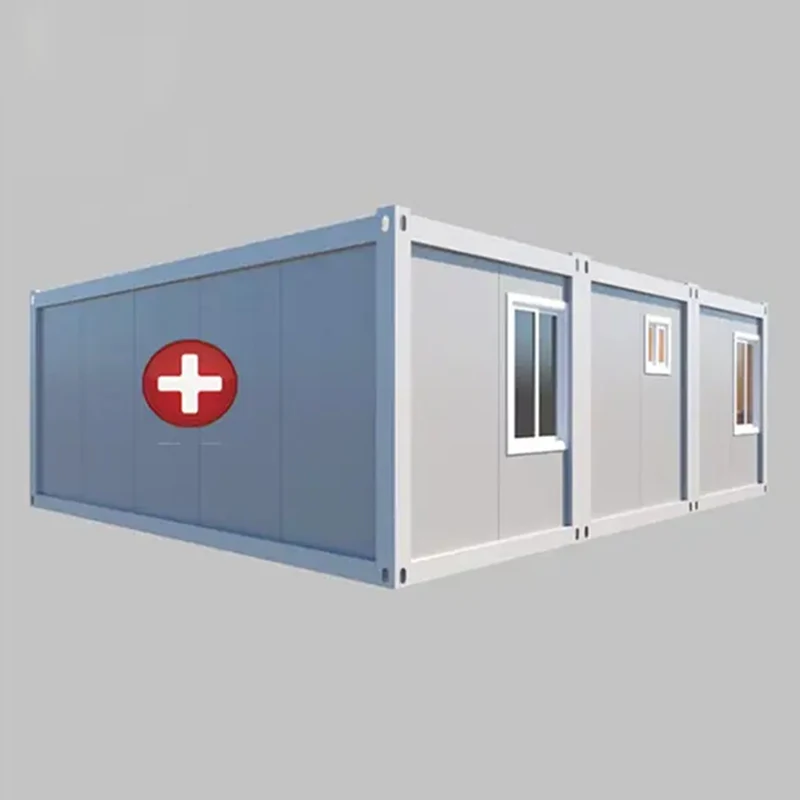
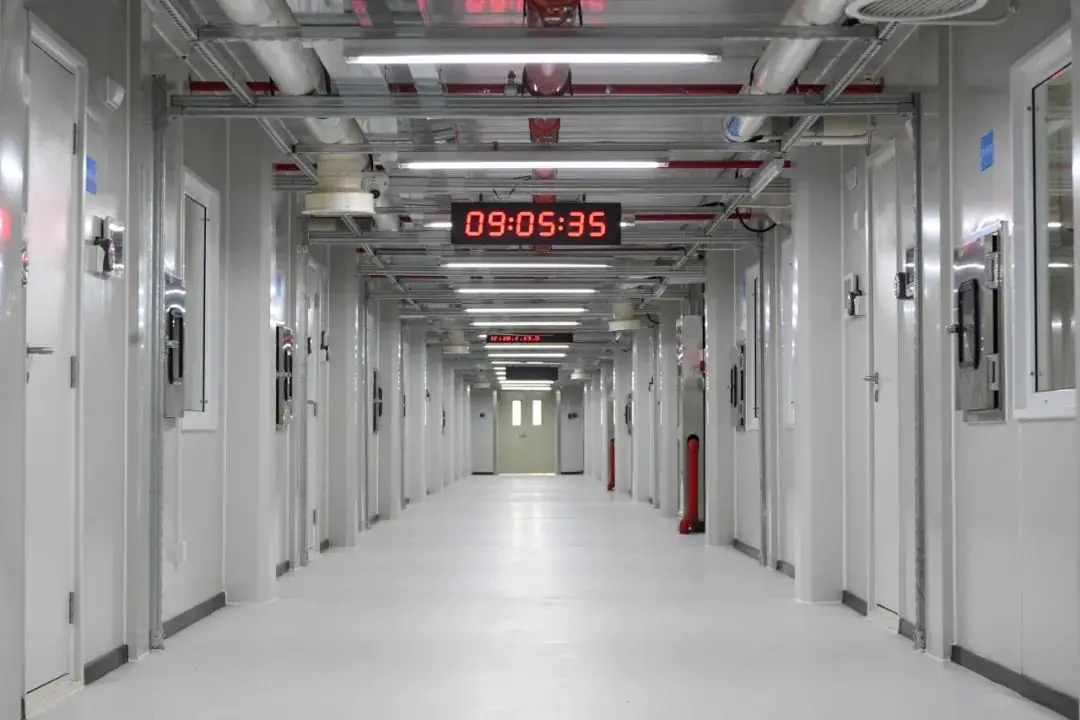
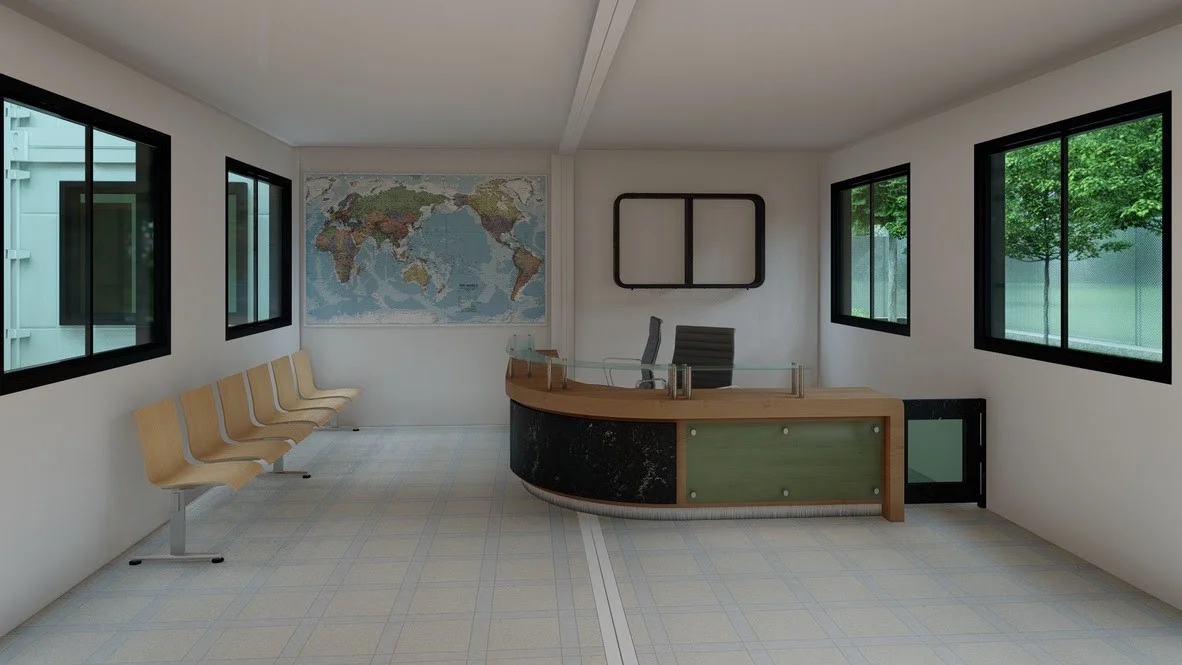
Prefabricated modular hospitals buildings and mobile hospital clinics are used as quarantine and clinical health facilities
- Category: >>>
- Supplier: Hebei Xindian Construction Engineering Co. Ltd.
Share on (1601268971895):
Product Overview
Description

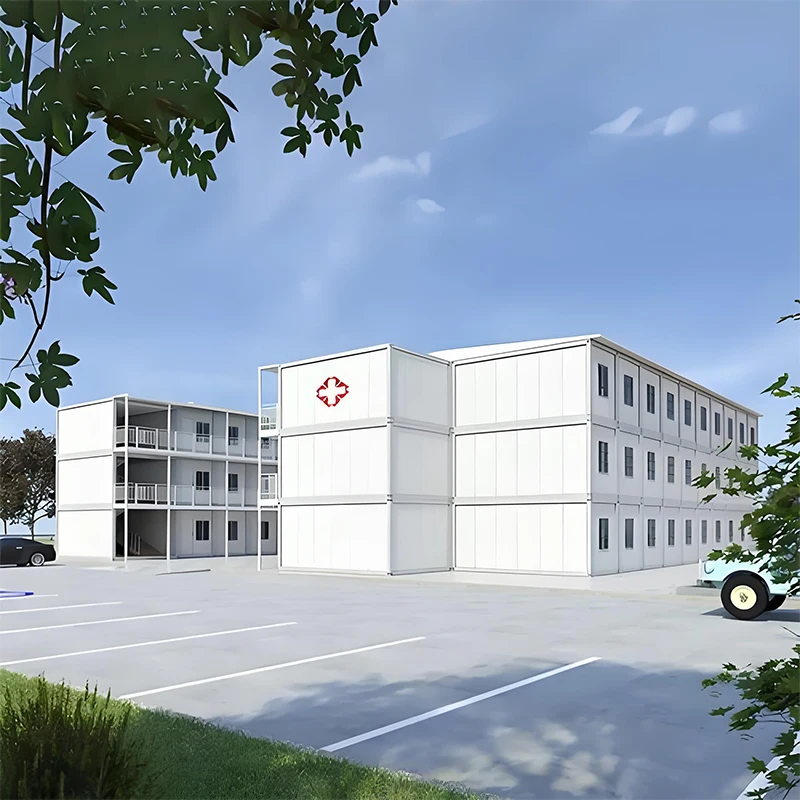
3-storey top and bottom one-pack Prefabricated modular hospital buildings
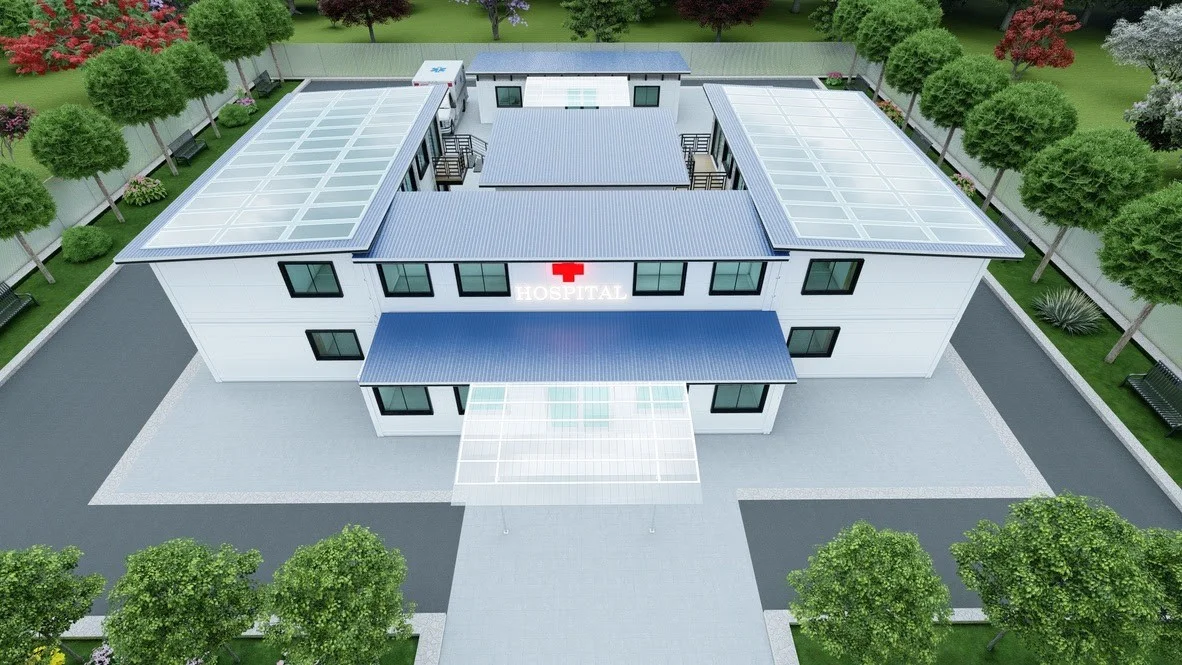
Prefabricated modular hospital buildings play an increasingly important role in modern medical construction due to their characteristics of rapid construction, reliable quality, high flexibility, energy saving and environmental protection. With the continuous progress of technology and the continuous expansion of application scenarios, prefabricated modular hospital buildings will provide people with more efficient, convenient and high-quality medical services


Profile Standard | Components | Configuration Details | |||||
5000*2500*2900 Solid card 4.0mm profile Baking paint as much as possible to deal with the corners | top beam | Top beam 180 mm high, L1=4580, L2=2200, one wire box | |||||
bottom beam | Base beam 160mm height 4.0mm, L1=4580,L2=2200 | ||||||
upright post | 150*210, L=2535*4 | 150*210, L=2535*4 | |||||
Corner piece | 150 * 210 Top-corner piece 200, Bottom corner piece 160 Angle piece wall thickness 4.0 | ||||||
spray paint | Refractory 70 ° 48 Hour Test, No Bubbles, Cracks, Cracks, Fading | ||||||
Top Secondary Beam | Top:80 * 40C section steel 1.5 thickness 7 pieces.1 square tube of 30 * 30. | ||||||
bottom secondary beam | 9100 * 50 galvanized rectangular tubes, 1.2 mm thick | ||||||
Capping | Lottery Capping | Standard 0.45 colour steel plate, fully bonded with butyl glue | |||||
Top Insulation | Insulation cotton 75 thick, 30 kg bulk weight | ||||||
Ground | cement sanding board | 24mm (fibre cement plate) | |||||
plastic floor | 1.5 thick aluminium plate backing 6mm spc locking green abrasion resistant flooring | ||||||
Thermos (bottle) | Class B1 Extruded Panel Insulation, Polyurethane Filling, Class B1 Acoustic Wool | ||||||
Door | Composite set of doors | ||||||
Window | broken bridge aluminium | ||||||
WALL PLATES | Purification Plate | 950 * 75, purification plate, iron sheet double sided 0.4 mm, rock wool volume weight 80 kg | |||||
Advantages of container house:
Application Scenarios:
1.Public Health Emergencies
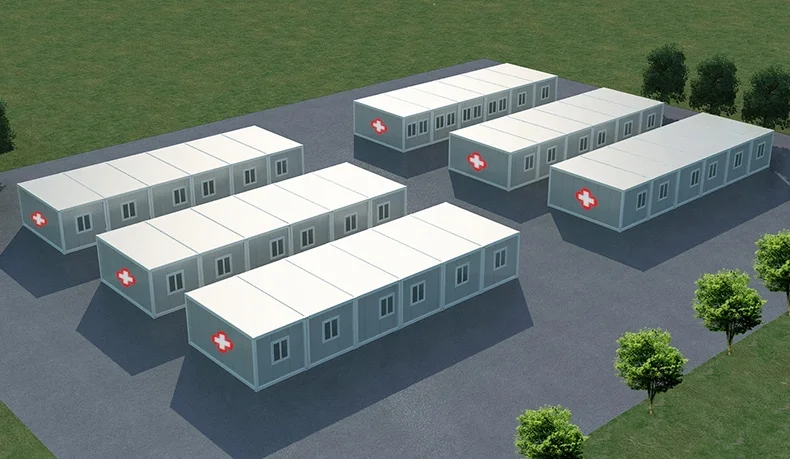
During emergencies such as infectious disease epidemics and natural disasters, prefabricated modular hospitals can be rapidly deployed to provide medical relief to the affected areas.
For example, prefabricated modular hospitals were used in many countries and regions to increase the number of medical beds during the New Crown Pneumonia epidemic.
2.Remote Area Medical Services
For remote areas where transportation is difficult and medical resources are scarce, prefabricated modular hospitals can be easily transported and installed to provide basic medical services to local residents.
Such hospitals can be customized according to actual local needs and equipped with necessary medical equipment and medicines.
3.Temporary Medical Facilities
On occasions such as large-scale events and sporting events, prefabricated modular hospitals can be used as temporary medical facilities to provide medical care for participants.
After the event, the modules can be dismantled and transported to other places for reuse.
Transport:During emergencies such as infectious disease epidemics and natural disasters, prefabricated modular hospitals can be rapidly deployed to provide medical relief to the affected areas.
For example, prefabricated modular hospitals were used in many countries and regions to increase the number of medical beds during the New Crown Pneumonia epidemic.
2.Remote Area Medical Services
For remote areas where transportation is difficult and medical resources are scarce, prefabricated modular hospitals can be easily transported and installed to provide basic medical services to local residents.
Such hospitals can be customized according to actual local needs and equipped with necessary medical equipment and medicines.
3.Temporary Medical Facilities
On occasions such as large-scale events and sporting events, prefabricated modular hospitals can be used as temporary medical facilities to provide medical care for participants.
After the event, the modules can be dismantled and transported to other places for reuse.
Convenient transportation, especially suitable for frequent replacement of construction units;
Quality & Stress resistance:
Strong and durable, all made of steel, with strong earthquake resistance, deformation resistance;
Sealing:
Good sealing performance, strict manufacturing process makes this kind of mobile house has very good water tightness
Product application scope:
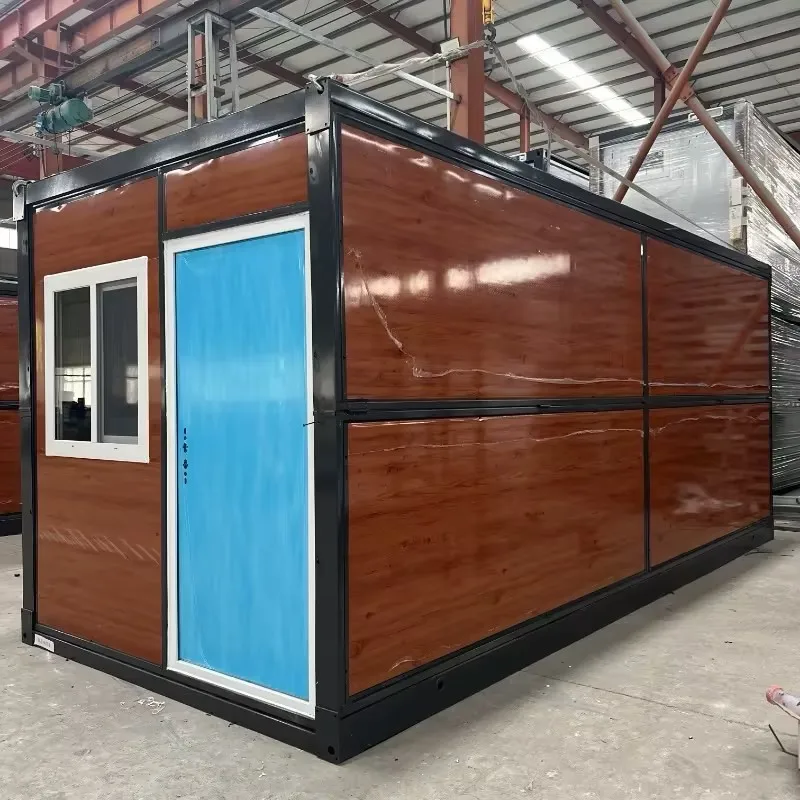
The mobile home is based on a standard steel chassis, which can be derived from a number of combination Spaces. Such as conference room, dormitory, kitchen, toilet and so on. The standard width is 2. 4 meters, height 2. 2 meters, 4 to 12 meters in length.
Merits:
Convenient disassembly, superior performance, stable and firm, good shockproof performance, waterproof, fireproof and anticorrosive, light weight. The house is a whole structure, with a frame, the wall is steel plate, available wood veneer, can be migrated as a whole, the service life can reach more than 20 years.
Environmental protection and sustainable aspects:
Green: The construction process of container houses produces less construction waste and has less impact on the environment. At the same time, the reuse of containers also reduces the waste of resources, in line with the concept of sustainable development.
Retrofittable environmental protection facilities: solar panels, rainwater collection systems and other environmental protection facilities can be easily retrofitted to achieve self-sufficiency in energy and recycling of water resources, reducing the dependence on external energy and water resources and further improving environmental performance.
Retrofittable environmental protection facilities: solar panels, rainwater collection systems and other environmental protection facilities can be easily retrofitted to achieve self-sufficiency in energy and recycling of water resources, reducing the dependence on external energy and water resources and further improving environmental performance.


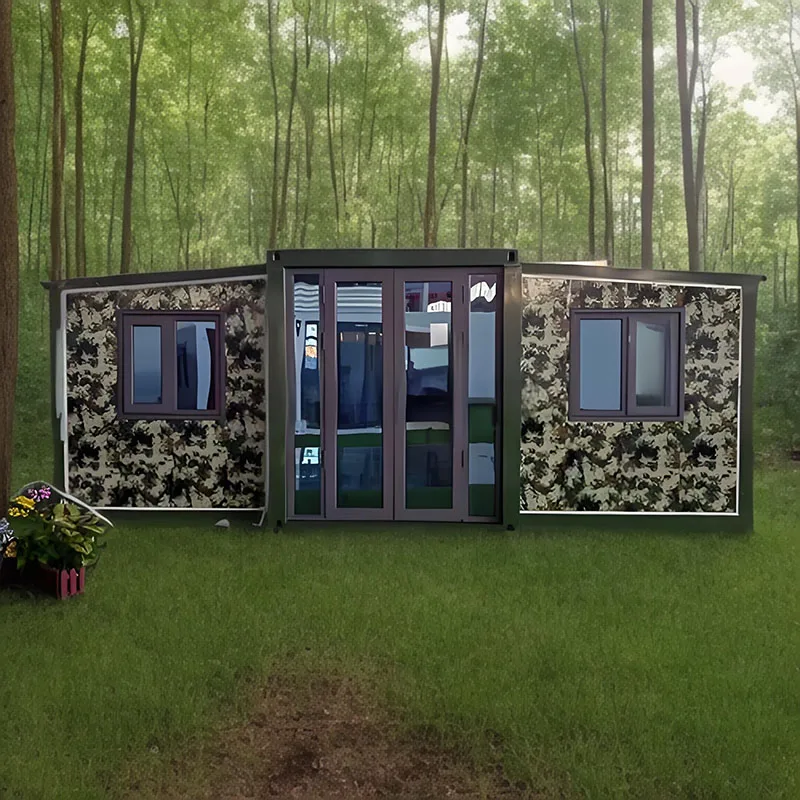
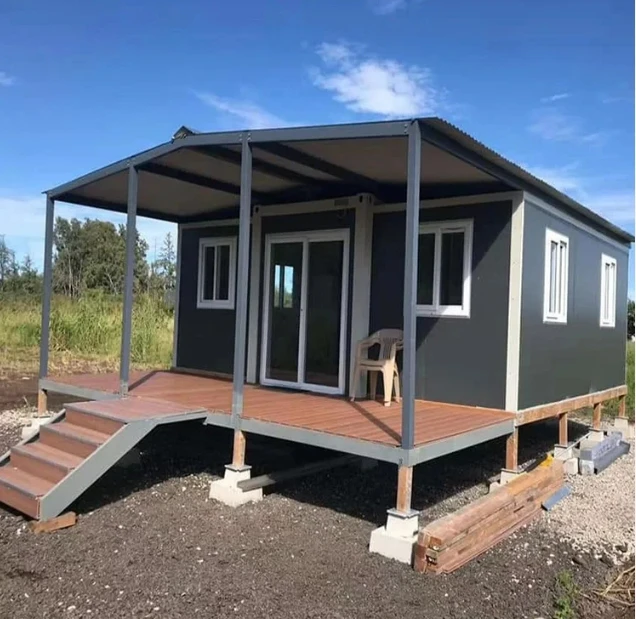
we sale both 20ft 40ft containers / customized size is also welcomed .
The below one is just for your reference only . If you have the new project , welcome to show us ,we can custom made as your request .
The below one is just for your reference only . If you have the new project , welcome to show us ,we can custom made as your request .


Recommend Products


Certifications

Product packaging

FAQ

1. Do you provide on-site installation service?
We provide very detailed installation instrution drawings and videos for every project.
For large projects, we will have both installation workers and supervisiors on site. The fee for the on-site service should be negotiated with clients.
2.What's your delivery time?
Normally, delivery time is 15 days after deposit received. For large order, the delivery time should be negotiated.
3.How to control the quality of your product?
a. quality of the design: think about possible problems in advance and provide a high-quality design solution.
b. quality of the raw material: choose the qualified raw material
c. quality of the production: precise manufacturing technique, experienced workers, strict quality inspection.
4. How to deal with quality problems?
Warranty is 2 years. Within the warranty period, XDH will responsible for all quality problems caused by our production.
5. If there is a clear service life of your products? If have, how long?
Under conventional climate and environment, the service life of container house steel frame is 20 years
6. What designs do you have in different climates (How can the products adopt to different climates)?
Strong wind region: improve the wind-resisting ability of the internal structure.
Cold region: increase the thickness of the wall, or use good insulation material, improve anti-pressure ability of the structure.
High corrosion region: use corrosion resistant material, or paint anticorrosive coating.
We provide very detailed installation instrution drawings and videos for every project.
For large projects, we will have both installation workers and supervisiors on site. The fee for the on-site service should be negotiated with clients.
2.What's your delivery time?
Normally, delivery time is 15 days after deposit received. For large order, the delivery time should be negotiated.
3.How to control the quality of your product?
a. quality of the design: think about possible problems in advance and provide a high-quality design solution.
b. quality of the raw material: choose the qualified raw material
c. quality of the production: precise manufacturing technique, experienced workers, strict quality inspection.
4. How to deal with quality problems?
Warranty is 2 years. Within the warranty period, XDH will responsible for all quality problems caused by our production.
5. If there is a clear service life of your products? If have, how long?
Under conventional climate and environment, the service life of container house steel frame is 20 years
6. What designs do you have in different climates (How can the products adopt to different climates)?
Strong wind region: improve the wind-resisting ability of the internal structure.
Cold region: increase the thickness of the wall, or use good insulation material, improve anti-pressure ability of the structure.
High corrosion region: use corrosion resistant material, or paint anticorrosive coating.
7. How can I get the quotation for the project?
If you have drawings, we can offer you our quotation according to your drawing.
If you have no design, our engineer will design some drawings for you to confirm. And then offer you a quotation.
8. Are you a factory or trading company?
We are a factory, and also a trading company. We can provide a one-stop service for our customers.
If you have drawings, we can offer you our quotation according to your drawing.
If you have no design, our engineer will design some drawings for you to confirm. And then offer you a quotation.
8. Are you a factory or trading company?
We are a factory, and also a trading company. We can provide a one-stop service for our customers.

We Recommend
New Arrivals
New products from manufacturers at wholesale prices