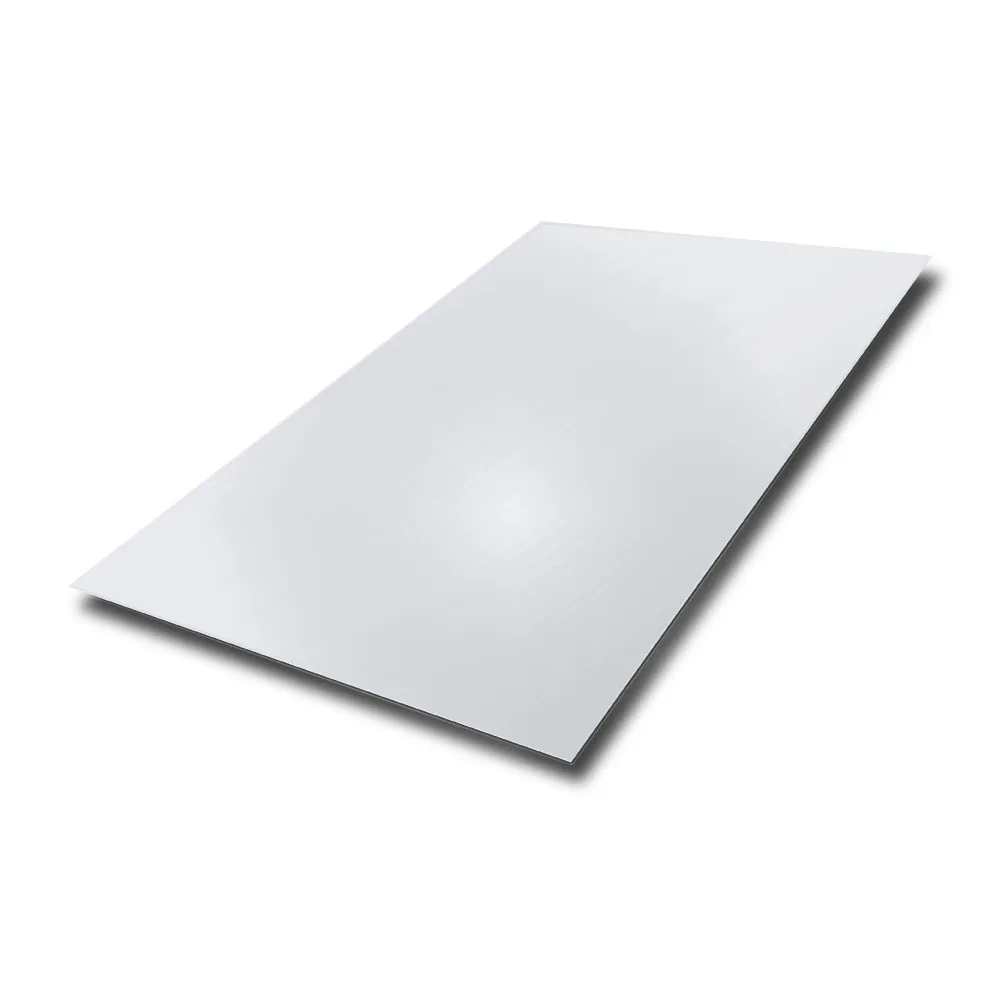
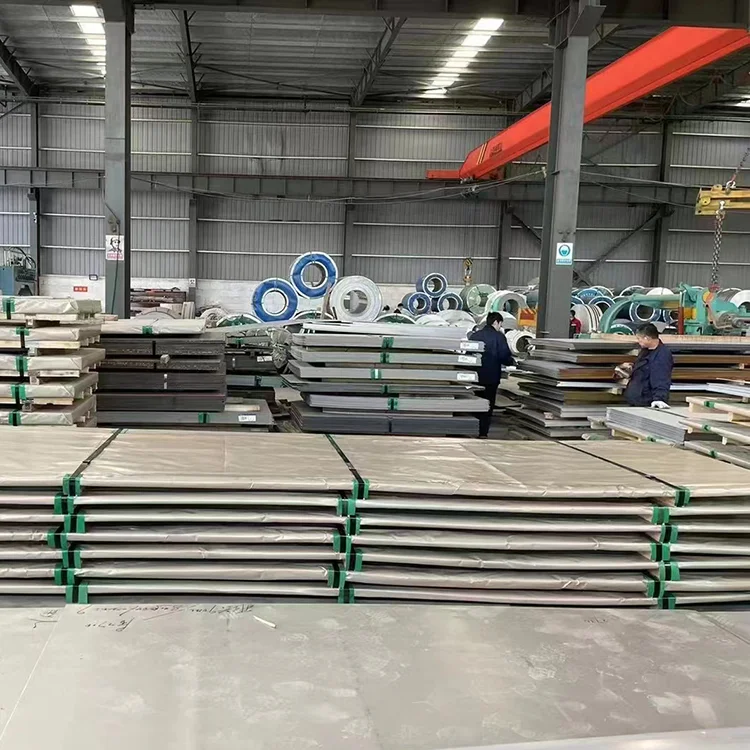
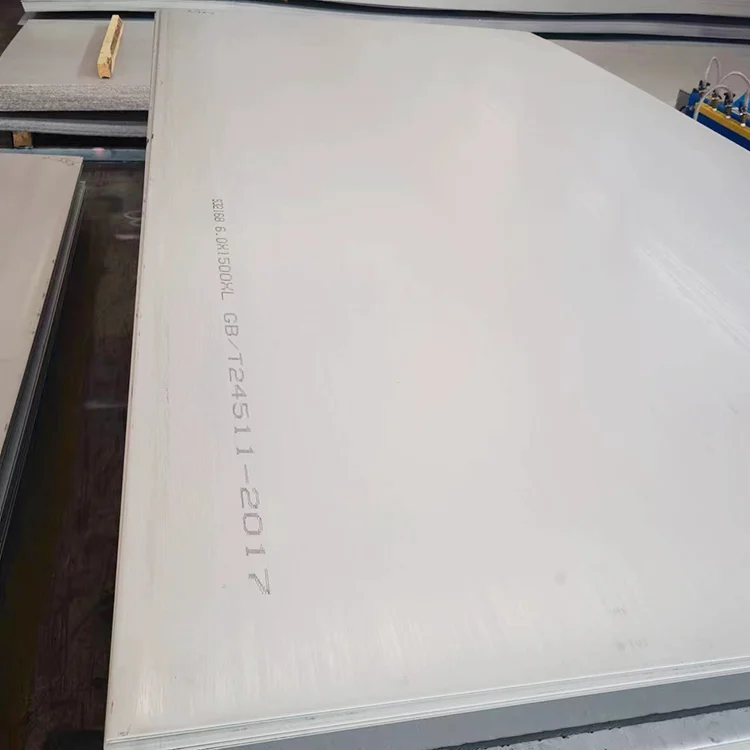
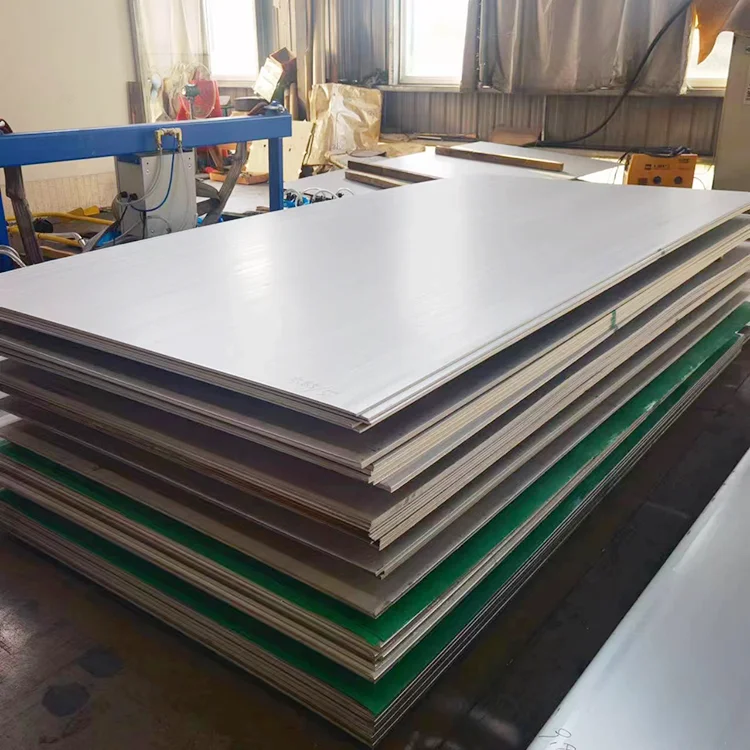
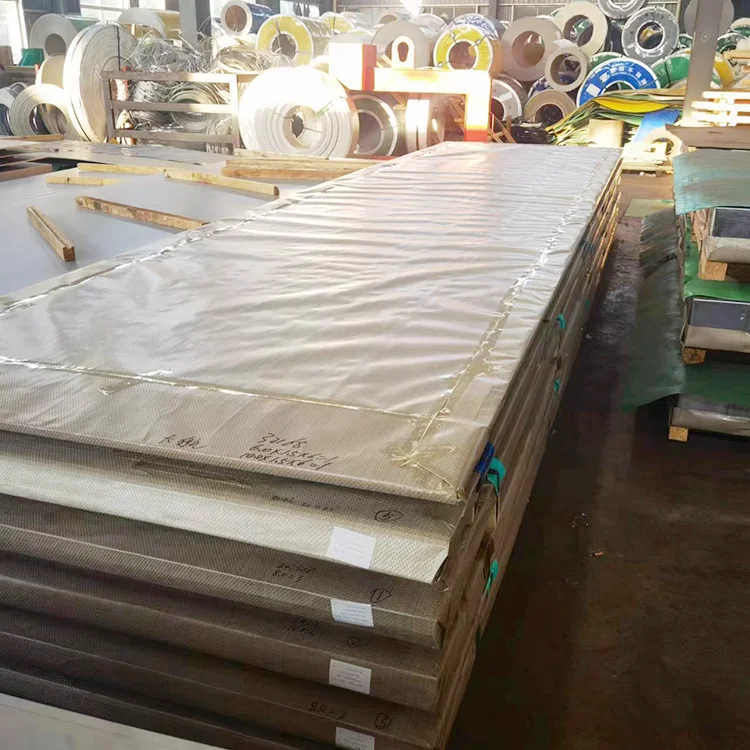
AISI ASTM 2b Ba Brushed Mirror 201 202 301 304 304L 309S 310S 316 316L 317L 321 409L 410 410s 420 Stainless Steel Plate
- Category: >>>
- Supplier: Jiangsu Sushang Steel Group Co. Ltd.
Share on (1601276704897):
Product Overview
Description
Products Description
Item Name | Stainless Steel Plate |
Material Grade | 201,301,302,303,304,304L,316,316L,321,308,308L,309,309L,309S,309H, 310,310S ,410,430,2205,409 etc |
Surface | 2B,BA,HL,BK,NO.1,NO.4,8K,SB,etc |
Size | customized Special specifications can also be produced according to drawing and sample |
Si Content (%) | standard level |
C Content (%) | standard level |
Length | As per requirement |
Color | Silver,black wither bright |
Quality | Top |
Certification | ISO9001 |
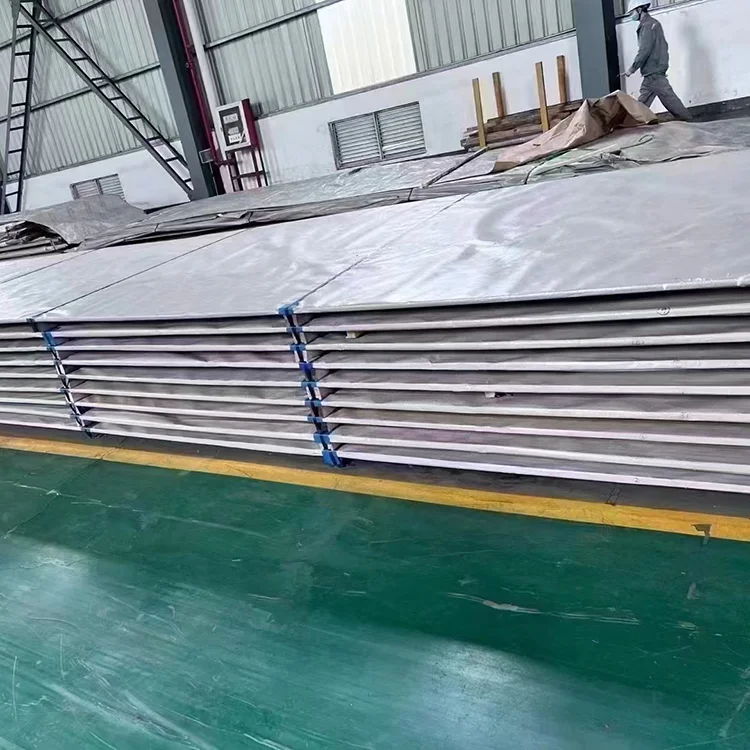
Packing | Standard seaworthy packing with each bundle tied and protected, with wooden pallets or as clients' requirements. |

2205 duplex stainless steel
2205 duplex stainless steel is a type of dual-phase stainless steel that combines properties of both austenitic and ferritic stainless steels. It is a highly corrosion-resistant material with excellent mechanical strength and durability, making it suitable for various applications in harsh environments.
2205 duplex steel sheets possess a two-phase microstructure consisting of approximately equal parts of austenite and ferrite phases. This dual-phase structure provides an excellent balance of strength and ductility.


More products
Applications

Production Line


Advantages of 2205 duplex stainless steel:
1. Superior corrosion resistance: 2205 duplex steel has excellent resistance to various forms of corrosion, including pitting, crevice corrosion, stress corrosion cracking, and chloride-induced corrosion. This is due to its high chromium, molybdenum, and nitrogen content, which enhances its corrosion resistance properties.
3. Stress corrosion cracking resistance: The ferritic phase in 2205 duplex steel contributes to its excellent resistance to stress corrosion cracking, making it suitable for applications where this type of corrosion is a concern.
4. Good weldability: Despite its high strength, 2205 duplex steel can be welded using conventional techniques, although proper precautions and procedures need to be followed to maintain its desired properties.
5. Low thermal expansion coefficient: 2205 duplex steel has a lower thermal expansion coefficient compared to austenitic stainless steels, making it more dimensionally stable at elevated temperatures.
6. Cost-effectiveness: While more expensive than carbon steels, 2205 duplex steel offers a cost-effective solution compared to other high-performance alloys, as it can provide similar or better corrosion resistance and strength with a more economical composition.
7. Wide range of applications: The unique combination of properties makes 2205 duplex steel suitable for various industries, including oil and gas, chemical processing, pulp and paper, marine, and desalination plants, among others.
2. High strength and toughness: The dual-phase microstructure of 2205 duplex steel, consisting of austenite and ferrite phases, provides a combination of high strength and toughness. It has a tensile strength approximately twice that of austenitic stainless steels, allowing for thinner and lighter-weight structures.
3. Stress corrosion cracking resistance: The ferritic phase in 2205 duplex steel contributes to its excellent resistance to stress corrosion cracking, making it suitable for applications where this type of corrosion is a concern.
4. Good weldability: Despite its high strength, 2205 duplex steel can be welded using conventional techniques, although proper precautions and procedures need to be followed to maintain its desired properties.
5. Low thermal expansion coefficient: 2205 duplex steel has a lower thermal expansion coefficient compared to austenitic stainless steels, making it more dimensionally stable at elevated temperatures.
6. Cost-effectiveness: While more expensive than carbon steels, 2205 duplex steel offers a cost-effective solution compared to other high-performance alloys, as it can provide similar or better corrosion resistance and strength with a more economical composition.
7. Wide range of applications: The unique combination of properties makes 2205 duplex steel suitable for various industries, including oil and gas, chemical processing, pulp and paper, marine, and desalination plants, among others.
Factory


Company View


FAQ
Q: Why choose us?
A: Our company have been in steel business for more than ten years, we are internationally experienced, professional, and we can
provide variety of steel products with high quality to our clients.
Q: Can provide OEM/ODM service?
A: Yes. Please feel free to contact us for more details discuss.
Q: How is your Payment Term?
A:One is 30% deposit by TT before production and 70% balance against copy of B/L; the other is Irrevocable L/C 100% at sight.
Q: Can we visit your factory?
A: Warmly welcome. Once we have your schedule, we will arrange the professional sales team to follow up your case.
Q: Can you provide sample?
A: Yes, for regular sizes sample is free but buyer need to pay freight cost.
Q: How long is your delivery time?
A: Our daily inventory is more than 8000 tons, so for common product size, just need 5 days from stocks; if the special size from
new production, delivery 20-30 days.
A: Our company have been in steel business for more than ten years, we are internationally experienced, professional, and we can
provide variety of steel products with high quality to our clients.
Q: Can provide OEM/ODM service?
A: Yes. Please feel free to contact us for more details discuss.
Q: How is your Payment Term?
A:One is 30% deposit by TT before production and 70% balance against copy of B/L; the other is Irrevocable L/C 100% at sight.
Q: Can we visit your factory?
A: Warmly welcome. Once we have your schedule, we will arrange the professional sales team to follow up your case.
Q: Can you provide sample?
A: Yes, for regular sizes sample is free but buyer need to pay freight cost.
Q: How long is your delivery time?
A: Our daily inventory is more than 8000 tons, so for common product size, just need 5 days from stocks; if the special size from
new production, delivery 20-30 days.
Thanks for your attention!
If you are interested, please don't hesitate to contact me.
If you are interested, please don't hesitate to contact me.

Jiangsu Sushang Steel Group Company
Jiangsu Sushang Steel Group Company is one of the biggest carbon steel and stainless steel products exporters in china. Located in Wuxi city, Jiangsu Province, near Shanghai port fast cargo loading.and land freight saving.One-stop shop of stainless steel sheet, stainless steel pipe, stainless steel coil stainless steel profiles, carbon steel, galvanized products, wear-resistant steep ate, alloy products and titanium products meet all of your requirements.
With more than 10 years of export experience in supplying a great variety of customers from different fields. Such as United States, Europe, Middle East, Southeast Asia, Africa South America market.Our annual export volume is more than 30000 tons. Sushang steel group also passed certificate ISO9001, ISO14000, OHSAS18001. As a member of China iron and steel association,we established long term friendly cooperation with famous domestic mill plants, such as Bao steel, Wu steel, An steel, Tai steel etc.
Our factory have advanced equipment including laser cutting machine, flying shear machine, hairline processing machine,polishing machine and folding plate machine. And all the equipment just make sure all the products with high and stable quality condition. SGS testing and any other third part testing are welcomed.
As well as active pursues partnerships foreign company, in order to meet customer requirement. With concept of keep improving Win-win Cooperation and executed by reliable quality and after sales service system,gained good reputation from customers at local and abroad.We sincerely welcome you to come our company to negotiate business.
With more than 10 years of export experience in supplying a great variety of customers from different fields. Such as United States, Europe, Middle East, Southeast Asia, Africa South America market.Our annual export volume is more than 30000 tons. Sushang steel group also passed certificate ISO9001, ISO14000, OHSAS18001. As a member of China iron and steel association,we established long term friendly cooperation with famous domestic mill plants, such as Bao steel, Wu steel, An steel, Tai steel etc.
Our factory have advanced equipment including laser cutting machine, flying shear machine, hairline processing machine,polishing machine and folding plate machine. And all the equipment just make sure all the products with high and stable quality condition. SGS testing and any other third part testing are welcomed.
As well as active pursues partnerships foreign company, in order to meet customer requirement. With concept of keep improving Win-win Cooperation and executed by reliable quality and after sales service system,gained good reputation from customers at local and abroad.We sincerely welcome you to come our company to negotiate business.
We Recommend


New Arrivals
New products from manufacturers at wholesale prices