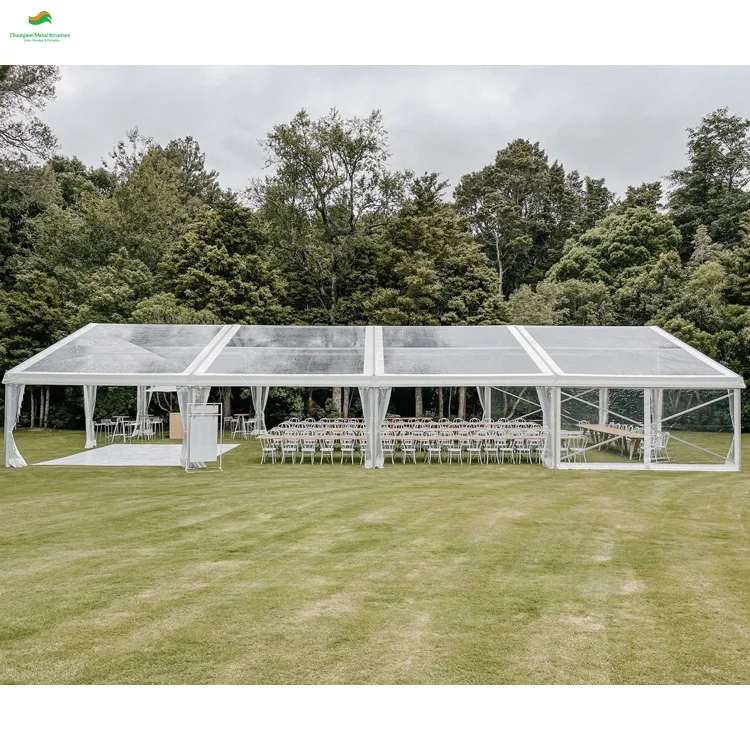
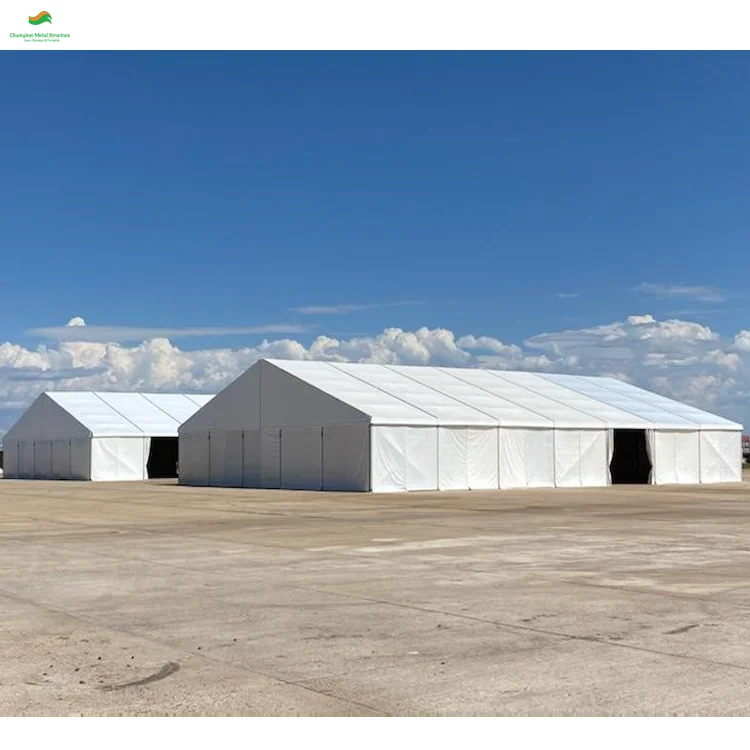
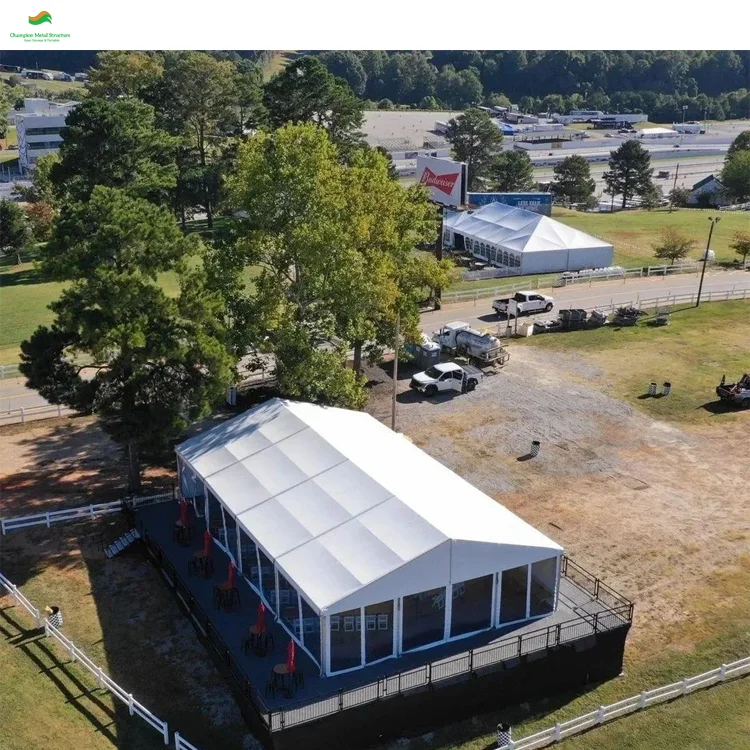
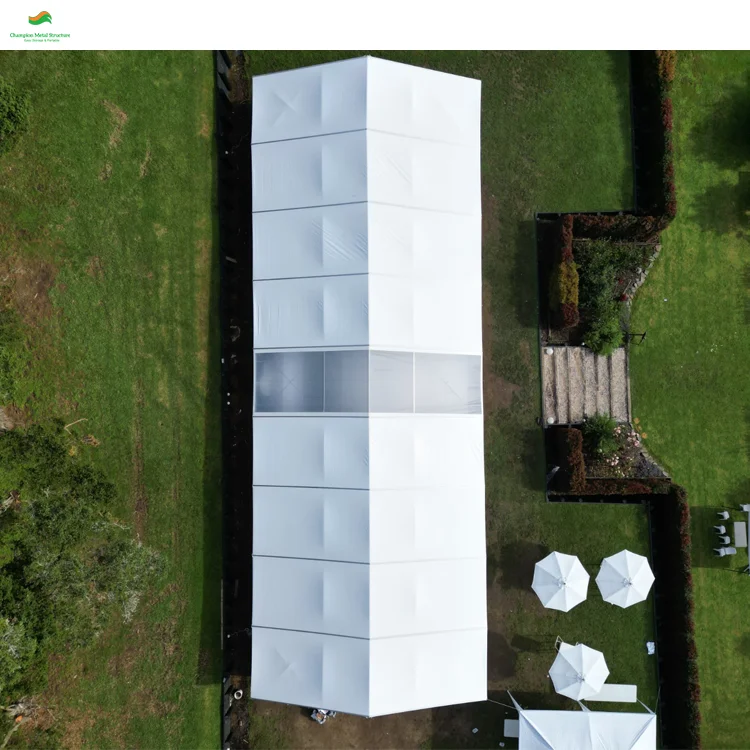
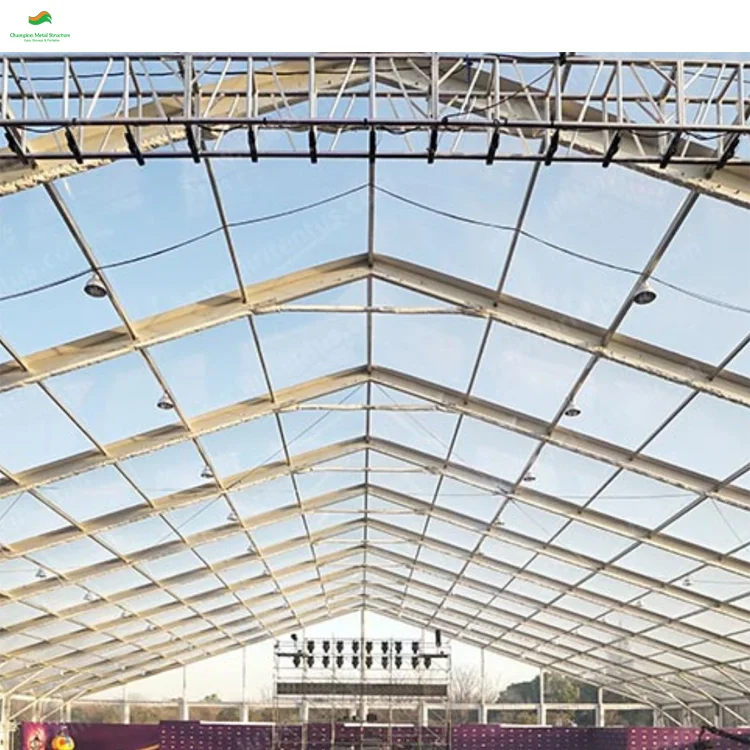
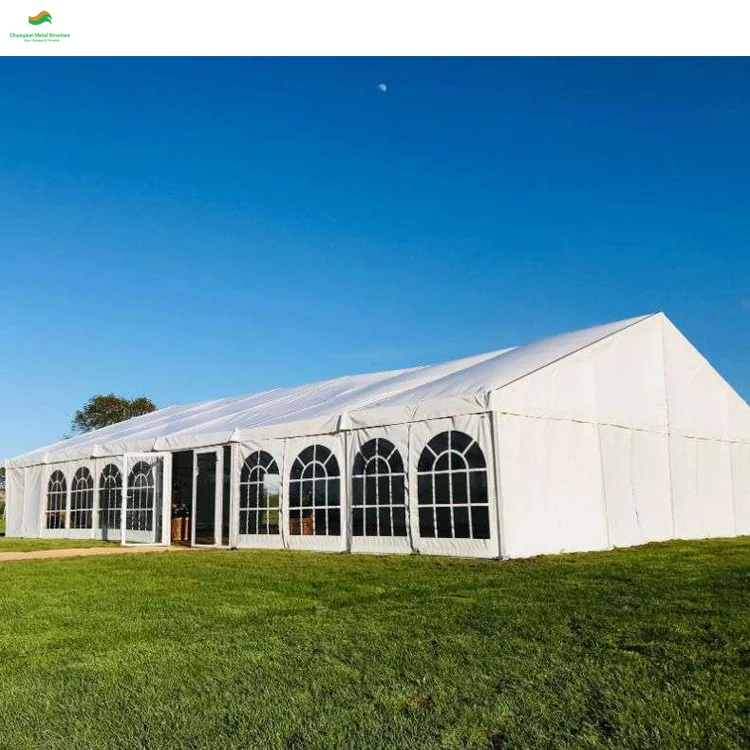
Car Wash Marquee Tent 8x8m Durable Structure Suitable for Quick Setup Events and Outdoor Car Wash Facilities
- Category: >>>
- Supplier: Guangzhou Tentsen Tent Co. Ltd.
Share on (1601278020649):
Product Overview
Description

Clear Span Marquee Tents Outdoor
A clear span tent is a type of temporary structure that features a design without interior support poles, allowing for an
unobstructed interior space. This makes it ideal for various events and uses, as it maximizes usable space and provides a
versatile environment.
unobstructed interior space. This makes it ideal for various events and uses, as it maximizes usable space and provides a
versatile environment.
Applications:
* Weddings and Receptions
* Corporate Events and Conferences
* Festivals and Concerts
* Trade Shows and Exhibitions
* Sporting Events and Outdoor Activities
* Weddings and Receptions
* Corporate Events and Conferences
* Festivals and Concerts
* Trade Shows and Exhibitions
* Sporting Events and Outdoor Activities


Clear span tents offer several advantages that make them an excellent choice for various events and applications. Here are some of the key benefits:
Advantages of Clear Span Tents
1. Maximized Usable Space:
* Without interior support poles, clear span tents provide a completely open interior. This maximization of space allows for flexible layouts, accommodating larger groups and enabling creative arrangements for seating, staging, and equipment.
2. Versatility:
* Clear span tents can be used for a wide range of events, including weddings, corporate functions, trade shows, festivals, and sporting events. Their adaptability makes them suitable for both formal and casual gatherings.
3. Easy Customization:
* These tents can be customized with sidewalls, lighting, flooring, and climate control systems (heating and air
conditioning), allowing you to create the ideal environment for your event.
4. Quick Setup and Dismantling:
* Clear span tents are designed for efficient assembly and disassembly, reducing setup time and labor costs. This is
especially beneficial for events that require quick turnarounds.
5. Weather Resistance:
* Built with durable materials, clear span tents can withstand various weather conditions, providing protection from rain, wind, and sun. This reliability ensures that events can proceed smoothly regardless of the weather.
6. Professional Appearance:
* Clear span tents provide a sleek and polished look, enhancing the overall aesthetic of an event. They can be dressed up with décor to match the theme, providing a sophisticated atmosphere.
7. Increased Accessibility:
* The absence of poles allows for easier movement within the tent, making it more accessible for guests, especially those with mobility challenges.
8. Cost-Effective Solution:
* While initial rental costs may be higher than traditional pole tents, the benefits of space utilization, customization
options, and reduced labor can make clear span tents a more cost-effective option in the long run.
9. Enhanced Safety:
* The open design not only facilitates movement but also provides clear sightlines for safety and crowd management, making
it easier to monitor guests and handle emergencies if they arise.
10. Long-Term Use:
* Many clear span tents are designed for longer-term installations, making them suitable for seasonal events or venues that require temporary structures for extended periods.
Conclusion
Overall, clear span tents provide a versatile, aesthetically pleasing, and functional solution for various events, making them apopular choice among event planners and organizations. If you have any specific applications or questions about clear span tents,
feel free to ask!
Advantages of Clear Span Tents
1. Maximized Usable Space:
* Without interior support poles, clear span tents provide a completely open interior. This maximization of space allows for flexible layouts, accommodating larger groups and enabling creative arrangements for seating, staging, and equipment.
2. Versatility:
* Clear span tents can be used for a wide range of events, including weddings, corporate functions, trade shows, festivals, and sporting events. Their adaptability makes them suitable for both formal and casual gatherings.
3. Easy Customization:
* These tents can be customized with sidewalls, lighting, flooring, and climate control systems (heating and air
conditioning), allowing you to create the ideal environment for your event.
4. Quick Setup and Dismantling:
* Clear span tents are designed for efficient assembly and disassembly, reducing setup time and labor costs. This is
especially beneficial for events that require quick turnarounds.
5. Weather Resistance:
* Built with durable materials, clear span tents can withstand various weather conditions, providing protection from rain, wind, and sun. This reliability ensures that events can proceed smoothly regardless of the weather.
6. Professional Appearance:
* Clear span tents provide a sleek and polished look, enhancing the overall aesthetic of an event. They can be dressed up with décor to match the theme, providing a sophisticated atmosphere.
7. Increased Accessibility:
* The absence of poles allows for easier movement within the tent, making it more accessible for guests, especially those with mobility challenges.
8. Cost-Effective Solution:
* While initial rental costs may be higher than traditional pole tents, the benefits of space utilization, customization
options, and reduced labor can make clear span tents a more cost-effective option in the long run.
9. Enhanced Safety:
* The open design not only facilitates movement but also provides clear sightlines for safety and crowd management, making
it easier to monitor guests and handle emergencies if they arise.
10. Long-Term Use:
* Many clear span tents are designed for longer-term installations, making them suitable for seasonal events or venues that require temporary structures for extended periods.
Conclusion
Overall, clear span tents provide a versatile, aesthetically pleasing, and functional solution for various events, making them apopular choice among event planners and organizations. If you have any specific applications or questions about clear span tents,
feel free to ask!


Advantage of clear span marquee tent
Clear span marquee tents are constructed from a combination of durable materials designed to provide strength, stability, and weather resistance. Here are the primary materials used in the construction of clear span marquee tents:
1. Frame Materials
* Aluminum: Most clear span tents utilize aluminum for their frame due to its lightweight yet robust properties. Aluminum is corrosion-resistant, making it suitable for outdoor use, and it can support large spans without the need for internal poles.
* Steel: In some cases, galvanized steel may be used for added strength, especially in larger structures or setups that require additional support.
2. Tent Fabric
* PVC Coated Polyester: This is a common material used for the canopy of clear span tents. It is waterproof, UV-resistant, and
durable, providing protection against the elements. The fabric is often flame-retardant, adhering to safety standards.
* Polyethylene: Some tents may use high-density polyethylene (HDPE) for the canopy. While it is less expensive than PVC, it may not offer the same level of durability or UV resistance.
3. Sidewalls
* Transparent or Solid Fabric: The sidewalls of clear span tents can be made from the same PVC or polyester fabric as the canopy. They can be clear (transparent) to allow natural light in or solid for privacy and protection from wind and rain. These walls can also be fitted with windows or doors.
4. Hardware and Accessories
* Anchoring Systems: The tents often come with various anchoring systems, which may include stakes, weights, or concrete blocks, depending on the ground conditions and location.
* Aluminum: Most clear span tents utilize aluminum for their frame due to its lightweight yet robust properties. Aluminum is corrosion-resistant, making it suitable for outdoor use, and it can support large spans without the need for internal poles.
* Steel: In some cases, galvanized steel may be used for added strength, especially in larger structures or setups that require additional support.
2. Tent Fabric
* PVC Coated Polyester: This is a common material used for the canopy of clear span tents. It is waterproof, UV-resistant, and
durable, providing protection against the elements. The fabric is often flame-retardant, adhering to safety standards.
* Polyethylene: Some tents may use high-density polyethylene (HDPE) for the canopy. While it is less expensive than PVC, it may not offer the same level of durability or UV resistance.
3. Sidewalls
* Transparent or Solid Fabric: The sidewalls of clear span tents can be made from the same PVC or polyester fabric as the canopy. They can be clear (transparent) to allow natural light in or solid for privacy and protection from wind and rain. These walls can also be fitted with windows or doors.
4. Hardware and Accessories
* Anchoring Systems: The tents often come with various anchoring systems, which may include stakes, weights, or concrete blocks, depending on the ground conditions and location.
* Connectors and Fasteners: High-quality connectors, brackets, and fasteners made from stainless steel or heavy-duty plastic are used to ensure the structural integrity of the tent.
5. Flooring Options
* While not part of the tent structure itself, clear span tents can be outfitted with various flooring options, such as wood,
carpet, or composite materials, which can enhance the aesthetics and comfort of the space.
* While not part of the tent structure itself, clear span tents can be outfitted with various flooring options, such as wood,
carpet, or composite materials, which can enhance the aesthetics and comfort of the space.
Summary
The combination of aluminum frames and durable, weather-resistant fabrics like PVC or polyester makes clear span marquee tents an excellent choice for a wide variety of events, ensuring they remain functional and attractive in different conditions. If you have
specific questions about materials or need more detailed information, feel free to ask!
The combination of aluminum frames and durable, weather-resistant fabrics like PVC or polyester makes clear span marquee tents an excellent choice for a wide variety of events, ensuring they remain functional and attractive in different conditions. If you have
specific questions about materials or need more detailed information, feel free to ask!
Usage of clear span tent
Clear span tents are versatile structures used for a variety of applications due to their design, which eliminates the need for
interior support poles, providing unobstructed space inside. Here are some common usages of clear span tents:
1. Event Venues:
* Weddings: Clear span tents are popular for outdoor weddings, providing a beautiful setting without obstructing views or space.
* Concerts and Festivals: They can accommodate large audiences while protecting them from weather elements.
* Corporate Events: Ideal for conferences, product launches, and exhibitions where a spacious, professional environment is needed.
2. Trade Shows and Exhibitions:
* Clear span tents serve as exhibition halls, allowing companies to showcase their products with ample space for displays and foot traffic.
3. Sports Events:
* Used for sports tournaments, providing shelter for athletes and spectators, as well as space for concessions and merchandise sales.
4. Temporary Storage:
* Businesses often use clear span tents as temporary warehouses or storage spaces during renovations or peak seasons.
5. Emergency Shelters:
* In disaster relief situations, clear span tents can provide temporary housing or medical facilities.
6. Seasonal Businesses:
* Retailers may use clear span tents for seasonal sales, such as holiday markets or summer events.
7. Catering and Dining:
* Clear span tents are often used for outdoor dining setups, providing a comfortable space for guests at events like banquets or parties.
8. Agricultural Uses:
* Farmers and agricultural businesses use clear span tents for livestock housing, crop storage, or as temporary market spaces.
9. Recreational Spaces:
* They can be set up as temporary gyms, yoga studios, or community centers for recreational activities.
10. Trade and Craft Fairs:
* Clear span tents can serve as a venue for local artisans and vendors to showcase their crafts and goods.
Overall, the versatility and spaciousness of clear span tents make them an excellent choice for a wide range of applications,
allowing for flexibility and adaptability in various settings.
interior support poles, providing unobstructed space inside. Here are some common usages of clear span tents:
1. Event Venues:
* Weddings: Clear span tents are popular for outdoor weddings, providing a beautiful setting without obstructing views or space.
* Concerts and Festivals: They can accommodate large audiences while protecting them from weather elements.
* Corporate Events: Ideal for conferences, product launches, and exhibitions where a spacious, professional environment is needed.
2. Trade Shows and Exhibitions:
* Clear span tents serve as exhibition halls, allowing companies to showcase their products with ample space for displays and foot traffic.
3. Sports Events:
* Used for sports tournaments, providing shelter for athletes and spectators, as well as space for concessions and merchandise sales.
4. Temporary Storage:
* Businesses often use clear span tents as temporary warehouses or storage spaces during renovations or peak seasons.
5. Emergency Shelters:
* In disaster relief situations, clear span tents can provide temporary housing or medical facilities.
6. Seasonal Businesses:
* Retailers may use clear span tents for seasonal sales, such as holiday markets or summer events.
7. Catering and Dining:
* Clear span tents are often used for outdoor dining setups, providing a comfortable space for guests at events like banquets or parties.
8. Agricultural Uses:
* Farmers and agricultural businesses use clear span tents for livestock housing, crop storage, or as temporary market spaces.
9. Recreational Spaces:
* They can be set up as temporary gyms, yoga studios, or community centers for recreational activities.
10. Trade and Craft Fairs:
* Clear span tents can serve as a venue for local artisans and vendors to showcase their crafts and goods.
Overall, the versatility and spaciousness of clear span tents make them an excellent choice for a wide range of applications,
allowing for flexibility and adaptability in various settings.


Clear span tents come in a variety of standard sizes to accommodate different events and needs. Here are some common dimensions:
1. Width:
* 10 feet: Suitable for smaller gatherings or as a side tent.
* 20 feet: Common for small to medium events.
* 30 feet: Often used for medium-sized events like weddings or corporate gatherings.
* 40 feet: Provides ample space for larger events.
* 50 feet and greater: Available in sizes up to 100 feet or more, suitable for large festivals, trade shows, or conventions.
2. Length:
* Lengths can typically be customized in increments, often starting at 20 feet and extending to 100 feet or more. Length can be adjusted based on the needs of the event, with options for adding sections as required.
3. Height:
* Clear span tents generally have a center height ranging from 10 to 20 feet or more, depending on the size and design of the tent. The height can vary based on the specific model and manufacturer.
1. Width:
* 10 feet: Suitable for smaller gatherings or as a side tent.
* 20 feet: Common for small to medium events.
* 30 feet: Often used for medium-sized events like weddings or corporate gatherings.
* 40 feet: Provides ample space for larger events.
* 50 feet and greater: Available in sizes up to 100 feet or more, suitable for large festivals, trade shows, or conventions.
2. Length:
* Lengths can typically be customized in increments, often starting at 20 feet and extending to 100 feet or more. Length can be adjusted based on the needs of the event, with options for adding sections as required.
3. Height:
* Clear span tents generally have a center height ranging from 10 to 20 feet or more, depending on the size and design of the tent. The height can vary based on the specific model and manufacturer.
Common Configurations:
* 20' x 30': Suitable for smaller events, such as intimate weddings or family gatherings.
* 30' x 60': Good for medium-sized events with more space for seating and activities.
* 40' x 100': Often used for larger events, accommodating hundreds of guests.
* 50' x 100': Provides expansive space for large gatherings, trade shows, or outdoor concerts.
Customization:
Many tent rental companies offer custom sizes or configurations, allowing planners to tailor the dimensions based on theirspecific requirements. It's best to consult with a tent rental provider to find the right size and layout for your event.
Conclusion:
When planning an event, consider the number of guests, the type of activities, and any additional space needed for dining,
dancing, or displays to determine the appropriate size of the clear span tent.
* 20' x 30': Suitable for smaller events, such as intimate weddings or family gatherings.
* 30' x 60': Good for medium-sized events with more space for seating and activities.
* 40' x 100': Often used for larger events, accommodating hundreds of guests.
* 50' x 100': Provides expansive space for large gatherings, trade shows, or outdoor concerts.
Customization:
Many tent rental companies offer custom sizes or configurations, allowing planners to tailor the dimensions based on theirspecific requirements. It's best to consult with a tent rental provider to find the right size and layout for your event.
Conclusion:
When planning an event, consider the number of guests, the type of activities, and any additional space needed for dining,
dancing, or displays to determine the appropriate size of the clear span tent.


How to install the clear span tent
Installing a clear span tent involves careful planning and execution to ensure safety, stability, and functionality. Here’s a
step-by-step guide to installing a clear span tent:
Preparation
1. Site Selection:
* Choose a flat, level area free from debris, rocks, or sharp objects.
* Ensure adequate drainage and avoid low-lying areas prone to flooding.
2. Permits and Regulations:
* Check local regulations for permits required for tent installation, especially for larger structures.
step-by-step guide to installing a clear span tent:
Preparation
1. Site Selection:
* Choose a flat, level area free from debris, rocks, or sharp objects.
* Ensure adequate drainage and avoid low-lying areas prone to flooding.
2. Permits and Regulations:
* Check local regulations for permits required for tent installation, especially for larger structures.
3. Gather Equipment:
* Ensure you have all necessary equipment and tools, including: * Tent sections
* Frame components (poles, connectors)
* Anchors (stakes, weights)
* Ground protection (if on grass or delicate surfaces)
* Lifting equipment (if necessary)
* Safety gear (gloves, hard hats)
Installation Steps
1. Unpack and Organize:
* Lay out all tent components on the ground, organizing by size and type for easy access during assembly.
2. Assemble the Frame:
* Start by assembling the frame on the ground according to the manufacturer’s instructions. This usually involves connecting
the main beams and cross members.
* Ensure all connections are secure and tight.
3. Erect the Structure:
* Depending on the size of the tent, you may need to use a lifting device or several people to lift the frame into an upright position.
* Begin raising the tent frame from one side, securing it as you go.
* Ensure that the structure is vertically aligned and stable before proceeding.
4. Install the Roof Fabric:
* Once the frame is upright, attach the roof fabric starting from one end and working your way to the other.
* Use the provided clips, straps, or hooks to secure the fabric tightly to the frame, ensuring there are no loose areas.
5. Secure the Tent:
* Anchor the tent using stakes or weights. If using stakes, drive them into the ground at an angle for maximum holding power.
* For hard surfaces (like asphalt), use weighted anchors or concrete blocks.
6. Install Sidewalls (if applicable):
* If your tent design includes sidewalls, attach them after securing the roof. Ensure they are properly aligned and fastened.
7. Add Accessories:
* Install any additional features such as lighting, flooring, heating, or air conditioning units as needed.
8. Final Inspection:
* Check all connections, anchors, and structural components to ensure everything is secure and stable.
* Inspect for any damage to the fabric or frame.
Safety Considerations
* Team Work: Clear span tents can be large and heavy. Ensure you have enough personnel to assist with the installation safely.
* Weather Awareness: Avoid installation during inclement weather to prevent accidents.
* Protective Gear: Wear appropriate safety gear, especially when handling heavy components.
Conclusion
Installing a clear span tent can be a straightforward process if you follow the manufacturer’s guidelines and take necessary precautions. If you're unsure or the tent is particularly large, consider hiring professional installers to ensure safety and compliance with local regulations.
* Ensure you have all necessary equipment and tools, including: * Tent sections
* Frame components (poles, connectors)
* Anchors (stakes, weights)
* Ground protection (if on grass or delicate surfaces)
* Lifting equipment (if necessary)
* Safety gear (gloves, hard hats)
Installation Steps
1. Unpack and Organize:
* Lay out all tent components on the ground, organizing by size and type for easy access during assembly.
2. Assemble the Frame:
* Start by assembling the frame on the ground according to the manufacturer’s instructions. This usually involves connecting
the main beams and cross members.
* Ensure all connections are secure and tight.
3. Erect the Structure:
* Depending on the size of the tent, you may need to use a lifting device or several people to lift the frame into an upright position.
* Begin raising the tent frame from one side, securing it as you go.
* Ensure that the structure is vertically aligned and stable before proceeding.
4. Install the Roof Fabric:
* Once the frame is upright, attach the roof fabric starting from one end and working your way to the other.
* Use the provided clips, straps, or hooks to secure the fabric tightly to the frame, ensuring there are no loose areas.
5. Secure the Tent:
* Anchor the tent using stakes or weights. If using stakes, drive them into the ground at an angle for maximum holding power.
* For hard surfaces (like asphalt), use weighted anchors or concrete blocks.
6. Install Sidewalls (if applicable):
* If your tent design includes sidewalls, attach them after securing the roof. Ensure they are properly aligned and fastened.
7. Add Accessories:
* Install any additional features such as lighting, flooring, heating, or air conditioning units as needed.
8. Final Inspection:
* Check all connections, anchors, and structural components to ensure everything is secure and stable.
* Inspect for any damage to the fabric or frame.
Safety Considerations
* Team Work: Clear span tents can be large and heavy. Ensure you have enough personnel to assist with the installation safely.
* Weather Awareness: Avoid installation during inclement weather to prevent accidents.
* Protective Gear: Wear appropriate safety gear, especially when handling heavy components.
Conclusion
Installing a clear span tent can be a straightforward process if you follow the manufacturer’s guidelines and take necessary precautions. If you're unsure or the tent is particularly large, consider hiring professional installers to ensure safety and compliance with local regulations.


Calculating the capacity of a clear span tent involves considering several factors, including the type of event, seating
arrangements, and the overall layout. Here’s a step-by-step guide to help you determine the capacity of a clear span tent:
1. Determine the Tent Size
Identify the dimensions of the tent in terms of length and width. Common sizes include 20’ x 30’, 30’ x 60’, etc. The total area
can be calculated using the formula:
Area=Length×Width
2. Identify the Type of Event
Different events require different amounts of space per person. Here are some general guidelines for common setups:
* Theater Style (Chairs Only): Approximately 6-8 sq. ft. per person.
* Banquet Style (Round Tables): Approximately 10-12 sq. ft. per person.
* Classroom Style (Tables and Chairs): Approximately 10-12 sq. ft. per person.
* Cocktail Style (Standing): Approximately 5-6 sq. ft. per person.
3. Calculate Capacity Based on Layout
Using the area of the tent and the square footage required per person based on the event type, you can calculate the capacity:
Capacity=Square Footage per PersonTent Area
Example Calculation
Tent Size: 30’ x 60’
1. Calculate Area:
Area=30ft×60ft=1800sq. ft.
2. Choose Event Type: Suppose it’s a banquet with round tables, which typically requires 10 sq. ft. per person.
3. Calculate Capacity:
Capacity=10sq. ft. per person1800sq. ft.=180people
4. Consider Additional Elements
* Stage or Dance Floor: If your event includes a stage, dance floor, or other setups, subtract that area from the total tent
area.
* Aisles: Ensure to account for space required for aisles between tables or chairs.
* Additional Amenities: Consider space taken up by food service, bars, or equipment if applicable.
5. Safety Regulations
Always check local regulations and safety guidelines, as there may be limits on occupancy based on fire codes or other safety considerations. It’s also important to leave room for emergency exits and pathways.
arrangements, and the overall layout. Here’s a step-by-step guide to help you determine the capacity of a clear span tent:
1. Determine the Tent Size
Identify the dimensions of the tent in terms of length and width. Common sizes include 20’ x 30’, 30’ x 60’, etc. The total area
can be calculated using the formula:
Area=Length×Width
2. Identify the Type of Event
Different events require different amounts of space per person. Here are some general guidelines for common setups:
* Theater Style (Chairs Only): Approximately 6-8 sq. ft. per person.
* Banquet Style (Round Tables): Approximately 10-12 sq. ft. per person.
* Classroom Style (Tables and Chairs): Approximately 10-12 sq. ft. per person.
* Cocktail Style (Standing): Approximately 5-6 sq. ft. per person.
3. Calculate Capacity Based on Layout
Using the area of the tent and the square footage required per person based on the event type, you can calculate the capacity:
Capacity=Square Footage per PersonTent Area
Example Calculation
Tent Size: 30’ x 60’
1. Calculate Area:
Area=30ft×60ft=1800sq. ft.
2. Choose Event Type: Suppose it’s a banquet with round tables, which typically requires 10 sq. ft. per person.
3. Calculate Capacity:
Capacity=10sq. ft. per person1800sq. ft.=180people
4. Consider Additional Elements
* Stage or Dance Floor: If your event includes a stage, dance floor, or other setups, subtract that area from the total tent
area.
* Aisles: Ensure to account for space required for aisles between tables or chairs.
* Additional Amenities: Consider space taken up by food service, bars, or equipment if applicable.
5. Safety Regulations
Always check local regulations and safety guidelines, as there may be limits on occupancy based on fire codes or other safety considerations. It’s also important to leave room for emergency exits and pathways.


We Recommend


New Arrivals
New products from manufacturers at wholesale prices