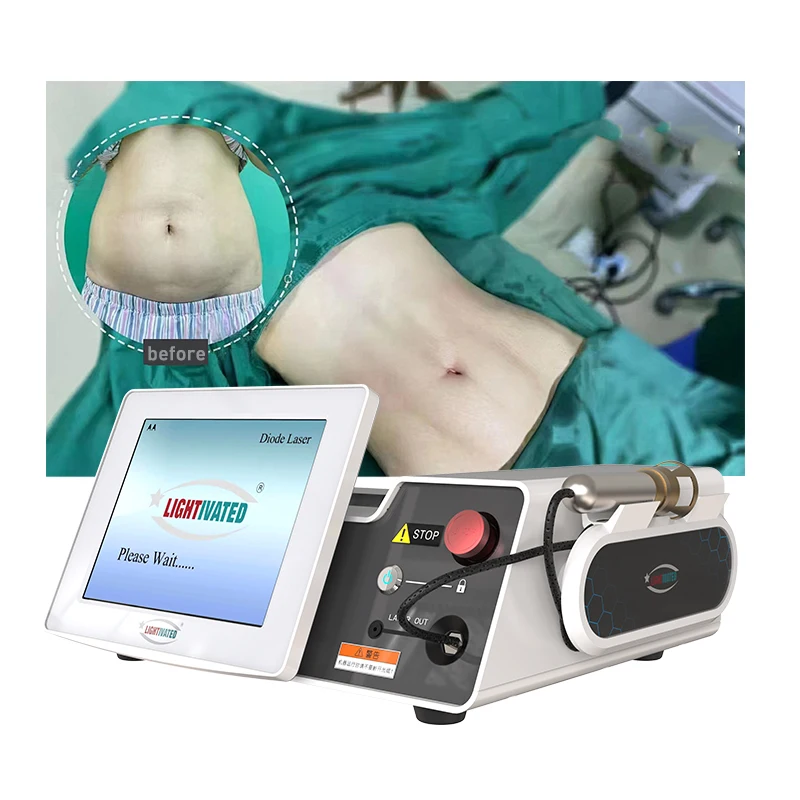
Fiber Endolaser Lipolysis Facial Body Lifting 980 1470nm Diode Laser Liposuction Canulas Fat Dissolving Medical Surgical Machine
- Category: >>>
- Supplier: Beijing Starlight S&T Development Co. Ltd.
Share on (1601280350027):
Product Overview
Description

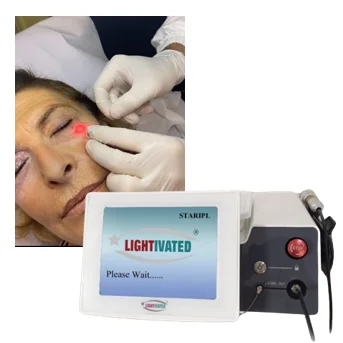
Best Effective 980nm 1470nm Diode Laser machine Liposuction Radial Fiber Laser Nail Fungus Physical Therapy cutting Vascular Removal EVLT PLDD trentment Machine
Title goes here.
1.Lipolysis/endolift
7.Dental Soft Tissue Surgery
Advantages:
Dual wavalength, depending on whether the target tissue uses the absorptin effect of pigment or water molecules, you can choose.
mixed or single wavelength output.
1.Minimally invasive technology, fast recovery, not easy to leave surgical scars.
2.It directly acts on the target tissue, and the effect is intuitive.
3.Temperture monitoring system to ensure instrument and patient safety.
4.Multiple therapeutic hand toos to meet different functional needs.
5.Independently designed integrated circuit with laser system, the quality is reliably guaranteed.
2.Physiotherapy/Pain Relief
3.Fungul Nail Removal/Onychomycosis
4.Vascular veins removal Therapy
5.Cutting Mode
6.EVLT
7.Dental Soft Tissue Surgery
8.PLDD
9.Veterinary
10.Teeth Whitening
11.Gynecology
Advantages:
Dual wavalength, depending on whether the target tissue uses the absorptin effect of pigment or water molecules, you can choose.
mixed or single wavelength output.
1.Minimally invasive technology, fast recovery, not easy to leave surgical scars.
2.It directly acts on the target tissue, and the effect is intuitive.
3.Temperture monitoring system to ensure instrument and patient safety.
4.Multiple therapeutic hand toos to meet different functional needs.
5.Independently designed integrated circuit with laser system, the quality is reliably guaranteed.
1.liposuction/endolift
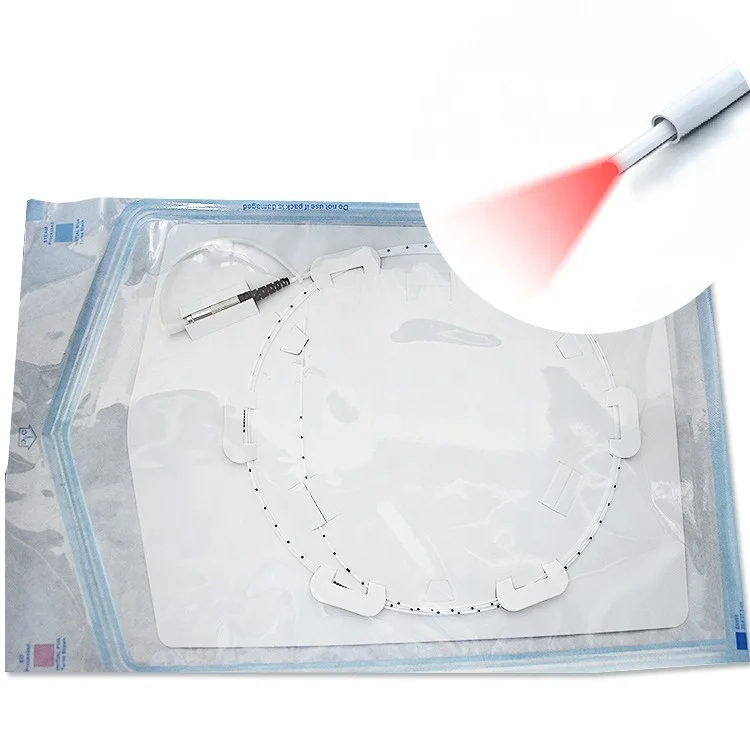
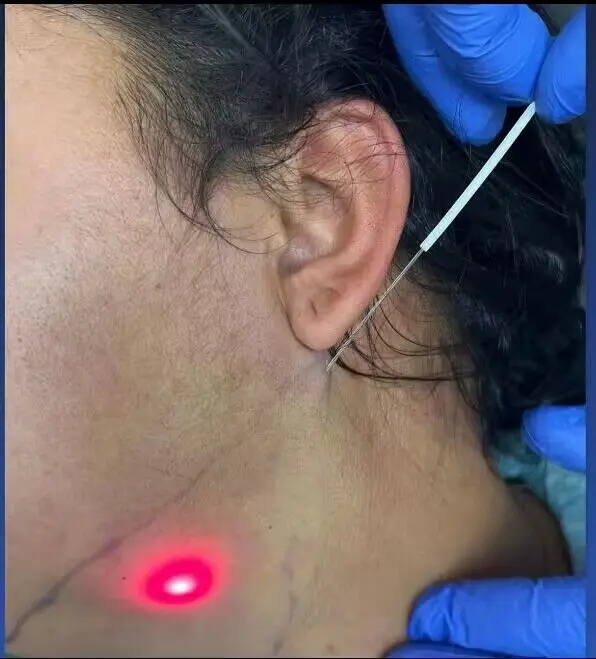
Endolift treatment is performed with a single-use micro optical fibers, thin like an hair which are easily inserted under the skin into the superficial hypodermis under local anaesthesia. We don’t need any cut or incision for the treatment.The laser fiber is inserted through a very small tube into your body, the laser ruptures the fat cell membranes and the fat cells are permanently destroyed,at the same time, coagulate tiny blood vessels and stimulate dermal and subdermal neocollagenesis,you don’t have to worry about dimpling and sagging skin.
Carry out the procedure by first applying local anesthetic to the area before making a small cut on the skin, the laser is then inserted into the incision. Once the laser is under the skin, it works to melt the fat away from under the skin by perforating the cells so they deflate, The fat is then released into the interstitial fluid and flushed out by the lymphatic system. Next, the doctor inserts a cannula into the same area to suck away the liquefied fat before closing the incision. Aside from melting the fat cells, laser beams also coagulate small blood vessels, which reduces the bleeding.
Laser lipolysis uses a finer catheter, which is only one millimeter, and the trauma is smaller. The scar is only 0.3~0.5mm. It usually gradually fades and disappears after 3~6 months of recovery. The liposuction area can be sculpted more precisely.
Laser lipolysis uses a finer catheter, which is only one millimeter, and the trauma is smaller. The scar is only 0.3~0.5mm. It usually gradually fades and disappears after 3~6 months of recovery. The liposuction area can be sculpted more precisely.
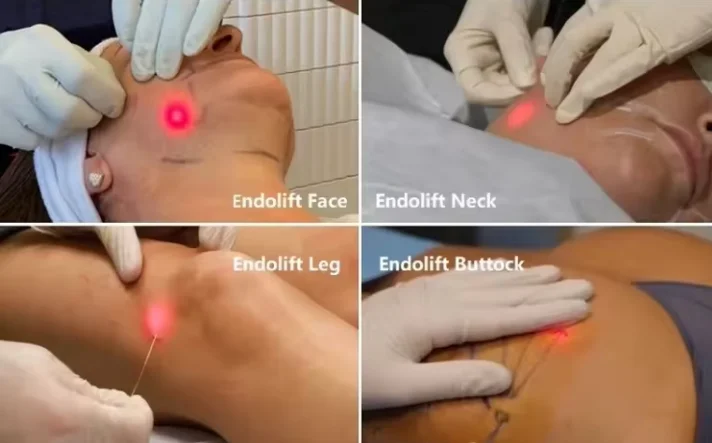
Endolift laser can tighten, and lift the upper face by tightening the under eye loose skin and under
eye lid skin, lifting the cheeks.
Endolift can improve sagging jowls by removing the excess fat in jowls and tightening the loose skin around jowls and lower face.
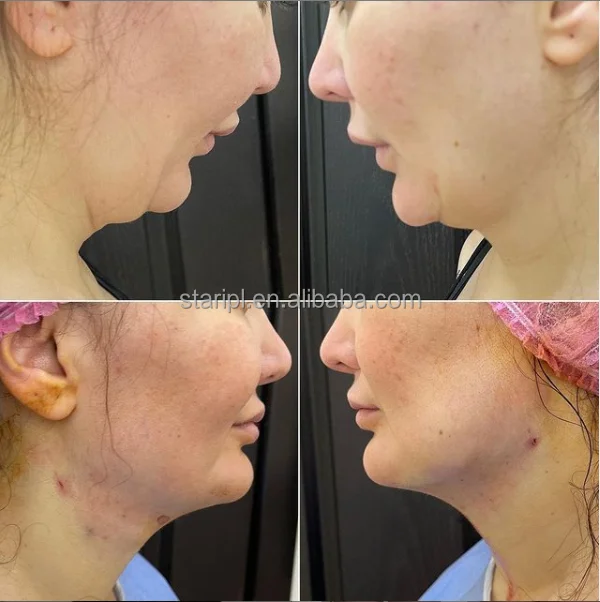
Endolift laser treatment can lift the lower face, define the jawline and lift the neck by removing excess fat alongside the jawline and tighten loose skin on the jawline and neck.
On the body Endolift laser can be used to improve loose skin on the tummy especially after birth or weight loss, can be used on saggy arms skin to tighten the arms and inner thighs and knees to tighten excess loose skin.
Due to collagen production and rejuvenation Endolift can be used for acne scarring and cellulites.
eye lid skin, lifting the cheeks.
Endolift can improve sagging jowls by removing the excess fat in jowls and tightening the loose skin around jowls and lower face.
Endolift laser treatment can lift the lower face, define the jawline and lift the neck by removing excess fat alongside the jawline and tighten loose skin on the jawline and neck.
On the body Endolift laser can be used to improve loose skin on the tummy especially after birth or weight loss, can be used on saggy arms skin to tighten the arms and inner thighs and knees to tighten excess loose skin.
Due to collagen production and rejuvenation Endolift can be used for acne scarring and cellulites.


1. Maximum reliability, minimal side effects
2. 980 1470 are the most reliable equipment sof the market for laser assisted liposuction. They provide good absorption by adipose
tissue and H2O, less swelling and fewer side effects as edema or pain.
3. Less bruising will appear as laser coagulates small vessels immediately.
4. Perfect treatment control while seeing the amount of energy.
5. Atraumatic and very fine cannulas: incisions are very small.6. Effective minimally invasive alternative
7.Patients may experience quicker healing and less recovery time, reducing the required time for follow-up in the office. Laser
contouring is a great option for patients who desire lower face and neck revitalization without the downtime of a face lift.
8.Desirable contours can be effectively achieved while gently shaping the face and body without the side effects of other
liposuction procedures. It is safe for all areas of the body, including the abdomen, face, neck, inner thighs, flanks, hips,
knees, back and arms.
2. 980 1470 are the most reliable equipment sof the market for laser assisted liposuction. They provide good absorption by adipose
tissue and H2O, less swelling and fewer side effects as edema or pain.
3. Less bruising will appear as laser coagulates small vessels immediately.
4. Perfect treatment control while seeing the amount of energy.
5. Atraumatic and very fine cannulas: incisions are very small.6. Effective minimally invasive alternative
7.Patients may experience quicker healing and less recovery time, reducing the required time for follow-up in the office. Laser
contouring is a great option for patients who desire lower face and neck revitalization without the downtime of a face lift.
8.Desirable contours can be effectively achieved while gently shaping the face and body without the side effects of other
liposuction procedures. It is safe for all areas of the body, including the abdomen, face, neck, inner thighs, flanks, hips,
knees, back and arms.


2.Vascular veins removal
980nm laser is the optimum absorption spectrum of Porphyrin vascular cells.
Vascular cells absorb the high-energy laser of 980nm wavelength, solidification occurs and finally dissipated.
Vascular cells absorb the high-energy laser of 980nm wavelength, solidification occurs and finally dissipated.

The laser instantly breaks up the hemoglobin in the capillaries, converting it into small molecular clusters that are absorbed by the tissues, and the dilated capillaries instantly shrink and coagulate. The originally visible red blood streaks disappear immediately, and the treatment effect is immediate. In order to overcome the problem of large-area skin burns and redness caused by traditional laser treatment, the professionally designed handpiece focuses the 980nm/1470nm laser beam to a diameter range of 0.2-0.5 mm, so that more concentrated energy can reach the target tissue while avoiding burning the surrounding skin tissue. The laser can stimulate the growth of dermal collagen while treating blood vessels, increase the thickness and density of the epidermis, and make small blood vessels no longer exposed. At the same time, the elasticity and resistance of the skin are also significantly enhanced.


3.Nails fungus removal
Laser treatment for onychomycosis is a non-invasive treatment and the latest treatment for onychomycosis.
The device emits a dense infrared laser beam that penetrates the nail surface and deep into the nail bed for treatment. The patient will not feel pain during the process. The doctor will determine the number of treatments according to the patient's onychomycosis condition. During the treatment, the laser will be used to completely remove the onychomycosis fungus in the infected area. The patient may feel a slight warmth from the laser during the treatment, but it is mild and no anesthesia is required. The medical staff will also ensure that the patient does not feel uncomfortable throughout the process.
The treatment does not interfere with the patient's daily life. Many onychomycosis patients can go running or have a manicure immediately after receiving laser treatment. The infected nail bed is laser-treated to eliminate the onychomycosis fungus. After several treatments, the infected nail will grow healthy nails again.


Laser Treatment Process
Usually 3 to 5 times constitute a course of treatment
Every 2 to 4 weeks
Usually it takes no more than 30 minutes each time
Usually 3 to 5 times constitute a course of treatment
Every 2 to 4 weeks
Usually it takes no more than 30 minutes each time

PLDD Physiotherapy
What is PLDD?
Percutaneous Laser Disc Decompression (PLDD) is the most minimally invasive percutaneous laser technique for the
treatment of disc herniation, cervical herniation, dorsal herniation (except segments T1-T5), and lumbar disc herniation. The procedure uses laser energy to absorb water within the nucleus of the herniated disc, thereby creating decompression.
treatment of disc herniation, cervical herniation, dorsal herniation (except segments T1-T5), and lumbar disc herniation. The procedure uses laser energy to absorb water within the nucleus of the herniated disc, thereby creating decompression.
PLDD treatment is performed only on an outpatient basis using local anesthesia. During the procedure, a thin needle is inserted into the herniated disc under x-ray or CT guidance. An optical fiber is inserted through the needle and laser energy is sent through the fiber, vaporizing a small portion of the disc nucleus. This creates a partial vacuum that moves the herniation away from the nerve root, thereby relieving pain. The results are usually immediate.
During percutaneous laser disc decompression, laser energy is delivered into the disc via a thin optical fiber. The goal of PLDD is to vaporize a small portion of the inner core. Ablation of a relatively small inner core results in an important reduction in intradiscal pressure, which in turn results in a reduction in disc herniation.
Advantages:
During percutaneous laser disc decompression, laser energy is delivered into the disc via a thin optical fiber. The goal of PLDD is to vaporize a small portion of the inner core. Ablation of a relatively small inner core results in an important reduction in intradiscal pressure, which in turn results in a reduction in disc herniation.
Advantages:
1. Local treatment, not general anesthesia.
2. Safe and fast surgical technique, no cutting, no scars, because only a small amount of disc is vaporized, no subsequent spinal instability. Unlike open lumbar disc surgery, there is no damage to the back muscles, no bone removal or large skin incisions.
3. Suitable for patients with higher risks of open discectomy, such as diabetes, heart disease, liver and kidney dysfunction, etc.

. What effects does laser physiotherapy have on our body?
– Analgesic effect, as laser physiotherapy greatly increases the pain threshold
– Anti-inflammatory effect, laser can increase local microcirculation and relieve inflammation
– The effect of accelerating healing. As a biostimulant, laser can accelerate the healing of injured tissues by increasing
metabolism and lead to wound closure without surgical indications, because the energy in the laser promotes the formation of fibrous scar tissue.
– Relaxation effect, laser physiotherapy has a relaxing and relaxing effect on tissues due to the microthermal effect and increase in metabolism.
– Analgesic effect, as laser physiotherapy greatly increases the pain threshold
– Anti-inflammatory effect, laser can increase local microcirculation and relieve inflammation
– The effect of accelerating healing. As a biostimulant, laser can accelerate the healing of injured tissues by increasing
metabolism and lead to wound closure without surgical indications, because the energy in the laser promotes the formation of fibrous scar tissue.
– Relaxation effect, laser physiotherapy has a relaxing and relaxing effect on tissues due to the microthermal effect and increase in metabolism.


EVLT /Varicose Veins
Laser varicose vein surgery is a procedure that uses heat from a 1470nm laser to reduce varicose veins. Varicose veins are enlarged and usually bulge out in the thigh or calf. A laser is a device that emits a beam of radiation in the form of light.
Semiconductor laser heat is used to create tiny bubbles in the blood, which transmit energy to precisely damage the blood vessel wall, causing it to close and become fibrotic and then absorbed by the body. 1470nm laser surgery closes and shrinks varicose veins and creates scar tissue in the blood vessels. This will seal the vein. The blood then flows through other nearby veins.
Semiconductor laser heat is used to create tiny bubbles in the blood, which transmit energy to precisely damage the blood vessel wall, causing it to close and become fibrotic and then absorbed by the body. 1470nm laser surgery closes and shrinks varicose veins and creates scar tissue in the blood vessels. This will seal the vein. The blood then flows through other nearby veins.


Hemorrhoids Removal
Laser energy is delivered to the hemorrhoidal pile through a designated optical fiber and is used to thermally seal the veins that nnourish this abnormal growth. The laser energy causes the destruction of the venous epithelium and simultaneously eliminates the hemorrhoidal pile by a contraction effect.
Laser hemorrhoid surgery is one of the newest, safest and most effective treatments available today. High patient satisfaction, less painful and reproducible method, possibility of recovery in a short time and return to normal life, ability to maintain breech tissue at the highest level, fewer complications make it preferable to use laser for hemorrhoidal surgery.
Depending on the patient's condition, the enlarged hemorrhoidal cushion is entered and bleeding is caused by a thin laser probe using local, general, spinal or epidural anesthesia. Then the probe is slowly retracted. At the same time, a thermal injury zone is created under the mucosa and sometimes under the anode by a laser beam with a depth of 2-4mm and a width of 6-8mm with high thermal properties. In this way, the internal hemorrhoids are reduced, fibrotic tissue is formed under the mucosa. During the operation, which lasts an average of 15-20 minutes, the patient is discharged after 2-4 hours of rest. After 1 day, he can return to his daily life.
Advantages of the laser method
Unlike other methods, hemorrhoidoplasty does not require any foreign materials such as rubber bands, staples, threads. It does not require any incisions and sewing. There is no risk of stricture. The surgery and recovery time are shortened. The patient has no risk of postoperative pain and can quickly return to normal activities.
• No sutures
• No foreign materials
• No wounds or bleeding
• No pain
• Short recovery time


Biquartz optical fiber transmission | ||||
Pulse , CW, Single | 0.01-1s (stepping 0.05s) | |||
Wavelength | 980nm 1470nm | Pilot Beam | Red Diode Laser of 650nm, Power<5mW | |
Power | 1-100% (max 60W) | Power requirement | AC120V±22V,60HZ±1HZ/AC230V±22V, 50HZ±1HZ |

Why Choose Us?
A. US 510K(K101901), Medical CE, ISO13485, ISO9001, ROHS, TUV certificates.
B. We are the professional manufacture with more than 10 years industry experience.
C. Best quality and best service with competitive price.
D. Alibaba Assessed 10 years Gold Supplier.
E. 100 QC inspection before shipment.
F. OEM & ODM service.
How to Contact Us?
Send your Inquiry details in the below, click "Send" now!


We Recommend
New Arrivals
New products from manufacturers at wholesale prices