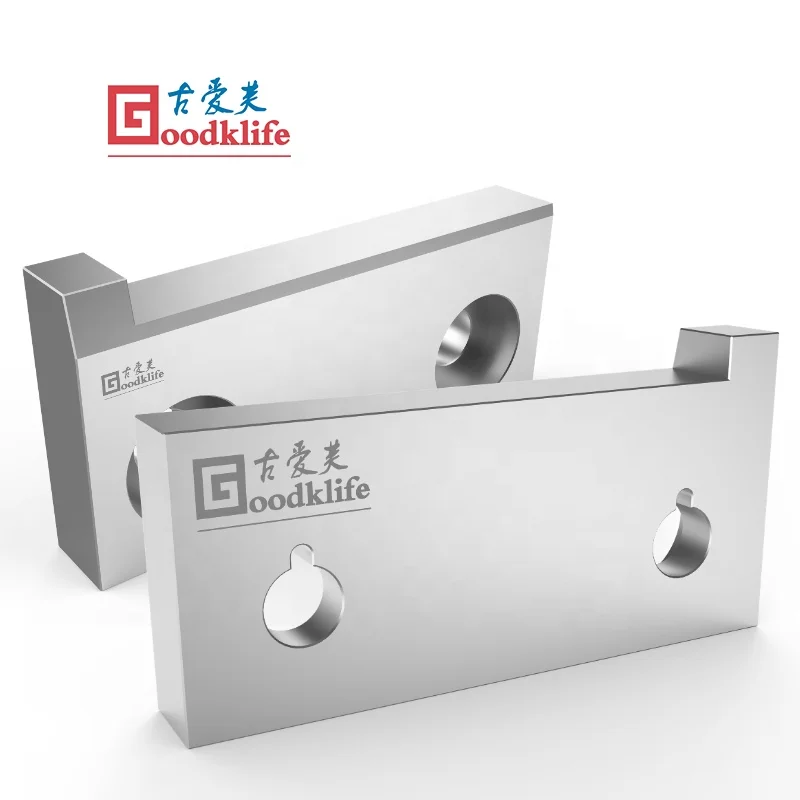
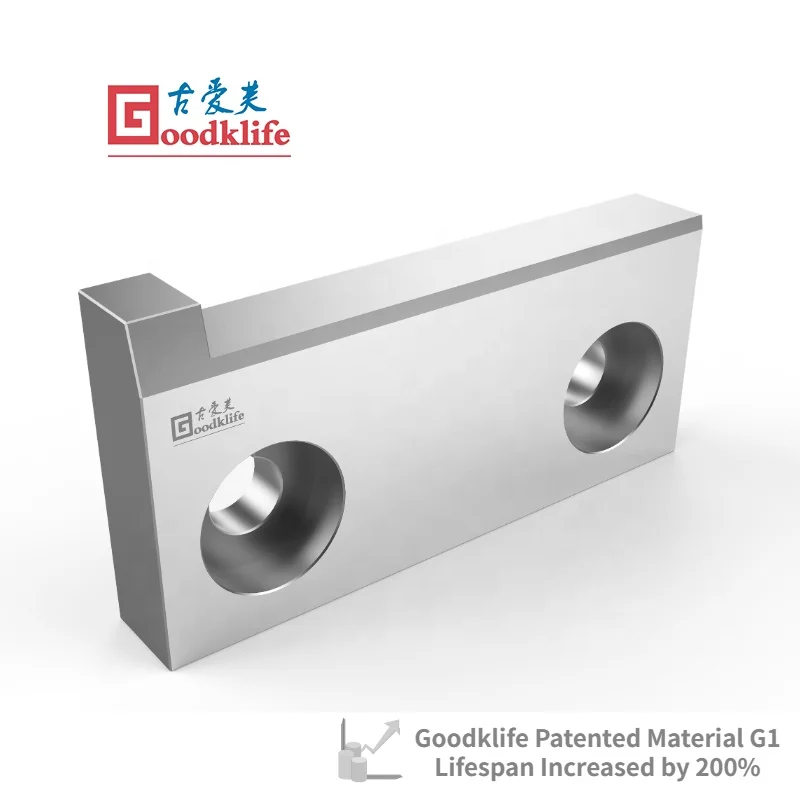
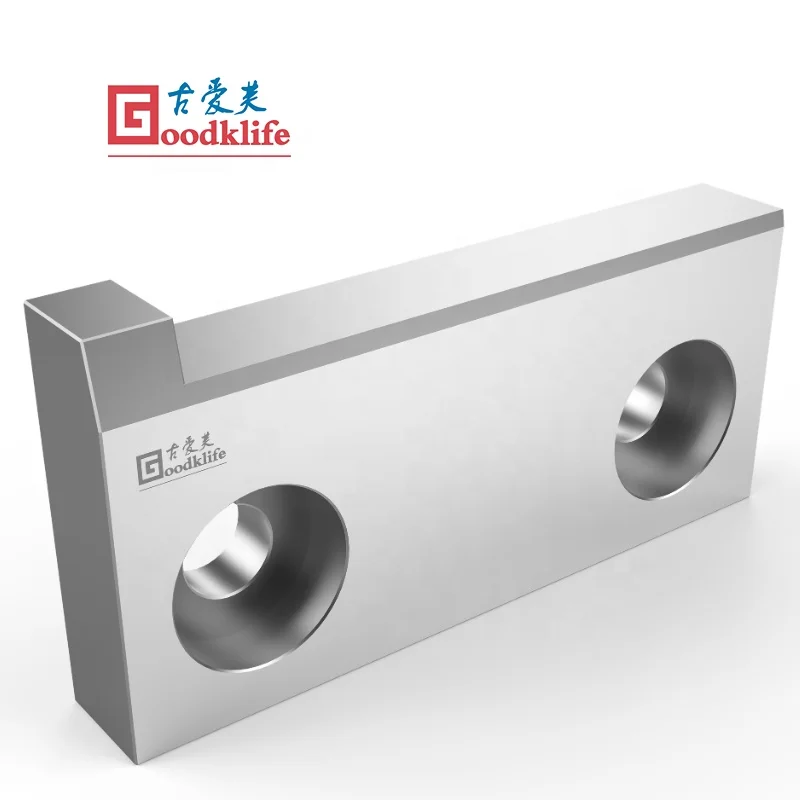
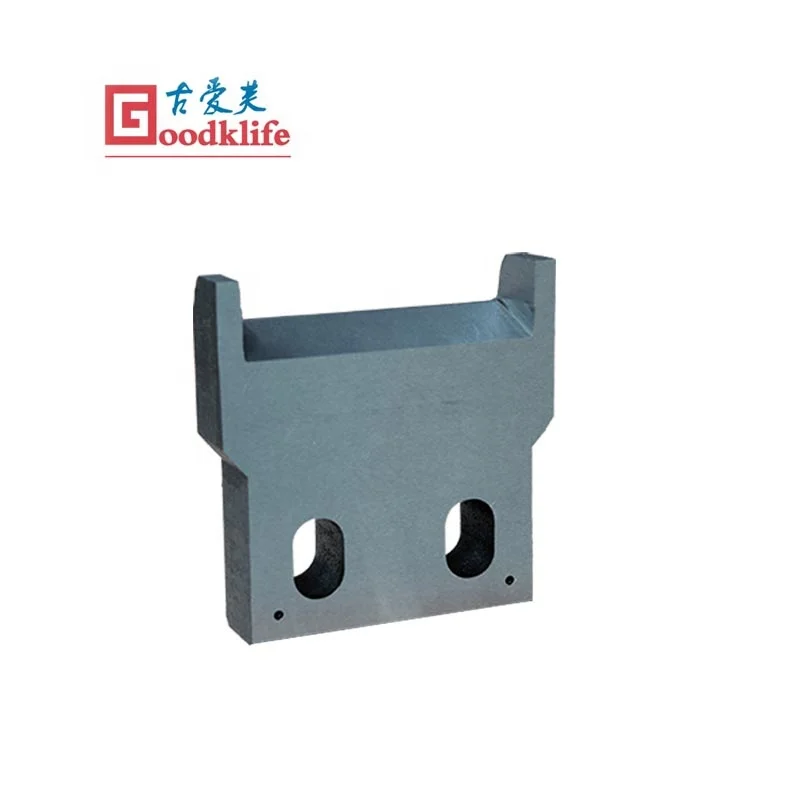
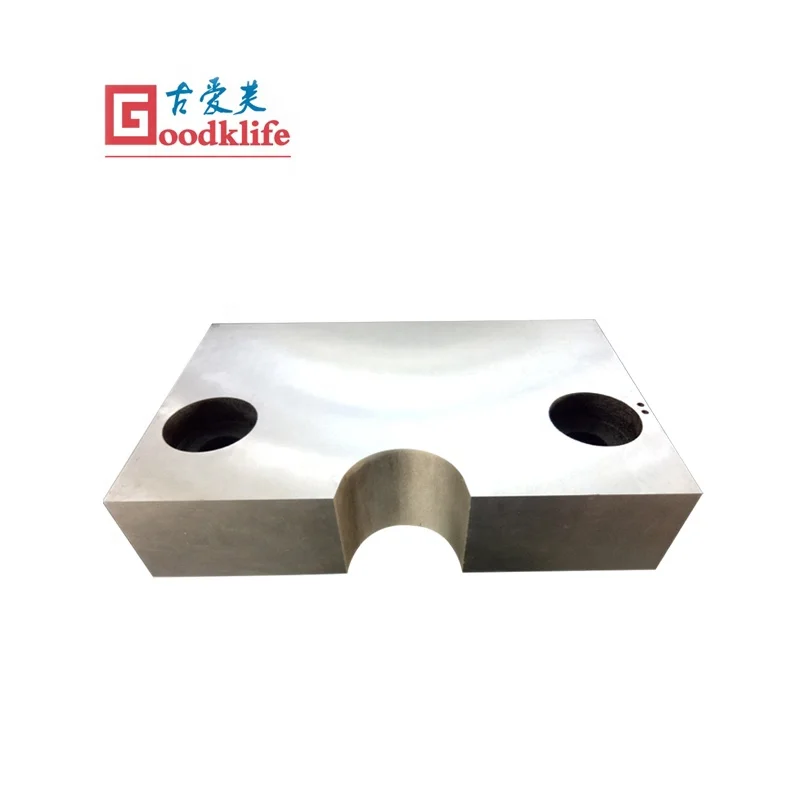
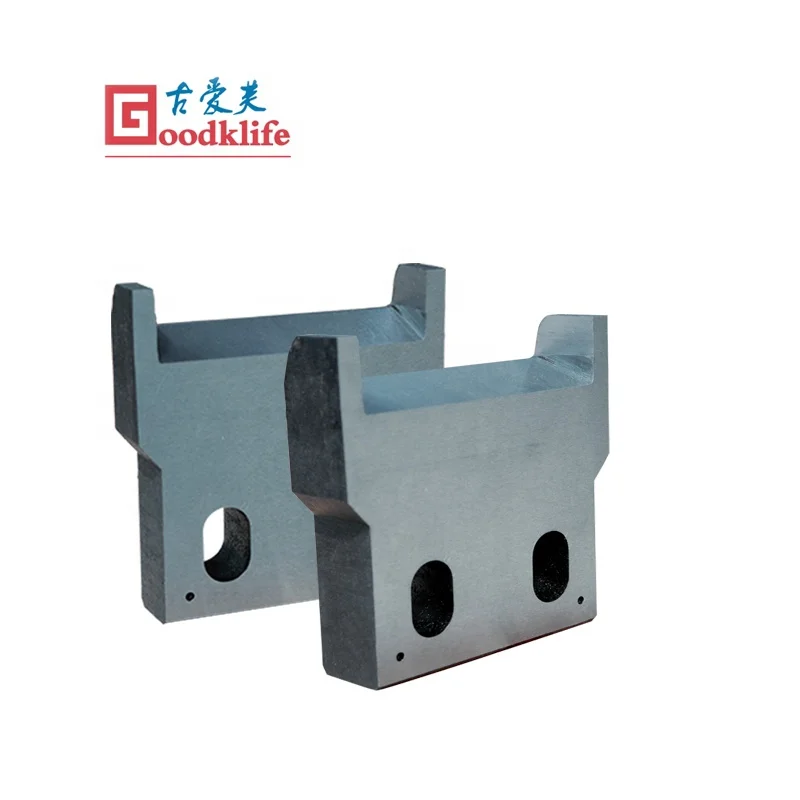
Flying Shear Blades for Cutting steel Rebar, Steel plant, Cold and hot Rolling mill
- Category: >>>
- Supplier: Goodklife Machinery Technology Co. Ltd. Maanshan
Share on (1601281178773):
Product Overview
Description
PRODUCTS DESCRIPTION

PRODUCT PARAMETER | ||
Brand | Goodklife | |
Products name | Scrap Chopper Knives For Steel Recycling & Slitting Machine Spare Parts | |
Material | Tool Alloy Steel, Goodklife Patented Material G1 - ESR | |
Cutting temperature | Hot and cold | |
Size | Customized | |
Groove | as request | |
Keyway | as request | |
Heat treatment | through-hardening | |
Surface Quality | Precision Ground | |
MATERIAL SELECTION
When selecting materials for Fly Shear Blades used in cropping shear knives, it is essential to balance toughness, ductility, wear resistance, and high-temperature stability. High-grade alloy steels such as H13 and D2 are preferred for their excellent toughness and resistance to cracking, which is crucial when shearing rebars. These materials also offer superior wear resistance, ensuring long blade life in high-demand environments. Additionally, H13 steel provides exceptional high-temperature resistance, preventing the knife edge from softening or annealing under heat, thus maintaining cutting performance and prolonging the blade's operational lifespan.
(Note: G is Goodklife's internal material code.)
TOLERANCE SELECTION
Flatness and Parallelism
Sufficiently high flatness and parallelism are necessary conditions to ensure that the shear clearance between the upper and lower slitter blades of the slitting machine is always consistent during dynamic operation. Correct clearance is at the heart of ensuring precision cutting. If the surfaces of circular knives are not flat, or the two sides of the blade are not parallel, the gap between the upper and lower blades is always changing. In addition, the reaction force generated by the extrusion of the strip during slitting also causes the gap to change continuously. This will make it impossible to get burr-free strips.
Thickness Tolerance
The thickness tolerance of the blade is mainly to ensure the cutting accuracy of the width of the metal strip and prevent the cumulative error in the knife assembly. If a blade with a thickness tolerance of 1~2 μm or even 0.5 μm cannot be provided, the cumulative error when multiple shearing knives are assembled is unavoidable.
Surface Roughness
A good surface roughness of the blade surface can improve the rigidity of the entire shearing system, increase the sharpness of the blade, reduce micro cracks on the blade and prolong the life of the blade. Different machining processes can result in different surface finishes. For high-precision non-ferrous metal processing, it is generally necessary to choose 0.05 - 0.1 μm. For slitting other thin coils, a surface roughness of 0.1 - 0.2 μm can be chosen.

QUALITY ASSURANCE
SGS AUTHORITATIVE TESTING
Goodklife has always been committed to providing high-quality, ultra-high-precision cutting tools to customers around the world. In order to enhance mutual trust, for the first cooperation, we now provide free SGS testing services to invited customers to dispel all your doubts.

MATERIAL QUALITY ASSURANCE
The quality of a knife hinges on the raw materials used in its making. Goodklife boasts an unparalleled variety of blade materials globally. We tailor our recommendations to match the specific cutting needs of our customers, ensuring blades stay sharp and free from chips. Recognizing the increasing demand for high-strength steel shearing, Goodklife has innovated the nationally patented G1 material, significantly enhancing shearing performance.
Currently, most knives available in the market are crafted from conventionally smelted raw materials. However, Goodklife strives for excellence by exclusively choosing raw materials processed through the ESR method. This method involves an additional purification step following traditional steel production, elevating the quality of the raw materials used in our knives.
ESR raw materials, in contrast to those produced by conventional methods, drastically reduce the likelihood of chipping and substantially extend the blade's lifespan.
Currently, most knives available in the market are crafted from conventionally smelted raw materials. However, Goodklife strives for excellence by exclusively choosing raw materials processed through the ESR method. This method involves an additional purification step following traditional steel production, elevating the quality of the raw materials used in our knives.
ESR raw materials, in contrast to those produced by conventional methods, drastically reduce the likelihood of chipping and substantially extend the blade's lifespan.
HEAT TREATMENT ASSURANCE
Goodklife's heat treatment workshop is fully equipped with various heating, annealing, quenching and tempering equipment, and is equipped with a number of experienced professional senior engineers. After years of experience summarization, the company's unique heat treatment process has been formed. Blades with a thickness of less than 100 mm can be fully hardened into the core, which can ensure that the performance of the blade is the same until it is ground to the minimum size. Not only the safety factor of the blade is high, but also the production efficiency can be significantly improved and the cutting cost can be reduced.

PRECISION TOLERANCE ASSURANCE
Goodklife ultra-high precision slitting knives are more like works of art. The company currently has a number of ultra fine grinding machines and lapping machines. Every employee in the finishing workshop is deeply rooted in the pursuit of high precision, and strictly abides by the operating system to ensure that every slitting tool is qualified.


GOODKLIFE BRAND STORY

COMPANY PROFILE
GOODKLIFE HISTORY
1988 As one of the first companies producing metal shear processing tools in China, we have been continuously exploring high quality products.
2006 Successfully developed a new tool high-strength steel G1, which greatly improved the service life of metalworking tools. The material was awarded the national new invention patent in 2008.
2011 We started to enter the international market, and now our products are selling well in many countries.
HIGH PRECISION TOLERANCE
1998 Started production of slitting tools with a thickness accuracy of +/-0.005 mm.
2000 Started mass production of slitting tools with a thickness accuracy of +/-0.005 mm.
2003 Started mass production of slitting tools with a thickness of +/-0.003 mm.
2016 We started mass production of slitting tools with thickness +/-0.001 mm and parallelism and flatness 0.002 mm accuracy.



We Recommend


New Arrivals
New products from manufacturers at wholesale prices