Cold Briquet of Sponge Iron for Kenya
- Category: Other Iron >>>
- Supplier: AREEJ MARKETING AND GLOBAL TRADING SPC
Share on (1700002869157):
Product Overview
Description
Product Description
In the past two decades, use of aggregate of scrap and its substitutes, Direct Reduced Iron (DRI) and Pig Iron, has been continuously increasing by the steelmaking producers due to the increased price and the reduced availability of scrap. More harmonious chemical, lower residual elements and the price of DRI have pushed the producers toward high-percentage usage of this alternate in their steelmaking processes.
Compared to the injected and free-charged carbon in the steelmaking processes, the carbon in iron bearing materials is more efficient. Therefore, high-carbon DRI improves efficiency of carbon consumption and decreases losses of carbon in these processes. Accordingly, one of the biggest objectives of iron- making industries is to increase the carbon content of DRI. Currently, the highest attainable carbon content of DRI is 4.5 wt%. This means that producing the DRI with carbon contents higher than 4.5 wt% is not achievable in the present direct reduction technologies.
Today, DRI is produced in various forms of CDRI (Cold Direct Reduced Iron), HDRI (Hot Direct Reduced Iron), and HBI (Hot Briquetted Iron). Among the DRI family products, trading and bulk shipment of CDRI is a challenge because of CDRI’s huge porosity and surface area, insufficient mechanical strength and high environmental reactivity.
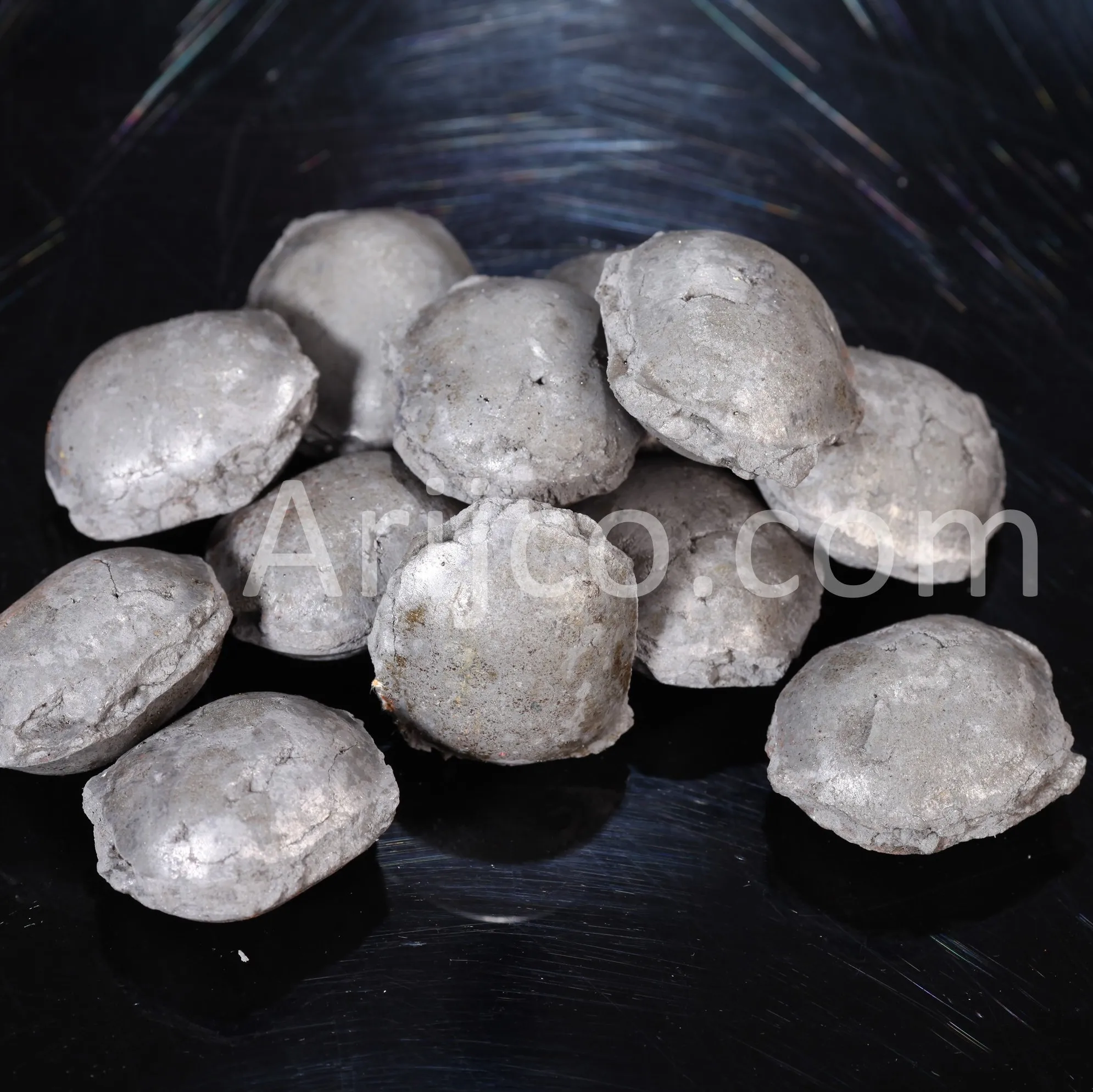
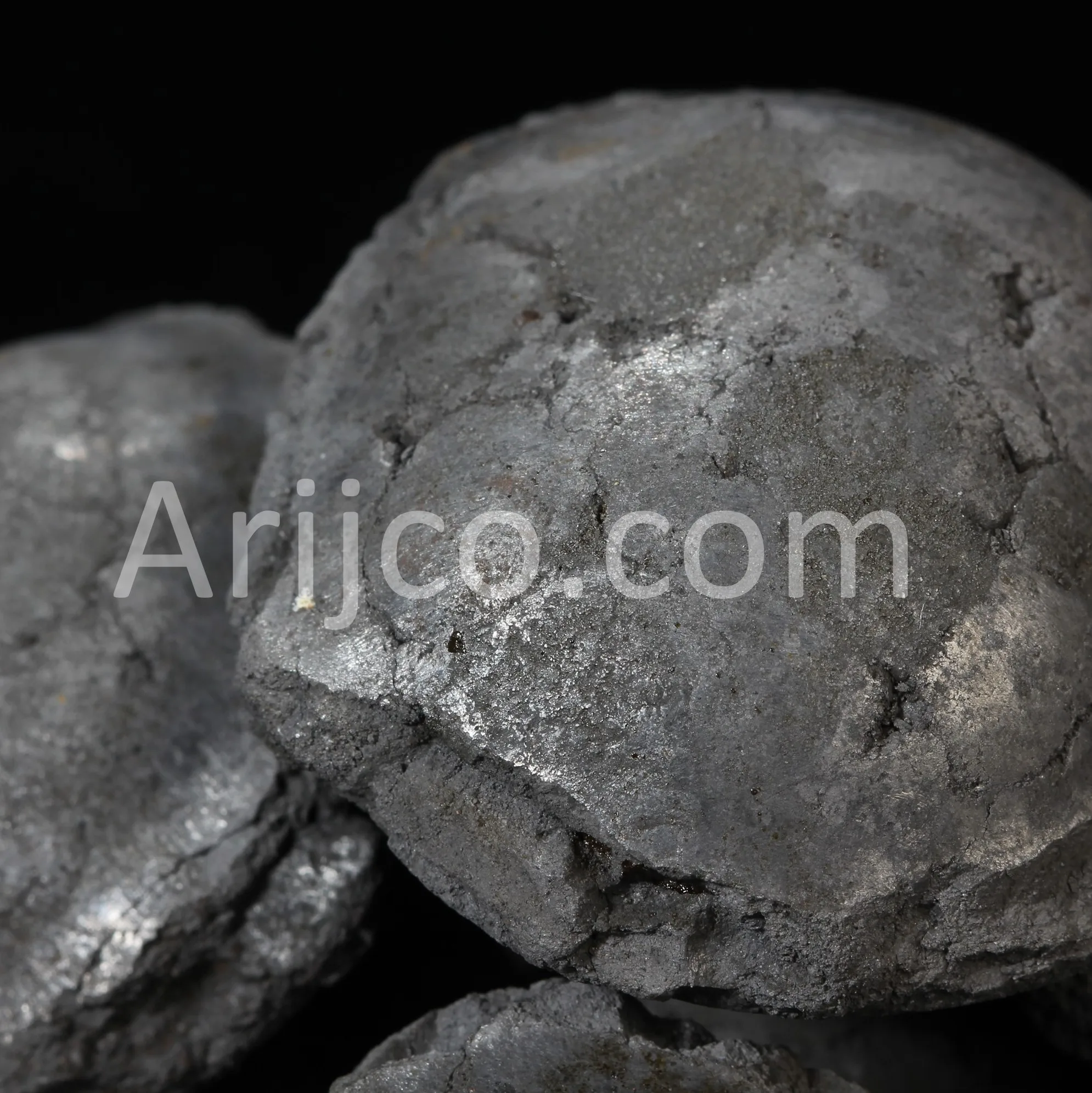
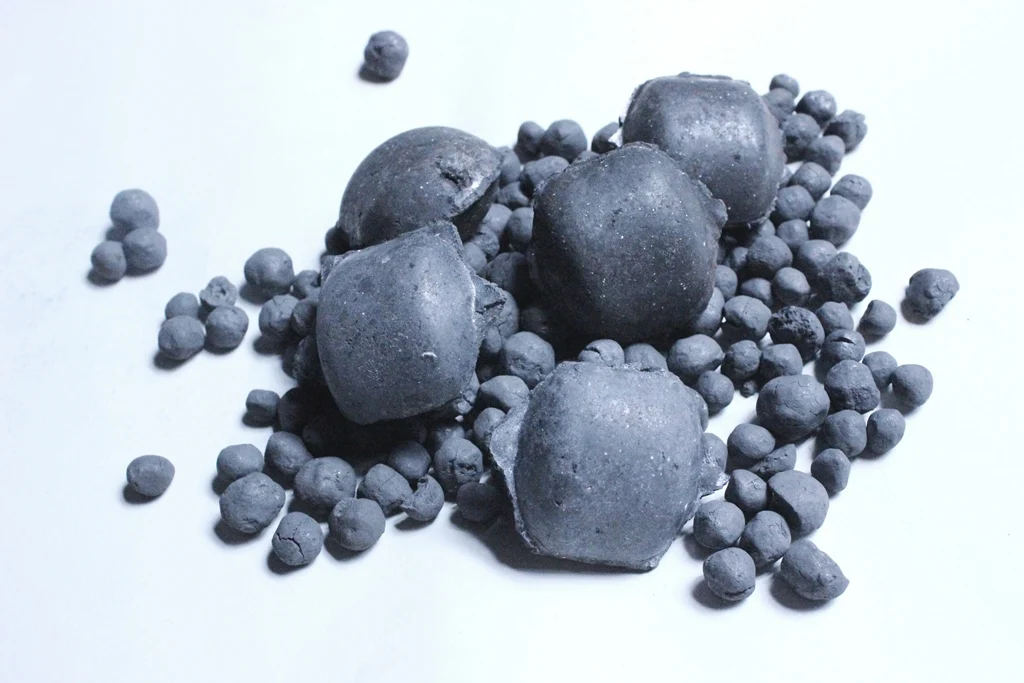
Because of the bright future of the universal requirement for DRI briquette over the next two decades, a new method was created in in 2009 in Iran to produce cold briquette of CDRI (Patent No. IR60923). Cold-Briquetted Sponge Iron (CBSI) was the name given to the new product. Afterwards, following pilot-scale and performing various laboratory studies, Cold-Briquetted Iron and Carbon (CBIC) was invented in Iran as a premium product over CBSI because of the prior’s higher carbon contents and higher efficiency through processes of steelmaking (Patent No. IR84090).
Owing to the fact that the cold-briquetting process of DRI is being done under high pressures, the density and mechanical strength of CBIC should be higher and the surface area and also porosity should be less than DRI’s. thus, the oxidation rate, dust and fine generation rate, and the moisture adsorption capacity of DRI will considerably decrease through the process of cold briquetting. These improvements would have big technical, economic and environmental effects on direct reduction and industries steel manufacturing and will push them heading for more sustainability.
Compared to the injected and free-charged carbon in the steelmaking processes, the carbon in iron bearing materials is more efficient. Therefore, high-carbon DRI improves efficiency of carbon consumption and decreases losses of carbon in these processes. Accordingly, one of the biggest objectives of iron- making industries is to increase the carbon content of DRI. Currently, the highest attainable carbon content of DRI is 4.5 wt%. This means that producing the DRI with carbon contents higher than 4.5 wt% is not achievable in the present direct reduction technologies.
Today, DRI is produced in various forms of CDRI (Cold Direct Reduced Iron), HDRI (Hot Direct Reduced Iron), and HBI (Hot Briquetted Iron). Among the DRI family products, trading and bulk shipment of CDRI is a challenge because of CDRI’s huge porosity and surface area, insufficient mechanical strength and high environmental reactivity.
Because of the bright future of the universal requirement for DRI briquette over the next two decades, a new method was created in in 2009 in Iran to produce cold briquette of CDRI (Patent No. IR60923). Cold-Briquetted Sponge Iron (CBSI) was the name given to the new product. Afterwards, following pilot-scale and performing various laboratory studies, Cold-Briquetted Iron and Carbon (CBIC) was invented in Iran as a premium product over CBSI because of the prior’s higher carbon contents and higher efficiency through processes of steelmaking (Patent No. IR84090).
Owing to the fact that the cold-briquetting process of DRI is being done under high pressures, the density and mechanical strength of CBIC should be higher and the surface area and also porosity should be less than DRI’s. thus, the oxidation rate, dust and fine generation rate, and the moisture adsorption capacity of DRI will considerably decrease through the process of cold briquetting. These improvements would have big technical, economic and environmental effects on direct reduction and industries steel manufacturing and will push them heading for more sustainability.
Specification
Chemical Analysis | |||
Element | Value | ||
Total Iron (T Fe) | 86.5±0.5 | ||
Metallic Iron (M Fe) | 79.5±0.5 | ||
Metallization | 91±0.5 | ||
Intrinsic Carbon | 1 - 2.8 (adjustable according to the customer demand) | ||
Total Carbon | 2.5 - 3 | ||
Si | 0 - 1.3 | ||
Al2O3+SiO2+MgO+CaO | 8.5 Max | ||
Phosphorous(P) | 0.04 Max | ||
Sulphur (S) | 0.03 Max | ||
Physical Analysis | ||
Element | Value | |
Size (mm) | 25 × 45 × 35 | |
Density (g/cm3) | 3.7-4.2 | |
Compressive Strength (Kg.F/Piece) | 350 Min | |
Undersize at loading port | 4% Max | |
Packing & Delivery


1 to 1.5 MT Jumbo Bag
25 KG Packages
25 KG Packages
We Recommend


New Arrivals
New products from manufacturers at wholesale prices