

Product Overview
Description
Product Description
Wooden Lucet -
The Lucet is hand sanded to an extremely fine finish assuring a smooth surface. A hand-rubbed natural beeswax finish brings out the beauty of the wood.
A lucet is a tool used in cordmaking or braiding which is believed to date back to the Viking and Medieval periods, when it was used to create cords that were used on clothing, or to hang items from the belt. Lucet cord is square, strong, and slightly springy. It closely resembles knitted I-cord or the cord produced on a knitting spool. Lucet cord is formed by a series of loop like knots, and therefore will not unravel if cut. Unlike other braiding techniques such as kumihimo, finger-loop braiding or plaiting, where the threads are of a finite length, lucetted (or knitted) braids can be created without pre-measuring threads and so it is a technique suited for very long cords.
Archaeological finds and a literary description of lucets strongly suggest that its use declined after the 12th century, but was revived in the 17th century. Its use waned again in the early 19th century.
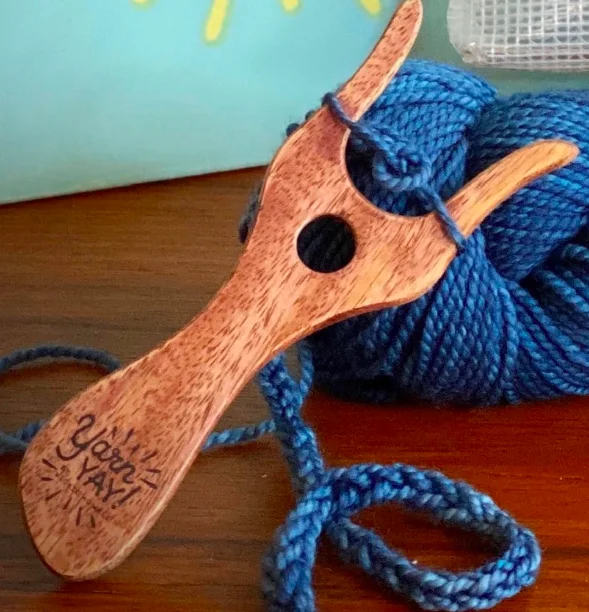
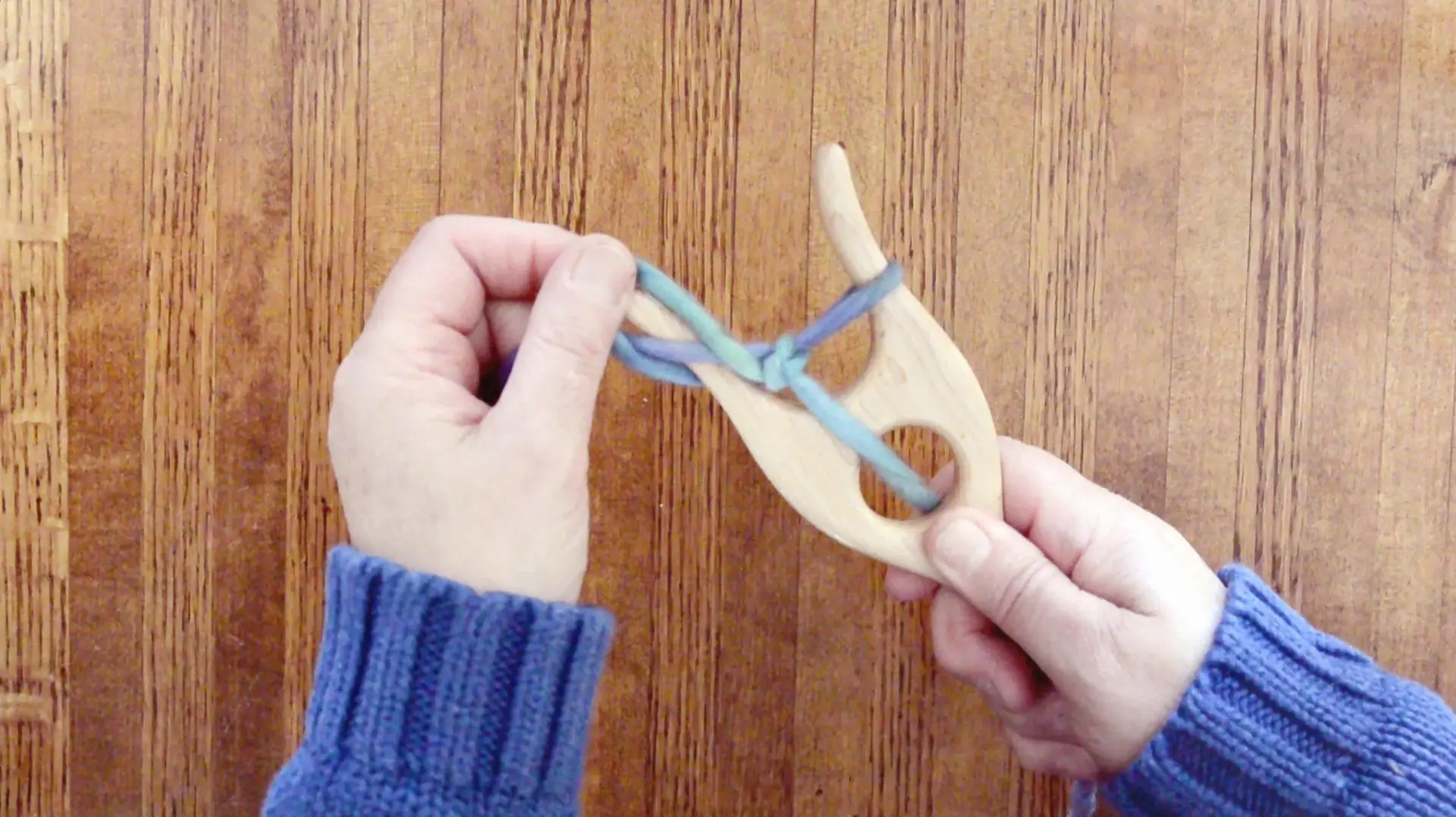
A modern lucet fork, like that pictured, is normally made of wood, with two prongs at one end and a handle on the other. It may also have a hole through which the cord can be pulled. Medieval lucets, in contrast, appear to be double-pronged, straight-sided implements, often made of bone. Some were shaped from hollowed bones, left tubular, presumably so that the cord could be drawn through the centre hole
* Smooth finish
* Beautiful and elegant packing
Archaeological finds and a literary description of lucets strongly suggest that its use declined after the 12th century, but was revived in the 17th century. Its use waned again in the early 19th century.
A modern lucet fork, like that pictured, is normally made of wood, with two prongs at one end and a handle on the other. It may also have a hole through which the cord can be pulled. Medieval lucets, in contrast, appear to be double-pronged, straight-sided implements, often made of bone. Some were shaped from hollowed bones, left tubular, presumably so that the cord could be drawn through the centre hole
The only materials necessary to lucet are a length of yarn and a lucet fork, also called a lucet or a chain fork. However, one can also use skewer-like sticks to pull the yarn over in addition to this. Lucets can be bought in shops as kits that are designed for children.
To cast on, the yarn is put through the hole in the lucet from the front, and the yarn in front of the lucet is wound around the prongs twice in a figure-of-eight. The two lower loops are then lifted over the two upper loops using either the fingers or a stick until they come over the horns, and the thread behind the lucet is pulled to tighten the knot. The process is then repeated, but this time only winding the yarn once around the prongs, as there is already a figure-of-eight on the fork. When the desired length is reached, the lucet can be cast off by carefully lifting the loops off the prongs, passing the remaining thread through them and pulling the knot tight. Any loose thread can be cut off with scissors or tied together to form a closed circle. The cord can be wrapped around the lucet handle as it grows.
Note that this is only one technique. There are many techniques used for making lucet, all of which produce slightly different cords. It is also possible to produce a two-coloured cord by using two strands of yarn.
Lucet cord can be used for decorative edging, draw-strings, lacing, and any other use where a strong cord is needed.
To cast on, the yarn is put through the hole in the lucet from the front, and the yarn in front of the lucet is wound around the prongs twice in a figure-of-eight. The two lower loops are then lifted over the two upper loops using either the fingers or a stick until they come over the horns, and the thread behind the lucet is pulled to tighten the knot. The process is then repeated, but this time only winding the yarn once around the prongs, as there is already a figure-of-eight on the fork. When the desired length is reached, the lucet can be cast off by carefully lifting the loops off the prongs, passing the remaining thread through them and pulling the knot tight. Any loose thread can be cut off with scissors or tied together to form a closed circle. The cord can be wrapped around the lucet handle as it grows.
Note that this is only one technique. There are many techniques used for making lucet, all of which produce slightly different cords. It is also possible to produce a two-coloured cord by using two strands of yarn.
Lucet cord can be used for decorative edging, draw-strings, lacing, and any other use where a strong cord is needed.
* Smooth finish
* Beautiful and elegant packing
* Comes in different sizes and various combinations
Related Products
Company Profile
We are half a decade old company with high expertise in knitting and craft industry products. All our products are manufactured by Indian artisans who have honed their skills after years of hard work and experimentation.
All our products are made from natural wood, Our wood is procured from the legal plantation of India making sure that there is no harm to the environment.
Packing & Delivery
Each piece of Lucet is packed separately in highly quality standard packing.
We take utmost care so that shipping damage is avoided. Our packing team has more than 5 years of experience in packing goods as per international standards.
Timely delivery and high quality is the motto of our company and we take utmost care in delivering your orders within the time frame discussed.
FAQ
We Recommend
New Arrivals
New products from manufacturers at wholesale prices