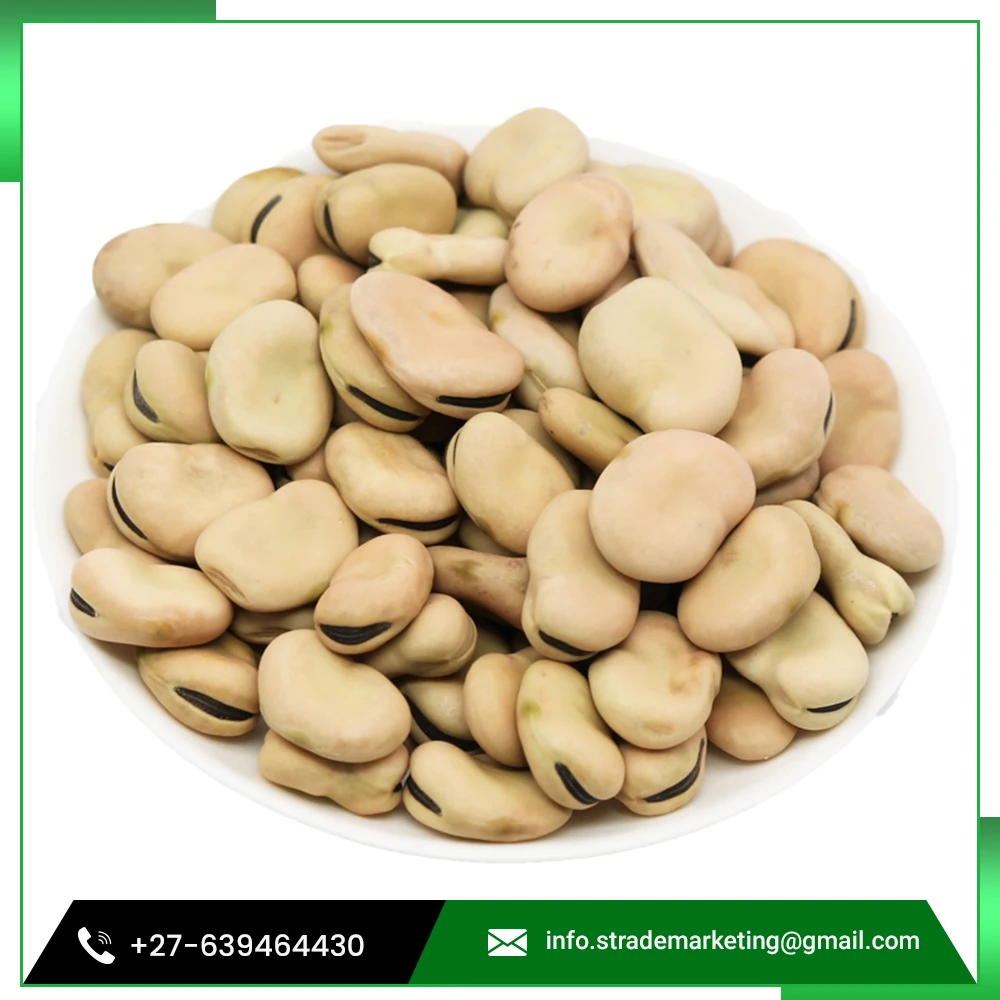
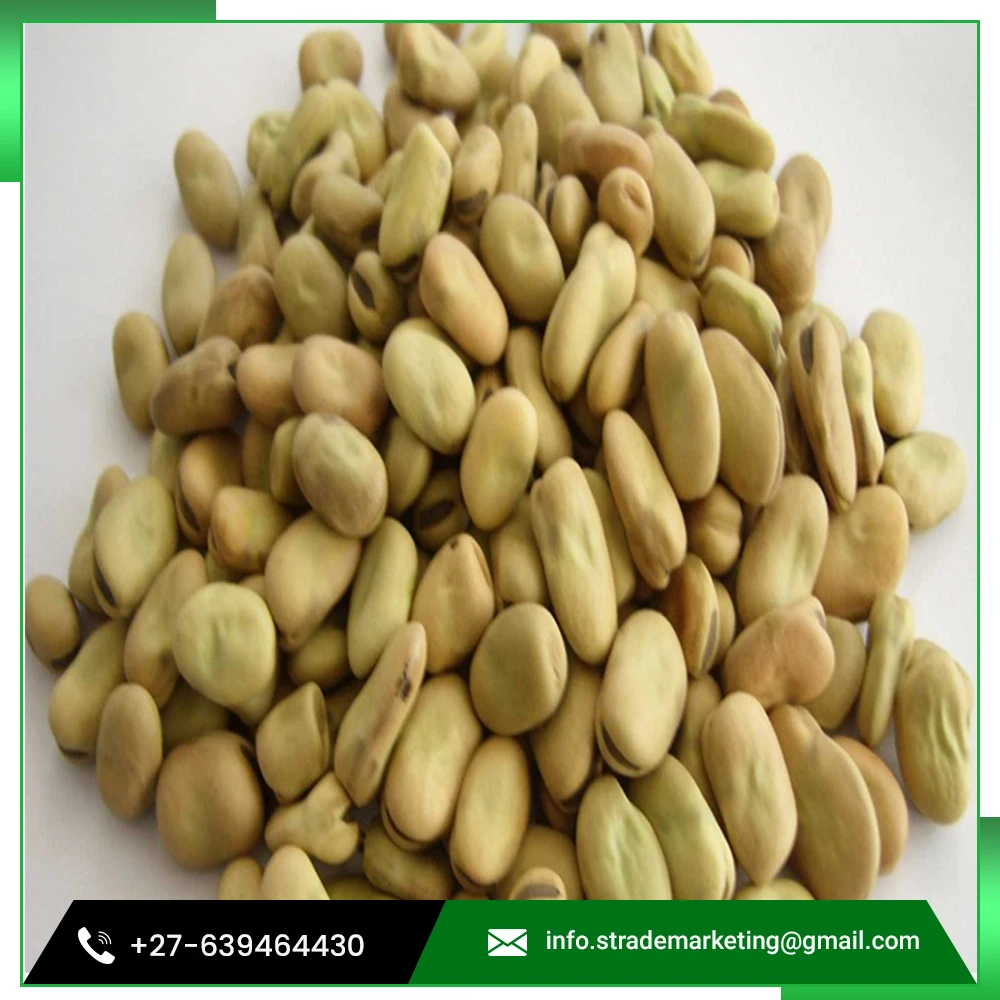
Also known as horse bean, Windsor bean, English bean, tick bean, fava bean, field bean, and pigeon bean, Broad Bean is a species of Beans that belong to the large family of vicia Faba, Fabaceae . The categorization has been largely done on the basis of different varieties as well as their respective uses in various countries. It seems that Broad beans got their name from the seeds which are large and flat.
Now these subspecies like faba var. minor is the beck, tick, or pigeon bean, greatly used for human consumption in the Arabic world, along with their use for animal forage as well. Horse Bean(var. equina)for that matter has been accordingly named as it is widely used as animal feed especially horses. Broad Bean(var. major.) is popularly also known as Windsor or the
Broad Bean, is specifically an annual herb plant that grows up to 1m at a fats rate. With high withstanding power to frosty conditions this plant is considered to have been a native of Mediterranean regions. A capable leguminous plant, broad Bean bears hermaphrodite flowers which can explain its self-fertilization quality. Bees enhance their growth to a greater extent as it helps in pollinating the flowers. Its fruit is a long, thick and angled, many-seeded pod, the seeds are flattened and angled or nearly rounded, varying in color from brown to green, purplish, or black.
A photo-sensitive plant, Broad Beans can survive in sandy, loamy and clay soils, preferably it requires well drained soil and therefore highly flourishes in heavy clay soil. Its growth is greatly facilitated by acidic, neutral, and basiscity of the soils. Although for proper growth it requires moist soils however its tolerance to drought conditions is commendable. Strong winds are tolerable to this tender plant but maritime moisture is completely no-no. Its advantage of being frost-tolerant so that in Europe it is possible to successfully sow seed in autumn yielding plants that are harvested in early summer
Climate Conditions :
Broadbean requires a cold season for best growth. Therefore it is grown as a winter annual in warm temperate and subtropical areas. the only restraint is that it should not be planted in areas where temperature fluctuates a lot. It is very well-adapted to wet portions of cereal-growing areas of western Canada. Moderate moisture supply is necessary for this bean to flourish well.
History of the Broad beans species is yet to be completely traced. The wild species which retained the domesticated version is still to be unveiled. one of the common possibility could be that the wild species is no more now defining its complete extinction. Scientists are having tough.
Domestication of the Broad Beans is a mystery that is yet to be veiled. However certain clues seem to point towards the Mediterranean regions as the place where it all began. But precise evidences are still awaited. Probability is that the domestication might have begun in the neolithic ages as the archaeological evidences point out. The origin of broad beans is obscure, but the best information indicates the Mediterranean area. Though remains are reported to have been found in Egyptian tombs but confusion still remains.
Native to the Near East, Broad Bean is now widely introduced and cultivated in temperate North America, including Manitoba and Saskatchewan, South America, especially the Andes, and elsewhere (e.g. Burma, China, Sudan, and Uganda).
Benefits of Broad Beans :
The protein content of Broad bean seeds is very high, it constitutes to about 20-25%.
It is a proper aid to be used for diuretic, expectorant, and tonic.
The beans can be eaten after being cooked accordingly or the small pods can be eaten whole. Their flavor is mild and pleasant with a floury texture.
Cultivated as a green or dried vegetable. It can be used as a fresh vegetable or can be canned for future storage as well.
Used as a stock feed and livestock feed as well. Its feeding value is comparatively larger than other legumes.
Broad Beans are the principal protein source for poor people in some Asian and Mediterranean countries such as Egypt
Broadbean has been also been considered as a potential meat extender or substitute and as a skim-milk substitute
In some places it is also grown for green manure as it is a fertility enhancer crop
It is one of the most important winter crops for human consumption in the middle East
Roast seed are eaten like peanuts in India
Broad bean seeds are very nutritious and are frequently used as items of food
Cultivation of Broad Beans :
Being a long, cool season crop,Broad bean requires 4-5 months from planting to harvest. It is best to plant this crop from September through March. It is grown as a summer annual in northern climates and as a winter annual in warmer climates. In the tropics it is adapted only at higher altitudes. Flowering is adversely affected by dry, hot weather.