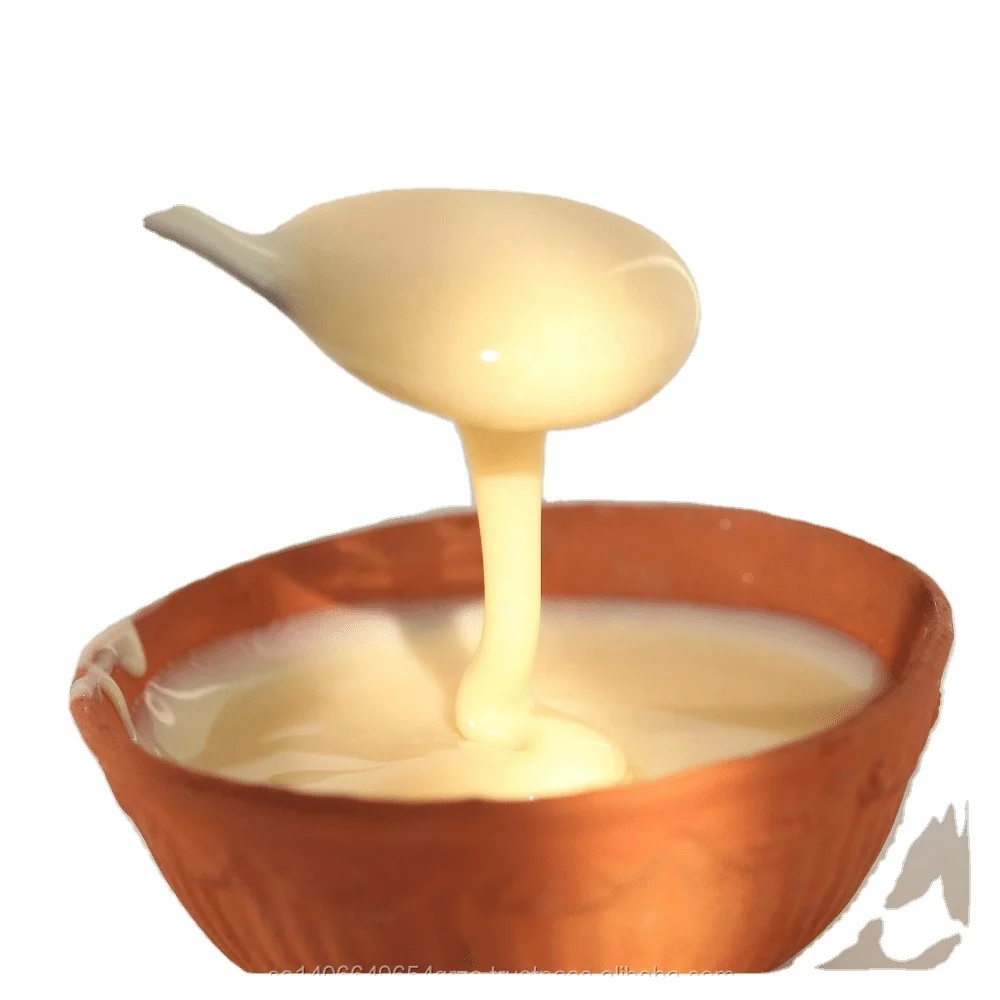
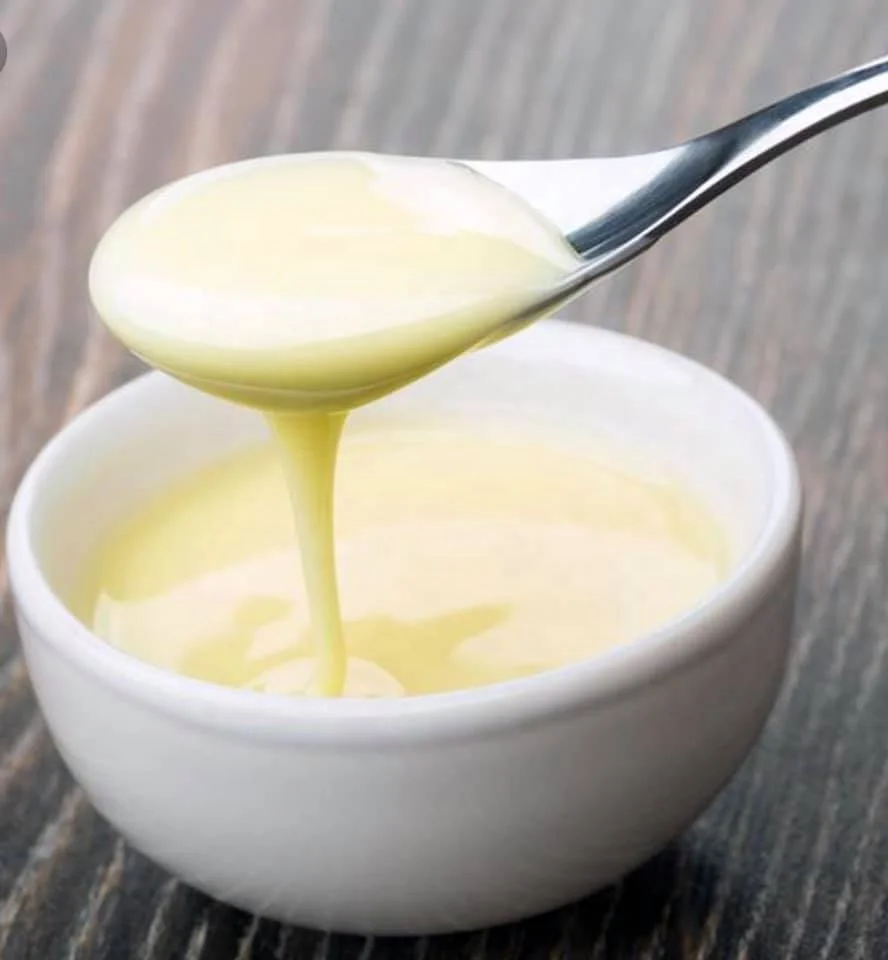
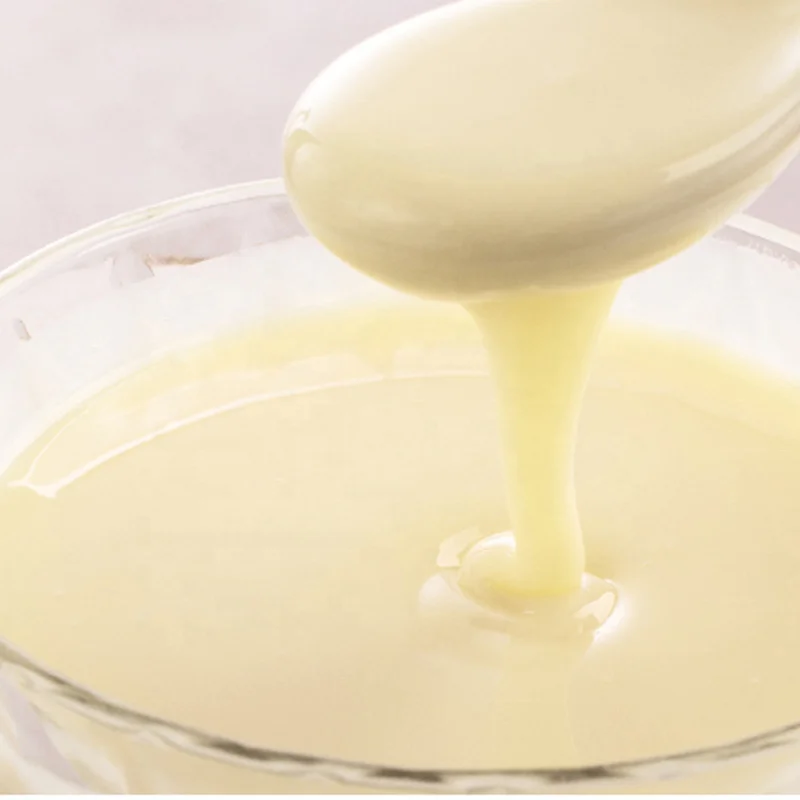
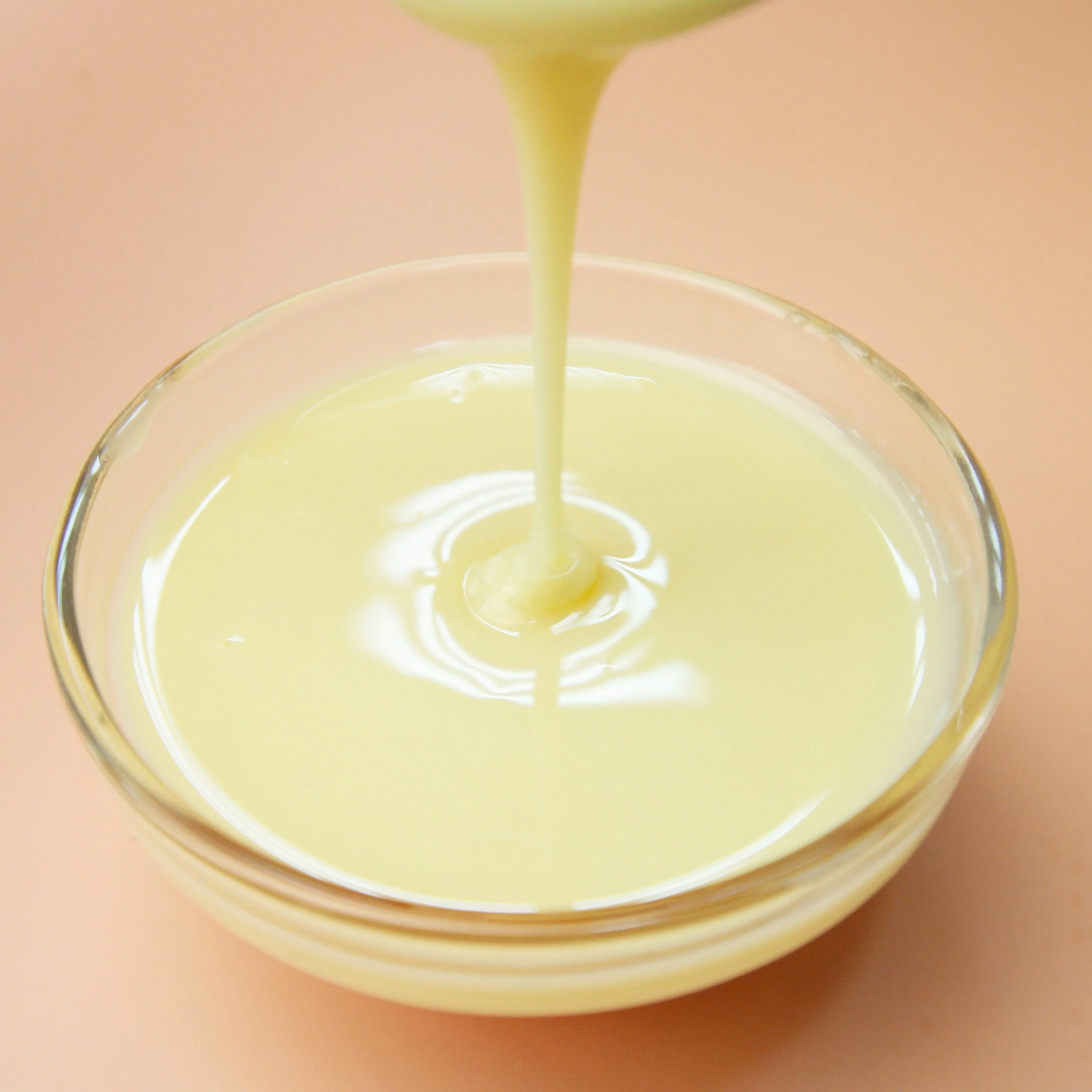
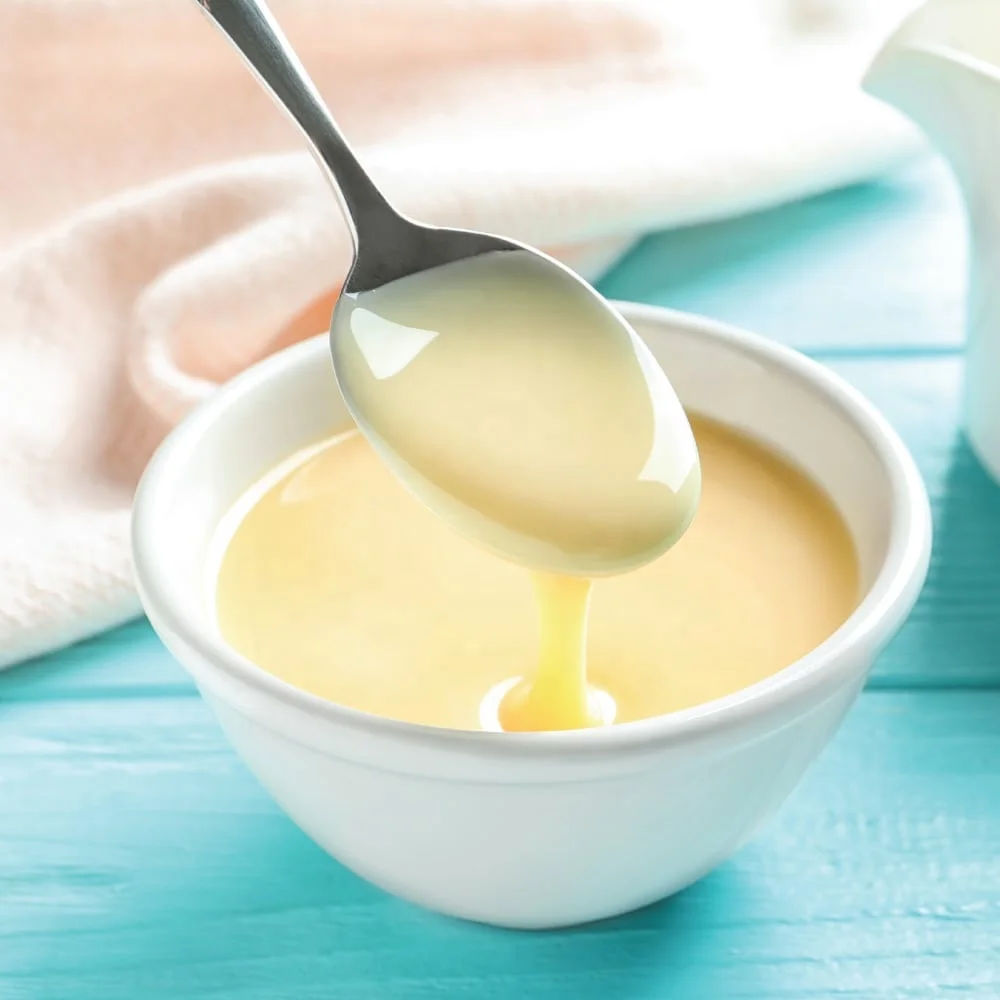
Premium Quality Condensed Milk Sweetened skimmed condensed milk Sweetened condensed milk
- Category: Condensed Milk >>>
- Supplier: FACTORY PACKED LIMITED
Share on (1700007101623):
Product Overview
Description
Condensed milk
A wide range of condensed milk for industrial use or mass consumption
Condensed milk, an ideal long-conservation product
Milk stability may be guaranteed by reducing water activity, it may be achieved by partially eliminating water (around 60% of included water) in order to obtain a dry matter of 20% to 30%.
Condensed milk may be whole, semi-skimmed or skimmed, sweetened or unseweetened and even flavoured. A reference on its packaging indicates a “best before” date and not a use-by date because of its long conservation period. After manufacturing, the optimal time to use condensed milk (best before date) is 12 to 18 months.
Condensed milk discovery in the 19th century was a small industrial revolution because of its conservation and its packing. Condensed milk is nowadays broadly used in the food industry.
Product information
Manufacturing process of condensed milk
Milk is usually condensed by vacuum evaporation. With vacuum, evaporation temperature may be lowered in order to limit heat denaturation of components. Wire-on-tube and plate evaporators may be used for evaporation. Depending on the addition of saccharose, sweetened condensed milk or unsweetened condensed milk will be obtained.
- Unsweetened condensed milk: to guarantee permanent stability, the product must be sterilised after homogenisation.
- Sweetened condensed milk: Saccharose addition guarantees conservation of the product without sterilisation by limiting microorganism development. A crystallisation may happen and as a result gives the product a sandy texture. To prevent that defect, crystallisation must be initiated either by a prompt cooling to 30-32°C (to create many small crystals) or by addition of anhydrous lactose or previously manufactured condensed.
Condensed milk composition
Condensed milk composition varies according to its fat content: skimmed, semi-skimmed or full-fat. (Codex Stan 281-1971).
Condensed milk must have the following minimal content :
- Dairy fat: 7.5% m/m
- Milk dry matter: 25% m/m
- Milk proteins in fat-free dry mattter: 34% m/m
Skimmed condensed milk:
- Maximal dairy fat content: 1% m/m
- Minimal milk dry matter: 20% m/m
- Minimal milk protein content in fat-free dry matter: 34% m/m
Semi-skimmed condensed milk:
- Dairy fat: between 1% m/m and 7.5% m/m
- Minimal milk dry matter: 20% m/m
- Minimal milk protein content in fat-free dry matter: 34% m/m
Full-fat condensed milk must have the following minimal content:
- Dairy fat: 15% m/m
- Milk dry matter: 11.5% m/m
- Milk protein content in fat-free dry matter: 34% m/m
Sweetened condensed milk
Milk is first pasteurised at high temperature and sweetened before being condensed and then cooled and packed. Sterilisation is unnecessary, thanks to saccharose addition that guarantees product conservation. Sugar quantity is defined by the good manufacturing practices (GMP).
Product composition varies depending whether it is sweentened, sweetened and skimmed, sweetened and semi-skimmed or sweetened and full-fat (Codex Stan 281-1971).
Sweetened condensed milk must have the following minimal content:
- Dairy fat: 8% m/m
- Milk dry matter: 28% m/m
- Minimal milk protein content in fat-free dry matter: 34% m/m
Sweetened skimmed condensed milk:
- Maximal dairy fat content: 1% m/m
- Minimal milk dry matter: 24% m/m
- Minimal milk protein content in fat-free dry matter: 34% m/m
Sweetened semi-skimmed milk :
- Dairy fat: between 1% m/m and 8% m/m
- Minimal fat-free dry matter: 20% m/m
- Minimal milk dry matter: 24% m/m
- Minimal milk protein content in fat-free dry matter: 34% m/m
Sweetened full-fat condensed milk must have the following minimal content:
- Dairy fat: 16% m/m
- Fat-free dry matter: 14% m/m
- Milk protein content in fat-free dry matter: 34% m/m
Functional properties of condensed milk are very useful for food preparations
- Hydrophilic agent: condensed milk gives food preparations a better texture and helps improving conservation.
- Browning: condensed milk influences colour by lactose and protein reaction with other reducing sugars during cooking or boiling.
- Emulsion: condensed milk helps creating and stabilising fat emulsion, giving as a result texture and taste to the finished product.
- Thickening/gellant: condensed milk influences viscosity thanks to hydrophilic properties, allowing thickening and gelation.
- Flavour: condensed milk helps improving taste of the products.
Diversified offer of condensed milk in various packagings
FIT offers sweetened condensed milk and unsweetened condensed milk for mass consumption or for industrial use.
- Condensed milk
- Skimmed condensed milk
- Semi-skimmed condensed milk
- Sweetened condensed milk
- Sweetened skimmed condensed milk
These products may be offered in diverse packagings for:
- Industry: bag-in-box, bucket, pallecon or container
- Mass consumption: boxes, packs or tubes (only for export)
Product | Full Cream (8% fat) Sweetened Condensed Milk | |||||
Ingredients | Fresh pasteurised cow’s milk, saccharose (45%) | |||||
Product composition | Milk fat | 8.0% | ||||
Non fat milk solids | 20.0% | |||||
Saccharose | 45.0% | |||||
Water | 27.0% | |||||
Appearance | Bright creamy-white smooth viscous liquid | |||||
Flavour | Characteristic clean, sweet flavour typical of full cream sweetened condensed milk. | |||||
Odour | Clean natural odour free from any off flavours | |||||
Typical Chemical Properties | Total solids | 73.0% | ||||
Viscosity | 2,500 cp | |||||
pH | 6.2 | |||||
Microbiological Standards | Total Viable Count | <2000/g | ||||
Yeasts and Moulds | Negative in 1g | |||||
Coliforms | Negative in 1g | |||||
Listeria monocytogenes | Negative in 25g | |||||
Salmonella spp. | Negative in 25g | |||||
Nutritional Information 100g typically provides:- | Energy (kcal/ kJ): | 327/1379 | ||||
Protein: | 8.2g | |||||
Carbohydrate: | 55.5g | |||||
of which total sugars are | 55.5g | |||||
Added sugars | 45.0g | |||||
Fat: | 8.0g | |||||
Sodium | 0.12g | |||||
Pack Sizes | 12.5kg bag in box (packed 72 boxes per pallet) |
|
|
| ||
Pack Type | Each box is marked with a label giving the name of the product, the identification of the goods, the net weight and the production date | |||||
Product Life | 9 months from date of manufacture | |||||
Storage | The product should be stored in clean, dry conditions, away from any heat source including direct sunlight at an ambient temperature of between 18- 22° C | |||||
|
| |||||


We Recommend

condensed milk powder
US $27.67-$29.67

Condensed milk /Evaporated condensed milk for sale
US $7.00-$8.00


Sweetened Condensed Milk Creamer
US $27.00-$28.00

New Arrivals
New products from manufacturers at wholesale prices