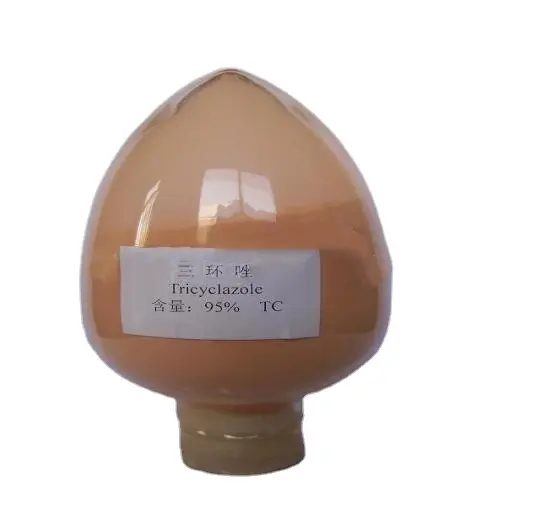
Fungicide Tricyclazole 95%Tc 75%WP Used to Treat Rice Blast
US $1.00-$100.00
Share on (1738996088):
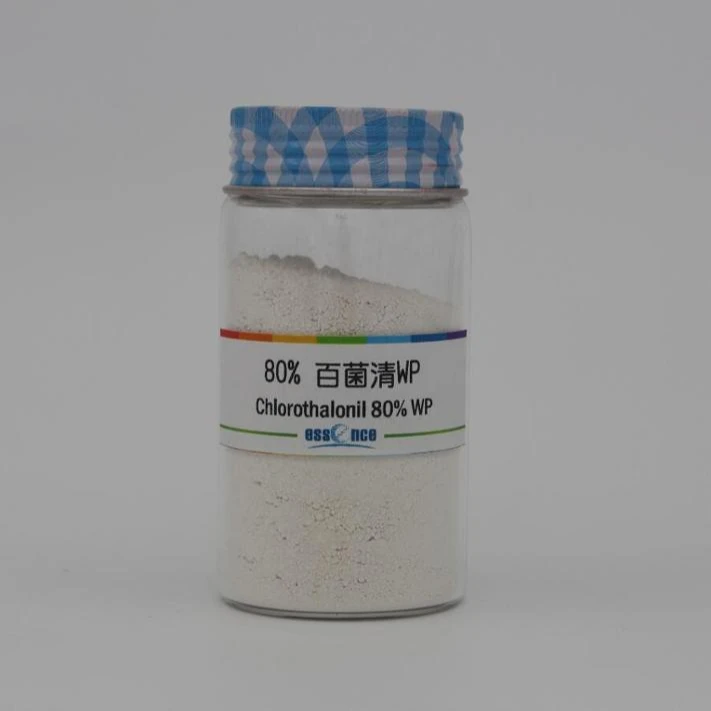
| Pesticide Product | Chlorothalonil |
| Uses | Non-systemic foliar fungicide with protective action |
| Formulation Details | 80%WP |
| packaging and label | Customized 1g to 25Kg |
Chlorothalonil Biochemistry
Conjugation with, and depletion of, thiols (particularly glutathione) from germinating fungal cells, leading to disruption of glycolysis and energy production, fungistasis and fungicidal action.
Chlorothalonil Mode of action
Non-systemic foliar fungicide with protective action.
Chlorothalonil Applications
of many fungal diseases in a wide range of crops, including pome fruit, stone fruit, almonds, citrus fruit, bush and cane fruit, cranberries, strawberries, pawpaws, bananas, mangoes, coconut palms, oil palms, rubber, pepper, vines, hops, vegetables, cucurbits, tobacco, coffee, tea, rice, soya beans, peanuts, potatoes, sugar beet, cotton, maize, ornamentals, mushrooms, and turf. Application rates for food crops are 1–2.5 kg/ha. Also used for protection from mildew of dry paint films and other coatings, protection of wood from mould, sapstain and decay.
Chlorothalonil Phytotoxicity
Russetting is possible with flowering ornamentals, apples, and grapes. Some varieties of flowering ornamentals may be injured. Pittosporum foliage is sensitive. Phytotoxicity may be increased with oils or oil-containing substances.
Chlorothalonil Compatibility
Not compatible with oils.
Chlorothalonil Formulations
Chlorothalonil 72% SC
Chlorothalonil 75% WP
Chlorothalonil 80% WP




New products from manufacturers at wholesale prices