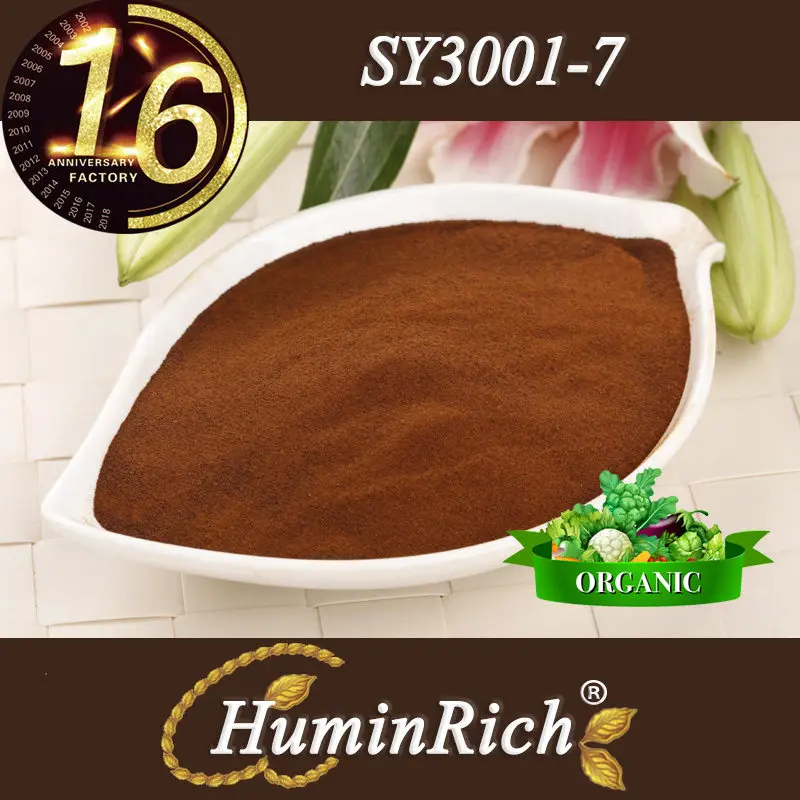
«HuminRich» активное молодежное удобрение леонордита фульвовой кислоты 45% 50% 60% 70% 80% 95% чистый порошок фульвовой кислоты
- Category: Organic Fertilizer >>>
- Supplier: Shenyang Humate Technology Co. Ltd.
Share on (1761090840):
Product Overview
Description
| |||
Benefits of Fulvic Acid | |||
What Is The Humic/Fulvic Acid ? Humic/Fulvic acid and other humic substances, collectively referred to as humates, are the final stage of organic matter as it degrades to its smallest possible size. They are extremely complex molecules, formed naturally over time by soil microorganisms as they recycle the nutrients and organic matter present in decaying plant material. In healthy, pristine soils, humates are constantly formed by the life and death cycles of plant roots, microorganisms, and fungi in the soil. Modern agricultural practices have disrupted this cycle – in order to maintain good soil health, it is now necessary to add this critical component back into the soil, so that we can reap the benefits of working with instead of against nature.
| |||
Huminrich Fulvic acid Specifications | |||
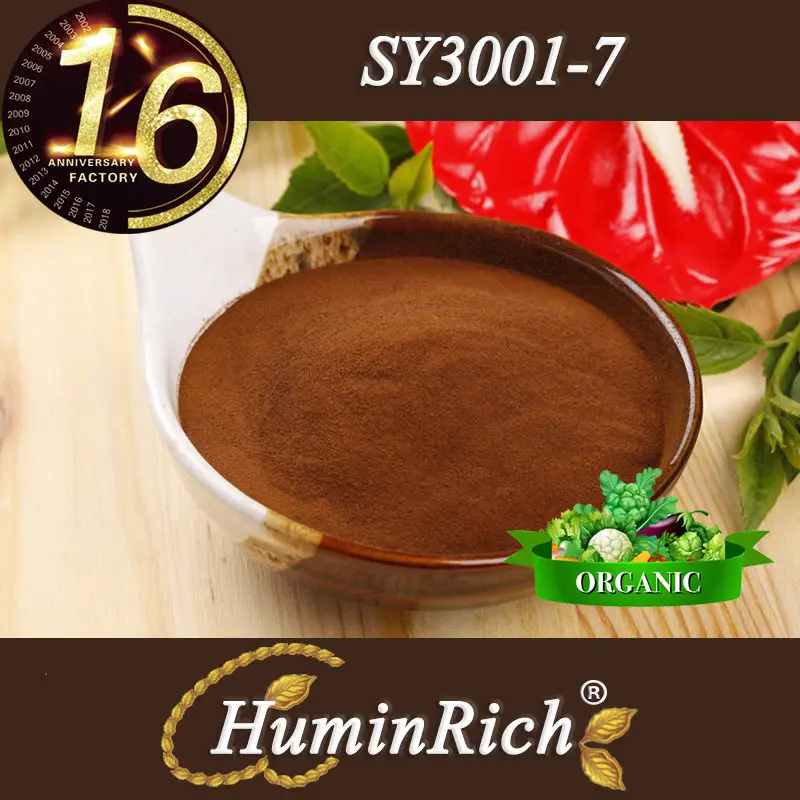
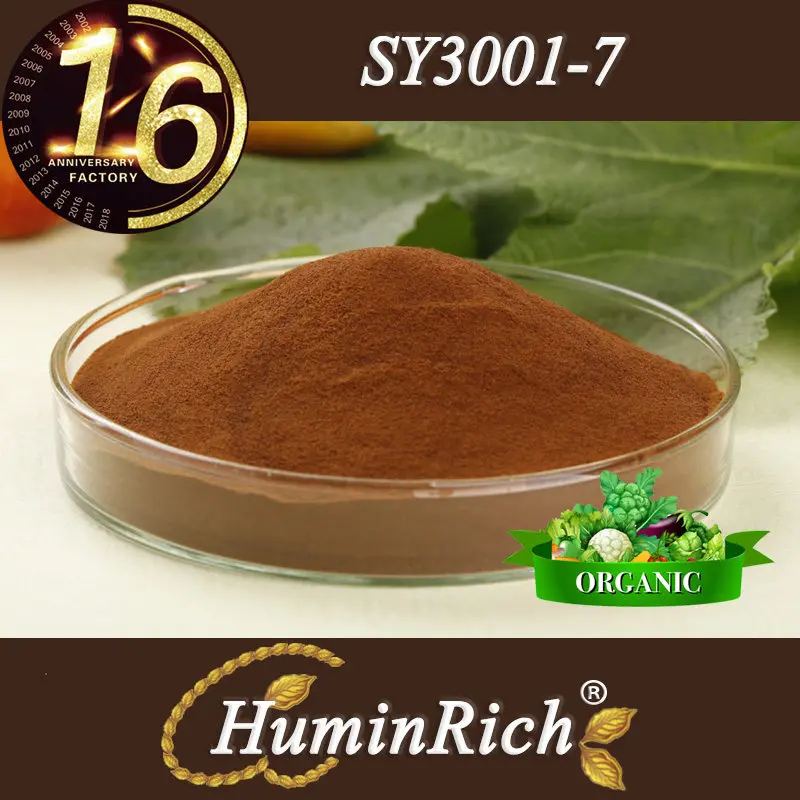
Brand | HUMINRICH | HUMINRICH | HUMINRICH |
Type | SY3001-7 | SY3001-10 | SY3001-11 |
Name | Fulvic Acid Powder | Fulvic Acid Powder | Fulvic Acid Powder |
Appearance | Brown Yellow powder | Brown Yellow powder | Brown Yellow powder |
Source | Leonardite and Plants | Leonardite and Plants | Leonardite and Plants |
Fulvic acid (dry base) | 50%min | 75% min | 80% min |
Moisture | 15% max | 15% max | 15% max |
PH | 5.0-6.5 | 5.0-6.5 | 5.0-6.5 |
Trace Elements | Ca, Mg, S, Cu, Fe, Zn, Mn, Mo | Ca, Mg, S, Cu, Fe, Zn, Mn, Mo | Ca, Mg, S, Cu, Fe, Zn, Mn, Mo |
Water-solubility | 99.7% | 99.7% | 99.7% |
| |||
  | |||
 | |||
Huminrich (Shenyang Humate Technology Co.,Ltd) is a high-tech enterprise, engaged in R&D, manufacturing and offering organic fertilizer, especially on Humic Acid, Fulvic Acid, Potassium Humate, Potassium Fulvate, Sodium Humate, Amino Acid, Seaweed Extract and Feed Additives.Our high contents, good water solubility products and considerable service won good reputation among our customers.We are always ready at your service on the way of Organic Agriculture.
Here attach some video of our factory, Welcome To Visit Our Factory! https://youtu.be/WRnVIm6Zuoc https://youtu.be/AuZrw58nC8U
| |||
HUMINRICH Product List
| |||
Application of fulvic acid 1, Benefits the health, quality, and yield of a wide array of crops, fruit/nut trees, and turf. 2, Can be applied directly to the soil or as a foliar spray, by itself or mixed with fertilizers/chemicals. 3, Works great in both soil and hydroponic growing conditions.
4, Can be applied to compost to decrease odors and accelerate aerobic decomposition.
| |||
Benefits of fulvic acid Greater fertilizer and chemical efficiency Humic acid prevents soil conditions that lead to runoff and volatilization – the molecules work to quickly increase organic matter and bind nutrients to soil particles until they are needed by plants. The humic and fulvic acid molecules stabilize the chemical fertilizers in the soil, decreasing the typical 50-80% loss that occurs in most situations. This is an obvious plus for your pocketbook and the environment.
Humic acid’s chemical efficiency boost doesn’t just apply to fertilizers, however. Due to its effect of increasing the permeability of plant cells, it can be mixed with similarly reduced rates of herbicides, pesticides, fungicides, etc for better results by using less. There is also the beneficial component that humic acid acts to bind with and break down chemical residues in the soil, decreasing their long term negative impact.
| |||
Unlocks bound nutrients in the soil for plant uptake
While chemical fertilizers are often too unstable to stick around long enough for plants to use, minerals in the soil, both inherent and imported through fertilizers and water, often become bound and immobilized in the soil. This is a common fate of phosphorous and other critical nutrients, which “scale” in the soil in the same way they build up in water pipes, damaging the structure of the soil. Humic acid dissolves this mineral scale, which both softens the soil for plant roots and breaks the minerals back down to a plant available size.
| |||
Increased organic matter, Healthier, stronger plants are naturally more resistant to pests and disease Organic matter serves many diverse functions within healthy soil: Improves soil structure; Buffers salts, minerals, and toxins from plant roots; Regulates soil PH
Increases Cation Exchange capacity Cation exchange capacity is crucial for nutrient mobility and biological function in the soil.
Stimulates beneficial biological activity
Humic and fulvic acid contains oxygen in its molecular structure, and provides this oxygen to beneficial soil biology, even if the soil itself is very low in oxygen.
| |||
We Recommend



New Arrivals
New products from manufacturers at wholesale prices