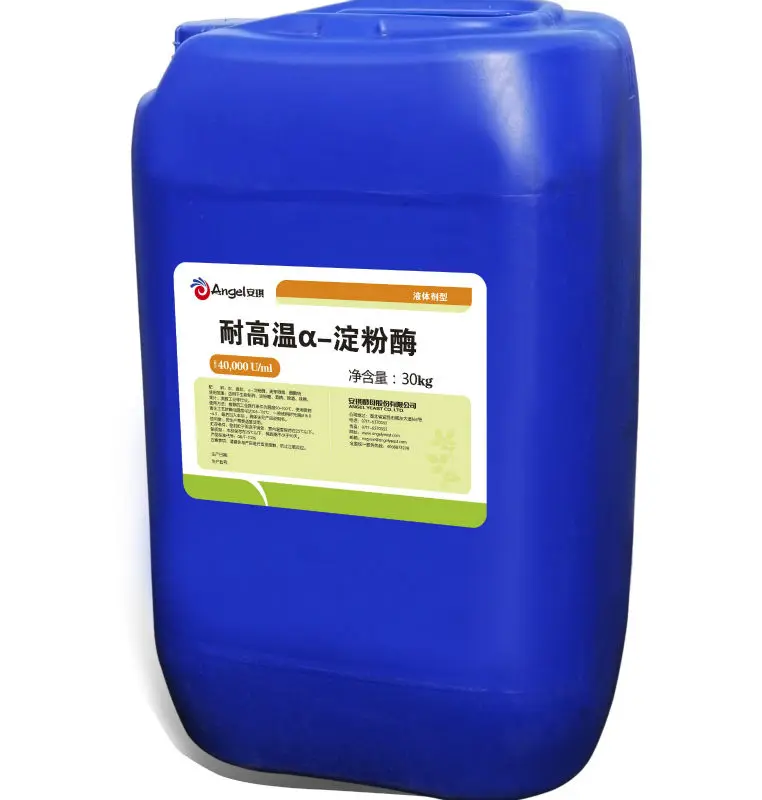
Angel Thermo Stable alpha Amylase Liquefaction enzyme
- Category: >>>
- Supplier: Angel Yeast Co. Ltd.
Share on (1822888887):
Product Overview
Description
This product can be used in the fermentation processes of ethanol,brewing, citric acid, antibiotics, etc. The high-temperature endurance feature of Thermo-Stable α–Amylase enables it to rapidly liquefy starch under high temperatures, allowing for faster filtration or processing.
Theory: Thermo-Stable α–Amylase is an endoenzyme that is able to hydrolyze the α-1,4 glycosidic bonds in starch, soluble dextrin, and low-polysaccharides under high temperatures. This enzyme is also able to quickly reduce viscosity of starch slurries to facilitate further handling and processing.
pH and its effects on the Thermo-Stable α–Amylase
The Stable pH range for Thermo-Stable α–Amylase is 4.8-10.0, effective pH 5.0-8.0, with an optimum pH of 5.0-6.0.
Temperature and its effects on Thermo-Stable α–Amylase
Performance of Thermo-Stable α–Amylase is very persistent when steam jet liquefying starch. Its high-heat withstanding properties make an ideal working temperature of 95°C. (For steam jet applications, temperature may increase to 100-105°C)
Ca++ Concentration
If underground or natural spring water is being used, there is no need to input additional Ca++ Ions. If distilled water is used, maintain Ca++ at a 50-70mg/kg level.
Specific Properties
Visual Description Brown Liquid
Odor Typical-fermentation odor
Working pH Range Ideal pH 5.0-6.5
Working Temperature Range Ideal Temp 95°C-97°C
Density (g/mL) 1.15-1.25
Product Test Standard GB 8275-2009
Heavy Metals
Lead Less than 5 mg/kg
Arsenic Less than 3 mg/kg
Microbiological Specification
Aerobic count ≤ 50000 cfu/g
Coliforms ≤ 3000 MPN/ 100g
Salmonella Not Detected
Lapactic Escherichia coli Not Detected
We Recommend

New Arrivals
New products from manufacturers at wholesale prices