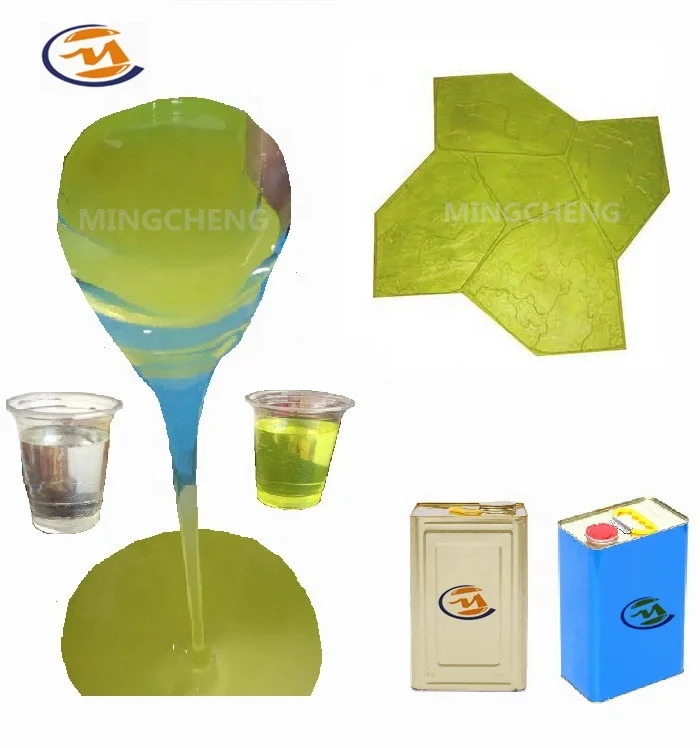
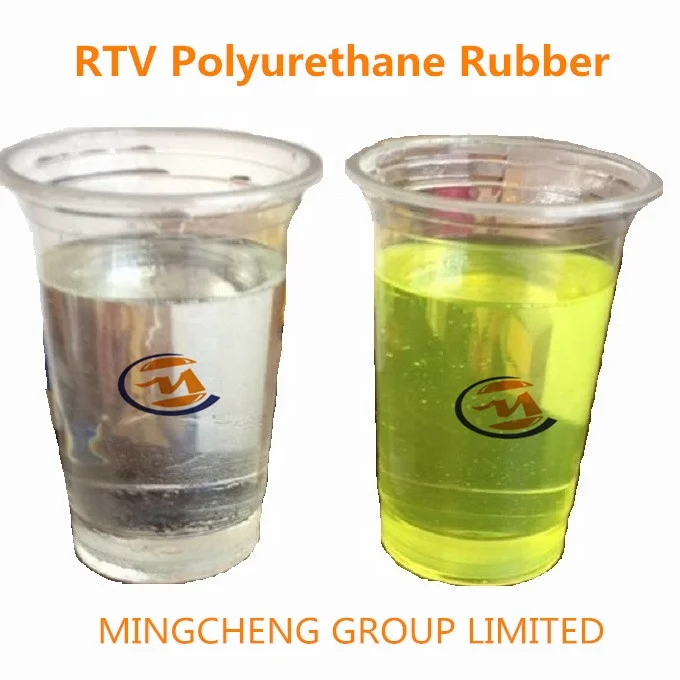
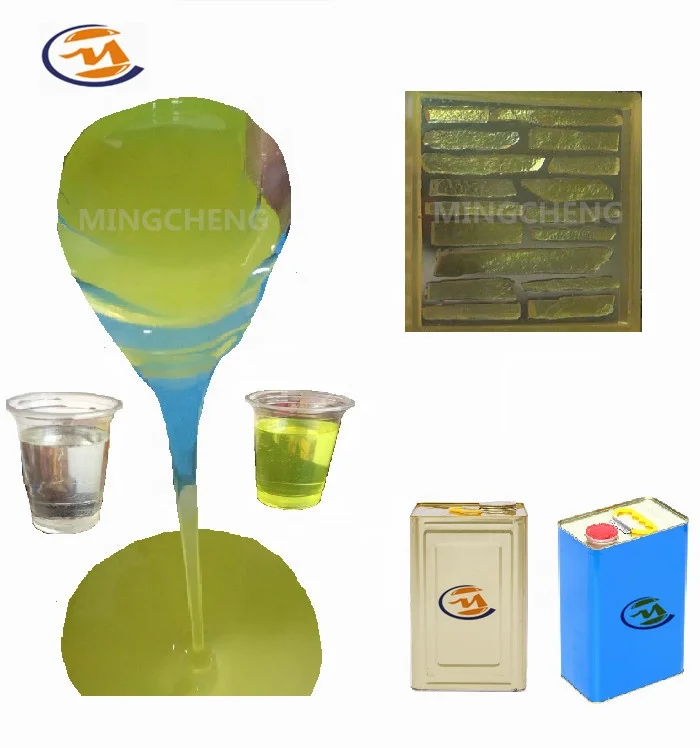
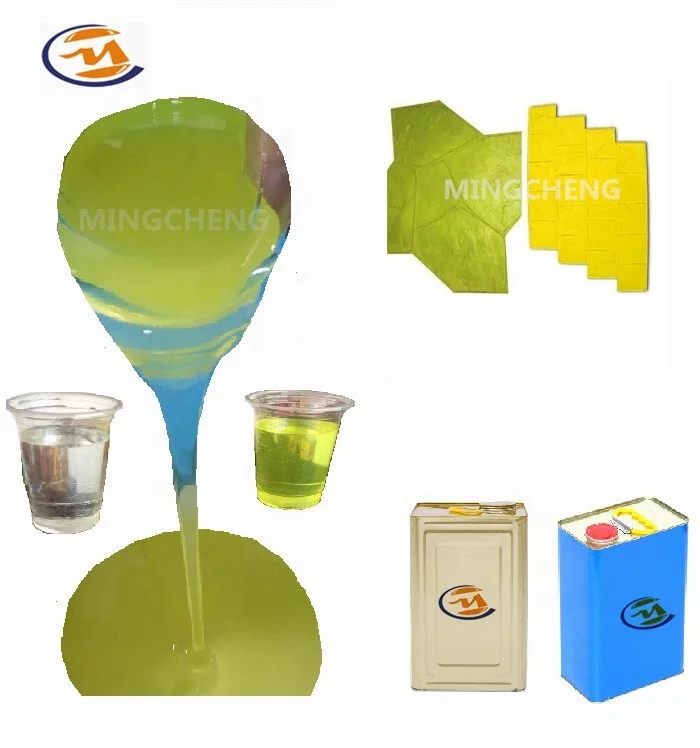
1:1 Mix Ratio RTV Urethane Mold Rubber Concrete Stamping Liquid Polyurethane Rubber
- Category: Polyurethane Rubber >>>
- Supplier: Dongguan Mingcheng Electronic Technology Co. Ltd.
Share on (1952409372):
Product Overview
Description
1:1 Mix Ratio RTV Urethane Mold Rubber Concrete Stamping Liquid Polyurethane Rubber
Composition:It consists of A&B component, B is curing agent, and A is polyurethane prepolymer.
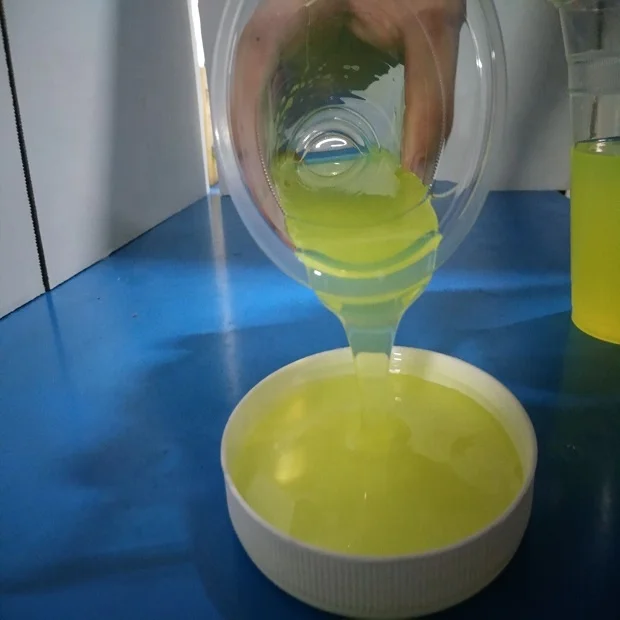
Characteristics:It has excellent processing properties, solid in common temperature, shorter gel time, and regulating colour by adding pigment. The ware has good properties of abrasive resistance, hydrolysis resistance, transparent, good resilience, stable dimension.

Technical data of liquid RTV polyurethane
A | Type | MC-PU70A |
Appearance | Colorless or light yellow transparent liquid | |
Viscosit(y 30℃)mPa·s/ | 2500±300 | |
B | Type | MC-PU70B |
Appearance | Light yellow liquid | |
Viscosity(30℃)/mPa·s | 560±200 | |
Ratio A:B(mass ratio) | 1:1 | |
Operation temperature/℃ | 25-40 | |
Gel time(30℃)*/min | 20-30(variable) | |
Appearance | Light yellow | |
Hardness (shore A) | 70±3 | |
Tensile strength/MPa | 8-11 | |
Elongation at break/ % | 250-350 | |
Tear strength/(kN/m) | 26-30 | |
Rebound/ % | 30-35 | |
Specific gravity(25℃)(g/ cm3) | 1.18 | |
Advantages
Urethane mold rubber with high hardness,low viscosity,high strength,many versatile formulas
Applications of polyurethane mold rubber
Concrete stamps,plaster,GRC,GRP moulding,large size concrete,some resin products mold.
Not accptable for low metal products
Using Instructions
NOTE: To ensure thorough coverage, lightly brush the release agent with a soft brush over all surfaces of the model. Follow with a light mist coating and let the release agent dry for 30 minutes. Because no two applications are quite the same, a small test application to determine suitability for your project is recommended if performance of this material is in question.
Measuring & Mixing...
Liquid urethanes are moisture sensitive and will absorb atmospheric moisture. Mixing tools and containers should be clean and made of metal or plastic. Materials should be stored and used in a warm environment (73°F/23°C).
IMPORTANT: Stir Part B thoroughly before dispensing. After dispensing equal amounts of Parts A and B into mixing container, mix thoroughly for at least 3 minutes making sure that you scrape the sides and bottom of the mixing container several times.
If Mixing Large Quantities (16 lbs./7 kgs. or more) at one time, use a mechanical mixer (i.e. Squirrel Mixer or equal) for 3 minutes followed by careful hand mixing for one minute as directed above. Then, pour entire quantity into a new, clean mixing container and do it all over again.
Although this product is formulated to minimize air bubbles in your the cured rubber, vacuum degassing prior to pouring rubber will further reduce entrapped air.
Pouring, Curing & Performance..
For best results, pour your mixture in a single spot at the lowest point of the containment field. Let the rubber seek its level up and over the model. A uniform flow will help minimize entrapped air. The liquid rubber should level off at least 1/2” (1.3 cm) over the highest point of the model surface.
Curing - Allow rubber to cure a minimum of 16-24 hours at room temperature (73°F/23°C) before demolding.
Post Curing - Optional . . . Following an overnight cure, heating the rubber to 150°F (65°C) for 4 to 8 hours will increase physical properties and performance.
Using The Mold - If using as a mold material, a release agent should be applied to the mold before each casting.
Performance & Storage - Fully cured rubber is tough, durable and will perform if properly used and stored. The physical life of the rubber depends on how you use it.
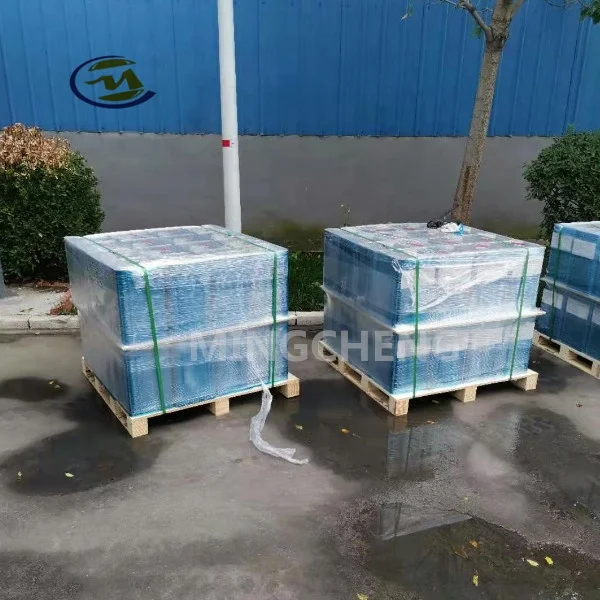
Package:20Kg/drum or 200Kg/drum.


Shelf life:For best results, store products in unopened containers at room temperature (60-90°F/15-32°C). Use products within six months.
If you have any question about polyurethane and mold making instructions, please feel free to contact Julie.

We Recommend


New Arrivals
New products from manufacturers at wholesale prices