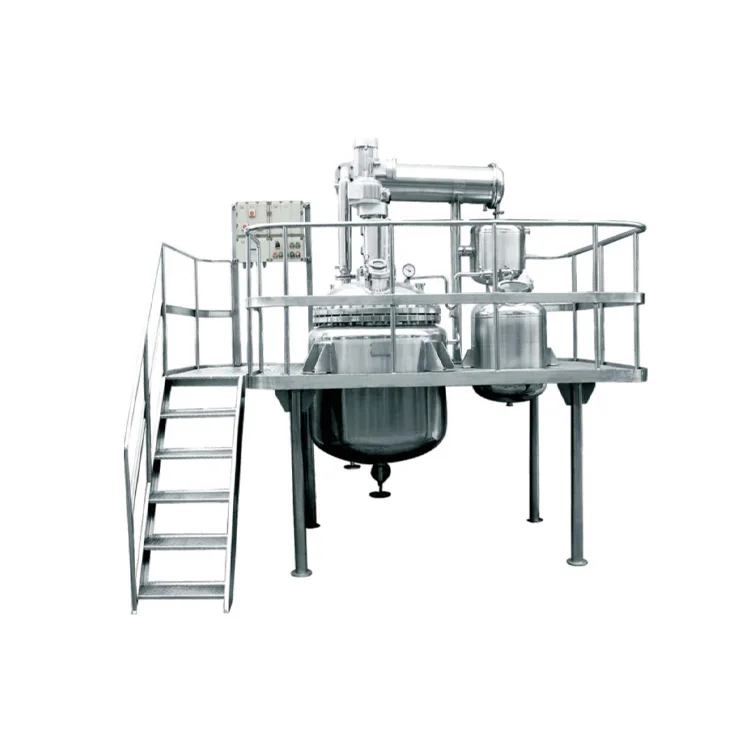
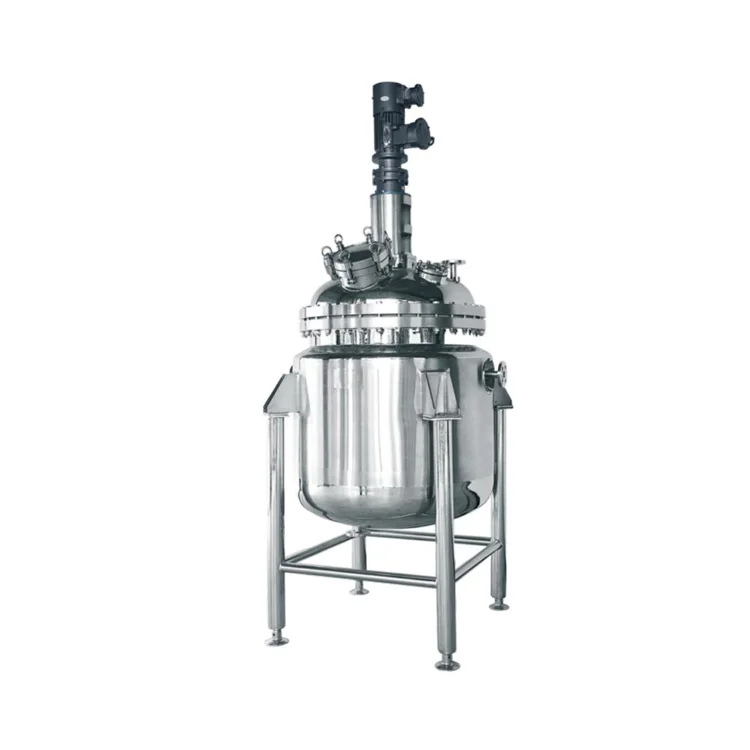
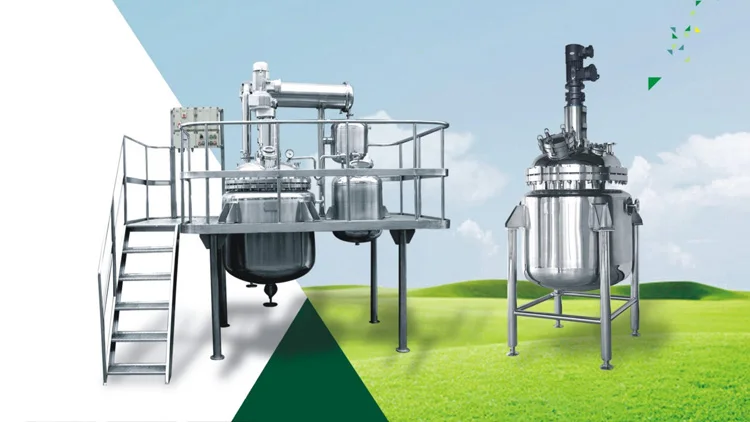
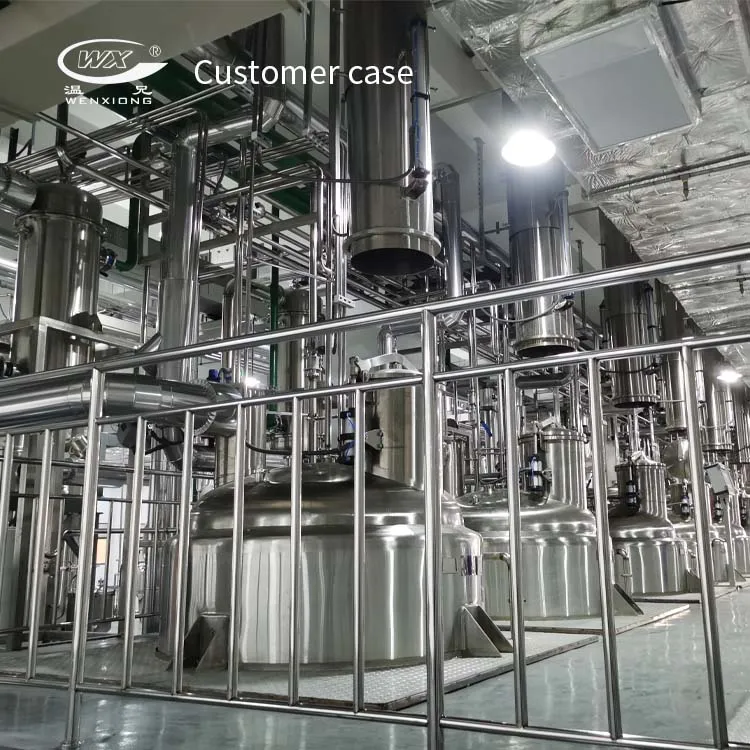
stainless steel reactor (limpet coil reactor ,jacketed reactor )
- Category: >>>
- Supplier: Wenxiong Holding Group Co. Ltd.
Share on (206034501):
Product Overview
Description
Product Description


Stainless Steel Mixing Reactor
Features:
1. According to different process, the reactor can be vacuum, hermetic seal, heating, or cooling.
It can configured with many kind of heating and cooling method, like electric heating, steam heating, hot oil heating, hot water heating, etc. for cooling can be cold water cooling,...
2. It can configured with various mixing method, like high speed disperser, high speed homogenizer paddle mixer, anchor mixer or high shear homogenizer, 3. It can equip with frequency inverter to get more various speed, with reducer to get low speed.
4. inside and outside of reactor is finishing polished, surface isvery smoothly, easy to clean.
5. According to different requirement, the reactor can not platform or with legs on the floor
6. maintenance: there are manhole for big volume reactor, man can through manhole to maintenance or clean the reactor, if small volume reactor, with handhole or with gland head, the head is removable.
7. material: ss304 or ss316L stainless steel, for acid or corrosive, inside wall can coating atiseptic material.
8. Volume: from 50 litre to 200000 litre
9. Voltage: 380v, 60hz, 3phase ( can customized )
Application:
Reactor is a closed vessel, which is used to perform a chemical reaction, distillation, crystallization, mixing, and isolation of materials etc. in API manufacturing facility. This is specially designed equipment with agitator and gearbox with flameproof electrical motor. Agitator is used for proper mixing, eddy formation, Vortex formation as per requirement. Agitator types are decided based on process requirement.
Jacket/limpet coil is used for maintaining reaction conditions by providing utilities like steam, chilled water, cooling water, chilled brine and hot water.
Solids are charged into reactor through Manhole/ Nozzles manually and liquids are charged in to reactor by liquid transfer pipelines connected to reactor or manually through dosing flask.
Solution or slurry is discharged from the reactor by nitrogen pressure or by pump, through bottom discharge valve
Related Products

Company Information

Packaging & Shipping

FAQ

Turn-key Engineering

We Recommend

New Arrivals
New products from manufacturers at wholesale prices