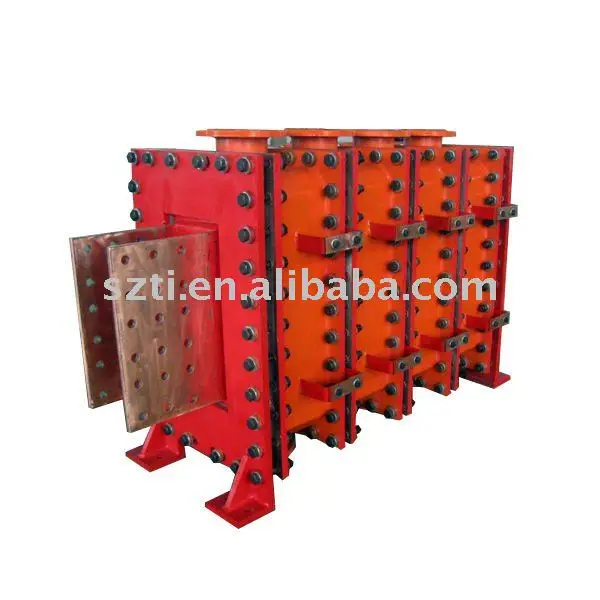
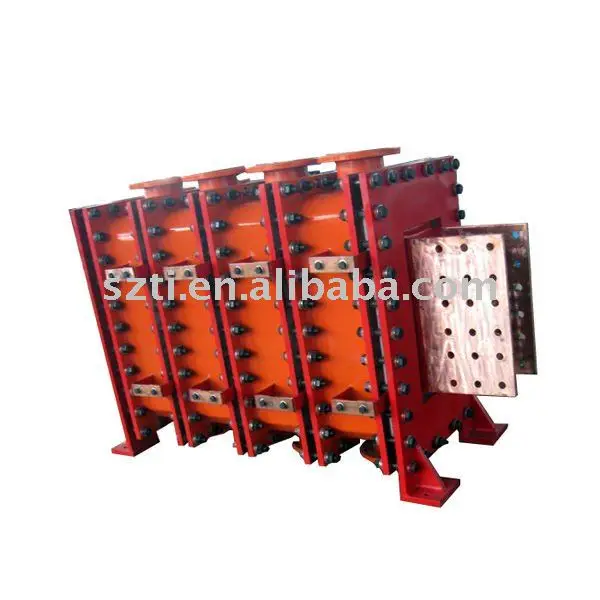
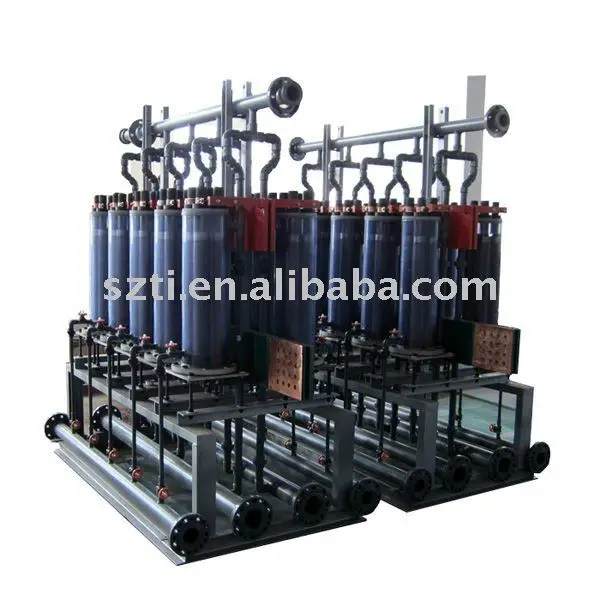
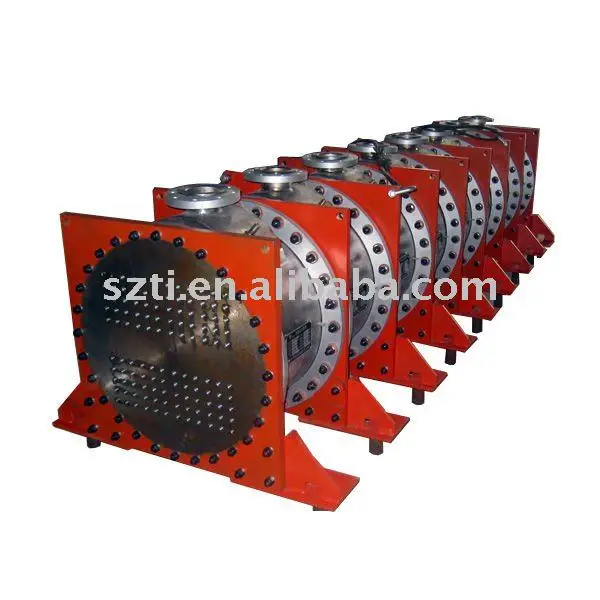
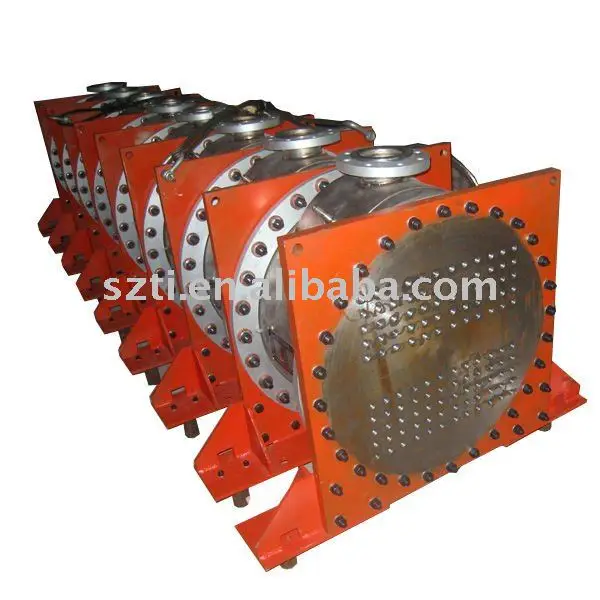
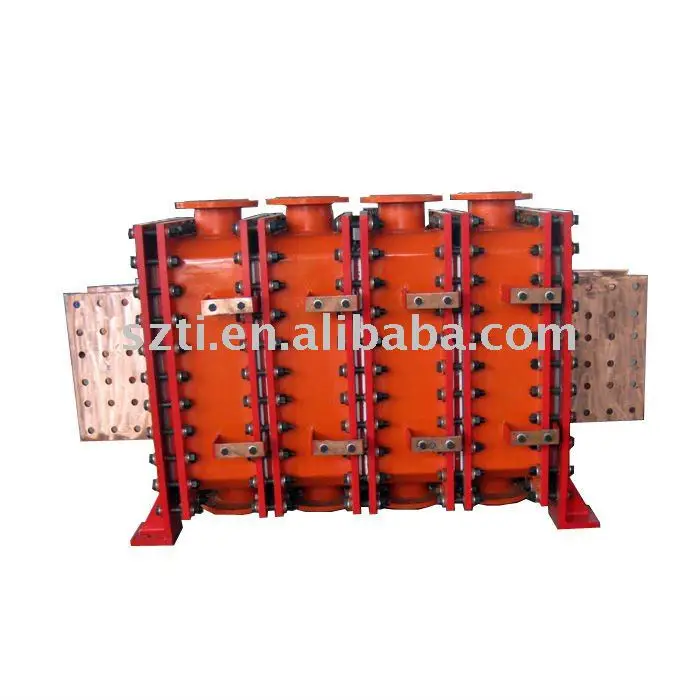
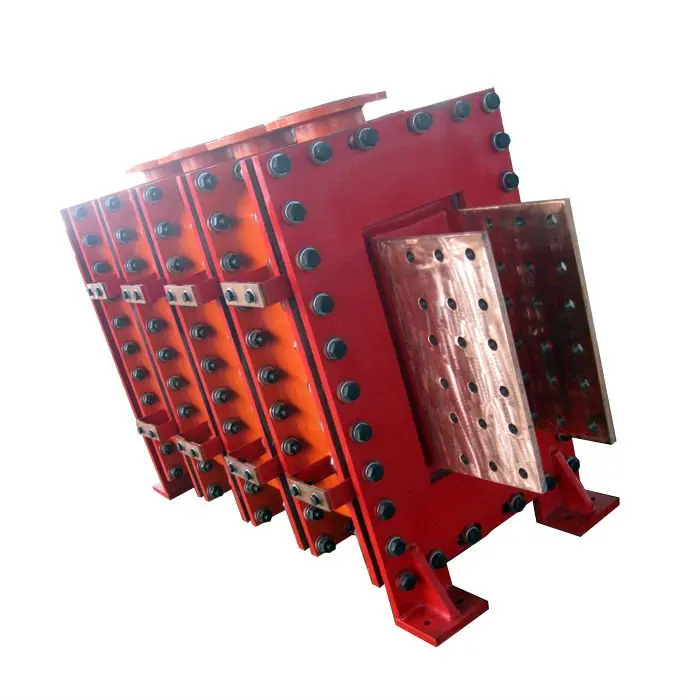
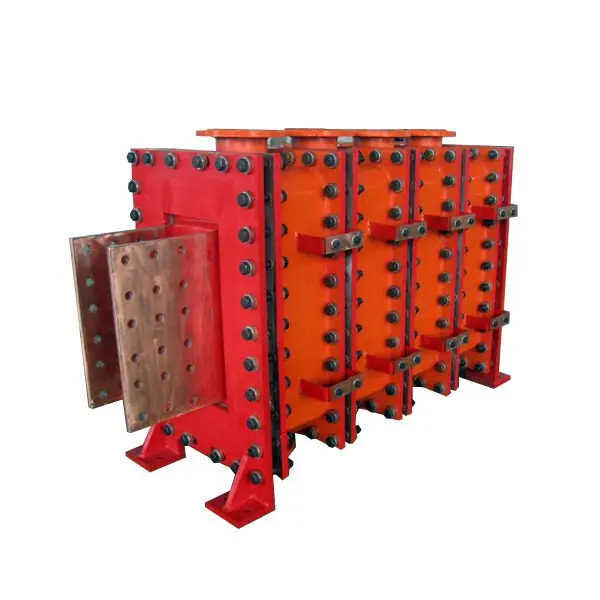
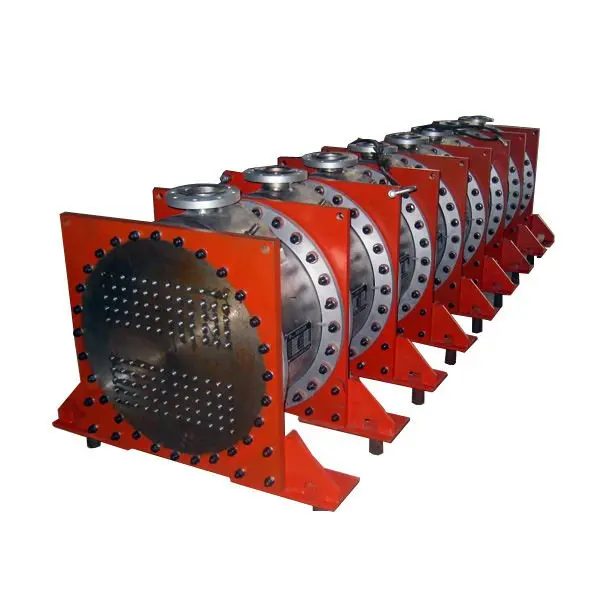
Chemical Industry Titanium Electrolyzer for Producing Sodium Chlorate NaClO3
- Category: Other Chemical Equipment >>>
- Supplier: Suzhou Fenggang Titanium Products And Equipment Manufacturing Co. Ltd. [Jiangsu China]Suzhou
Share on (231733112):
Product Overview
Description
Mono-polar Electrolyzer
Model | FG-II20-B | FG-II25-B | FG-II30-B | FG-II60-B | FG-II80-B | FG-II120-B | ||
Electrolytic Area | 10M2 | 12.5M2 | 15M2 | 30M2 | 40M2 | 60 M2 | ||
Anode Material | Noble Metal Oxide Coating+ High Purity Titanium | |||||||
Cathode Material | Extreme Low Carbon Steel | |||||||
Design Current Density | 2200-2500A/M2 | |||||||
Inter-electrode Distance | 2.5mm~3mm | |||||||
Anode Material | Quintuple Noble Metal Nano-structured Coating | |||||||
Anode Service Life | >6 Years | >6Years | >6Years | >6Years | >6Years | >6Years | ||
Oxygen Content | <3% | <3% | <3% | <3% | <3% | <3% | ||
Current Efficiency | >92%(Secondary Refined Brine) | |||||||
Shell Material | Carbon Steel, Titanium | |||||||
Chlorates Output | 110MT/Year | 130MT/Year | 160MT/Year | 300MT/Year | 400MT/Year | 600MT/Year | ||
DC Power Consumption | <5000KW/MT | |||||||
Working Temperature | 80°C~85°C | |||||||
Name: Chemical Industry Titanium Sodium Chlorate Electrolytic Cell
Item No.: EL-001
Specifications:
Technical parameters:
Anode coating for chlorates:
Electrolyte: NaCl 100-130g/L+HCL+NaCLO3
Current density: 2000-2500A/M2
Temperature: 80-90°C
Service life: >6years
Ph value: 5.5-6.5
Main components: RuO2+IrO2+TiO2+SnO2+X
Features:
1. Electrolyzers for producing sodium chlorate and potassium chlorate.
2. Low consumption power.
3. High working efficiency.
Application:
Electrochemistry.
1. Effluent treatment
2. Organic electrosynthesis
3. Oxidant production and regeneration such as perchloride, iodate, chromic anhydride and persulphate etc.
4. Industrial electroplating such as Zn and Cr plating etc.
Introduction:
An electrolytic cell decomposes chemical compounds by means of electrical energy, in a process called electrolysis; the Greek word lysis means to break up. The result is that the chemical energy is increased. Important examples of electrolysis are the decomposition of water into hydrogen and oxygen, and bauxite into aluminum and other chemicals.
An electrolytic cell has three component parts: an electrolyte and two electrodes (a cathode and an anode). The electrolyte is usually a solution of water or other solvents in which ions are dissolved. Molten salts such as sodium chloride are also electrolytes. When driven by an external voltage applied to the electrodes, the electrolyte provides ions that flow to and from the electrodes, where charge-transferring, or faradaic, or redox, reactions can take place. Only for an external electrical potential (i.e. voltage) of the correct polarity and large enough magnitude can an electrolytic cell decompose a normally stable or inert chemical compound in the solution. The electrical energy provided undoes the effect of spontaneous chemical reactions.
Related Items:



We Recommend


New Arrivals
New products from manufacturers at wholesale prices