Aflatoxin Rapid Test Strip Kit for Milk Grain and Grain Products
US $89.00-$119.00
Share on (281111699):
PRINCIPLE:
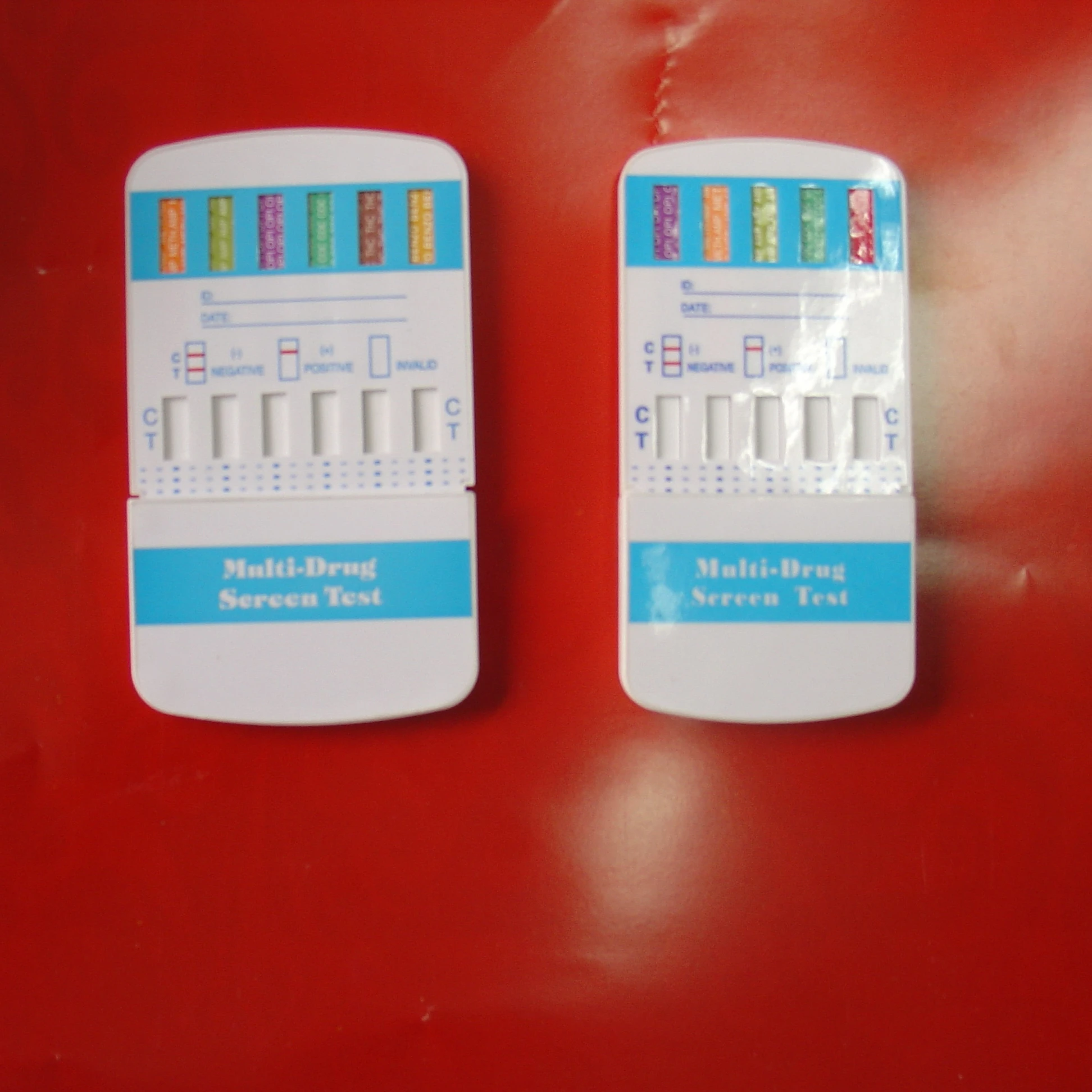
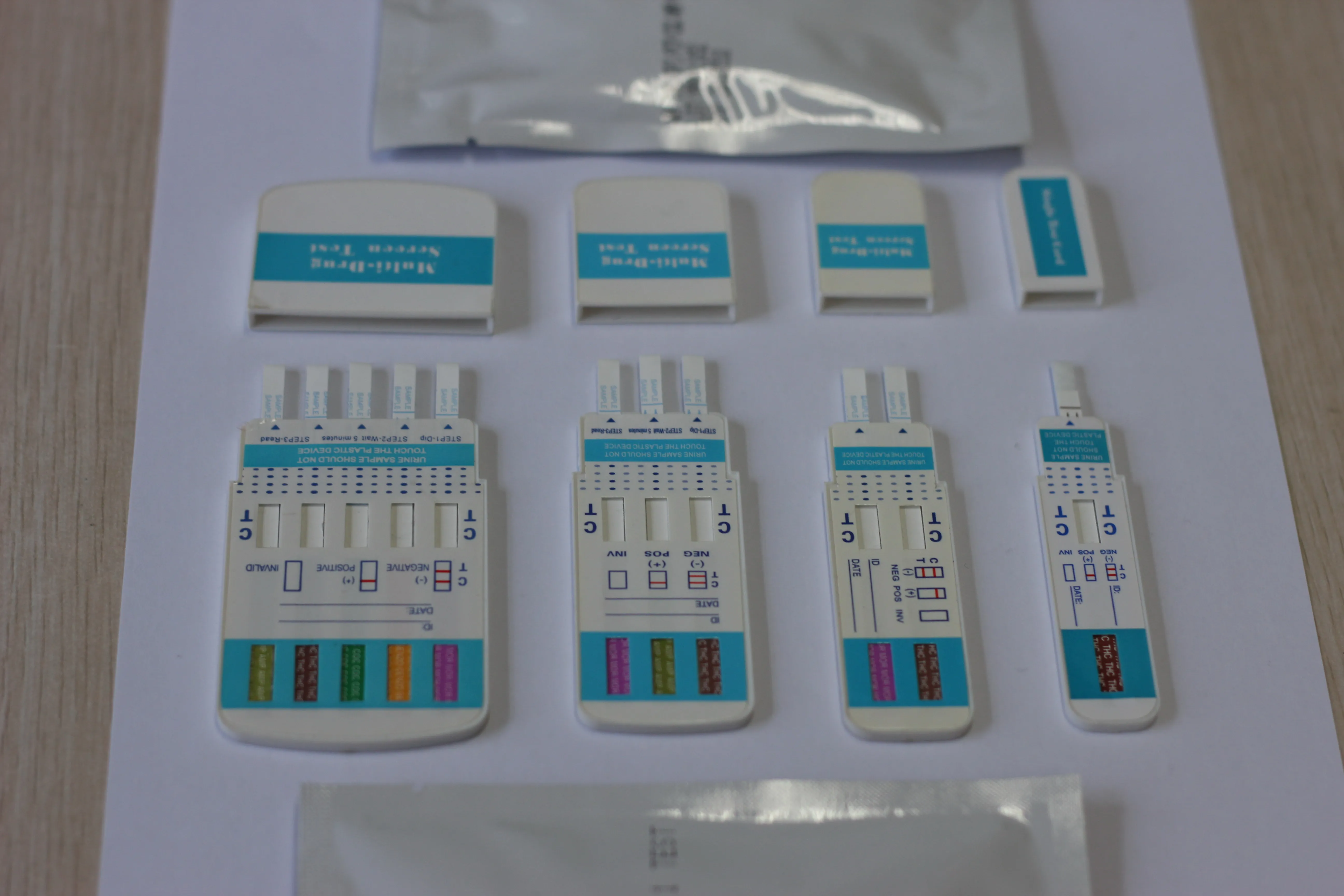
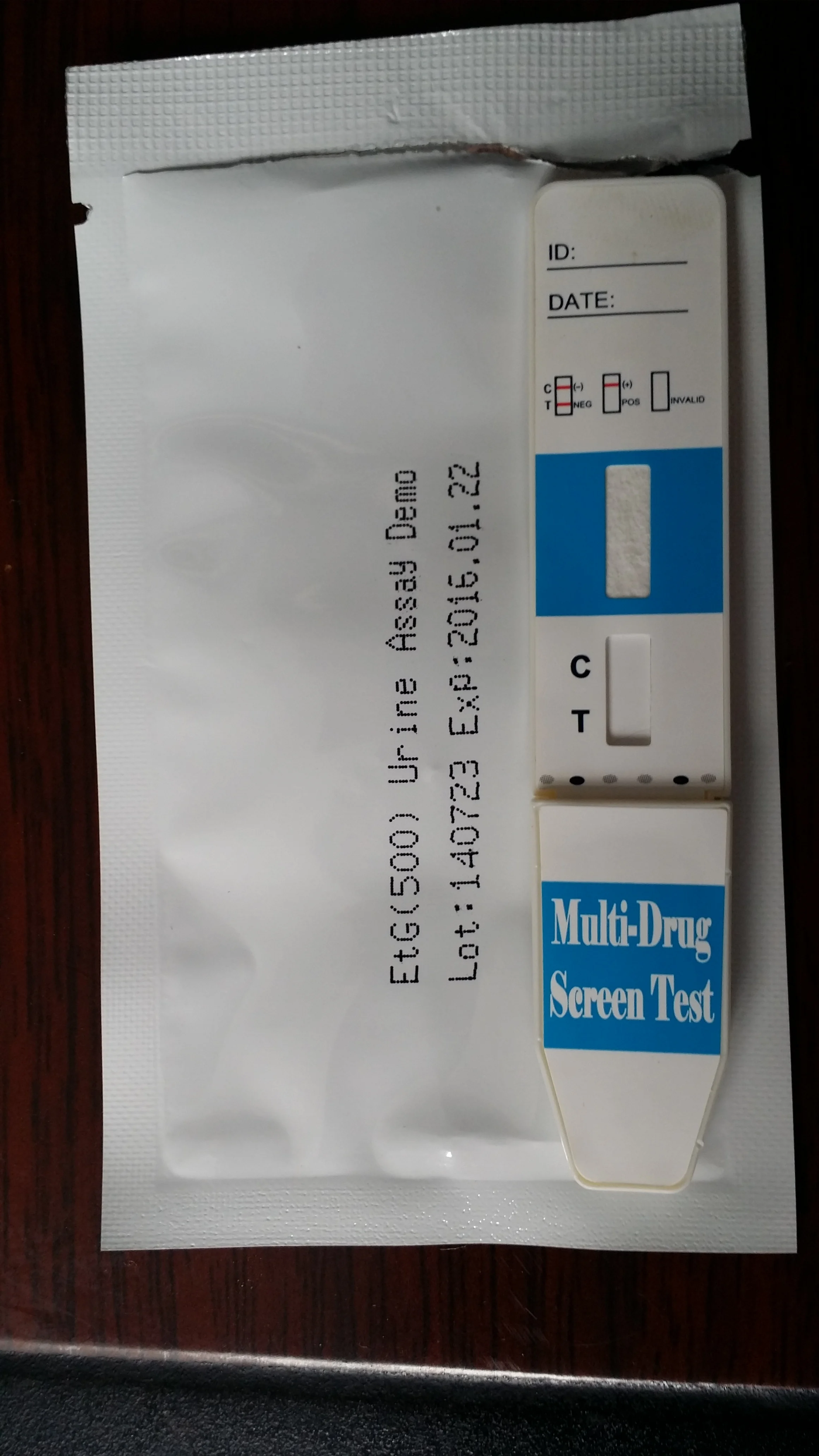
One step drug of abuse test is a lateral flow chromatographic immunoassay for the qualitative detection of multi drugs and drug metabolites in urine at the following cut-off concentrations:
AVAILABLE DRUGS:
|
Initials |
Full Names |
Sensitivity(ng/ml) |
Type |
Specimen |
|
AMP |
Amphetamine Test |
500 or 1,000ng/ml |
Strips
Cassettes
Dipcards or Cups
|
Urine Only
|
|
MET |
Methamphetamine Test |
1,000 ng/ml |
||
|
MOR |
Morphine Test |
300 ng/ml |
||
|
THC |
Marijuana Test |
50 ng/ml |
||
|
COC |
Cocaine Test |
300 ng/ml |
||
|
MDMA |
Ecstasy Test |
300 ng/ml |
||
|
BZO |
Benzodiazepines Test |
300 ng/ml |
||
|
MTD |
Methadone Test |
300 ng/ml |
||
|
TCA |
Tricyclic Antidepressants Test |
1,000 ng/ml |
||
|
BAR |
Barbiturates Test |
300 ng/ml |
||
|
OPI |
Opiate Test |
2,000 ng/ml |
||
|
PCP |
Phencyclidine Test |
25 ng/ml |
||
|
PPX |
Propoxyphene Test |
300ng/ml |
||
|
OXY |
Oxycodone Test |
100ng//ml |
||
|
KET |
Ketamine Test |
1,000ng/ml |
||
|
BUP |
Buprenorphine Test |
10ng/ml |
SUMMARY AND EXPLANATION
Marijuana is a major drug of abuse. THC (beta9-tetrahydrocannabinol) is the primary active
ingredient in marijuana. After smoking or oral administration, the major psychoactive compound, tetrahydrocannabinol (THC), is extensively metabolized before excretion. The presence of tetrahydrocannabinol acid or the cannabinoid metabolite in urine is an THEication of marijuana use. The peak effect of smoking THC occurs in 20- 30 minutes and the duration is 90-120 minutes after one cigarette. Elevated levels of urinary metabolites are found within hours of exposure and remain detectable for 3-10 days after smoking. The main metabolite excreted in the urine is 11-nor-beta9-tetrahydrocannabinol-9-carboxylic acid.
Cocaine is an alkaloid found in the leaves of a coca plant. It has been used medicinally as an anesthetic agent, but its addictive property has minimized its modern daily use. As a potent central nervous system stimulant, cocaine has been defined as a controlled substance by the National Institute on Drug Abuse. Cocaine is excreted in urine primarily as benzoylecgonine in a short period of time. Benzoylecgonine has a biological half -life of 5 to 8 hours, which is much greater than that of cocaine; generally, it can be detected within 24-60 hours after a cocaine use.
Methamphetamines are central nervous system stimulants that produce the feeling of alertness, wakefulness, increased energy, reduced hunger, and general well being. Methamphetamine increases tolerance and physiological dependence in a person, leading to its abuse. Both D (D) and (L) forms of the isomers are controlled substances. The effects of Methamphetamine generally last 2-4 hours, and the drug has a half-life of 9-24 hours in the body. Methamphetamine is excreted in the urine primarily as amphetamine and oxidized and deaminated derivatives, but however, 10-20% of methamphetamine is excreted unchanged. Thus, the presence of the parent compound in the urine THEicates its use.
Amphetamine is a sympathomimetic amine whose biological effects include potent central nervous system stimulation, appetite reduction, hyperthermia, insomnia, increase in heart rate, increase in blood pressure, and the feeling of euphoria. It is usually taken orally, intravenously, or by smoking. Amphetamines are readily absorbed from the gastrointestinal
New products from manufacturers at wholesale prices