Product Overview
Description
Dialysis fluid purity
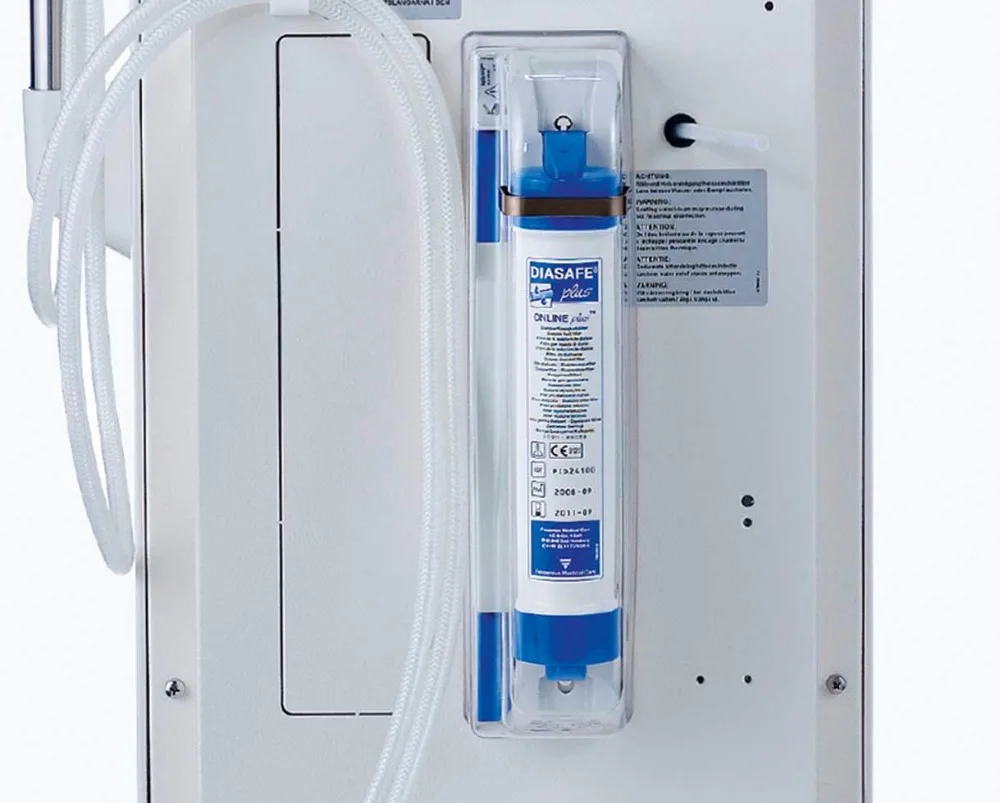
The quality and purity of dialysis fluids are of major concern in modern renal replacement therapies as large volumes of dialysis fluid come into contact with the patient’s bloodstream. Dialysis fluids may contain microbial impurities such as endotoxins derived from bacterial fragments. Endotoxin fragments may have molecular weights well below 2000Da - small enough to pass across both low and high flux membranes (Figure 1). Endotoxins are known to cause acute adverse reactions and promote long-term complications in hemodialysis patients1,2.
In order to avoid endotoxin related complications during routine hemodialysis, the European Best Practice Guidelines for Hemodialysis (EBPG)3 strongly recommend the usage of ultrapure water. Ultrapure water or dialysis fluid can easily be achieved through the application of special dialysis fluid filters – such as DIASAFE®plus.
| The different purity levels of pure and ultrapure water according to the European Best Practice Guidelines for Hemodialysis | ||
|---|---|---|
| Pure water | Ultrapure water | |
| Microbial contaminations (CFU/mL) | ≤ 100 | < 0.1 |
| Bacterial endotoxins (IU/mL) | < 0.25 | < 0.03 |
We Recommend

New Arrivals
New products from manufacturers at wholesale prices