Product Overview
Description
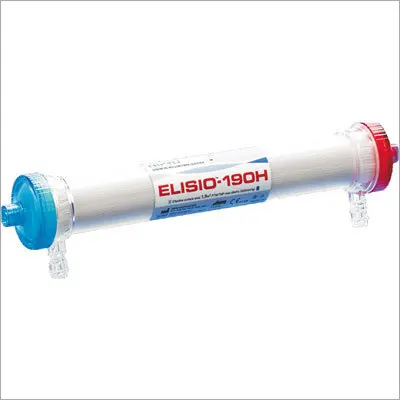
The term high flux dialysis refers to a form of hemodialysis that was developed in recent years to improve the efficiency of dialysis. It has succeeded in both improving the quality of dialysis and in shortening dialysis times.
The essential element of high flux dialysis is the use of dialyzers (artificial kidneys) that have larger pores for the removal both of uremic toxins and of fluid. Blood urea nitrogen (BUN) is measured and followed as a reflection of all the toxins that the kidney normally removes. With high flux dialysis, BUN clearly is removed more quickly. But there is also now evidence that larger molecules may also play an important role in causing the uremic symptoms that are both annoying and dangerous to dialysis patients. Such molecules are too big to be removed by conventional dialysis, but are removed with high flux dialyzers. For example, a molecule called beta 2 microglobulin, which can have a role in causing arthritis in dialysis patients, is removed only by high flux dialysis. In fact there are already reports of patients with less joint pain when switched from conventional to high flux dialysis. Thus, the removal of larger molecules may prove to be a crucial benefit of high flux dialysis.
We Recommend


New Arrivals
New products from manufacturers at wholesale prices