Product Overview
Description
Product Description
Description
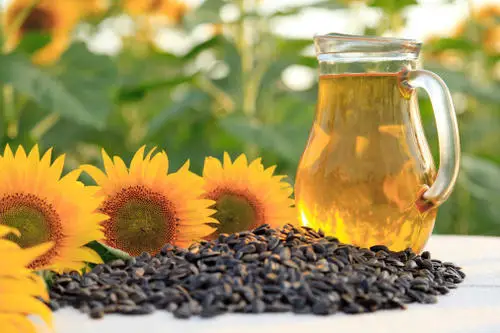
Sunflower oil is mainly a triglyceride; a typical constituent is shown. The British Pharmacopoeia lists the following profile:
Palmitic acid (saturated): 5%
Stearic acid (saturated): 6%
Oleic acid (monounsaturated omega-9): 30%
Linoleic acid (polyunsaturated omega-6): 59%
Several types of sunflower oils are produced, such as high linoleic, high oleic and mid oleic. Mid-oleic sunflower oil typically has at least 69% oleic acid. High oleic sunflower oil has at least 82% oleic acid. Variation in unsaturated fatty acids profile is strongly influenced by both genetics and climate. In the last decade,[when?] high stearic sunflower lines have been developed in Spain to avoid the use of partially hydrogenated vegetable oils in the food industry.
Sunflower oil is high in the essential vitamin E and low in saturated fat. The two most common types of sunflower oil are linoleic and high oleic. Linoleic sunflower oil is a common cooking oil that has high levels of polyunsaturated fat. It is also known for having a clean taste and low levels of trans fat. High oleic sunflower oils are classified as having monounsaturated levels of 80% and above. Newer versions of sunflower oil have been developed as a hybrid containing linoleic acid. They have monounsaturated levels lower than other oleic sunflower oils. The hybrid oil also has lower saturated fat levels than linoleic sunflower oil.
The phosphatides (0.1–0.2%) present in the oil are lecithin (38.5%) and cephalin (61.5%); they occur in combination with protein and carbohydrates.
Sunflower oil also contains lecithin, tocopherols, carotenoids and waxes. Sunflower oil's properties are typical of a vegetable triglyceride oil.
Palmitic acid (saturated): 5%
Stearic acid (saturated): 6%
Oleic acid (monounsaturated omega-9): 30%
Linoleic acid (polyunsaturated omega-6): 59%
Several types of sunflower oils are produced, such as high linoleic, high oleic and mid oleic. Mid-oleic sunflower oil typically has at least 69% oleic acid. High oleic sunflower oil has at least 82% oleic acid. Variation in unsaturated fatty acids profile is strongly influenced by both genetics and climate. In the last decade,[when?] high stearic sunflower lines have been developed in Spain to avoid the use of partially hydrogenated vegetable oils in the food industry.
Sunflower oil is high in the essential vitamin E and low in saturated fat. The two most common types of sunflower oil are linoleic and high oleic. Linoleic sunflower oil is a common cooking oil that has high levels of polyunsaturated fat. It is also known for having a clean taste and low levels of trans fat. High oleic sunflower oils are classified as having monounsaturated levels of 80% and above. Newer versions of sunflower oil have been developed as a hybrid containing linoleic acid. They have monounsaturated levels lower than other oleic sunflower oils. The hybrid oil also has lower saturated fat levels than linoleic sunflower oil.
The phosphatides (0.1–0.2%) present in the oil are lecithin (38.5%) and cephalin (61.5%); they occur in combination with protein and carbohydrates.
Sunflower oil also contains lecithin, tocopherols, carotenoids and waxes. Sunflower oil's properties are typical of a vegetable triglyceride oil.
Detailed Images
Packing & Delivery
Packaging & Delivery
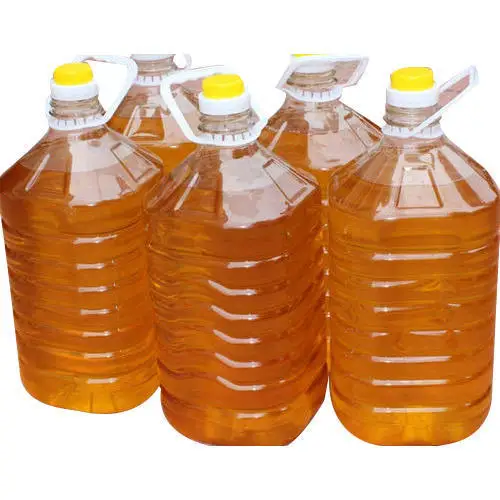
Packaging Details Pet bottle, flexi tanks, bulk
Port ASP
We Recommend
New Arrivals
New products from manufacturers at wholesale prices