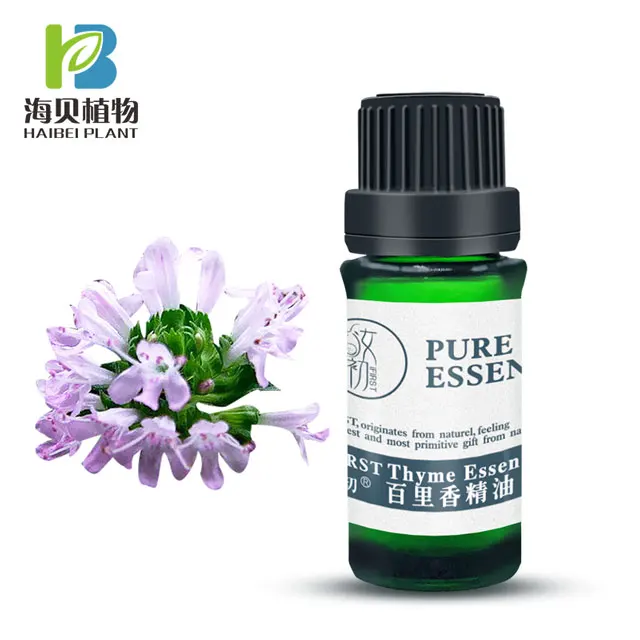
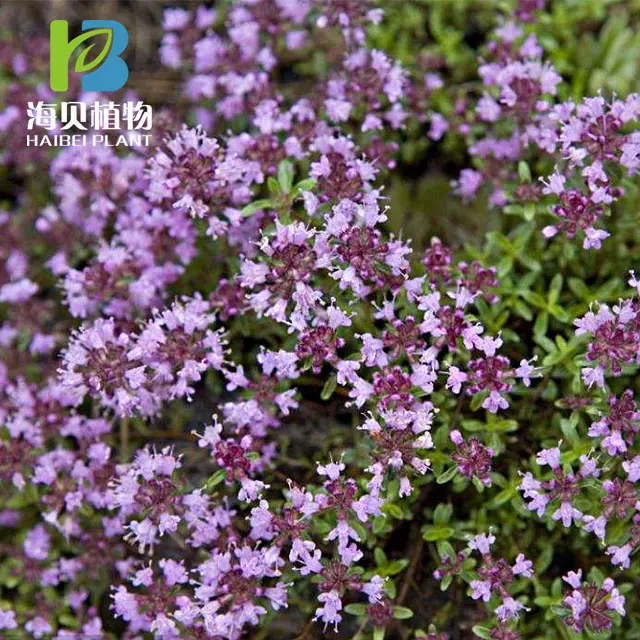

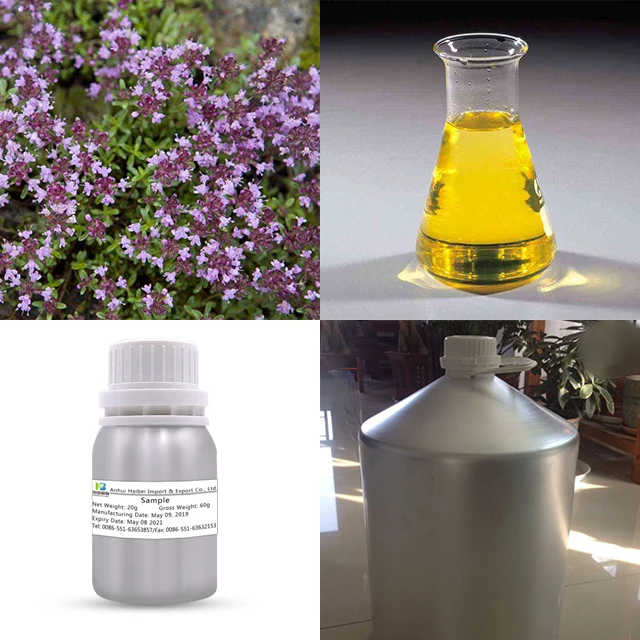
High Quality Thyme Oil
- Category: >>>
- Supplier: Anhui Haibei Import & Export Co. Ltd. [Anhui China]Anhui
Share on (533352850):
Product Overview
Description

Natural Thyme oil |
Ref No. : HB-E063 Synonyms: - Molecular Formula: - Molecular Weight : - CAS No.: 8007-46-3 Einecs No.: - : - CoE:
GENERAL dESCRIPTION Appearance: Thyme herbal camphor Odor: A characteristic odor of cassia cinnamon
PHYSICOCHEMICAL PROPERTIES Specific Gravity : 0.91500~0.93500 @ 25.00 °C. Refractive Index : 1.49500~1.50500 @ 20.00 °C. Boiling Point : 195.00 °C. @ 760.00 mm Hg Flash Point : 132.00 °F. TCC ( 55.56 °C. ) |

Disinfecting
The phenols in thyme oil contribute to its strong antiseptic properties. During World War I, hospitals used the phenol thymol as an antiseptic and today you can find oil of thyme in natural household cleaners. White thyme oil inhibits even antibiotic-resistant strains of Staphylococcus and Streptococcus, and antimycotic-resistant Candida, researchers at the University of Kiel, Germany found in 2009. Adding a few drops to your mouthwash can help reduce bacteria that cause bad breath and gingivitis. To create a natural household disinfectant, mix thyme oil with other antimicrobial oils like rosemary.
Killing Head Lice
The cleansing power of thyme oil extends to parasitic infestations, too. In laboratory tests, an application of thyme oil followed by a rinse of essential oils, vinegar and water killed head lice, reported a 1996 study published in Complementary Therapies in Nursing and Midwifery. Add this oil and other mite-killing essential oils like tea tree and paw paw to regular shampoo to make an herbal lice treatment.
Relieving Pain and Chills
Its fragrance and ability to warm the skin made thyme the ancient Greeks' oil of choice for after-bath massages. Rubbing this oil on the skin stimulates circulation, creating warmth that can alleviate muscle aches and arthritis pain. Blended into a chest rub for cold-symptom relief, it can both clear the airways and reduce chills.








We Recommend

New Arrivals
New products from manufacturers at wholesale prices