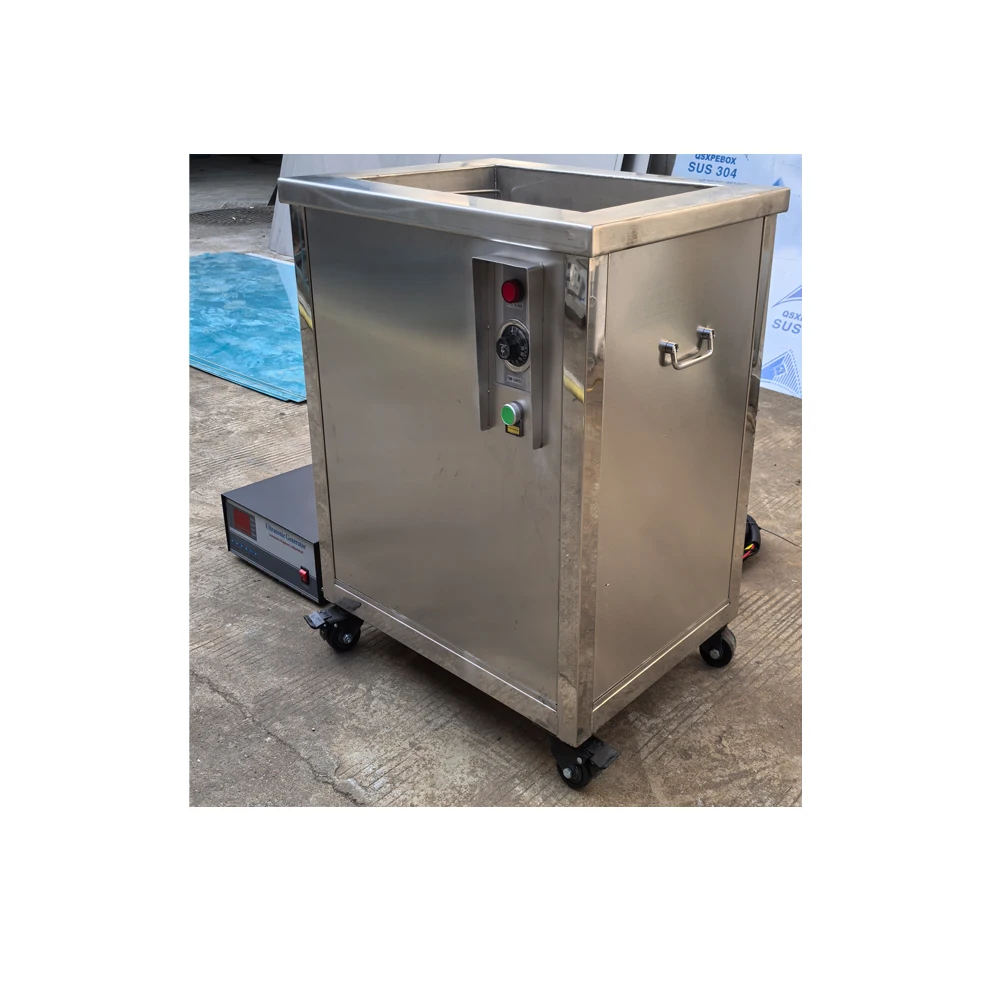
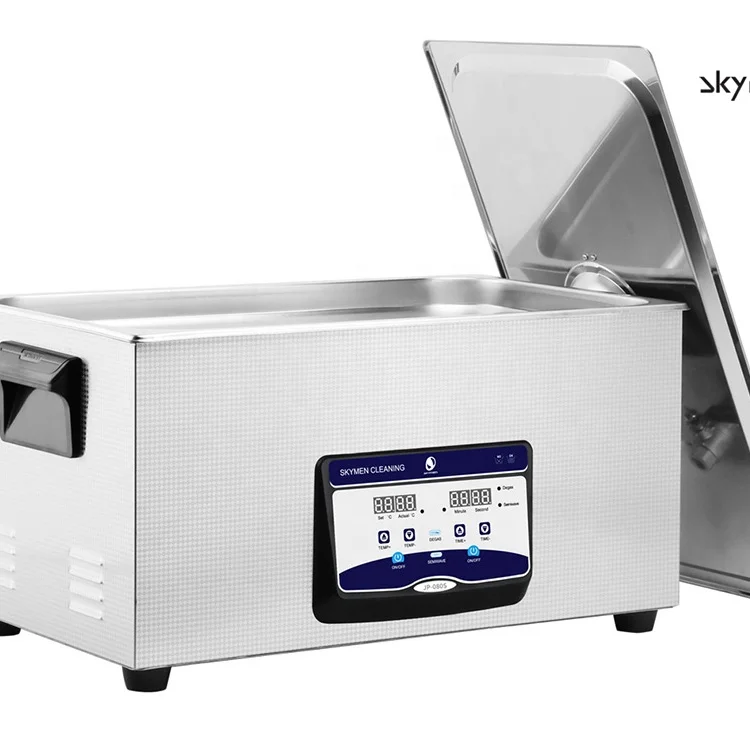
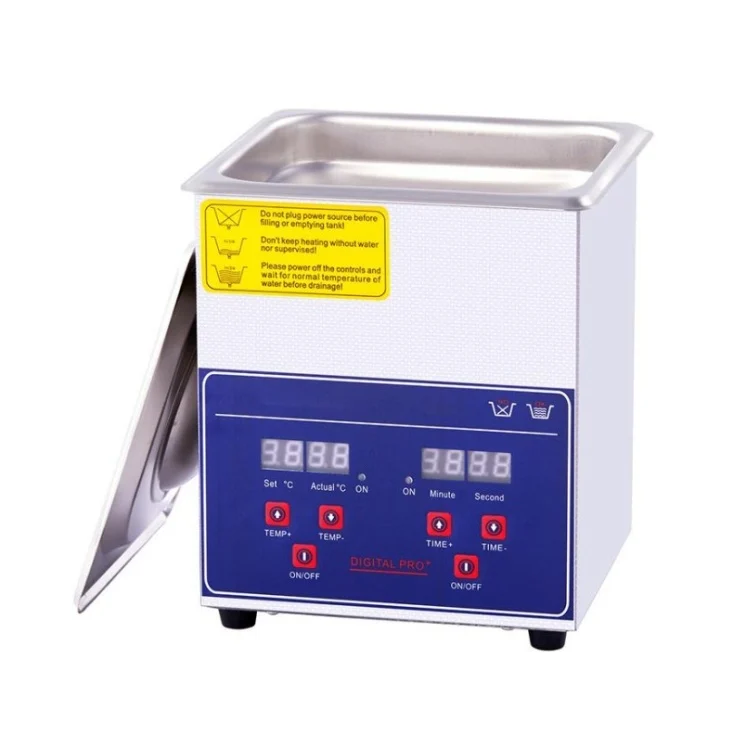
Digital ultrasound Car wash ultrasonic vibrator cleaner 22L,automated engine parts washing system
- Category: >>>
- Supplier: Skymen Technology Corporation Limited
Share on (551740909):
Product Overview
Description
Table Top Large Ultrasonic Cleaner Ultrasonic Surgical Instrument Cleaning Bath
Features:
- Sensitive touch control panel
- Digital Control display
- More convenient for operation
- Stainless steel tank has resistance to wear and long work life.
- Tank capacity: 22L
- Digital timer, clear digital LCD display
- With Stainless steel basket
- Use just tab water, or industrial solvent cleaner for more higher cleaning requirement
- Industrial control chip microcontroller.flexible circuit boards control, more secure & stable
JP-080S product specification:
| Ultrasonic frequency | 40,000Hz |
| Material of tank | SUS304 |
| Material of shell | SUS304 |
| Capacity | 22L |
| Timer | Digital control, 0~30 mins |
| Heater | 500W |
| Power supply type 1 | AC 100~120V, 50/60Hz |
| Power supply type 2 | AC 220~240V, 50/60Hz |
| Ultrasonic power | 240W /480W |
| Tank inner dimension | 500*300*150mm |
| Unit dimension | 585*330*280mm |
| Inner Packing size | 635*410*335mm |
| Transducer | 8pcs |
| N.W. | 12.6kg |
| G.W. | 14kg |
| Certificate | CE & RoHS & FCC |
| Model | Capacity | Tank Size | Ultrasonic Power | Heating Power | Frequency |
| (L) | (L*W*H)mm | (W) | (W) | (KHz) | |
| JP-008 | 0.8 | 150*85*65 | 35 | 0 | 40 |
| JP-009 | 0.9 | 150*135*65 | 60 | 100 | 40 |
| JP-010T | 2 | 150*165*100 | 60 | 100 | 40 |
| JP-020S | 3.2 | 240*135*100 | 120 | 100 | 40 |
| JP-030S | 4.5 | 300*150*100 | 180 | 200 | 40 |
| JP-031S | 6.5 | 300*150*150 | 180 | 200 | 40 |
| JP-040S | 10 | 300*240*150 | 240 | 200 | 40 |
| JP-060S | 15 | 330*300*150 | 360 | 300 | 40 |
| JP-080S | 22 | 500*300*150 | 480 | 500 | 40 |
| JP-100S | 30 | 500*300*200 | 600 | 500 | 40 |
How to Use an Ultrasonic Cleaner for Medical & Surgical Instruments
Medical and surgical instruments in a variety of sizes and complexity can pose challenges when it comes to cleaning, disinfecting and sterilizing them after use. An ultrasonic cleaner is an ideal tool for the first step in this three step process to protect medical personnel and patients from possible infection due to pathogens that remain on the instruments after a procedure.
Cleaning effect:


Suggested Ultrasonic Cleaning Procedure
In all cases manufacturers’ instructions should be followed when using an ultrasonic cleaning process. These are representative steps.
Fill the ultrasonic cleaning tank with an approved medical instrument cleaning solution such as CLN-LR012 available from Tovatech following dilution instructions provided. Turn the cleaner on to start the degassing process. This step removes entrained air in new solutions that interferes with the efficiency of cavitation and takes approximately 10 minutes.
In the meantime:
- Segregate instruments by alloy or composition to avoid potential damage (Chromium plated instruments should not be cleaned ultrasonically)
- Instruments with movable parts should be disassembled to facilitate cleaning
- Place the instruments the ultrasonic cleaner’s mesh basket, taking care that they do not come in contact with each other
- Cannulated or lumened instruments should be positioned to insure interiors are wetted with the cleaning solution. In some instances placing them on an angle will facilitate this
- Set the control panel per manufacturers’ instructions and start the cleaning process
At the end of the cycle, remove the instruments from the ultrasonic cleaning bath and thoroughly rinse them to remove all traces of the cleaning solution. Deionized water rinses will avoid spotting. If the instruments are not to be immediately disinfected and sterilized be certain that they are thoroughly dried and protected. Part reassembly can occur after sterilization.
Procedures should be in place to guide the replacement of used ultrasonic cleaning solutions. In some instances it is recommended that solution be drained and tanks thoroughly cleaned and dried after each ultrasonic cleaning cycle. Many solutions available today are biodegradable, which facilitates disposal but local authorities should be consulted on proper practices.
The ultrasonic cleaner uses ultrasonic waves (vibration) using water with detergents or enzymatic products to break up soil and organic material on medical instruments/devices. These devices are rinsed then autoclaved (sterilized). The autoclave sterilizer uses heat, steam, and pressure to kill all pathogenic microorganisms and their spores.
We Recommend
New Arrivals
New products from manufacturers at wholesale prices