HDPE Oyster Mesh, Bag,Plastic PE oyster bags for oyster bag growing
- Category: >>>
- Supplier: Hebei Hengsu Screen Manufacturing Co. Ltd. [Hebei China]Hebei Ltd.
Share on (573160768):
Product Overview
Description
HDPE Oyster Mesh, Bag,Plastic PE oyster bags for oyster bag growing
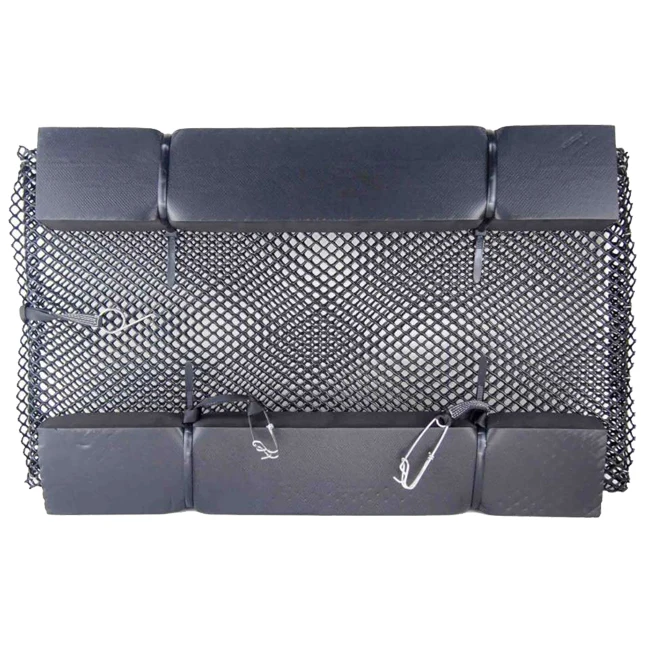
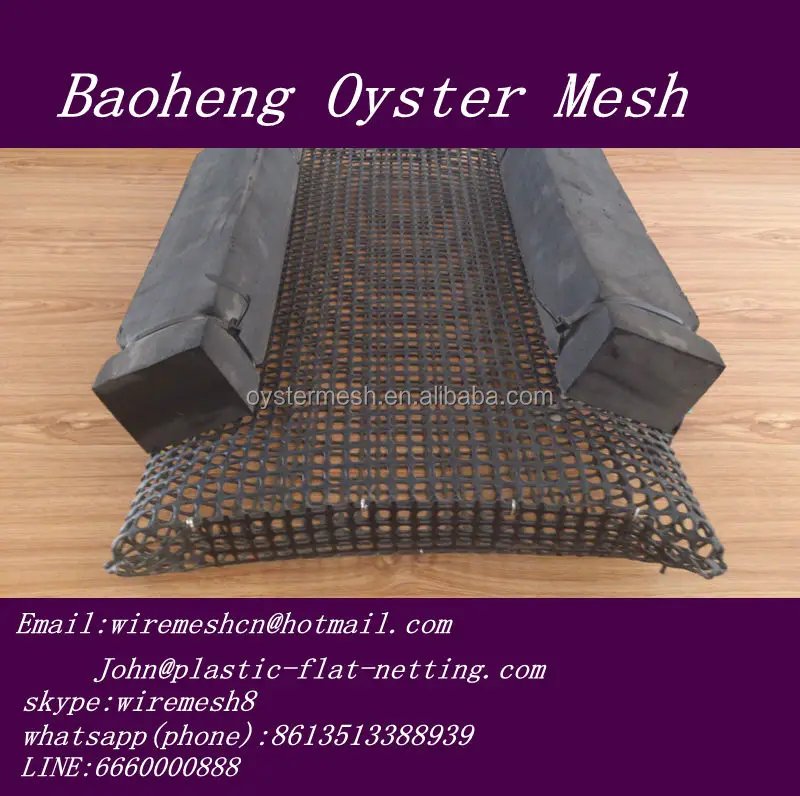
Oyster bags
100% new PE material
Used for oyster growing
25 dozens per bag
10 years work life
We supply both diamond mesh square mesh oyster bags.
We supply oyster bags in pieces,in rolls,with floats,also with other parts,such as marine standard clips,cable tie,ropes ,etc.
1st:There are four main types of oyster farming:
1. Traditional Bed or Bottom Culture
Oysters are grown on the grounds of intertidal regions(the area that is above water at low tide and under water at high tide), feeding on the plankton available in the incoming tide. These areas are usually gravel or hard packed sand beaches.
2. Rack and Bag Culture
Oysters are cultivated in plastic net bags. supported above the ground on steel racks so that water can flow completely around the oysters allowing them to feed faster and be protected from crabs and other predators. This method also makes it possible to grow oysters in areas which might otherwise be too muddy to grow them directly on the intertidal grounds.
3. Suspended Culture
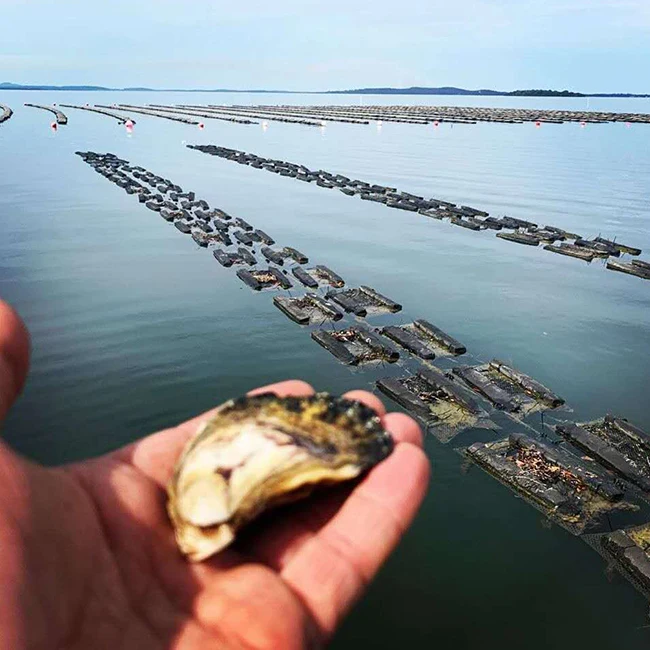
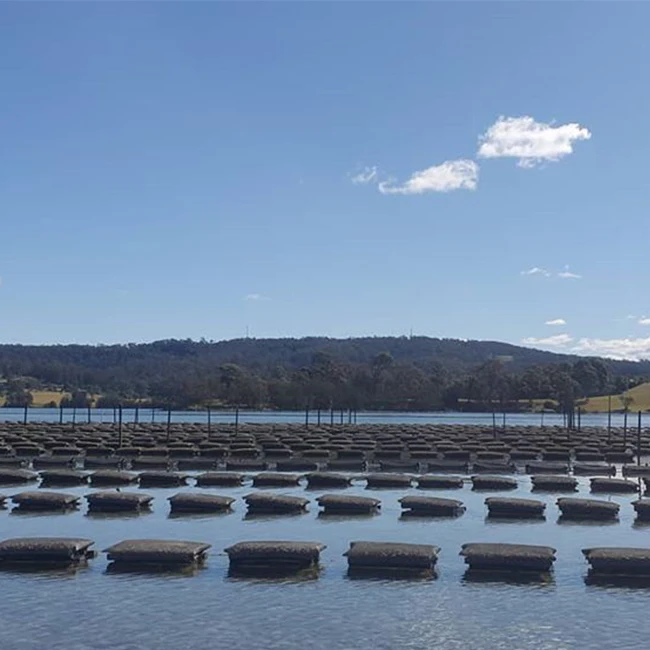
This method may vary between suspended tray culture or lantern net culture. The purpose of this method is to allow for growing oysters in deeper, sub tidal waters. The oysters are placed in trays or nets which are suspended from floats or sub-tidal longlines so that they hang below the surface of the water 24 hours per day allowing for the oysters to grow very fast.
4. Intertidal Longline Culture
Another suspension method where adult oyster shells with baby oysters set on them, are then inserted into the strands of a rope. The shells are spaced out every foot or two along a 300-600 foot rope, and that rope is then stretched along the ground in the intertidal region at low tide, and the rope is then supported about a foot above the ground with pegs. The end result is that the entire length of rope and shell is suspended above the natural bed allowing for the oysters to grow faster than they would settled down into the mud or sand.
Description: Mesh has developed and marketed and specially designed tubular net for inter-tidal oyster farming.
It is supplied in different mesh ranges to keep up with size and weight oyster growing.
Benefits: oyster bags make you manage your oysters more efficiently, thereby giving the oyster farmer a management technique to control shell growth, condition and clean, producing a much better oyster, with a rumbling action for sale presentation. Features: Made of HDPE with UV resistant additives.
Spec we can do: Mesh size: 2mm, 4mm, 6mm,9mm,12mm,14mm,16mm,20mm,23mm.
Color: Black
Oyster Bags Width: 0.3m-0.7m
Oyster Bags Length: 50 cm-25 meter.
Long line floating bags & cages are an extremely cost efficient aquaculture production system. Compare costs per hectare & per dozen of production with alternative systems.
Pacific Oyster
1ha = 10,000 Square metres or 100m X 100m |
|
|---|---|
Row spacing |
5 metre |
Rows per 100m |
20 |
Long Lines per 100m row |
3 |
Floating cages per 100m row |
168 (28 pairs per long line ie. 56 X 3 lines per row |
Oysters per cage |
7 dozen (Pacific oyster standard grade 125 gr) |
| Rope required per row | 115 metre |
| Posts required per row | 4 |
| Total posts required | 80 |
Approximate cost
Floating bag:
BH Oyster Bags: foam float, closing door, 2 x 80mm shark clips $20.95 168 bags x 20 rows = 3,360 floating cages @ 20.95 = $70,392

Rope:
: 8mm marine grade rope 115m x 20 rows = 2,300m @ $0.20 / m = $460

Posts:

Approx price on 2m x 90mm plastic post or timber flumed in plastic 4 posts x 20 rows = 80 @ $12 (estimate only) = $960
Total cost per hectare |
$71,812 |
Production per hectare |
23,520 Dozen (282,240 oysters) |
Capital Outlay per dozen |
$3.05 |
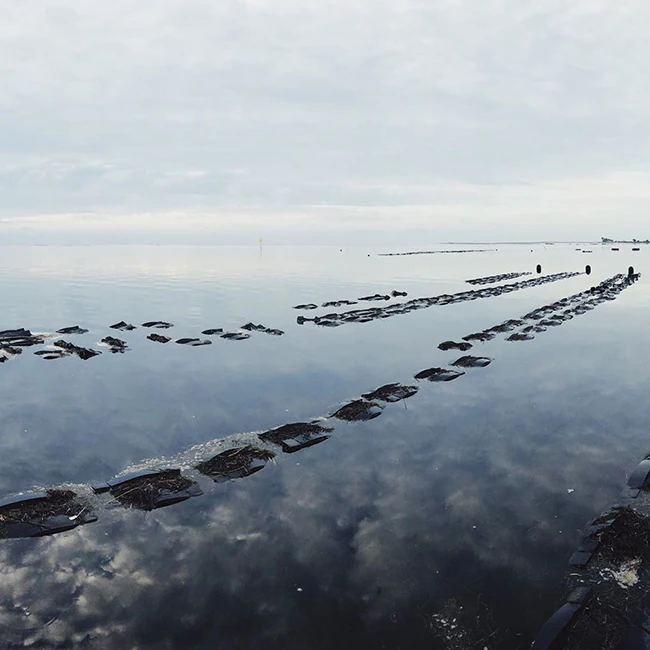
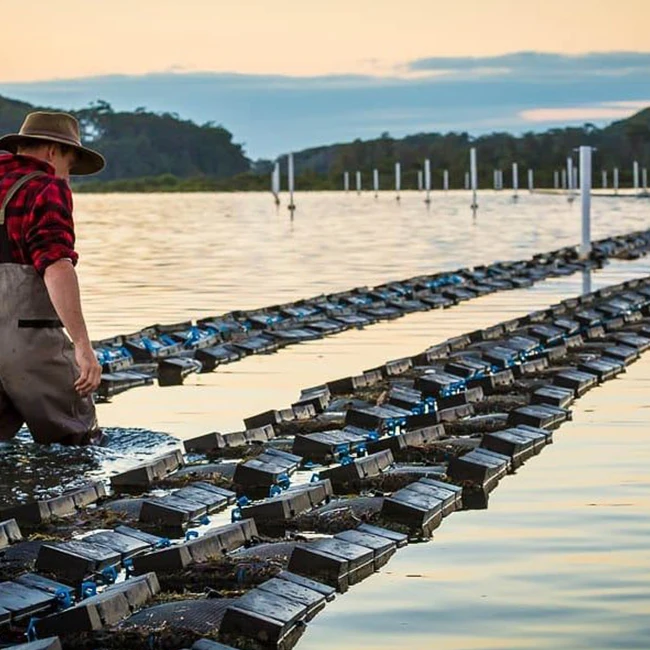
Why do we grow our oysters on the surface of water?

eeding by float mesh bag.
Oysters stay cleaner and do not contain "grit"
Due to ample light penetration, there is a high availability of micro-algal food for optimal oyster growth
Wave action insures oxygenation of surface water
Disease processes (Dermo & MSX) are absent
Low observed mortality rate of 4%
Growth to minimum market size (3”) in 18-24 months.

Feeding not by float mesh bag.
Oysters are less aesthetically appealing and contain "grit"
Silt at the bottom increases food handling times making it more difficult for oysters to feed
Low levels of sunlight at the bottom, restricts the amount of micro-algal food available
Disease processes are resident
High mortality rates of >75%
Growth to market size: 3 years minimum, if they survive.
We Recommend
New Arrivals
New products from manufacturers at wholesale prices