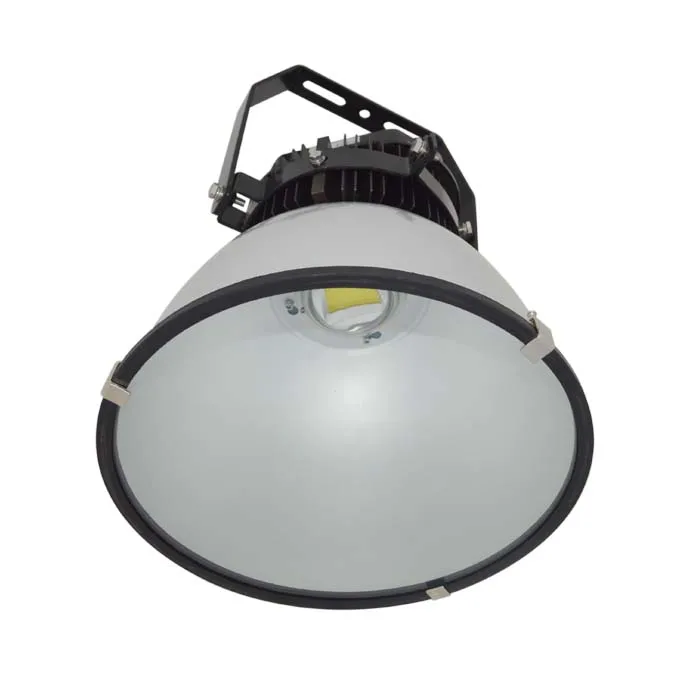
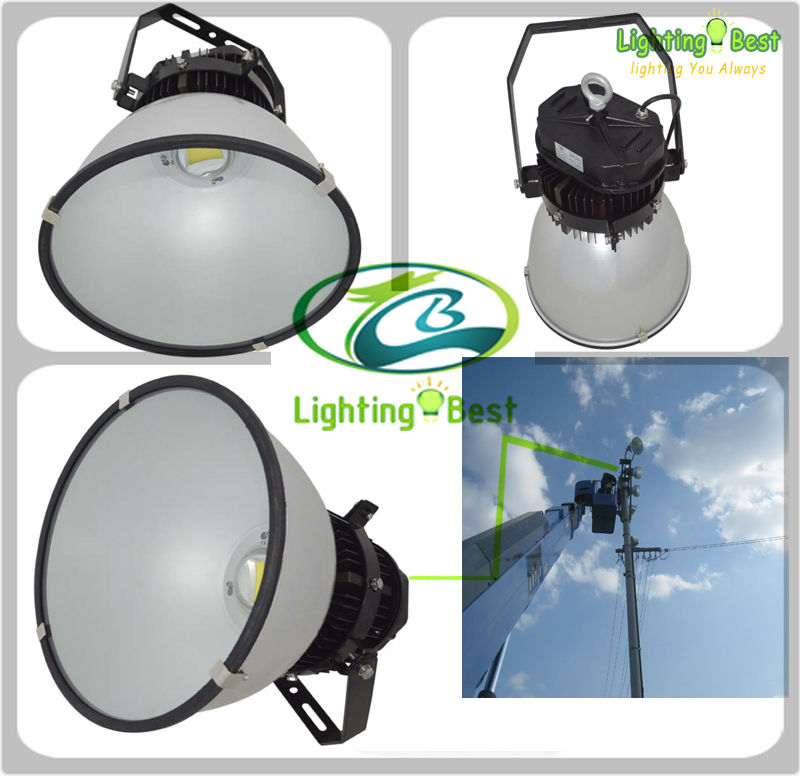
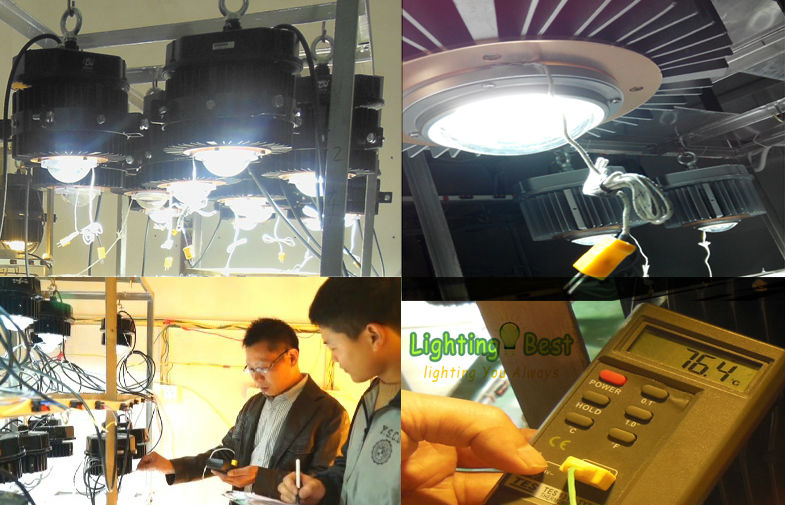
1.Adopting design of integrated optical source, choosing imported high brightness LED (30W~120W) as a source for an advantage of high light effect. High CRI, low degradation, no ghosting. 2. No mercury included, it’s environment-friendly. 3.Lens with optical design, the lens can achieve very high light output efficiency, batwing light distribution curve distribution, as well as a more uniform rectangular spot. Edge ray principle, lens design light interception, and eliminate glare. The light fully allocated to the lighting on the road or on the specific requirements for lighting places, to prevent light pollution and glare. 4. It has been controlled by constant voltage and current, working voltage is from 100V to 240V,can start instantly.
LED High Mast Light Application
Construction sites,building lighting,hotels,docks,factoeies,gas stations,football,golf,green landscape lighting
Packaging & Shipping
1.Packing:standard cartoon or packing as customer's requirement
2.Dilivery Time:2-5 working days for samples,6-20 workdays for big order
Shipping options:
1.By express:such as DHL,UPS,TNT,FEDEX ect
2.Airfreight:when you order more than 100KG which will be more economical than express
3.Seafreight:shipping by sea is available after customer provide destination port
4.Agent designated by client:please tell us the contact details of your shipping ugent/forwards
Our Services
1. Reply your inquiry in 24 hours
2. OEM & ODM welcome, more than 1 year OEM experience, independent R&D ability, and patent design.
4. Fast delivery, 2-15 workdays depends on order quantity after payment confirmed
5. Convenient transportation fast delivery, Close & Easy access to both Shenzhen Seaport and Airport.
6. Flexible, small amount order accepted. Monthly supply capacity:3.000~10.000pcs/item
LED High Mast Light Specification
Input Voltage
AC100V~240V
Freqency Range
50Hz~60Hz
Harmonic Distortion
≤12%
power Factor
>0.95
Power Efficiency
>87%
Working Voltage
DC30~36V
led quantity
1pcs
Led Power
180W
Lamp Total Power
185W
LED Chip
Epistar or Bridgelux
LED luminous efficiency
90±5lm/w or 100±5lm/w
lamp's Efficiency
>80%
Lighting angle
30°
available
45°
available
30°+45°
available
Illuminance Area
Height 6M
D10M
Height 8M
D16M
Height 10M
D21M
Illuminance Uniformity
>0.6
Ave. Illuminance
(45° reflector)
Height 6M
497Lux
Height 8M
280Lux
Height 10M
179Lux
Color Rendering Index
WW
Ra>68
PW/CW
Ra>75
Light Distribution
Symmetric /Circular light spot
Light Design
LED+Reflector
Working Temperature
-40° ~ +45° C
Storage Temperature
-40° ~ +65° C
IP Grade
IP65
Working lifespan
50.000H
Power cable
0.75mm² trifurcating cable
Connect wire
Brown
L Power line
Blue
N Null line
Yellow/Green
G Earth line
Lamp Shell Color
Black or Silver
Certificate
CE,ROHS, IP65
LED High Mast Light Picture
LED High Mast light Packing Show
Company Information
FAQ
FAQ for LED Lights
1. Why should I use LED Lights?
LED Lights consume 80-90% less energy when compared to the equivalent incandescent light bulb.
2. How much will I save using LED Lights?
See the chart below for a comparison to incandescent bulbs.
Incandescent light(Watt)
LED Light(Watt)
25
3
40
4-5
50
6-7
60
8-9
75
10-12
100
15-20
120
20
3. What is the life of an LED Light?
If an 8w LED light is used to replace a 60w traditional incandescent bulb, and the bulb is operated 8 hours per day for one year (2,920 hours), then the electrical consumption will be reduced by 152 kw-hrs per year. The home owner will therefore save $27.36 per bulb per year assuming a fully loaded electrical bill cost of $0.18/kw-hr. If the average home has 20 light bulbs, then a savings of over $500 per year can be realized. Use the Energy Savings Calculator to estimate savings for your specific situation.
4. LED Lights are expensive,do I really save?
LED lights have a theoretical useful life of over 50,000 hours compared to a useful life of 1,000 hours for a traditional incandescent bulb. Some will continue to operate up to 100,000 hours. The useful life of a bulb is the point at which the light output of the bulb has decayed to 70% of its original light output. This means that a single LED light will theoretically last over 17 years if operated 8 hours per day. [Note that the industry standard is to state incandescent bulb life at the time of 50% light depreciation level.
5. Why should I swich to LED Lights rather than CFL bulbs?
Absolultely Yes ! The payback period of the initial investment of the LED bulb is 1-2 years. Thereafter you will save on the reduced electrical consumption at an estimated $27.36 per bulb (replacement of a 60w bulb) each year for the life of the LED bulb. In addition, you will not pay for the replacement cost of the incandescent bulb every 1,000 hours or spend time replacing bulbs in hard to reach places! Use the Energy Savings Calculator to determine the amount of your savings over the life of the LED bulb.
6. Do you konw the incandescent bulb will sooo be obsolete?
First, LED lights are 30-50 % more efficient than CFL (compact fluorescent) bulbs, thus savings additional electricity; Second, the spiral structure of the CFL lamp is really not visually appealing;Third, the CFL bulb contains mercury. There is a concern for the proper disposal of mercury containing CFL bulbs; Fourth, CFL bulbs have a uselful life of <10,000 hours. LED lights can be designed in several different shapes and can emit varying colors of light depending on the users preference. LED lights do not contain any harmful metals such as mercury or lead and they last for 50,000 hrs!
7. What are the enviromental bebefits?
The Energy Independence Act of 2007 requires that lighting efficiency be improved 28% compared to the incandescent standard of 2007 and be phased in during 2012. Therefore a 100w incandescent bulb will need to provide the same light output but operate at 72w. LED Lights will become the lighting technology of choice due to its lighting efficiency, long life, and lowest cost of ownership benefits. California already has legislation to ban incandescent bulbs by 2012. Canada will discontinue the sale of incandescent bulbs in 2012, Australia in 2010, and Europe will be phasing out in 2010 as well.
8. What are the socket sizes used for traditional home lighting in the USA?
22% of the electrical consumption in the USA is used on lighting.A substantial amount of energy can therefore be saved by converting to LED lights. Since the primary source of energy in the USA is the burning of fossil fuel and thus generation of CO2, the environment will benefit from a reduction in the amount of CO2 emitted for every kilowatt of energy saved. Every mW-hr of electricity saved will reduce CO2 emissions by 1 ton. Excessive CO2 emissions are a key reason for the partial destruction of the earth’s ozone layer and onset of global warming. Landfills will also benefit from the implementation of LED lighting due to the long useful life of the LED lights. One LED light can last has long as 50 conventional incandescent light bulbs. This is a true savings of waste.
9.Are LED Lights dimmable?
Yes, some bulbs are dimmable. The majority of LED bulbs are not dimmable. LED components operate on DC current typically at 350 mA. Therefore every LED bulb contains a LED driver to convert the AC power to DC power. Special drivers are required if the bulb is to function with a standard voltage regulating wall dimmer such as those made by Lutron and Leviton. Therefore only install bulbs labeled as “Dimmable” in lighting circuits that contain dimmers. Topband brand dimmable LED’s are compatible with the standard Lutron P600 dimmer. If a non-dimmable bulb is installed into a dimmable circuit, the bulb may burnout, flicker, or dammage the dimmer. LED USA is not responsible for mis-use of LED bulbs and specifically is not responsible for non-dimmable bulbs operated with a dimmer.
10.What is the color of light LED’S emit?
White light LED’s can be manufactured in a range of white colors. White light is measured on the color temperature scale in degrees Kelvin. White LED’s are typically grouped into 3 categories:
A. Warm White: Typically 2700-3500 K. This most closely matches the color of incandescent light and is the color of white light most used in the home to create a warm atmosphere. It has an underlying tone of yellow/orange.
B. Natural White: Typically 4000-5000 K. This color of light is brighter white and does not have a yellow component feeling. Natural white light is typically used for office, retail, basement, or workshop lighting environments. A traditional fluorescent tube light normally emits light in this range. Also metal halide lamps normally are within this range.
C. Cool White: Typically 6000-8000K. This color of white light tends to have a bluish tone. Lights in this category are typically used in manufacturing and high brightness