Cerium Oxide CeO2 99.999% Nanopowder on Demand from Chinese factory
- Category: >>>
- Supplier: Fujian Changting Golden Dragon Rare-Earth Co. Ltd. [Fujian China]Fujian
Share on (60110080053):
Product Overview
Description
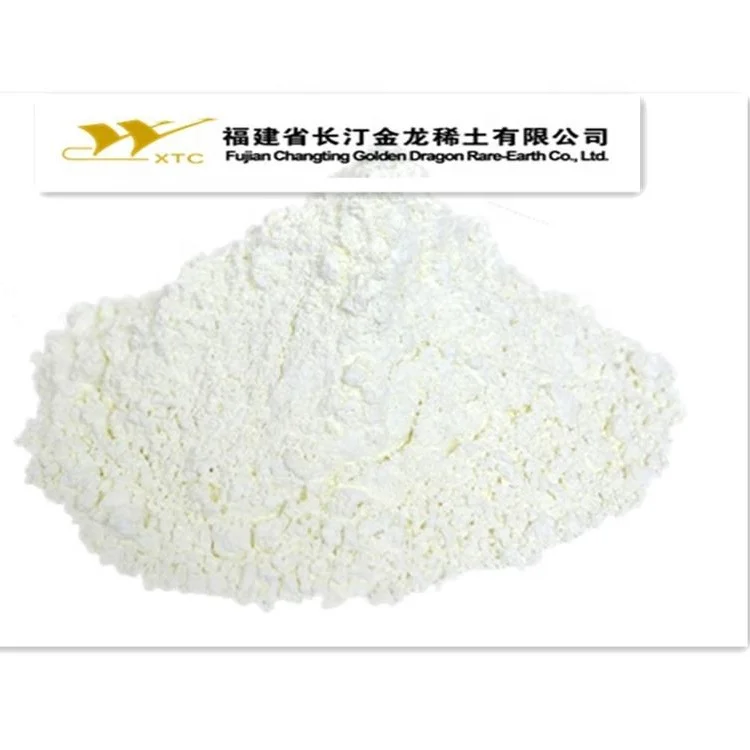
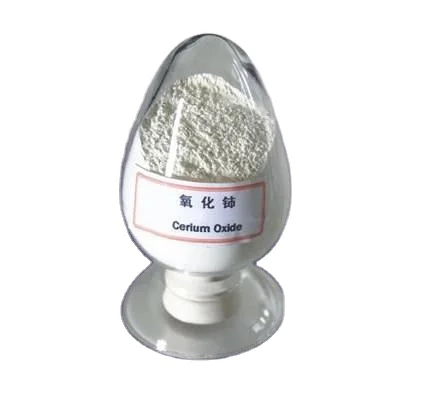
Cerium(IV) oxide, also known as ceric oxide, ceria, cerium oxide or cerium dioxide, is an oxide of the rare earth metal cerium. It is a pale yellow-white powder with the chemical formula CeO2.Cerium(IV) oxide is formed by the calcination of cerium oxalate or cerium hydroxide.Powdered ceria is slightly hygroscopic and will also absorb a small amount of carbon dioxide from the atmosphere.

Cerium Oxide Synonyms
Cerium (IV) oxide; CeO2; ceric oxide; ceria; cerium oxide; cerium dioxide; A 1; A 1(ceria); CESL 15N; Cepol 120; Cepol 302; Ceria; Ceria (CeO2); Ceric oxide; Ceric oxide (CeO2); Cerico; Cerico H; Cerium dioxide; Cerium dioxide (CeO2); Cerium oxide; Cerium(4+) oxide; Cerium(IV) oxide; E 10; GPL-C 1010; GPL-C S2125; HF 210; HS 8005; HSA 15; HSA 5; Hastilite 919; Hastilite PO; MicroPlanarST 2100; Mirek 801; Molycorp 5310; NanoActive CeO2; NanoTek CE 6042; NanotekCeO2; Needlal; Needlal B 10; Needlal H 15; Needlal P 10; Needlal U 100; NeedlalU 15; Needlal W 10-01; Needlal W 100; Needlal W 15; Opaline; Opaline (oxide); Polishing Opaline; Purusea SQE 10C; RN 10C; Rhodox 76; SRS 123C; SRS 135;Shorox; Sunveil A; Superox 50; TE 1000; TE 508; TRS 1793; TRS 1794; TRS 2005; U100; U 20; U 20 (oxide); VP AdNano Ceria 50; CAS #1306-38-3,
Cerium Oxide Designations
Chemical Name: Cerium dioxide
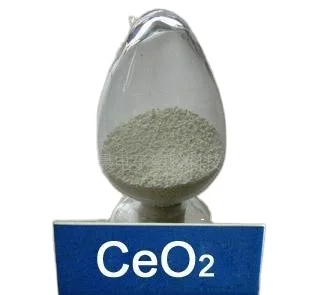
Chemical Formula: CeO2
Cerium Oxide Description
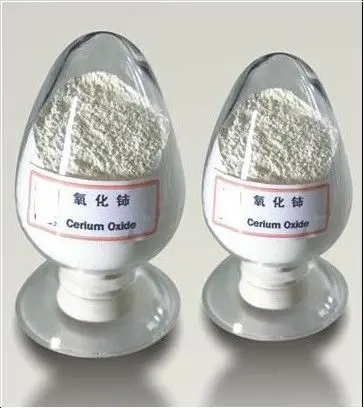
Cerium oxide usually appears as a yellow powder. It is insoluble in water and moderately soluble in strong mineral acids. CeO2 is slightly hygroscopic and will absorb small amounts of moisture and CO2 from the atmosphere.
Cerium Oxide Chemical Properties Available
99% min., 99.95%, and 99.99% (REO basis)
Cerium Oxide Physical Properties Available
Tablets, pieces, granules, and powder
Cerium Oxide Physical Constants:
Molecular Weight (g/mol.)
172.1142
Apparent Density (g/cm3)
7.65 g/cm3 as a solid
Specific Gravity
7.28
Melting Point (°C)
Approx. 2500°
Boiling Point (°C)
3500 °C
Odor
Odorless
Acute Health Hazard
Yes
Mohs Hardness @ 20 °C
6
EINECS Number
215-150-4
Solubility In Water
Insoluble
Appearance
White or pale yellow solid
Crystallography
Cubic, face centered
Cerium Oxide Typical Applications
a) Used in precision polishing and lapping applications, escpecially for glass.
b) In the doped form,(it comes from cerium and oxygen) ceria is of interest as a material for solid oxide fuel cells or SOFCs because of its relatively high oxygen ion conductivity (i.e. oxygen atoms readily move through it) at intermediate temperatures (500-800 °C). Undoped and doped ceria also exhibit high electronic conductivity at low partial pressures of oxygen due to the formation of small polarons. However, doped ceria has an extended electrolytic region (area of predominant ionic conductivity), over that of ceria, that allows its use as an electrolyte in SOFCs. Substituting a fraction of the ceria with gadolinium or samarium will introduce oxygen vacancies in the crystal without adding electronic charge carriers. This increases the ionic conductivity and results in a better electrolyte.
c) Under reducing conditions, those experienced on the anode side of the fuel cell, a large amount of oxygen vacancies within the ceria electrolyte can be formed. Some of the cerium(IV) oxide is also reduced to cerium(III) oxide under these conditions which consequently increases the electronic conductivity of the material. The lattice constant of ceria increases under reducing conditions as well as with decreasing nanocrystal size in nanocrystalline ceria, as a result of reduction of the cerium cation from a 4+ to a 3+ state in order to charge compensate for oxygen vacancy formation.
d) Ceria has been used in catalytic converters in automotive applications. Since ceria can become non-stoichioimetric in oxygen content (i.e. it can give up oxygen without decomposing) depending on its ambient partial pressure of oxygen, it can release or take in oxygen in the exhaust stream of a combustion engine. In association with other catalysts, ceria can effectively reduce NOx emissions as well as convert harmful carbon monoxide to the less harmful carbon dioxide. Ceria is particularly interesting for catalytic conversion economically because it has been shown that adding comparatively inexpensive ceria can allow for substantial reductions in the amount of platinum needed for complete oxidation of NOx and other harmful products of incomplete combustion.
e) Due to its fluorite structure, the oxygen atoms in a ceria crystal are all in a plane with one another, allowing for rapid diffusion as a function of the number of oxygen vacancies. As the number of vacancies increases, the ease at which oxygen can move around in the crystal increases, allowing the ceria to reduce and oxidize molecules or co-catalysts on its surface. It has been shown that the catalytic activity of ceria is directly related to the number of oxygen vacancies in the crystal, frequently measured by using X-Ray Photoelectron Spectroscopy to compare the ratios of Ce3+ to Ce4+ in the crystal.
f) Ceria can also be used as a co-catalyst in a number of reactions, including the water-gas shift and steam reforming of ethanol or diesel fuel into hydrogen gas and carbon dioxide (with varying combinations of rhodium oxide, iron oxide, cobalt oxide, nickel oxide, platinum, and gold), the Fischer-Tropsch reaction, and selected oxidation (particularly with lanthanum). In each case, it has been shown that increasing the ceria oxygen defect concentration will result in increased catalytic activity, making it very interesting as a nanocrystalline co-catalyst due to the heightened number of oxygen defects as crystallite size decreases—at very small sizes, as many as 10% of the oxygen sites in the fluorite structure crystallites will be vacancies, resulting in exceptionally high diffusion rates. Source: Wikipedia
Cerium Oxide Packaging
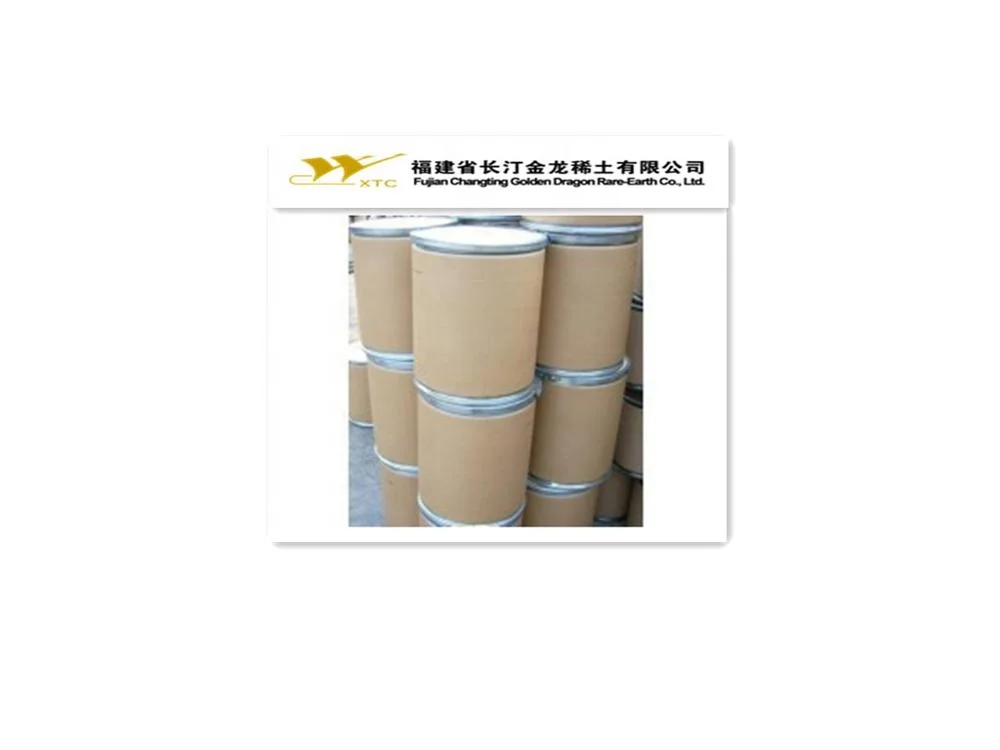
a) Jars, pails, drums, multiply paper bags, bulk bags and fiberboard containers. For further information on packaging options contact READE.
b) Packaging may vary according to HAZMAT and TSCA (SARA Title III) status.
Cerium Oxide TSCA (SARA Title III) Status
Listed. For further information please call the E.P.A. at +1.202.554.1404
Cerium Oxide CAS Number
CAS# 1306-38-3
We Recommend

New Arrivals
New products from manufacturers at wholesale prices