Lanthanum Oxide Nanoparticles La2O3 Nanopowder
- Category: >>>
- Supplier: Fujian Changting Golden Dragon Rare-Earth Co. Ltd.
Share on (60162199728):
Product Overview
Description
Introduction
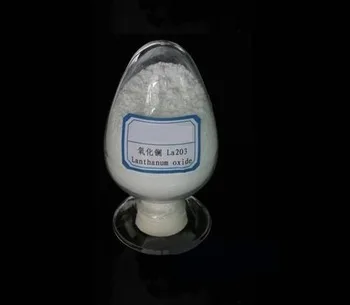
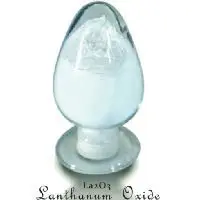
This article discusses about the properties and applications of lanthanum oxide nanoparticles. Lanthanum is a Block F, Period 6 element, while oxygen is a Block P, Period 2 element. Lanthanum oxide is an odorless, white solid. It is insoluble in water, and soluble in dilute acid. Lanthanum oxide nanoparticles have high photoelectric conversion efficiency.
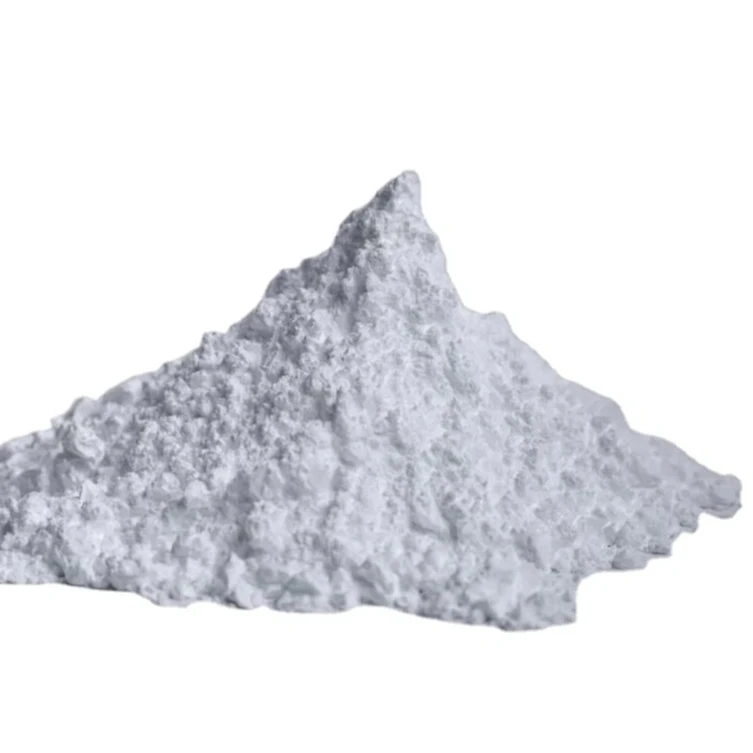
The morphology of lanthanum oxide nanoparticles is spherical, and they appear as a white powder. They are strongly hygroscopic. Lanthanum oxide nanoparticles are graded as irritant, and can cause irritation to skin, eyes, and related breathing difficulties.
Chemical Properties
The chemical properties of lanthanum oxide nanoparticles are outlined in the following table.
| Chemical Data | |
|---|---|
| Chemical symbol | La2O3 |
| CAS No. | 1312-81-8 |
| Group | Lanthanum 3 Oxygen 16 |
| Electronic configuration | Lanthanum [Xe] 5d1 6s2 Oxygen [He] 2s2 2p4 |
| Chemical Composition | |
|---|---|
| Element | Content (%) |
| Lanthanum | 85.26 |
| Oxygen | 14.72 |
Physical Properties
The physical properties of lanthanum oxide nanoparticles are given in the following table.
| Properties | Metric | Imperial |
|---|---|---|
| Density | 6.50 g/cm3 | 0.235 lb/in3 |
| Molar mass | 325.81 g/mol | - |
Thermal Properties
The thermal properties of lanthanum oxide nanoparticles are provided in the table below.
| Properties | Metric | Imperial |
|---|---|---|
| Melting point | 2305°C | 4181°F |
| Boiling point | 4200°C | 7590°F |
Applications
The key applications of lanthanum oxide nanoparticles are listed below:
- As a magnetic nanoparticle for magnetic data storage and magnetic resonance imaging (MRI)
- In biosensors
- For phosphate removal in bio medical and water treatment (even for swimming pools and spas) applications
- In laser crystals and optics
- In nanowires, nanofibers, and in specific alloy and catalyst applications
- In piezoelectric materials to increase product piezoelectric coefficients and improve product energy conversion efficiency
- For the manufacture of high-refraction optical fibers, precision optical glasses, and other alloy materials
- In preparation of several perovskite nanostructures like lanthanum manganite and lanthanum chromite, for the cathode layer of solid oxide fuel cells (SOFC)
- For the preparation of organic chemical products catalysts, and in automobile exhaust catalysts
- To improve the burning rate of propellants
- In light-converting agricultural films
- In electrode materials and in light-emitting material (blue powder), hydrogen storage materials, and laser materials
We Recommend



New Arrivals
New products from manufacturers at wholesale prices